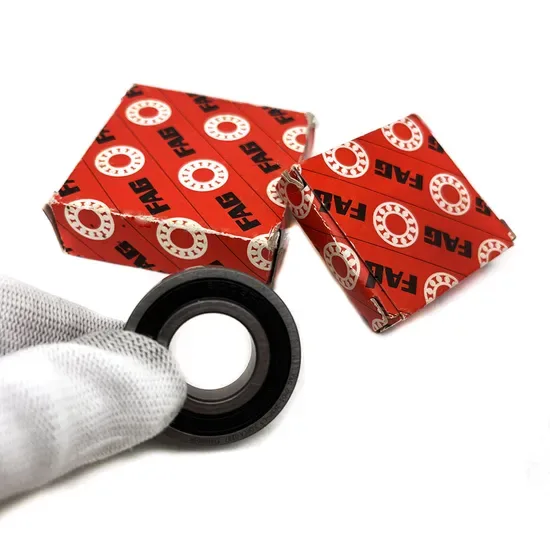
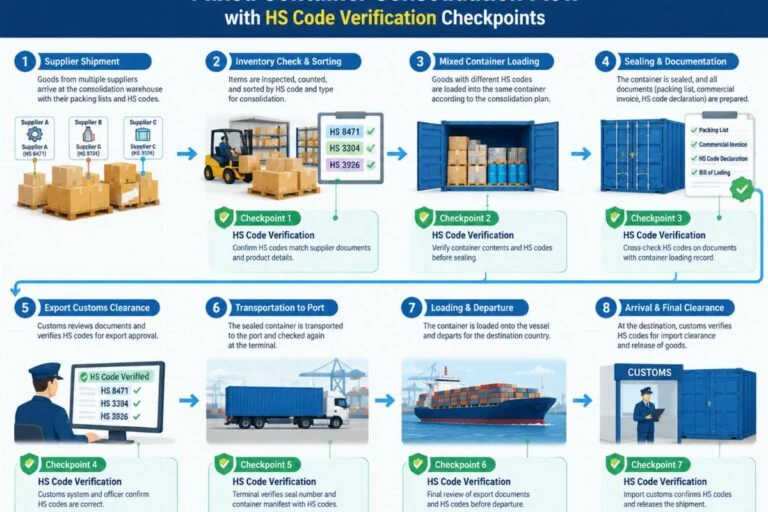
Most buyers think FAG and INA are just legacy names on a box. The reality is that their integration into the Schaeffler ecosystem created a complementary matrix of heavy industrial and precision automotive solutions that defines modern North American supply chains.
Sourcing genuine Schaeffler US History products requires verifying not just the brand logo, but the traceability documentation that links each bearing to its specific manufacturing batch. For bulk orders, this means prioritizing suppliers who can provide full customs-ready paperwork and mixed-brand consolidation, ensuring that emergency MRO replacements and long-term OEM projects arrive with verifiable authenticity.
I still remember the smell of burnt oil and overheated metal in a quarry outside Lagos. A client had skipped the verification steps to save on upfront costs, importing what looked like standard FAG spherical roller bearings for their primary crusher. Within months, the main shaft seized. The downtime cost them far more than the savings on the parts. That incident wasn’t about bad luck; it was about a broken chain of custody. In the heavy equipment sector, the history of a brand isn’t just marketing—it’s a record of engineering tolerances held under extreme stress. Understanding how FAG and INA evolved in the American market helps buyers distinguish between a stamped logo and a certified component.
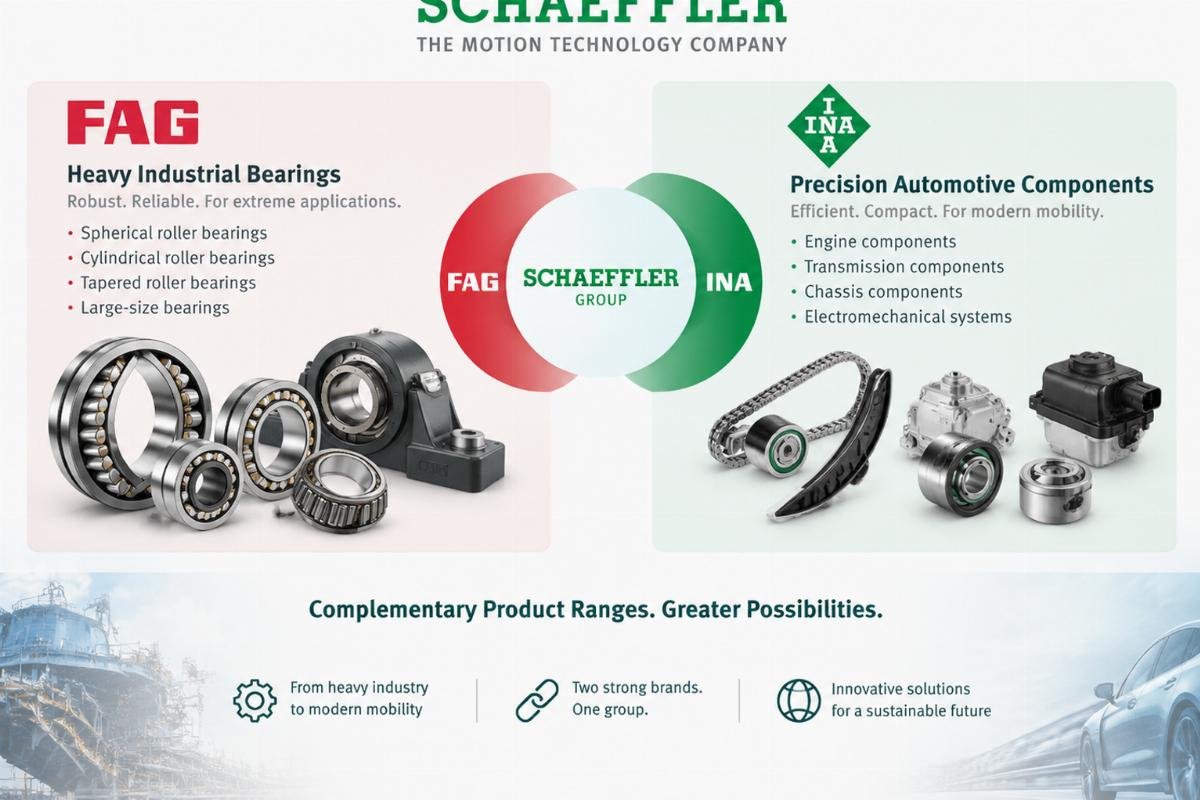
This distinction matters because the North American market has shifted from simple importation to localized technical support and warehousing. When you look for a reliable FAG and INA Bearings USA wholesale supplier for bulk orders, you are not just buying steel rings and rollers. You are buying into a system where traceability prevents catastrophic failure.
How Did FAG and INA Evolve in the US Market?
The transition from independent European imports to a unified North American presence was driven by the need for localized inventory and technical adaptation to American industrial standards.
In the early days, American engineers sourced FAG for heavy industrial applications and INA for automotive needle bearings as separate entities. The merger under the Schaeffler umbrella changed the logistics landscape. It wasn’t just a corporate restructuring; it was a strategic move to consolidate warehousing and distribution networks across the continent. This evolution allowed for a more robust response to the varying demands of the US market, from the rust-belt manufacturing hubs to the energy sectors in Texas and the Midwest.
For distributors, this history explains why certain part numbers are now cross-referenced or consolidated. The old silos between “industrial” and “automotive” divisions have blurred, creating a single source for complex machinery that uses both heavy-duty spherical rollers and precision cam followers. A buyer who understands this evolution can navigate the catalog more effectively, knowing that a solution for a wind turbine gearbox might share logistical pathways with high-volume automotive components.
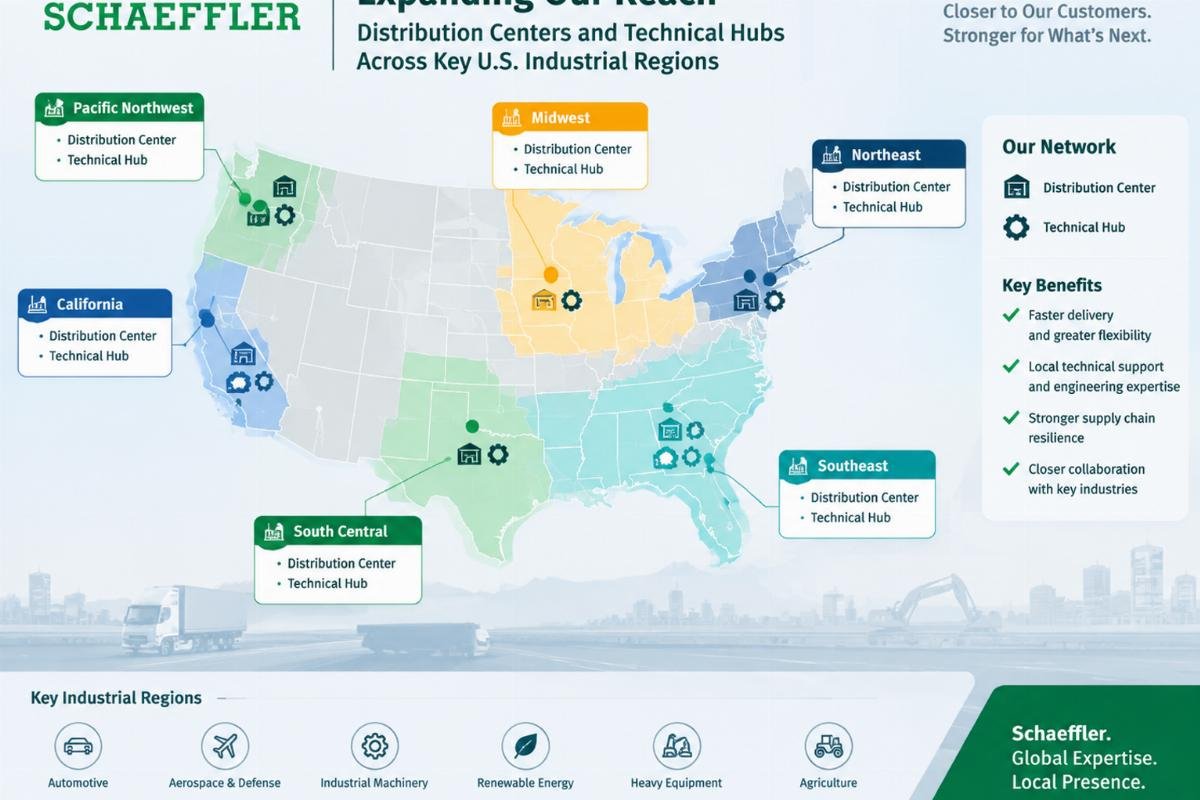
This centralized approach also meant that quality control standards became uniform. The rigorous German engineering principles that defined FAG and INA were applied consistently across the North American supply chain. For bulk buyers, this consistency is critical. It means that a bearing sourced for a project in California meets the same specification tolerances as one shipped to a plant in Ohio. The evolution of Schaeffler US History is essentially a story of standardization and reliability, ensuring that the brand promise holds true regardless of the point of entry.
What Are the Core Application Differences Between FAG and INA?
While both brands fall under the Schaeffler umbrella, FAG specializes in heavy-load industrial applications, whereas INA focuses on precision engine components and linear guidance systems.
Confusing these two lines can lead to significant procurement errors. FAG is the go-to for spherical roller bearings, cylindrical rollers, and tapered rollers used in mining, steel mills, and wind energy. These components are designed to withstand extreme radial and axial loads, often in harsh environments contaminated with dust or moisture. INA, on the other hand, dominates the space for needle roller bearings, cam followers, and linear recirculating ball bearings. These are critical for automotive engines, transmission systems, and precision machine tools where space constraints and high-speed precision are paramount.
To clarify the selection process, consider the following functional comparison:
| Application Domain | Primary Brand Focus | Key Bearing Types | Operational Environment |
|---|---|---|---|
| Heavy Industry (Mining, Steel) | FAG | Spherical Roller, Cylindrical Roller | High Load, Contaminated, Shock Loads |
| Automotive & Precision Machinery | INA | Needle Roller, Cam Followers, Linear Guides | High Speed, Space-Constrained, Precision |
| General Manufacturing | Both (Context Dependent) | Deep Groove Ball, Thrust Bearings | Mixed Conditions, Standard Loads |
| Wind Energy | FAG | Large Diameter Spherical & Cylindrical | Extreme Weather, Maintenance-Access Difficult |
A common mistake I see in bulk orders is specifying an INA needle bearing for a heavy crusher application because it fits the housing dimensionally. While it might fit, it lacks the load-carrying capacity and fatigue resistance of a properly sized FAG spherical roller. Conversely, using a bulky FAG unit in a tight automotive assembly where an INA needle bearing was designed can cause clearance issues and overheating.
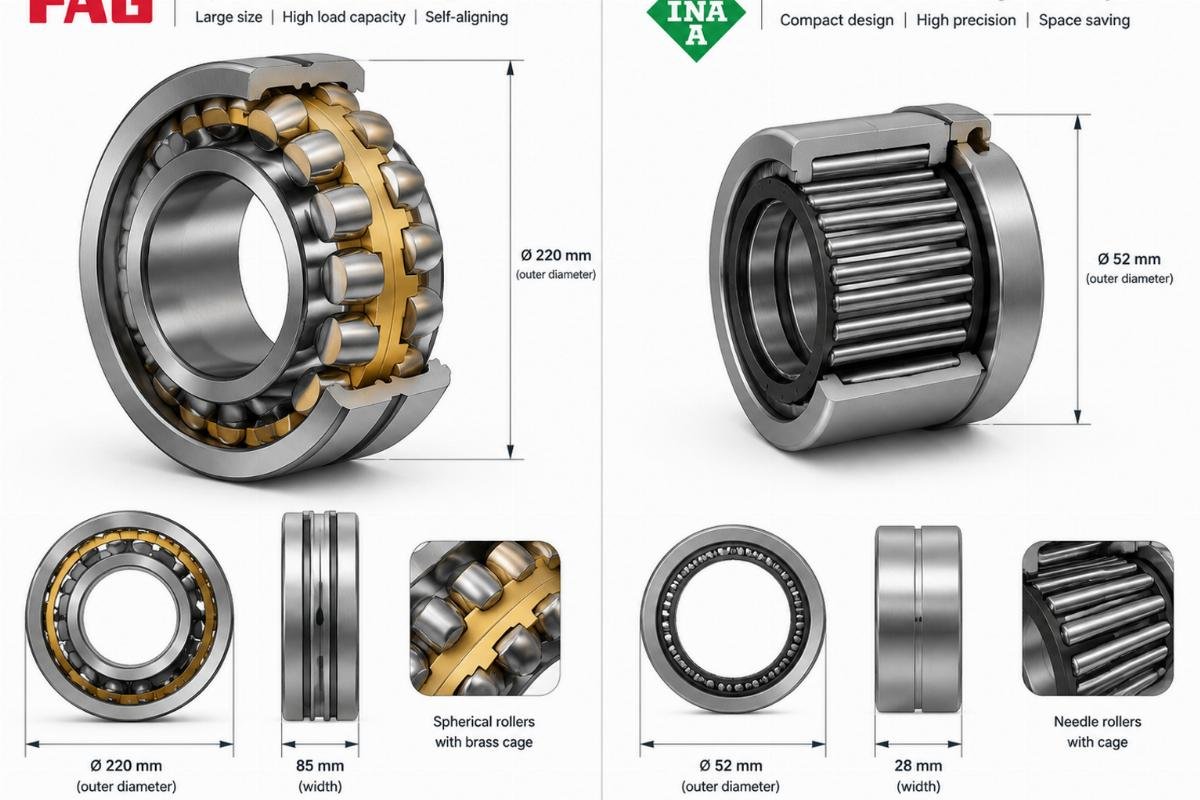
Understanding these core differences allows procurement teams to optimize their inventory. Instead of stocking generic alternatives, they can maintain precise cross-references that respect the engineering intent of each brand. This specificity reduces return rates and ensures that maintenance teams have the right tool for the job, minimizing unplanned downtime.
Why Does Traceability Matter for Schaeffler Bearings in America?
In a market flooded with counterfeits, traceability documents are the only definitive proof that a bearing meets the original manufacturer’s material and precision specifications.
The prevalence of fake bearings in the global supply chain is a well-documented risk. Counterfeit units often use inferior steel with higher inclusion densities, leading to premature fatigue failure. In critical applications like aerospace or heavy mining, this isn’t just a warranty issue; it’s a safety hazard. Traceability links the physical product back to the manufacturer’s production facilities, verifying the heat treatment, grinding precision, and quality control checks performed during manufacturing.
I once reviewed a shipment for a mid-sized distributor where the packaging looked perfect. The holograms were there, the boxes were crisp. But the batch numbers on the bearings didn’t match the accompanying certificates. Upon closer inspection, the surface finish lacked the micron-level precision expected from genuine Schaeffler products. The supplier couldn’t provide the raw material certification or the final inspection logs. That shipment was rejected. For a buyer, accepting such goods without verification is a gamble with expensive odds.
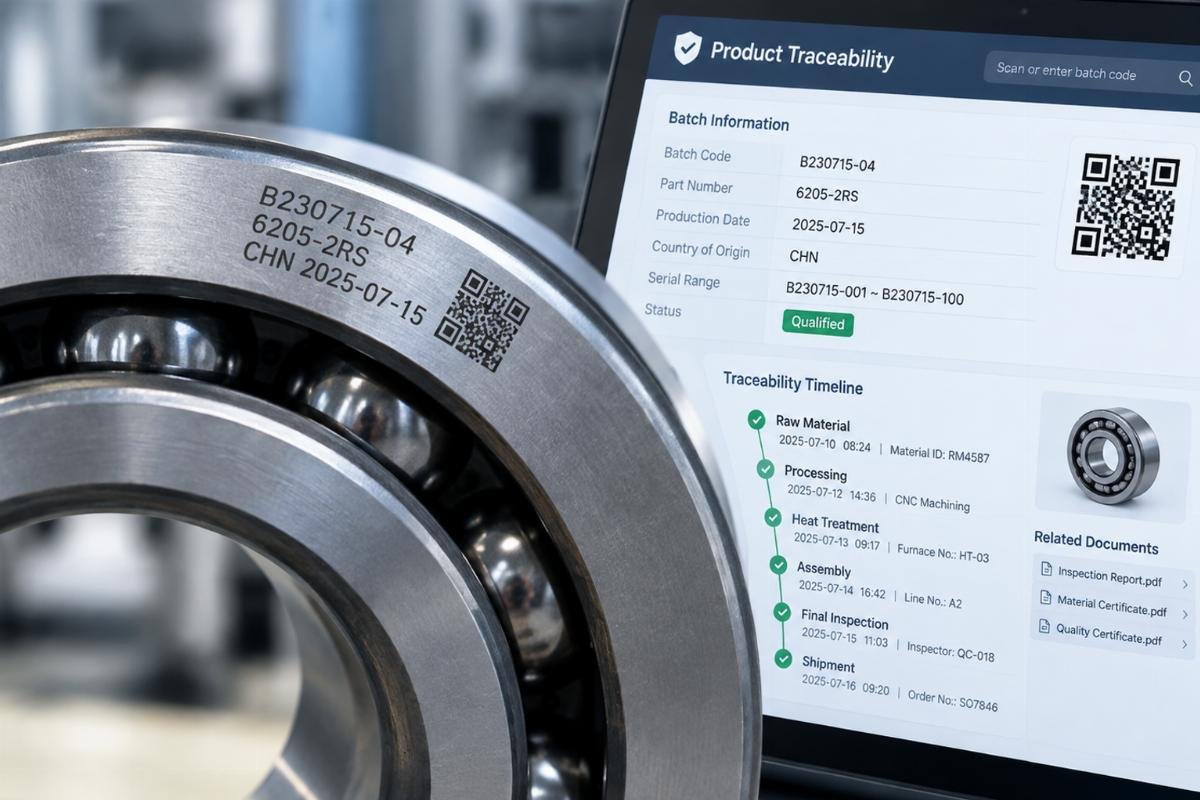
Genuine Schaeffler US History products come with a paper trail that includes material certificates, dimensional inspection reports, and origin declarations. For bulk projects, especially those involving government contracts or regulated industries, these documents are non-negotiable. They prove that the bearings were not diverted from unauthorized channels or refurbished. A reliable supplier will provide these documents seamlessly, integrating them into the shipping paperwork so that customs clearance and internal quality audits proceed without delay.
How to Source Genuine FAG/INA Bearings for Bulk Projects?
Successful bulk sourcing relies on verifying supplier credentials, requesting mixed-brand consolidation, and ensuring complete documentation before shipment leaves the warehouse.
Sourcing for large-scale projects often involves complex logistics. You might need FAG spherical rollers for a new mine site and INA linear guides for a factory upgrade, all arriving at different ports but managed under a single purchase order. The key is finding a partner who can handle this complexity without compromising on authenticity. This means looking beyond the lowest price per unit and evaluating the supplier’s ability to provide technical support and verified stock.
Here is a practical approach to securing genuine stock:
- Verify Authorization and Stock Sources: Ask for proof of direct purchasing channels from Schaeffler or authorized master distributors. Genuine suppliers can explain the origin of their stock and provide recent batch examples.
- Request Mixed-Brand Consolidation: Instead of placing separate orders for FAG and INA items, consolidate them. This reduces shipping costs and simplifies customs clearance. Ensure the supplier has the infrastructure to pick, pack, and document mixed SKUs accurately.
- Demand Full Documentation Upfront: Before payment, confirm that material certificates and traceability docs will be included. For critical applications, request sample inspections or third-party verification services.
- Check Technical Support Capability: A good supplier doesn’t just ship boxes. They offer cross-reference support, helping you identify equivalent models if a specific part number is obsolete or unavailable.
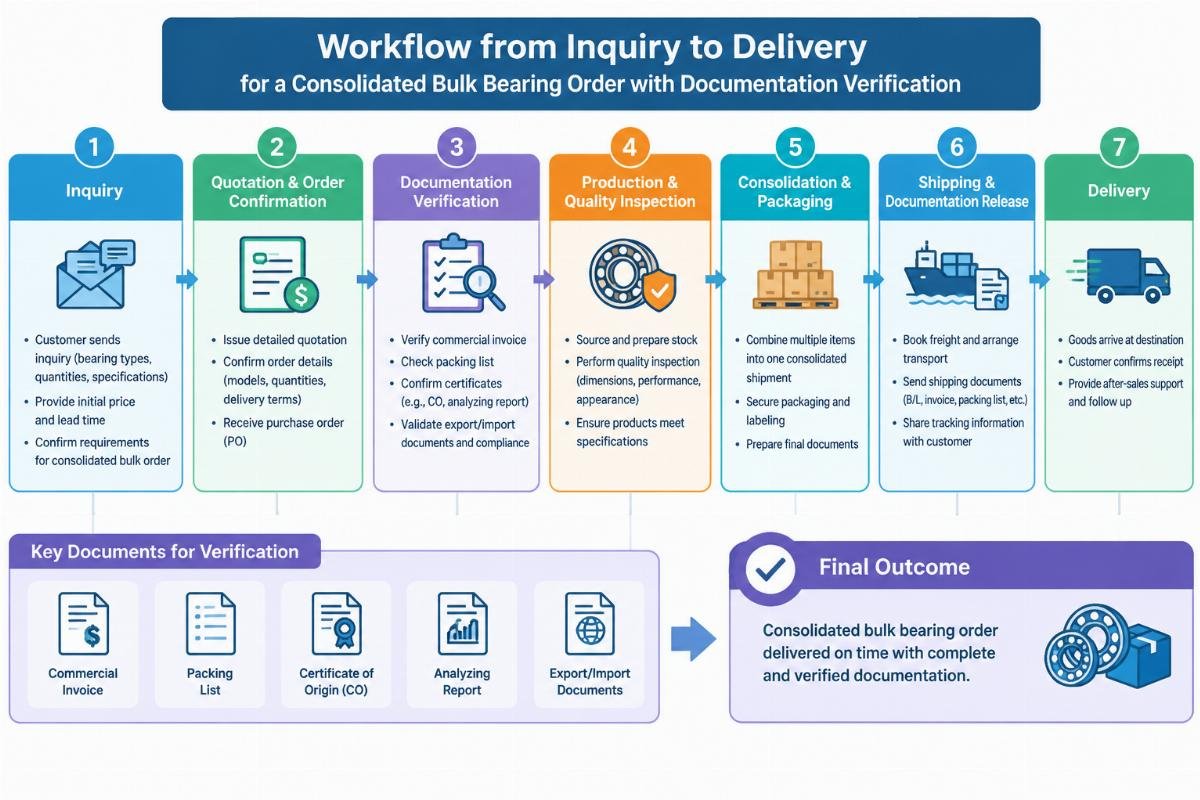
In my experience, the most efficient projects are those where the supplier acts as a technical partner. They understand that a delay in documentation can hold up an entire container at customs, costing more than the freight itself. By choosing a supplier who prioritizes transparency and technical accuracy, you secure not just the physical bearings, but the peace of mind that comes with knowing your equipment is protected by genuine engineering.
Conclusion
Authenticity in bearing procurement is not a luxury; it is the foundation of operational reliability and safety in heavy industry.
The legacy of Schaeffler US History demonstrates how integrated brands like FAG and INA provide comprehensive solutions for diverse mechanical challenges. By understanding their distinct applications and insisting on rigorous traceability, buyers can protect their assets from the high costs of failure. Sourcing through partners who offer verified stock and consolidated logistics ensures that every bearing installed performs as engineered.