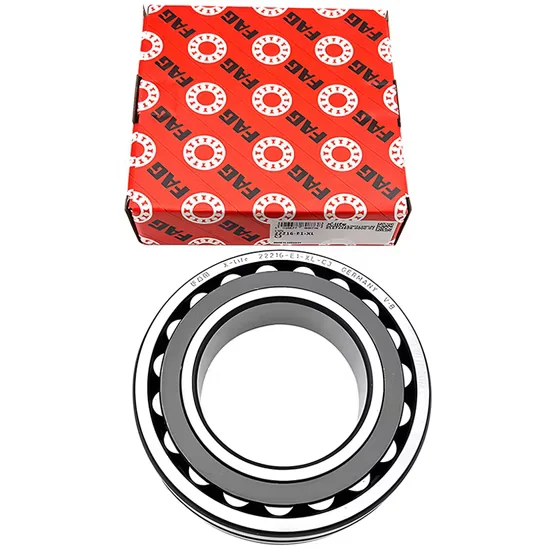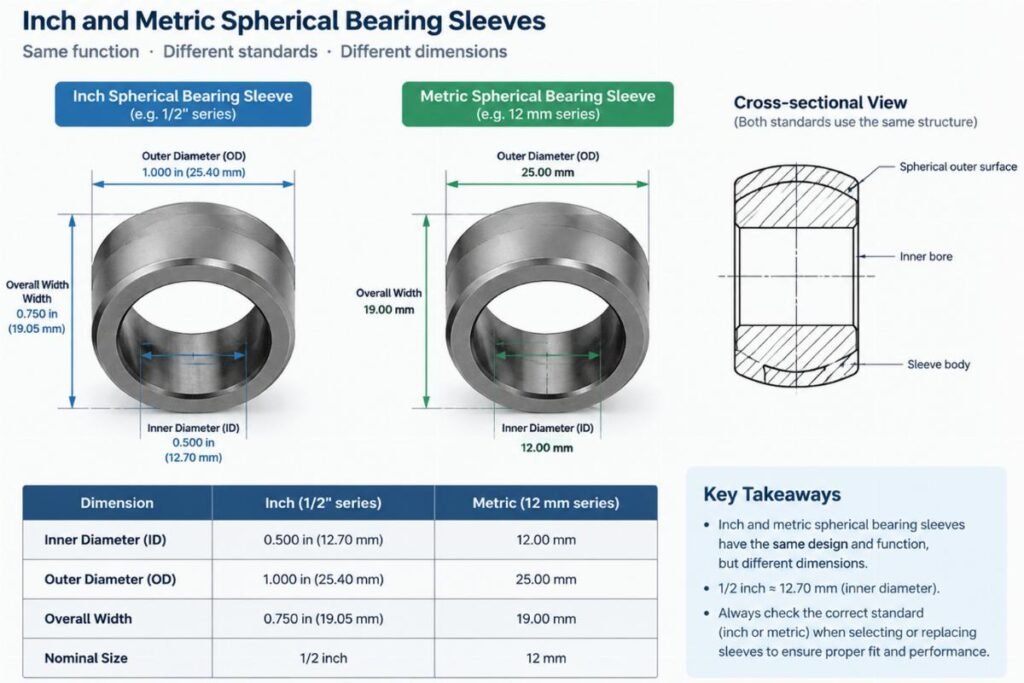
An inch bore does not simply equal a millimeter measurement divided by 25.4.
The core function of the FAG spherical bearing inch sleeve table is to define the precise geometric relationship between an imperial-sized inner ring and its corresponding outer housing, ensuring that internal clearance and raceway curvature match the specific demands of heavy-load oscillating applications rather than serving as a mere unit conversion chart.
I still remember the humid air in a palm oil processing plant in Sumatra, where the silence of a stopped crushing line was louder than the machinery ever was. The issue was not a lack of lubrication or a material failure, but a fundamental mismatch between an inch-bore spherical plain bearing and a metric-designed mounting seat. The procurement team had relied on a generic conversion, assuming that a 1-inch bore would fit a 25.4 mm housing without issue. They overlooked the fact that the FAG spherical bearing inch sleeve table specifies not just the diameter, but the tolerance class and the radial internal clearance unique to the inch series. The resulting interference fit caused immediate seizure upon startup. We had to air-freight the correct inch-series components at a premium cost that dwarfed the initial savings. That incident reshaped how I approach technical verification. Now, when clients request dimensions from the FAG spherical bearing inch sleeve table, I insist on cross-referencing the original equipment manufacturer drawings and measuring the actual mounting seats before any order is placed.
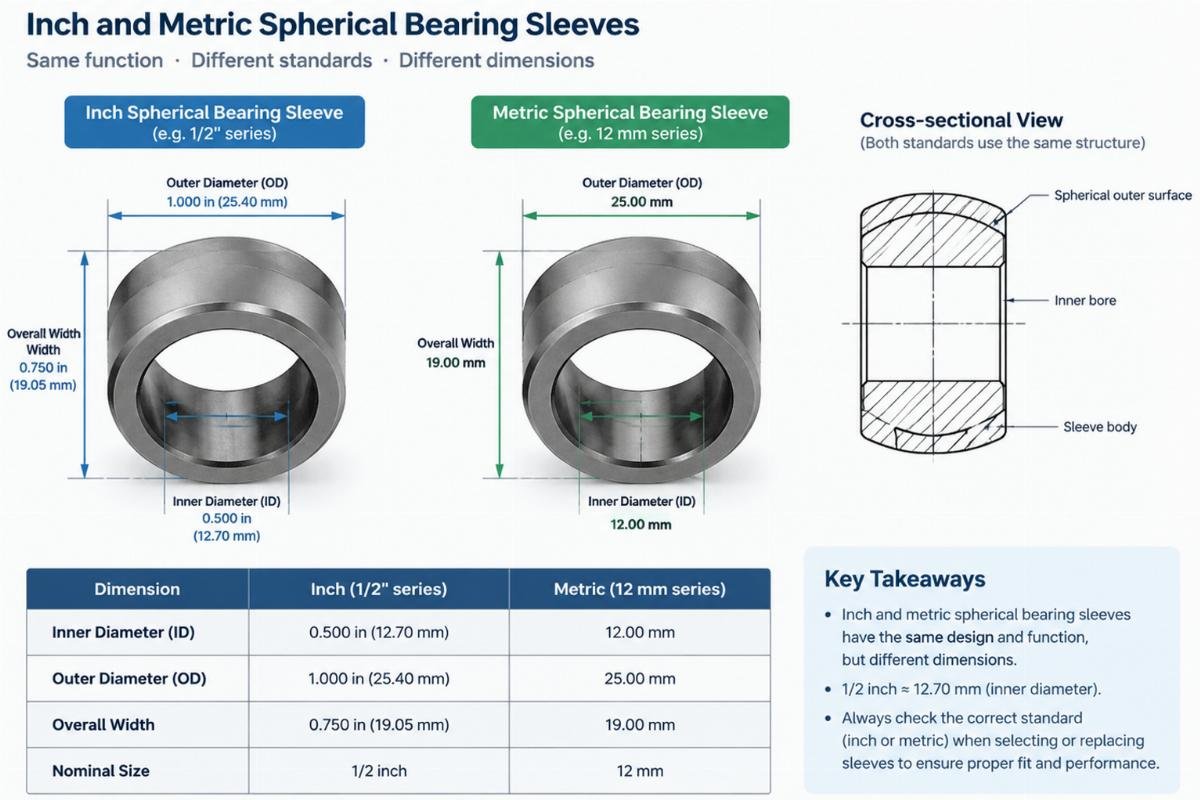
This distinction is critical because many engineers assume that “inch size” implies the entire bearing assembly follows imperial standards. In reality, it is common for only the bore to be inch-sized, while the outer diameter and width may require specific adapters or follow different dimensional logic. Misinterpreting the FAG spherical bearing inch sleeve table can lead to catastrophic installation errors, particularly in retrofit scenarios where old drawings may not reflect current manufacturing tolerances.
How to Read the FAG Inch Sleeve Table Correctly?
The primary error in reading an inch sleeve table is treating it as a standalone dimension list rather than a system of interdependent tolerances.
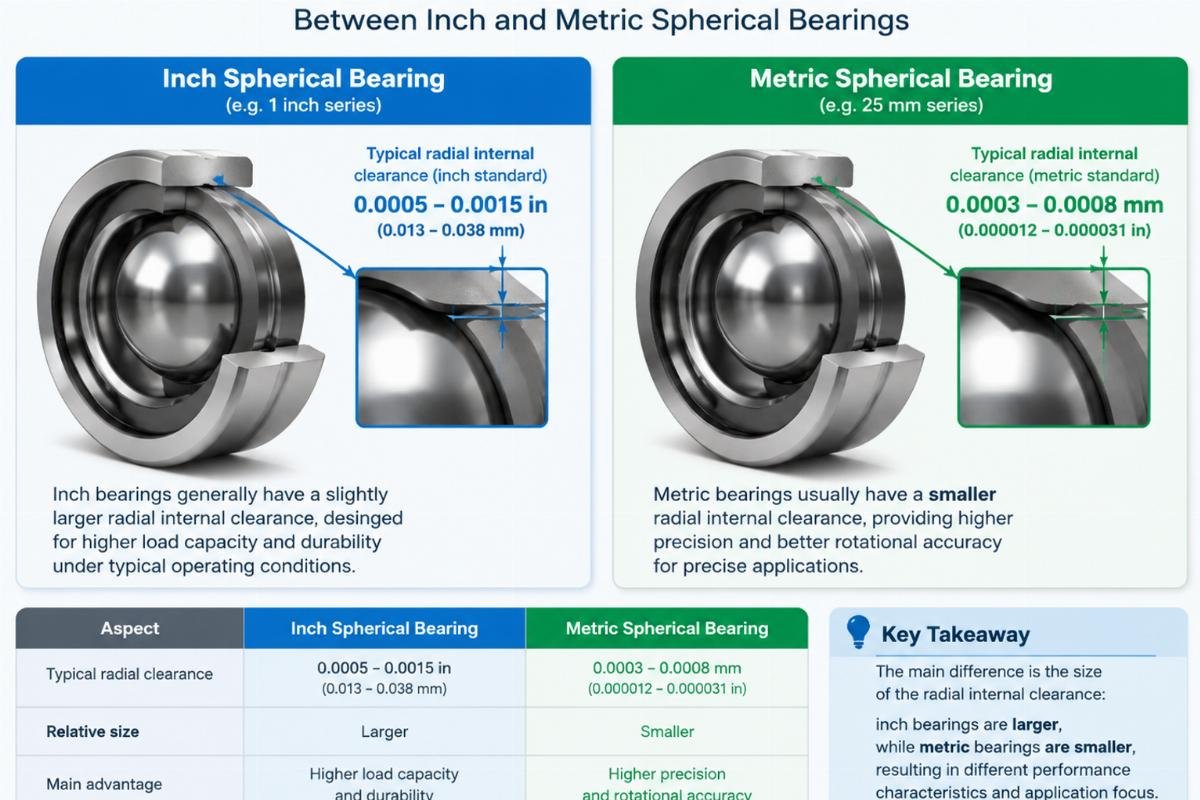
When you open the FAG spherical bearing inch sleeve table, you are not just looking for a bore diameter. You are identifying a specific combination of inner ring width, outer ring width, and crucially, the radial internal clearance. Inch-series bearings often have different internal clearances compared to their metric counterparts, even if the bore sizes appear similar after conversion. This difference is designed to accommodate the thermal expansion and load distribution characteristics typical in North American heavy machinery standards.
A common misconception is that the outer diameter (OD) of an inch-series bearing will perfectly match a standard metric housing if the bore is converted. However, the FAG spherical bearing inch sleeve table reveals that the OD and width dimensions are optimized for the inch-series load ratings. For example, a bearing with a 1-inch bore might have an OD that does not correspond to any standard metric series, requiring a custom housing or a specific adapter sleeve. Ignoring this detail leads to loose fits or excessive preload, both of which drastically reduce bearing life.
| Dimension Feature | Inch Series Characteristic | Metric Series Equivalent | Installation Risk if Mixed |
|---|---|---|---|
| Bore Diameter | Defined in fractional inches | Defined in millimeters | Seizure or excessive play |
| Radial Internal Clearance | Specific to inch load standards | Specific to metric load standards | Premature fatigue or overheating |
| Raceway Curvature | Optimized for inch load angles | Optimized for metric load angles | Edge loading and spalling |
| Housing Fit Tolerance | Imperial standard classes | ISO metric standard classes | Incorrect seating and vibration |
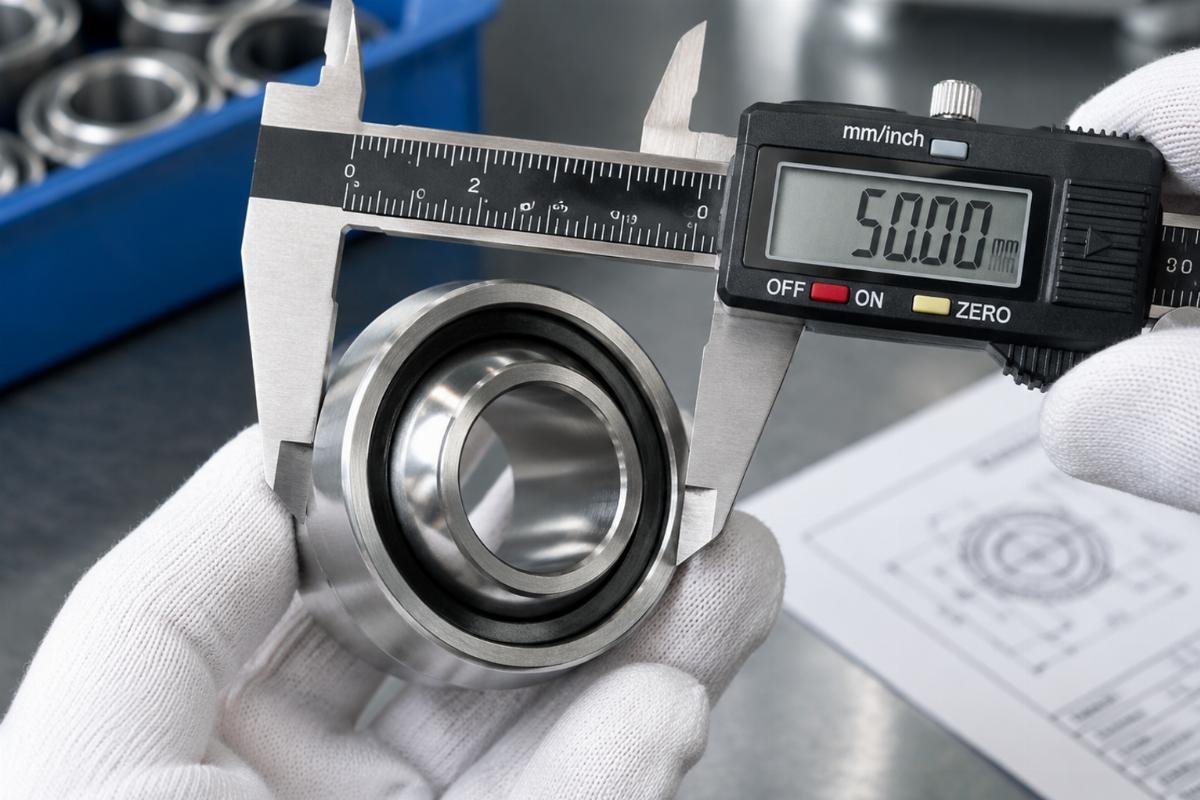
To avoid these pitfalls, always verify the outer dimensions against the housing design. Do not assume compatibility based on the bore alone. The FAG spherical bearing inch sleeve table must be read holistically, considering the entire geometry of the bearing. If you are replacing a worn component, measure the existing housing bore and depth precisely. Compare these measurements directly with the values in the FAG spherical bearing inch sleeve table, paying close attention to the tolerance limits specified for the inch series. This practice ensures that the new bearing will seat correctly and perform as intended under load.
Why Do Inch and Metric Mismatches Happen on Site?
Decimal point errors and assumption-based housing fits are the silent killers of maintenance schedules.
In the field, mismatches often occur because technicians assume that a “1-inch” bearing is universally compatible with any 25.4 mm hole. This is rarely true in precision engineering. The FAG spherical bearing inch sleeve table includes specific tolerance classes that differ from metric ISO standards. A slight deviation in the housing bore, perhaps due to wear or manufacturing variance, can become critical when mating an inch-bearing with a metric-derived housing. The difference in radial internal clearance means that an inch bearing might feel tight in a metric housing, leading to false brinelling or raceway damage during operation.
Consider a mining excavator retrofit project where the maintenance team ordered replacement rod ends based on an old parts list. The list specified an inch size, but the housing had been machined to metric tolerances during a previous overhaul. The team did not consult the FAG spherical bearing inch sleeve table to verify the outer dimensions and clearance requirements. As a result, the new bearings were difficult to install, and those that were forced in failed within weeks due to excessive preload. The downtime cost far exceeded the price of the bearings themselves.
Another frequent issue arises from decimal point errors in interpreting the FAG spherical bearing inch sleeve table. A misread value of 0.750 inches versus 0.755 inches can seem negligible on paper but translates to a significant interference fit in practice. In agricultural machinery assembly, such small errors can lead to field rework, where technicians must disassemble complex linkages to replace incorrectly sized components. This rework cycle not only delays operations but also increases the risk of damaging adjacent parts during removal.
To prevent these issues, always measure the actual mounting seat before ordering. Do not rely solely on historical data or part numbers, as modifications may have been made over the equipment’s lifecycle. Use the FAG spherical bearing inch sleeve table as a verification tool, cross-referencing your physical measurements with the published dimensions. If there is any doubt, consult with a technical specialist who can help interpret the tolerance classes and recommend the appropriate bearing series.
Step-by-Step Verification Before Ordering
Accurate sourcing begins with physical verification, not just catalog lookup.
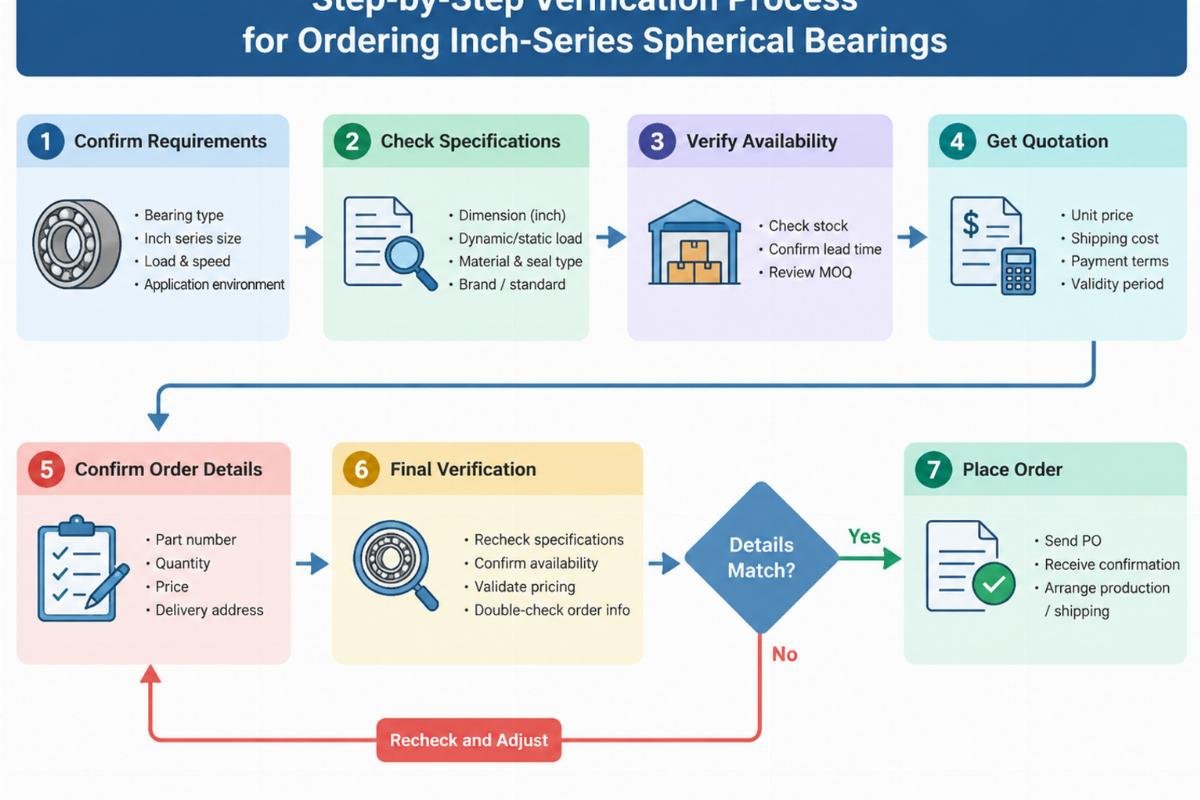
Ordering the correct inch-series bearing requires a disciplined approach that goes beyond matching part numbers. The following workflow ensures that the components you receive will fit and function correctly in your application. This method minimizes the risk of mismatches and reduces the likelihood of costly emergency replacements.
- Retrieve Original Drawings: Start by locating the original equipment manufacturer drawings for the assembly. These documents provide the baseline dimensions and tolerance requirements for the mounting seat. If the drawings are unavailable, proceed to physical measurement.
- Measure the Mounting Seat: Use precision calipers and micrometers to measure the housing bore diameter, depth, and shoulder dimensions. Record these values accurately, noting any signs of wear or deformation. Compare these measurements with the dimensions listed in the FAG spherical bearing inch sleeve table.
- Identify the Bearing Series: Determine whether the application requires an inch-series or metric-series bearing. Look for markings on the existing bearing or consult the equipment manual. If the bore is specified in inches, you likely need an inch-series component. Verify the specific series code using the FAG spherical bearing inch sleeve table.
- Check Radial Internal Clearance: Confirm the required radial internal clearance for your application. Inch-series bearings often have different clearance classes than metric ones. Ensure that the selected bearing from the FAG spherical bearing inch sleeve table matches the operational requirements for load and temperature.
- Verify Outer Dimensions: Check the outer diameter and width of the selected bearing against your housing measurements. Ensure that there is adequate space for installation and that the bearing will seat properly without interference. Pay attention to any adapter requirements if the housing is metric.
- Consult Technical Support: If any discrepancies arise during verification, contact a technical support team. Provide them with your measurements and the relevant pages from the FAG spherical bearing inch sleeve table. Their expertise can help clarify tolerance interpretations and suggest alternative solutions if necessary.
By following these steps, you ensure that every bearing you order is verified against the physical realities of your equipment. This proactive approach saves time and money, preventing the disruptions associated with incorrect parts. In our practice, we routinely request old part drawings and mounting parameters from clients to ensure 100% accurate FAG inch-series sourcing, mirroring the diligence required in high-stakes industrial environments.
Common Pitfalls in Inch-Series Selection
Assuming uniformity across inch-series bearings ignores critical design variations.
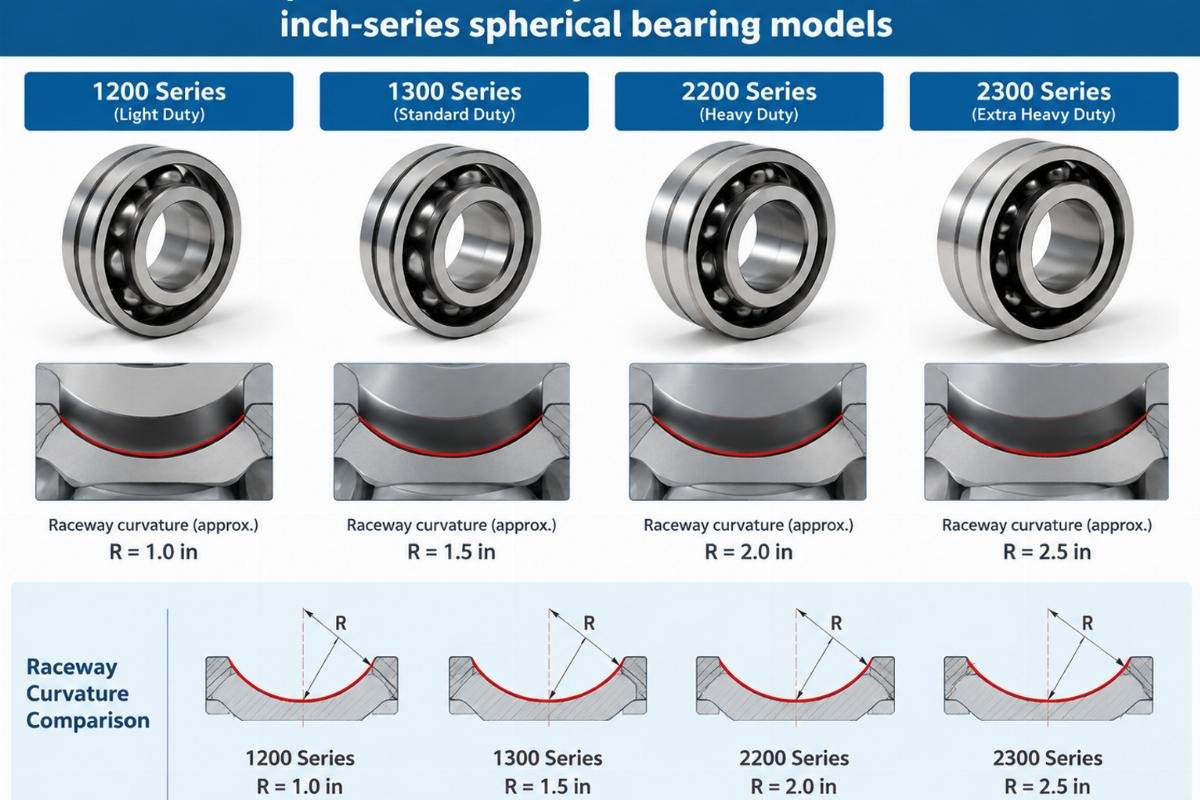
One of the most dangerous assumptions in bearing selection is that all inch-series bearings are created equal. The FAG spherical bearing inch sleeve table highlights specific design features that vary between models, such as raceway curvature and material composition. These features are engineered to handle specific load conditions and environmental factors. Ignoring them can lead to premature failure.
For instance, some inch-series bearings are designed with a greater raceway curvature to accommodate higher angular misalignment. Using a bearing with a flatter raceway in such an application can cause edge loading, leading to rapid wear and spalling. Similarly, the material used in the inner and outer rings may vary depending on the load rating. Selecting a bearing with insufficient load capacity for your application will result in early fatigue failure, regardless of how well it fits initially.
Another pitfall is neglecting the lubrication requirements specified for inch-series bearings. Some models come pre-lubricated with a specific grease type, while others require regular maintenance. Using the wrong lubricant can degrade the bearing performance and shorten its service life. Always check the lubrication specifications in the FAG spherical bearing inch sleeve table and ensure that your maintenance protocol aligns with these requirements.
Additionally, be aware of the environmental conditions in which the bearing will operate. Inch-series bearings used in harsh environments, such as mining or marine applications, may require special seals or coatings to protect against contamination and corrosion. Standard bearings may not withstand these conditions, leading to rapid deterioration. Select the appropriate variant from the FAG spherical bearing inch sleeve table that matches your operational environment.
By avoiding these common pitfalls, you can maximize the performance and longevity of your inch-series bearings. Careful selection based on the detailed information in the FAG spherical bearing inch sleeve table ensures that your equipment operates reliably and efficiently.
Conclusion
Precision in interpretation prevents chaos in operation.
Understanding the FAG spherical bearing inch sleeve table is not merely about reading numbers; it is about recognizing the engineering intent behind each dimension and tolerance. By verifying measurements, respecting clearance differences, and consulting technical resources, you safeguard your operations against costly mismatches. Let the data guide your decisions, ensuring that every bearing you install contributes to the reliability and efficiency of your machinery.