Standard clearance is not always safe; high-temperature operations often require C3 or C4 to prevent thermal seizure.
Decoding FAG suffixes is critical for matching exact US industrial operating conditions, preventing premature failures and costly downtime. The letters E, M, and C3 are not arbitrary codes but specific engineering directives that dictate cage material, internal geometry, and radial clearance.
I still remember the panic in my voice during a late-night call from a mining client in the United States. Their crusher had stopped. The spherical roller bearings I had supplied, marked with what I thought were standard specifications, had failed catastrophically. The图纸 specified E and M suffixes, but in my haste, I had substituted a TVH plastic cage and standard clearance. The underground environment was hot, exceeding 120°C, and the load was heavy. The plastic cage shattered under the combined stress of heat and shock. That failure cost me more than just the price of the bearings; it cost me trust. Since then, I have learned that every letter in a FAG part number tells a story about the operating environment. Ignoring them is not an option.

Understanding these codes transforms procurement from a guessing game into a precise engineering decision. This guide breaks down the logic behind the most common suffixes, helping you avoid the mistakes that lead to unplanned downtime.
What Do FAG Suffix Codes Actually Mean?
Suffixes are not random additions; they are precise identifiers for internal design, cage material, and clearance.
When you look at a bearing designation like 22220-E-M-C3, each segment after the basic number defines a critical physical attribute. Misinterpreting these can lead to selecting a bearing that physically fits but functionally fails.
The suffix E indicates an optimized internal design with reinforced rollers. This design increases the load-carrying capacity without changing the external dimensions. It is essential for applications where space is limited but loads are high, such as in vibrating screens or heavy-duty gearboxes.
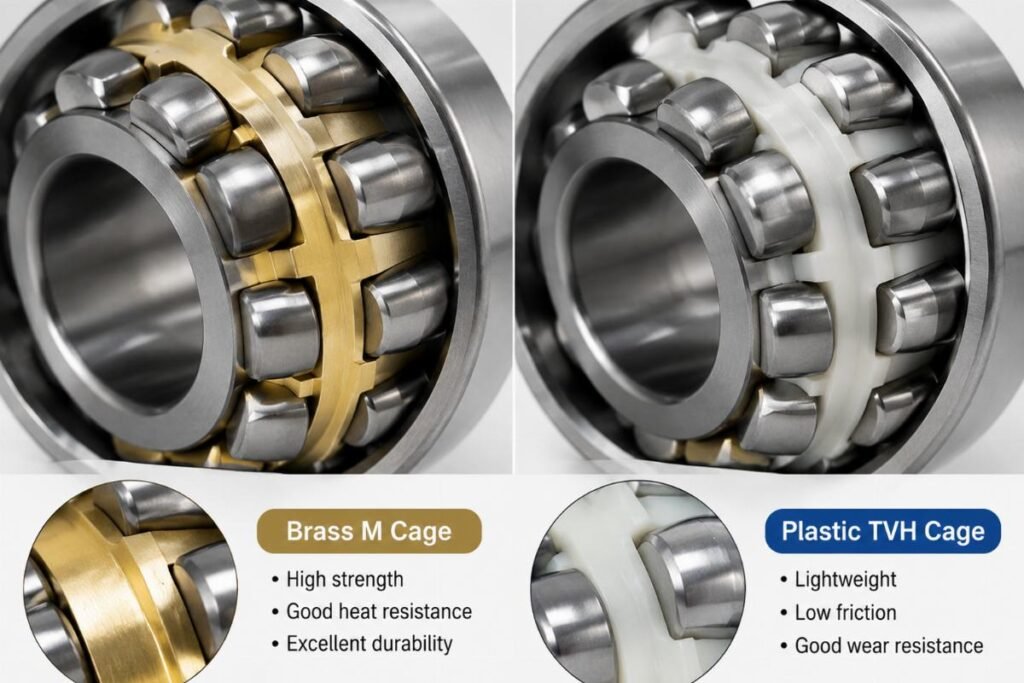
The suffix M stands for a machined brass cage. Brass is robust, resistant to high temperatures, and handles shock loads better than many polymer alternatives. In contrast, TVH denotes a glass-fiber reinforced polyamide cage. While TVH is lighter and cheaper, it has strict temperature limits and can become brittle under heavy shock or chemical exposure. Choosing M over TVH is often the difference between a bearing that lasts years and one that fails in months.
The suffix C3 refers to radial internal clearance greater than normal. Standard clearance (CN) is suitable for most general applications. However, when a bearing operates at high temperatures, the inner ring expands more than the outer ring due to heat transfer from the shaft. Without extra clearance (C3 or C4), this expansion eliminates the running gap, leading to preload, excessive friction, and eventual seizure.
| Suffix | Component | Description | Application Context |
|---|---|---|---|
| E | Internal Design | Reinforced rollers, higher load capacity | Heavy-load, compact designs |
| M | Cage Material | Machined brass cage | High-temp, shock-load, heavy-duty |
| TVH | Cage Material | Glass-fiber reinforced polyamide | General purpose, moderate temp |
| C3 | Clearance | Radial clearance greater than normal | High-temp, fast-running shafts |
| C4 | Clearance | Radial clearance greater than C3 | Very high-temp, extreme conditions |

For US buyers, understanding these distinctions is vital. A FAG suffix reference guide is not just a translation tool; it is a risk management document. When sourcing from a FAG suffix reference for US buyers: wholesale supplier, ensure that the suffixes match the operational reality, not just the catalog default.
How to Match Suffixes to US Industrial Conditions?
Selecting the right suffix requires mapping environmental factors directly to code specifications.
The process of selection should be systematic. Start with the operating temperature, then assess the load type, and finally consider the speed and lubrication conditions. This step-by-step logic ensures that no critical factor is overlooked.
First, evaluate the temperature. If the operating environment exceeds 80°C consistently, standard clearance is risky. For temperatures above 120°C, C3 clearance is mandatory, and C4 may be required for extreme cases. This prevents the inner ring from expanding into the rolling elements, which causes overheating and failure.
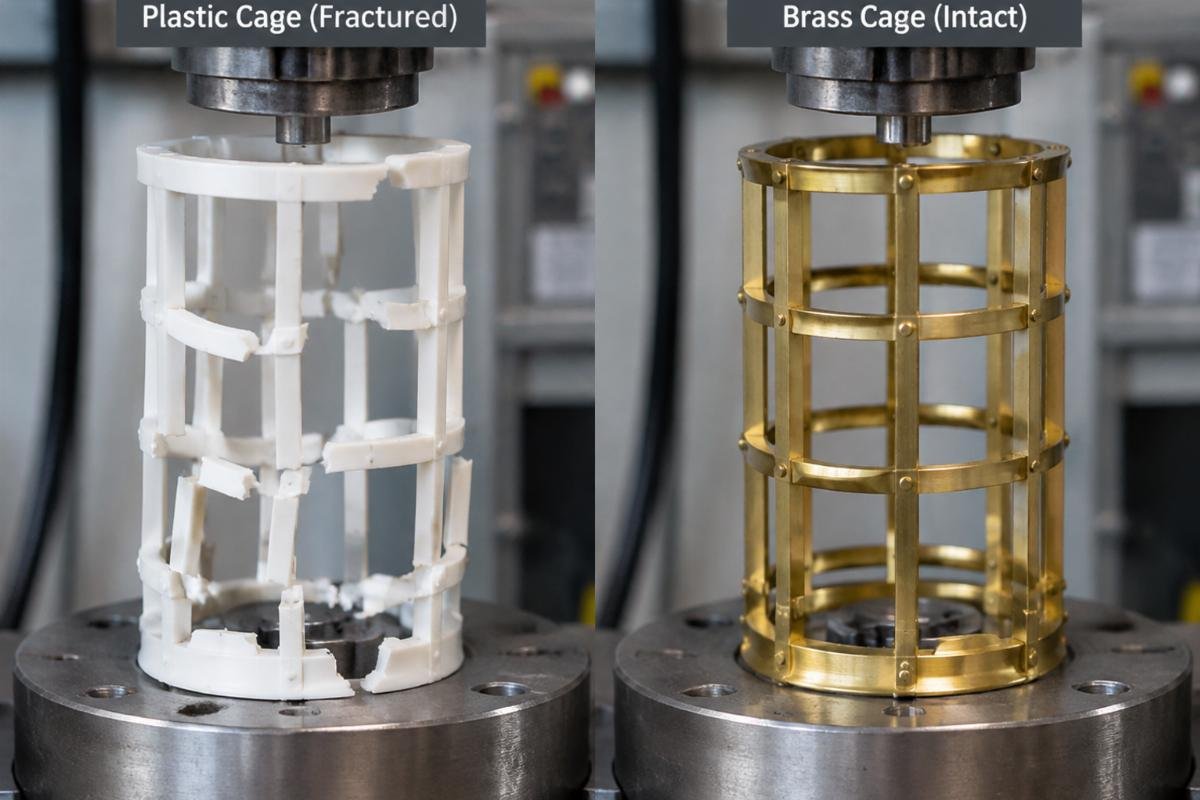
Second, analyze the load. Is it steady or shocking? In mining crushers or steel mill gearboxes, shock loads are common. Here, a brass cage (M) is superior to plastic (TVH). Plastic cages can deform or fracture under sudden impact, while brass maintains its integrity. I once saw a steel mill gearbox where switching from TVH to M cages doubled the service life, simply because the brass could withstand the vibration and shock without degrading.
Third, consider the speed and lubrication. High-speed applications generate internal heat. Even if the ambient temperature is low, the friction within the bearing can raise the internal temperature significantly. In such cases, C3 clearance helps dissipate heat and maintain a proper oil film.
| Operating Condition | Recommended Suffix | Reason |
|---|---|---|
| High Temperature (>120°C) | C3 or C4 | Compensates for thermal expansion of inner ring |
| Heavy Shock Load | M (Brass Cage) | Resists deformation and fracture better than plastic |
| High Speed | C3 | Manages internal heat generation and friction |
| Corrosive Environment | Special Coatings | Prevents rust and surface degradation |
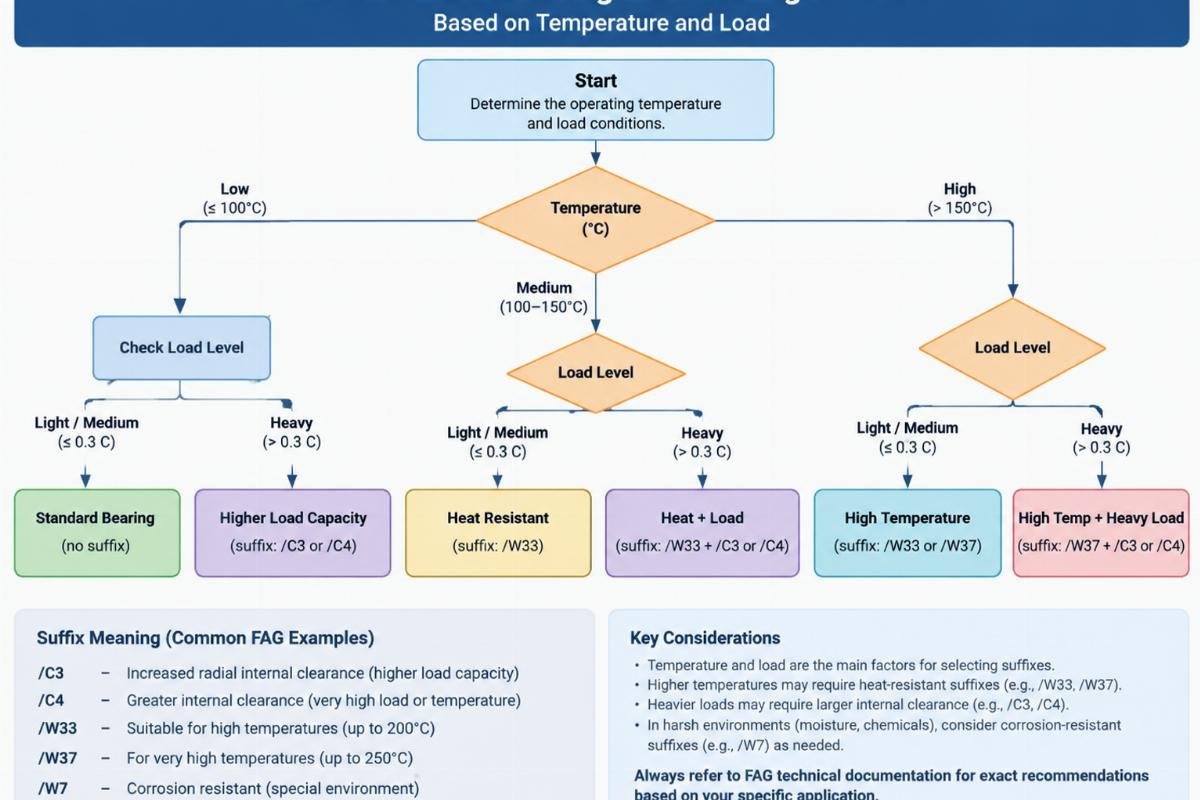
By following this mapping logic, you ensure that the bearing is not just a replacement part but an optimized component for your specific application. When consulting a FAG suffix reference for US buyers: wholesale supplier, use this framework to verify that the proposed part number aligns with your site conditions.
Why Do Wrong Suffixes Cause Catastrophic Failures?
Mismatched suffixes lead to specific failure modes that are often misdiagnosed as manufacturing defects.
When a bearing fails prematurely, the instinct is to blame the quality. However, in many cases, the root cause is a mismatch between the suffix and the application. Two common scenarios illustrate this point clearly.
In a wind pitch drive application, a technician installed bearings with standard clearance (CN) instead of C3. The drive operated in direct sunlight, and the internal friction generated significant heat. As the inner ring expanded, it eliminated the clearance, causing the rolling elements to bind. The resulting friction heat accelerated the process, leading to thermal seizure. The bearing did not fail due to fatigue; it failed because it was choked by its own expansion.
In another case, a mining operation used bearings with TVH plastic cages in a high-vibration crusher. The constant shock loading caused micro-cracks in the plastic cage. Over time, these cracks propagated until the cage fragmented. The loose pieces entered the rolling contact zone, causing severe damage to the races and rollers. Switching to M suffix bearings with brass cages resolved the issue, as brass is far more resilient to shock and vibration.
These failures are not random. They are predictable consequences of ignoring the suffix codes. A plastic cage in a shock-load environment is a ticking time bomb. Standard clearance in a high-heat environment is a recipe for seizure. Understanding these cause-and-effect relationships is crucial for maintaining reliability.
When sourcing from a FAG suffix reference for US buyers: wholesale supplier, ask for technical consultation if you are unsure. A correct suffix selection prevents these catastrophic failures, saving both money and production time.
How to Verify Genuine FAG Suffixes Upon Delivery?
Physical inspection and documentation traceability are the only ways to confirm suffix accuracy.
Receiving the wrong suffix is a common procurement error. To avoid this, you must verify the goods upon delivery. Do not rely solely on the box label; inspect the bearing itself.
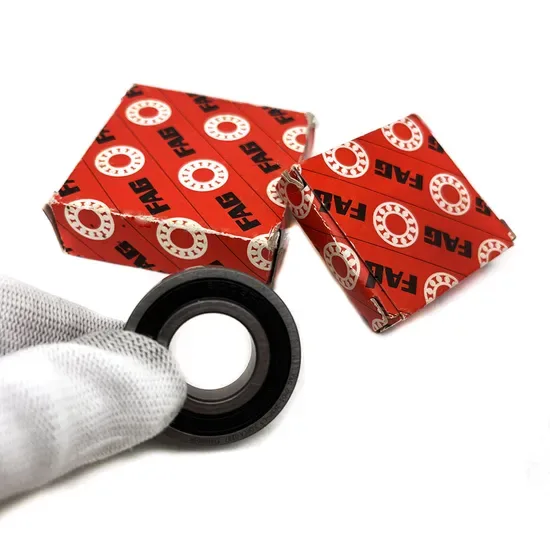
First, check the packaging. Genuine FAG bearings come in sealed, branded packaging with clear part numbers. The suffixes should be printed legibly on the box. Compare this with your purchase order. Any discrepancy, no matter how small, should be flagged immediately.
Second, inspect the bearing marking. The suffixes are often laser-etched or stamped on the outer ring or the cage. For example, an M suffix bearing will have a brass cage that is visibly different from the dark gray or black appearance of a TVH plastic cage. You can also feel the difference; brass is heavier and has a distinct metallic sound when tapped lightly, whereas plastic sounds duller.
Third, request traceability documents. A reputable supplier will provide certificates of conformity or test reports that link the batch number to the manufacturing data. These documents should confirm the internal clearance and cage material. If a supplier cannot provide this documentation, be cautious. Traceability is not just paperwork; it is proof of authenticity.
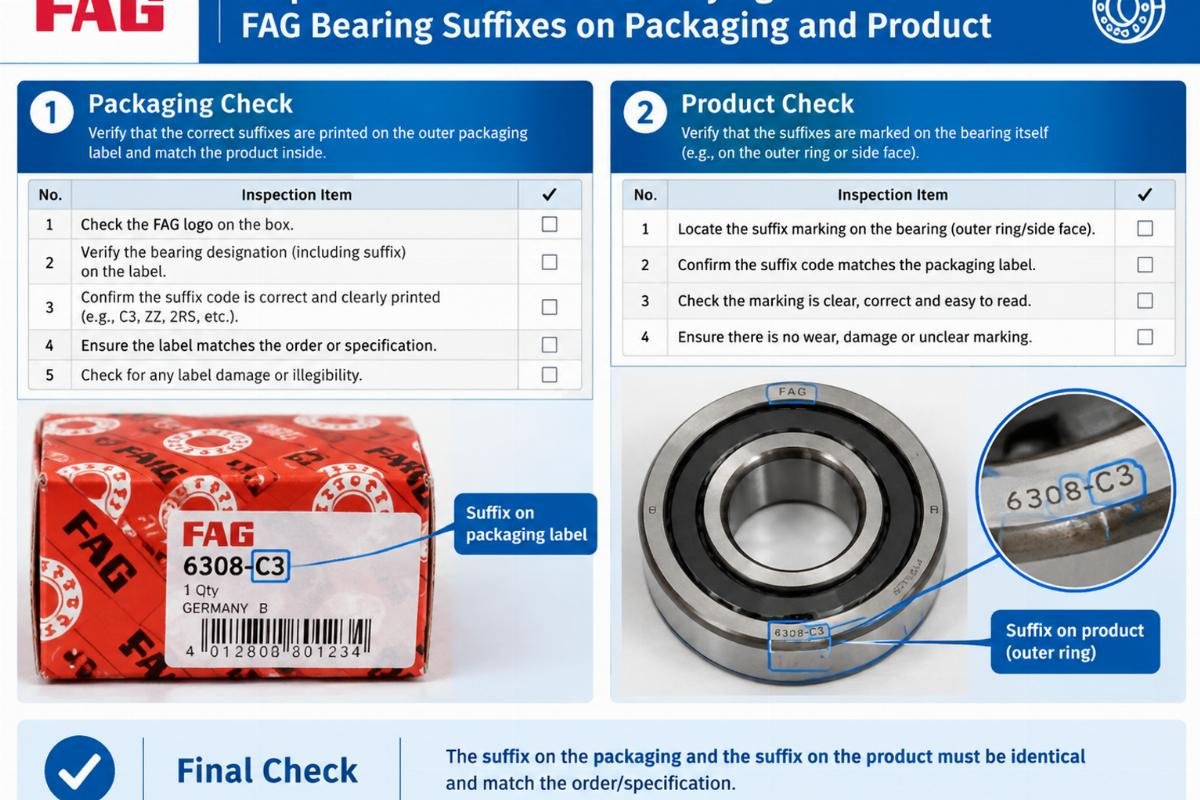
We maintain a spot inventory of genuine FAG bearings with full traceability docs. This allows us to cross-check every shipment against our records, ensuring that the suffixes match the order exactly. When working with a FAG suffix reference for US buyers: wholesale supplier, demand this level of transparency. It protects you from counterfeit parts and incorrect substitutions.
Conclusion
Decoding FAG suffixes is not optional; it is essential for reliable industrial operation.
The letters E, M, and C3 are not just codes; they are engineering safeguards. Matching them to your operating conditions prevents premature failures and extends equipment life. Always verify suffixes upon delivery and seek technical guidance when in doubt.
For those seeking accurate procurement, a trusted FAG suffix reference for US buyers: wholesale supplier provides not just products but the expertise to select the right ones. Ensure your supply chain supports this precision, and your machinery will reward you with longevity and reliability.