

Cheap bearings do not save money; they destroy margins.
Sourcing FAG bearings without neutral third-party inspections exposes US buyers to severe counterfeit risks, causing massive financial losses from port rejections. The only way to mitigate this risk is through pre-shipment material testing and traceable supply channels that verify cage composition and steel integrity before goods leave the origin country.
I still remember the silence in the warehouse after the call from Los Angeles. It was early in my career, handling procurement for a North American client who needed a batch of tapered roller bearings. We found a source offering prices significantly below the market average. To secure the deal, we skipped the neutral inspection, trusting the supplier’s printed certificates. When the container arrived at the port, the client’s quality team performed a routine check before installation. The cage material was wrong. It was not the standard brass or reinforced polymer specified by the manufacturer. The entire shipment was rejected. The cost of return freight, demurrage, and warehousing fees wiped out the profit margin of that quarter and nearly bankrupted the operation. That loss was not due to bad luck; it was due to a lack of verification.

This experience shifted my entire approach to sourcing. In the global bearing market, especially for premium brands like FAG, the visual difference between a genuine part and a high-quality counterfeit is often invisible to the naked eye. The deception lies in the metallurgy. For US industrial distributors and OEMs, understanding the mechanics of these failures is not just technical due diligence; it is financial survival.
What Are the Hidden Costs of Fake FAG Bearings?
Port rejections and warehousing fees far exceed initial savings.
Many buyers calculate the cost of bearings based solely on the unit price. This is a fundamental error. The true cost includes the risk of supply chain disruption. When counterfeit goods are identified at US ports, the financial impact extends well beyond the value of the goods themselves.
Consider the logistics. A rejected container does not simply vanish. It incurs daily demurrage charges while customs determines its fate. It requires specialized handling for return or destruction. For a US distributor, this means delayed projects for end-users, potential penalty clauses in service contracts, and the administrative burden of resolving the dispute.
A Middle East steel mill operator once shared a similar story. They sourced what they believed were genuine spherical roller bearings for a critical crusher application. The parts looked correct, and the packaging was convincing. However, within weeks of operation, the bearings failed due to premature fatigue. The investigation revealed that the steel purity was substandard, containing higher levels of non-metallic inclusions than allowed by international standards. The cost of the unplanned downtime, including lost production and emergency replacement logistics, was several times the initial purchase price.
The hidden costs are not just financial; they are reputational. For an OEM, delivering machinery with faulty components can damage long-term client relationships. For a distributor, it erodes trust in their ability to vet suppliers. This is why the focus must shift from price negotiation to risk mitigation.

How to Compare Sourcing Channels via Neutral Checks?
Matrix comparing non-regulated vs. traceable suppliers on inspection depth.
Not all suppliers operate with the same level of transparency. When evaluating potential partners, it is essential to look beyond their marketing claims and assess their verification processes. The following comparison highlights the differences between non-regulated channels and those that prioritize traceability and neutral inspection.
| Feature | Non-Regulated Channel | Traceable Supplier with Neutral Checks |
|---|---|---|
| Documentation | Self-issued certificates, easily forged | Verifiable factory test reports, batch-specific traceability |
| Inspection Level | Visual check only, no material testing | Pre-shipment material spectroscopy and dimensional verification |
| Cage Verification | Not performed, assumed correct | Mandatory cage composition analysis |
| Risk Profile | High vulnerability to counterfeits | Robust protection against material fraud |
| Customs Clearance | Prone to delays if questioned | Smooth processing with complete compliance docs |
A US buyer once attempted to source angular contact ball bearings from a new vendor who claimed to have direct factory access. The supplier provided documents that looked authentic. However, when the buyer requested a neutral third-party inspection report focusing on material composition, the supplier refused, citing “proprietary information.” This refusal was a red flag. Genuine manufacturers welcome verification because their products meet strict standards. Counterfeiters avoid it because their materials cannot pass scientific scrutiny.
By choosing a channel that mandates neutral checks, buyers gain an objective layer of security. This is not about distrusting the supplier; it is about validating the product. In our operations, we enforce strict traceability protocols. Every batch of FAG bearings undergoes verification to ensure it matches the manufacturer’s specifications. This process eliminates the guesswork and protects the buyer from the hidden costs of fraud.
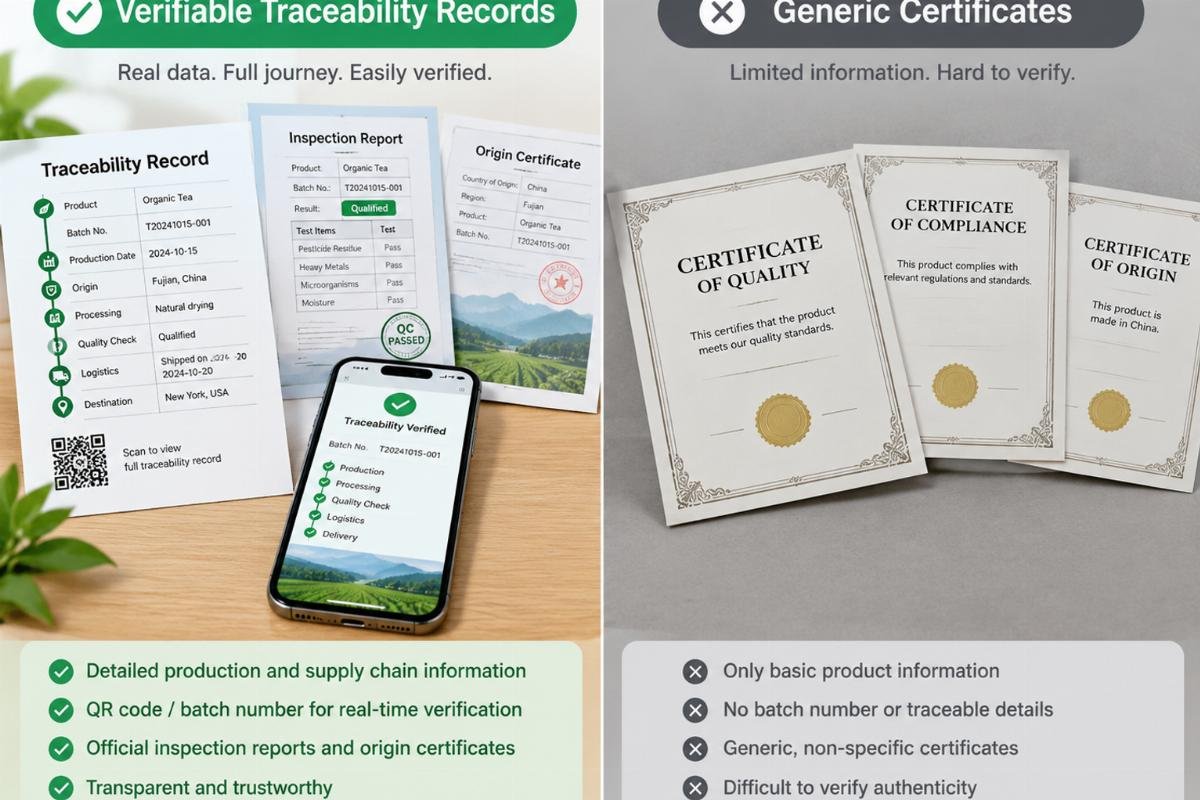
Why Do Supplier Certificates Fail at US Ports?
Forged docs pass visual checks but fail neutral material spectroscopy.
It is a common misconception that a certificate of authenticity guarantees the product is genuine. In reality, printing a document is trivial. Replicating the metallurgical properties of premium bearing steel is not. US Customs and Border Protection, along with private quality inspectors, increasingly rely on scientific testing rather than paper trails.
Supplier certificates often fail because they are detached from the physical product. A certificate may state that a batch of deep groove ball bearings meets specific hardness and purity standards. However, if the actual items in the box are made from inferior steel, the certificate is meaningless.
Visual inspections are equally unreliable. Counterfeiters have become sophisticated in replicating packaging, laser etching, and even the appearance of the bearing rings. They may use recycled or low-grade steel that looks identical to high-purity vacuum-degassed steel. The difference only becomes apparent under stress or through chemical analysis.
For example, a European wind farm operator discovered that a batch of cylindrical roller bearings had certificates from a reputable brand. However, during routine maintenance, technicians noticed unusual wear patterns. Material testing revealed that the steel lacked the necessary cleanliness, leading to rapid crack propagation. The certificates were perfect; the bearings were not.
This discrepancy is why neutral material checks are essential. Spectroscopy can detect the exact elemental composition of the steel, revealing impurities that cause premature failure. It can also verify the material of the cage, which is often a target for cost-cutting in counterfeit production. Relying solely on paper documentation is a gamble that few can afford to lose.

How to Implement Pre-shipment Material Testing?
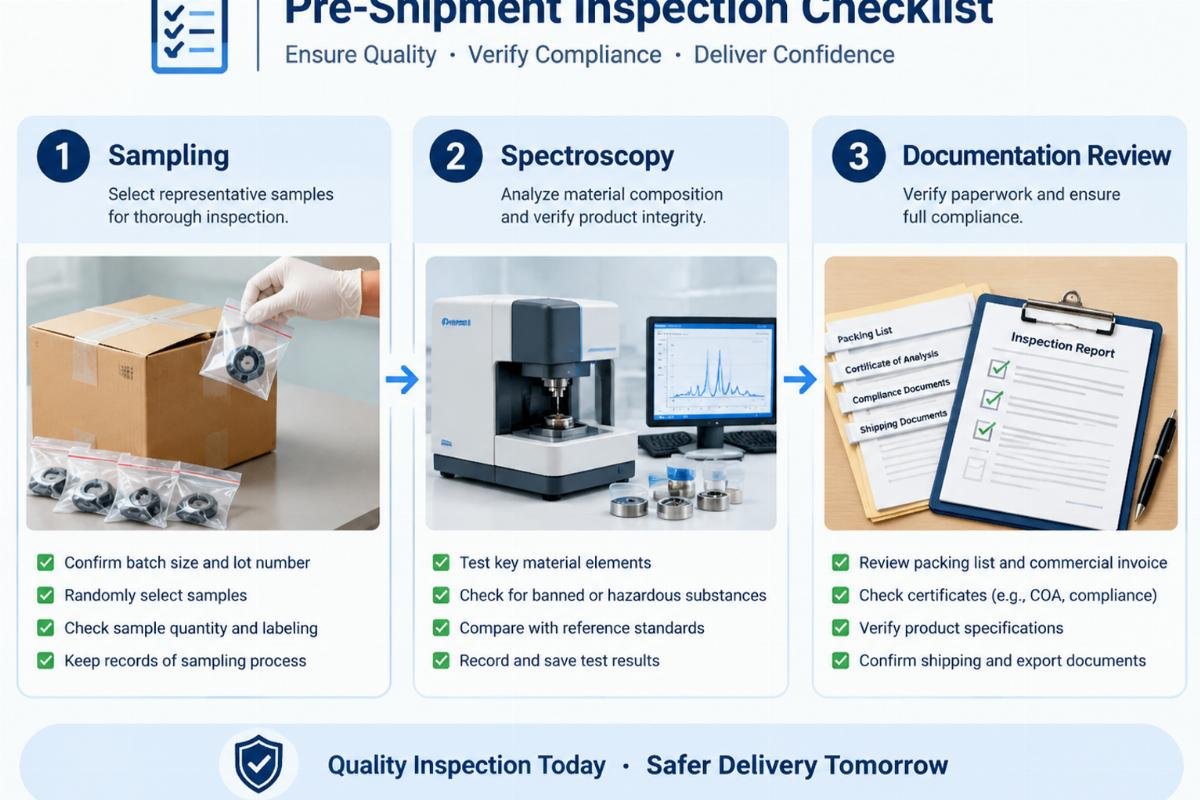
Mandate third-party cage composition analysis before loading.
Preventing counterfeit issues requires action before the goods are shipped. Waiting until arrival at the US port is too late. The most effective strategy is to integrate neutral material testing into the procurement process at the origin.
The first step is to define the testing parameters. For FAG bearings, this includes verifying the steel grade and the cage material. Tapered roller bearings, for instance, often use brass or polymer cages. Counterfeit versions may use cheaper alloys or plastics that cannot withstand the operating temperatures and loads.
The second step is to engage an independent third-party inspection agency. This agency should have no financial interest in the transaction. Their role is to take random samples from the batch and perform spectroscopy and dimensional checks. The results should be compared against the manufacturer’s official specifications.
In our supply chain, we mandate this process for all high-value orders. Before any container is loaded, our quality team ensures that the material composition matches the required standards. This proactive approach prevents the shock of port rejections. It also provides buyers with documented proof of quality, which can be used for internal audits and customer assurance.
A practical example involves a mining equipment manufacturer in Latin America. They required a large order of spherical roller bearings for heavy-duty crushers. By implementing pre-shipment material testing, they identified a batch where the cage material did not meet the specified toughness requirements. The issue was resolved before shipping, saving them from a potential catastrophic failure in the field.
This method transforms quality control from a reactive measure to a preventive strategy. It ensures that every bearing delivered is not just visually correct, but materially sound.
Conclusion
Verification is cheaper than rejection.
The risk of counterfeit FAG bearings in the US market is real and costly. Relying on low prices and supplier certificates is a dangerous strategy that often leads to port rejections and operational downtime. By implementing neutral third-party inspections and demanding pre-shipment material testing, buyers can secure their supply chain. Traceability and scientific verification are not optional extras; they are essential tools for protecting profit margins and ensuring equipment reliability.



