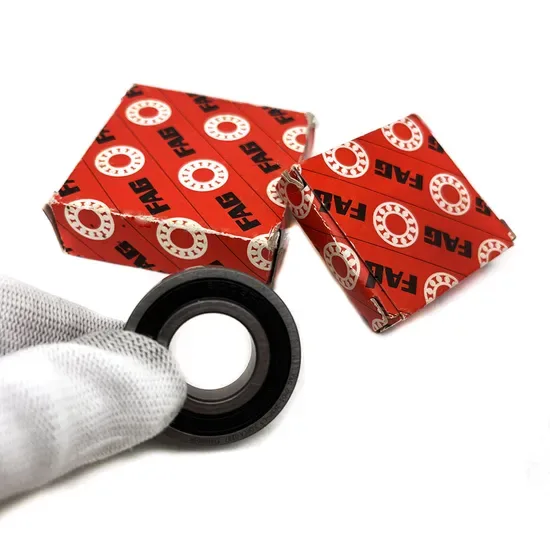
Matching outer dimensions is not enough to replace obsolete US bearings.
Sourcing genuine FAG replacements for obsolete US equipment requires verifying internal clearance, cage material strength, and heat treatment depth rather than relying solely on dimensional cross-references. Premature failure in discontinued machinery often stems from mismatched dynamic parameters that standard catalogs do not highlight.
I still remember the smell of burnt oil in a remote oilfield site in Saudi Arabia. A client had replaced a seized main shaft bearing on an old American pump jack with a cheap alternative that matched the bore and outer diameter perfectly. Within a week, the unit locked up completely. The replacement had standard clearance, but the original application required a specific C3 clearance to handle thermal expansion under heavy load. The cage material was also too weak for the high-impact vibrations typical of that legacy design. That incident shifted my focus entirely to the technical nuances of obsolete bearing cross reference work. It is not just about finding a part that fits; it is about ensuring the internal dynamics match the operational stress of aging infrastructure.
Understanding why these failures happen is the first step toward reliable sourcing. Many distributors assume that if the numbers align, the performance will follow. This assumption ignores the metallurgical and engineering changes that have occurred over decades. When you source discontinued US bearing replacement units, you are bridging two different eras of manufacturing standards. The original ABMA specs may differ significantly from current ISO norms used by European manufacturers like FAG. Without recalculating these variables, even a genuine brand product can fail prematurely if the wrong variant is selected.
Why Do Obsolete US Bearings Fail Prematurely?
Dimensional matching ignores critical internal dynamics and material fatigue limits.
When US manufacturers discontinued certain lines, they often left behind applications with unique operational requirements. A common mistake is assuming that a standard deep-groove ball bearing can substitute for a specialized unit designed for heavy misalignment or shock loads. The failure usually occurs in three areas: internal clearance, cage integrity, and heat treatment.
Internal clearance is the most frequent oversight. Older US machinery often operated with looser tolerances to accommodate shaft deflection and thermal growth. Modern standard bearings may have tighter clearances that lead to preload conditions when the machine heats up. This generates excessive friction and rapid temperature rise.
Cage material is another hidden variable. Legacy designs sometimes used brass or reinforced polymer cages suited for specific RPM ranges. Substituting these with standard steel cages can cause resonance issues or fatigue cracking under variable loads. I once saw a conveyor system in a steel mill where the replacement bearing cage disintegrated after a few months because the material could not handle the start-stop torque spikes inherent in that old US design.
Heat treatment depth affects the bearing’s ability to resist subsurface fatigue. If the replacement does not match the case-hardening depth of the original, spalling will occur much faster. This is particularly true in mining crushers where impact loads are severe. Using a standard industrial grade instead of a specially treated variant reduces lifespan noticeably.
| Failure Mode | Common Cause in Obsolete Replacement | Technical Requirement |
|---|---|---|
| Seizure | Incorrect internal clearance (C0 vs C3/C4) | Verify thermal expansion needs |
| Cage Breakage | Mismatched material strength for RPM/load | Analyze cage dynamics and material type |
| Rapid Spalling | Insufficient heat treatment depth | Match case-hardening specs to load profile |
| Misalignment Wear | Rigid design replacing flexible original | Use spherical or self-aligning variants where needed |
These factors explain why a simple part number swap often leads to downtime. The solution lies in treating each replacement as a re-engineering task rather than a direct purchase. When evaluating FAG equivalent for old US machinery, you must look beyond the catalog dimensions.
How to Map US Obsolete Codes to FAG Equivalents?
Use official cross-reference tables but verify internal clearance and load ratings manually.
Mapping obsolete codes is not a straightforward database lookup. Many US part numbers were proprietary or followed legacy ABMA standards that do not have direct one-to-one equivalents in modern ISO-based systems. The process requires a multi-step verification approach to ensure the discontinued US bearing replacement is technically viable.
Start with the dimensional data. Record the bore, outside diameter, and width precisely. Then, identify the bearing type. Is it a spherical roller, cylindrical roller, or tapered roller? Each type has specific load-carrying characteristics. Once the basic type is identified, consult the manufacturer’s cross-reference guide. However, treat this as a starting point, not a final answer.
The next step is to check the suffixes. Old US bearings often had suffixes indicating special features like seals, shields, or internal clearances. These may not translate directly. For example, a US-specific seal design might require a different FAG sealing solution to maintain lubrication integrity.
Load ratings must be recalculated. The dynamic and static load capacities of the original bearing should be compared with the proposed replacement. If the replacement has lower ratings, it will fail under the same operating conditions. In some cases, upgrading to a larger size or a higher-capacity series is necessary to compensate for wear in the housing or shaft.
I worked with a distributor in Dubai who needed to replace a batch of tapered roller bearings for a fleet of older trucks. The cross-reference suggested a standard metric size, but the original imperial design had a higher load rating due to its geometry. By switching to a heavier-series FAG equivalent, we ensured the new bearings could handle the road shocks without premature fatigue. This careful mapping prevents the “fit but fail” scenario.
Accurate mapping ensures that the FAG replacements for obsolete US equipment meet the mechanical demands of the application. It transforms a risky guess into a calculated engineering decision.
What Critical Parameters Must Be Recalculated?
Heat treatment depth, cage strength, and clearance must align with actual site conditions.
Recalculating parameters is essential when the operating environment has changed or when the original specifications are unclear. This step distinguishes a professional supplier from a simple parts trader. For obsolete bearing cross reference projects, three parameters demand close attention.
First, assess the internal clearance. Determine if the application involves high temperatures or significant shaft deflection. If so, a C3 or C4 clearance is likely required. Standard C0 clearance may cause binding. Measure the existing shaft and housing tolerances to confirm if they have worn out of spec. If the housing is elongated, a spherical roller bearing with a wider tolerance range might be a better choice than a rigid cylindrical type.
Second, evaluate cage strength. High-vibration environments, such as vibrating screens or crushers, require robust cages. Brass cages are good for moderate speeds, but steel or reinforced polymer cages may be needed for high-impact scenarios. Check the RPM of the application. If the speed is near the limiting speed of the bearing, a stronger cage design is critical to prevent centrifugal failure.
Third, consider heat treatment and material quality. For heavy-load applications, ensure the replacement bearing uses high-purity steel with controlled inclusion levels. This improves fatigue life significantly. If the original bearing failed due to spalling, verify that the replacement has adequate case-hardening depth to resist subsurface cracks.
A mining operator in West Africa faced repeated failures in their gyratory crushers. The original US bearings were no longer available. By analyzing the failure patterns, we determined that the standard replacements lacked the necessary surface hardness for the abrasive environment. Switching to a FAG variant with enhanced heat treatment extended the service life meaningfully. This adjustment was only possible because we recalculated the material requirements based on the specific wear mechanisms observed.
These recalculations ensure that the FAG equivalent for old US machinery is not just a physical fit but a functional upgrade. It addresses the root causes of previous failures rather than just replacing the component.
How to Verify Authenticity and Avoid Counterfeits?
Check traceability docs, packaging, and supplier ISO compliance rigorously.
The market for obsolete parts is rife with counterfeits. Fake bearings may look identical but lack the metallurgical quality and precision of genuine products. When sourcing discontinued US bearing replacement units, verifying authenticity is non-negotiable. Counterfeits often fail catastrophically, causing secondary damage to expensive machinery.
Start by requesting full traceability documentation. Genuine bearings come with certificates of conformity that link the batch to the manufacturing facility. Check the part number, batch code, and production date. Verify these details with the manufacturer if possible. A reputable supplier will provide these documents without hesitation.
Inspect the packaging carefully. Authentic products have high-quality packaging with clear printing, holograms, and security labels. Look for signs of tampering or poor print quality. The bearing itself should have crisp, laser-etched markings. Blurry or poorly aligned logos are red flags.
Evaluate the supplier’s credentials. Ensure they are ISO-compliant and have a proven track record in supplying genuine brands. Ask for references from other clients in similar industries. A professional supplier will have established relationships with manufacturers and can verify the origin of their stock.
I once encountered a batch of bearings that looked perfect but had inconsistent grease fill levels. Upon testing, the grease lacked the necessary additives for high-temperature stability. This was a clear sign of a counterfeit product. By working with a verified supplier who provided full traceability, we avoided installing these faulty units. This diligence protects your operation from unplanned downtime and safety hazards.
Verifying authenticity ensures that your FAG replacements for obsolete US equipment deliver the expected performance and reliability. It is a critical step in maintaining operational integrity.
Conclusion
Precision in parameter matching prevents costly downtime in legacy systems.
Replacing obsolete US bearings with FAG equivalents demands more than dimensional accuracy. It requires a deep understanding of internal clearance, cage dynamics, and material properties. By recalculating these critical parameters and verifying authenticity, you ensure reliable performance for aging machinery. This approach minimizes risk and extends the operational life of your equipment.