Most buyers assume nylon cages are universally heat-resistant, but localized friction can exceed material limits causing grease bleed.
Selecting the right FAG 3307-B-2RSR-TVH specs requires more than matching bore and outer diameter; it demands verifying cage thermal limits and sealing integrity to prevent premature failure in high-load applications. The core dimensions define the physical fit, but the dynamic load ratings and polyamide cage properties dictate the operational lifespan. Ignoring the interaction between seal lip pressure and shaft tolerance often leads to rapid contamination ingress or excessive heat generation, regardless of the bearing brand.
Understanding these technical nuances separates a reliable replacement from a recurring maintenance headache. When sourcing for industrial distribution or heavy equipment OEMs, the focus must shift from simple part number matching to application-specific validation. This approach ensures that the FAG 3307-B-2RSR-TVH specs align with the actual operating conditions, whether in high-speed machine tools or heavy-duty pump assemblies.
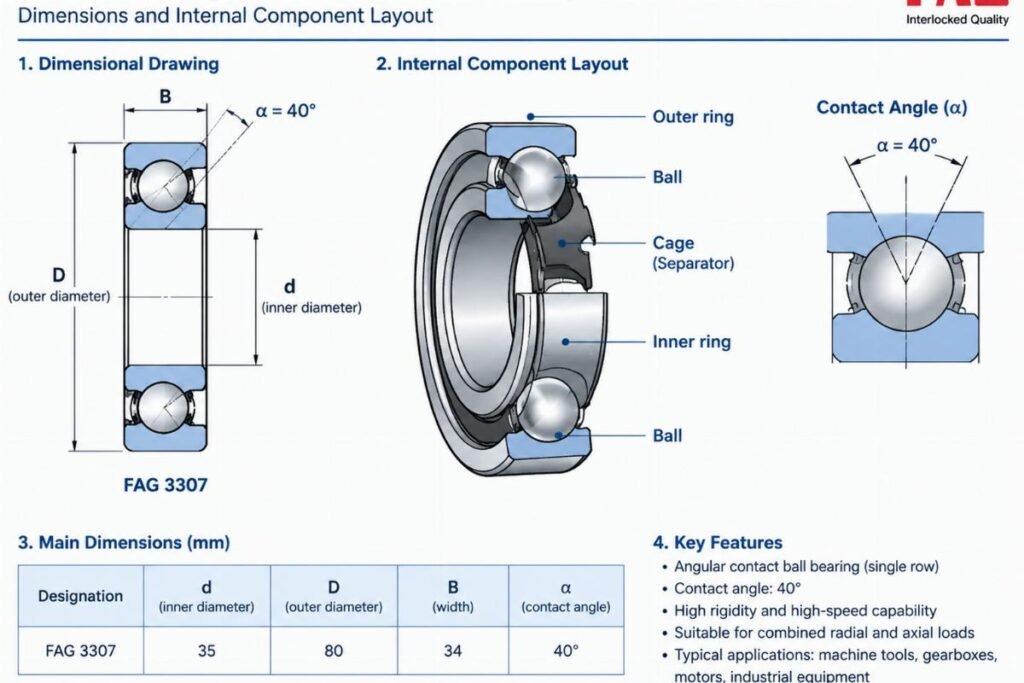
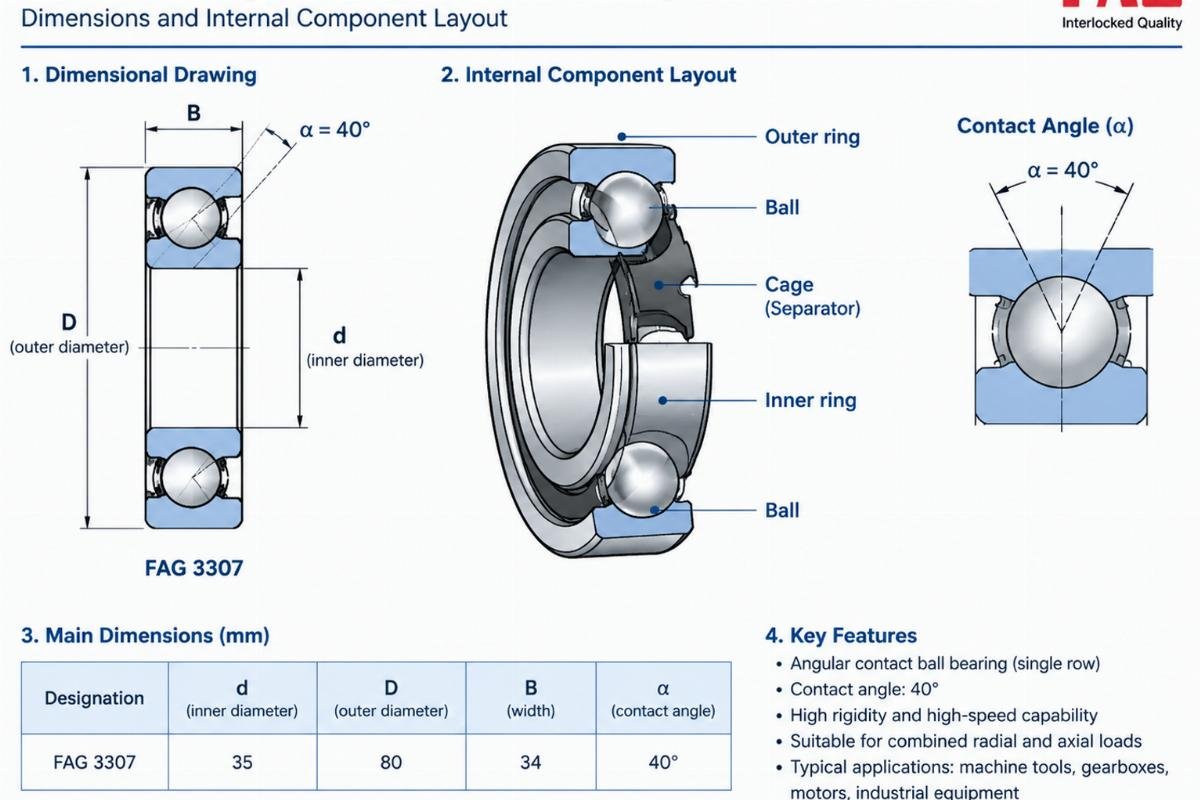
What Are the Core Dimensions of FAG 3307-B-2RSR-TVH?
Exact bore, outer diameter, and width define the physical fit, but ISO tolerances determine the functional clearance.
The fundamental geometry of the FAG 3307 angular contact ball bearing dimensions follows strict international standards. While the nominal sizes are fixed, the actual mating behavior depends on the precision class and internal clearance. For most industrial applications, the standard P0 precision class suffices, but high-speed spindles may require tighter tolerances to minimize runout.
| Parameter | Specification | Note |
|---|---|---|
| Bore Diameter | Standard Metric | Defines shaft fit |
| Outer Diameter | Standard Metric | Defines housing fit |
| Width | Standard Metric | Defines axial space |
| Precision Class | P0 (Normal) | Common for general industry |
| Internal Clearance | C3 or Normal | Depends on thermal expansion |
A European wind farm operator once replaced a series of gearbox bearings using only the basic part number. The new units fit physically but failed within weeks due to excessive preload caused by ignoring the internal clearance code. The original design specified a specific clearance to accommodate thermal expansion of the housing. By switching to a standard clearance without verification, the bearing experienced high operating temperatures and early fatigue. This case highlights why checking the full FAG 3307-B-2RSR-TVH specs is critical before procurement.
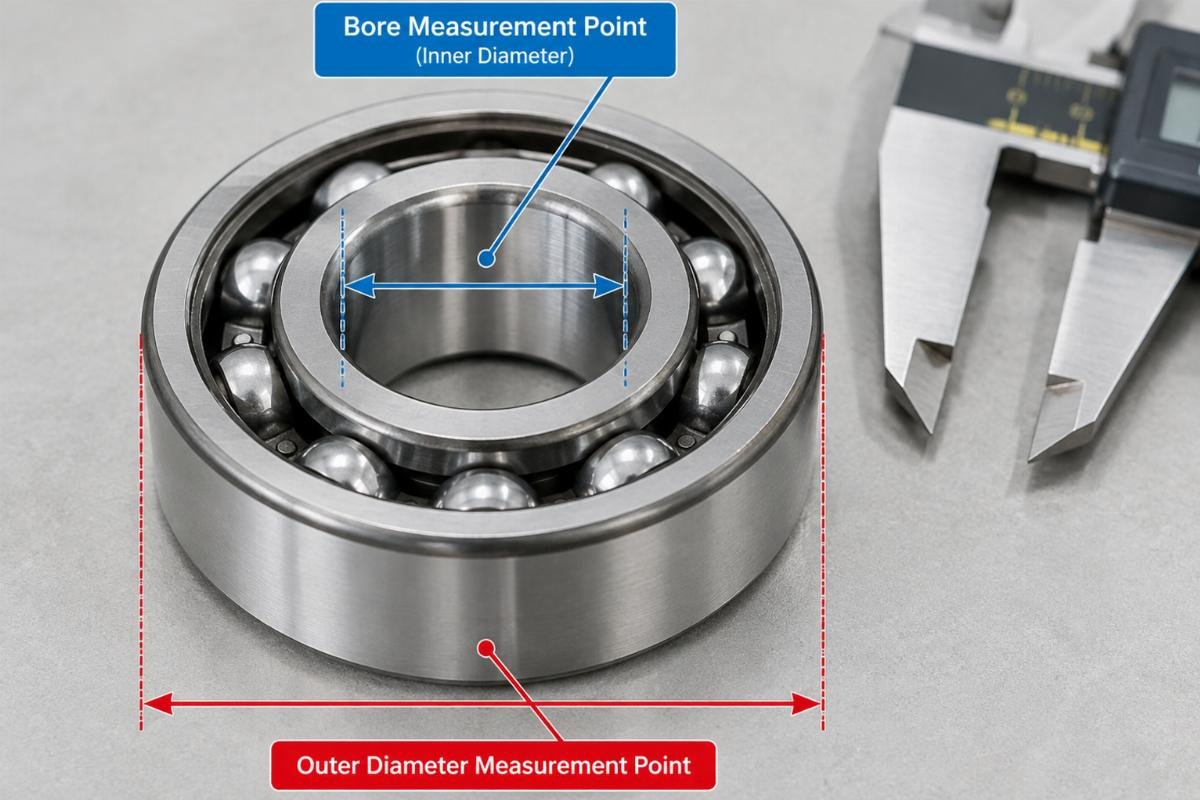
When evaluating replacements, always confirm the suffix codes. The “B” indicates the contact angle, which affects axial load capacity. The “2RSR” denotes double-sided contact seals, crucial for contaminated environments. The “TVH” specifies the glass-fiber reinforced polyamide cage. Each element contributes to the overall performance, and omitting any detail can lead to mismatched performance expectations.
How Do Load Ratings Dictate Application Limits?
Dynamic and static capacities determine lifespan under radial and axial loads, not just the physical size.
The 3307-B-2RSR-TVH load rating is the primary indicator of how much stress the bearing can withstand before fatigue sets in. Dynamic load rating predicts the life expectancy under rotating conditions, while static load rating defines the maximum load the bearing can support when stationary. Misinterpreting these values often results in overloading the bearing, leading to brinelling or raceway deformation.
In a heavy-load pump replacement scenario, a Middle East steel mill faced repeated failures. The initial analysis focused on radial loads, but the actual failure mode was axial overload. The angular contact design of the FAG 3307-B-2RSR-TVH specs allows it to handle combined loads, but the ratio matters. If the axial component exceeds the design limit, the contact angle shifts, causing edge loading on the raceways.
| Load Type | Impact on Bearing | Mitigation Strategy |
|---|---|---|
| Radial Load | Primary stress source | Ensure proper housing support |
| Axial Load | Critical for angular contact | Verify contact angle suitability |
| Combined Load | Complex stress state | Calculate equivalent dynamic load |
| Static Load | Risk of permanent deformation | Check static safety factor |
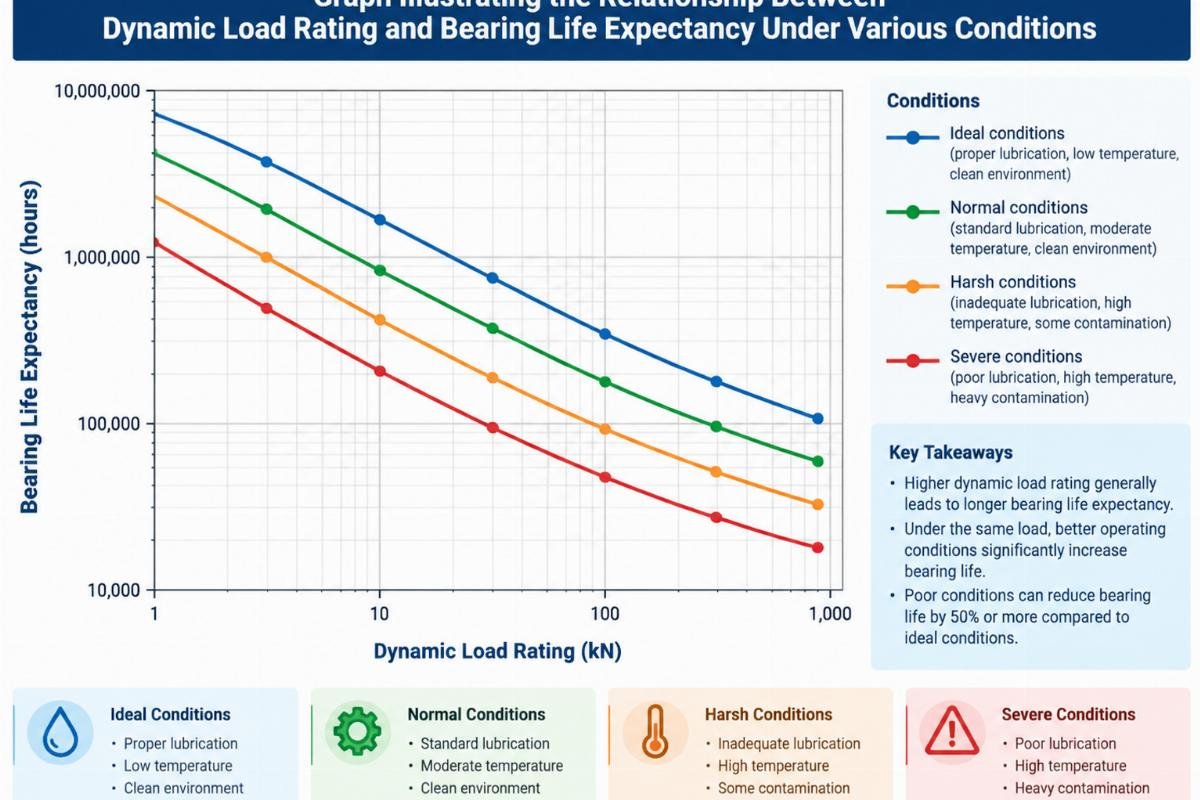
A common mistake is assuming that a higher dynamic load rating automatically means a longer life. In reality, lubrication quality and contamination levels play a significant role. A clean, well-lubricated bearing with a moderate load rating can outlast a heavily loaded one in a dirty environment. Therefore, when reviewing the 3307-B-2RSR-TVH load rating, consider the entire system context, including seal effectiveness and maintenance intervals.
For distributors, providing customers with load calculation support adds significant value. Instead of just selling a part, offering guidance on how to interpret the FAG 3307-B-2RSR-TVH specs helps prevent misapplication. This technical engagement builds trust and reduces return rates due to premature failure.
Why Does the TVH Nylon Cage Matter for Temperature?
Material limits dictate maximum operating speeds and thermal thresholds, not just ambient temperature.
The “TVH” suffix in FAG 3307-B-2RSR-TVH specs refers to a glass-fiber reinforced polyamide 66 cage. This material offers low weight and good sliding properties, but it has strict thermal limits. Many assume nylon cages are universally heat-resistant, but localized friction can exceed material limits causing grease bleed and cage deformation.
During a German trade show, a local buyer questioned the high-temperature performance of these bearings. The discussion revealed that while the ambient temperature was within limits, the internal friction generated by high speeds raised the cage temperature significantly. Without proper heat dissipation, the polyamide can soften, leading to loss of dimensional stability and eventual failure.
| Factor | Impact on Cage | Operational Limit |
|---|---|---|
| Ambient Temperature | Baseline thermal stress | Must be below material limit |
| Friction Heat | Localized temperature rise | Depends on speed and load |
| Lubrication | Cooling and wear reduction | Critical for heat dissipation |
| Speed | Centrifugal forces | Affects cage stability |
A precision machine tool setup requires careful attention to these thermal dynamics. The pairing clearance and axial rigidity must be adjusted to micrometer-level precision to minimize friction. If the preload is too high, the resulting heat can degrade the TVH cage faster than expected. Therefore, understanding the FAG 3307 nylon cage temperature limit is essential for high-speed applications.
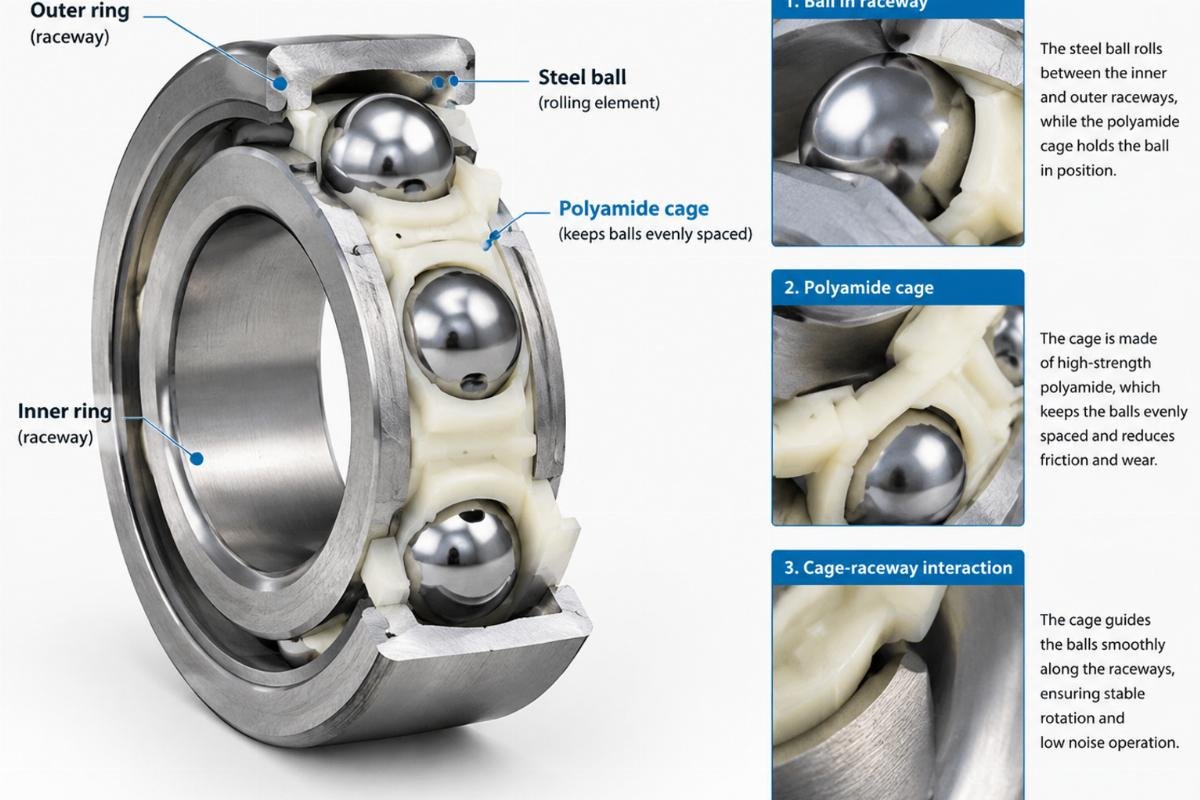
For MRO buyers, this means checking not just the part number but the operating conditions. If the application involves high speeds or poor cooling, alternative cage materials like steel or bronze might be necessary. However, for most general industrial uses, the TVH cage provides an excellent balance of performance and cost, provided the thermal limits are respected.
How to Verify 2RSR Sealing Performance?
Contact seal design prevents contamination but requires precise mating surfaces to function correctly.
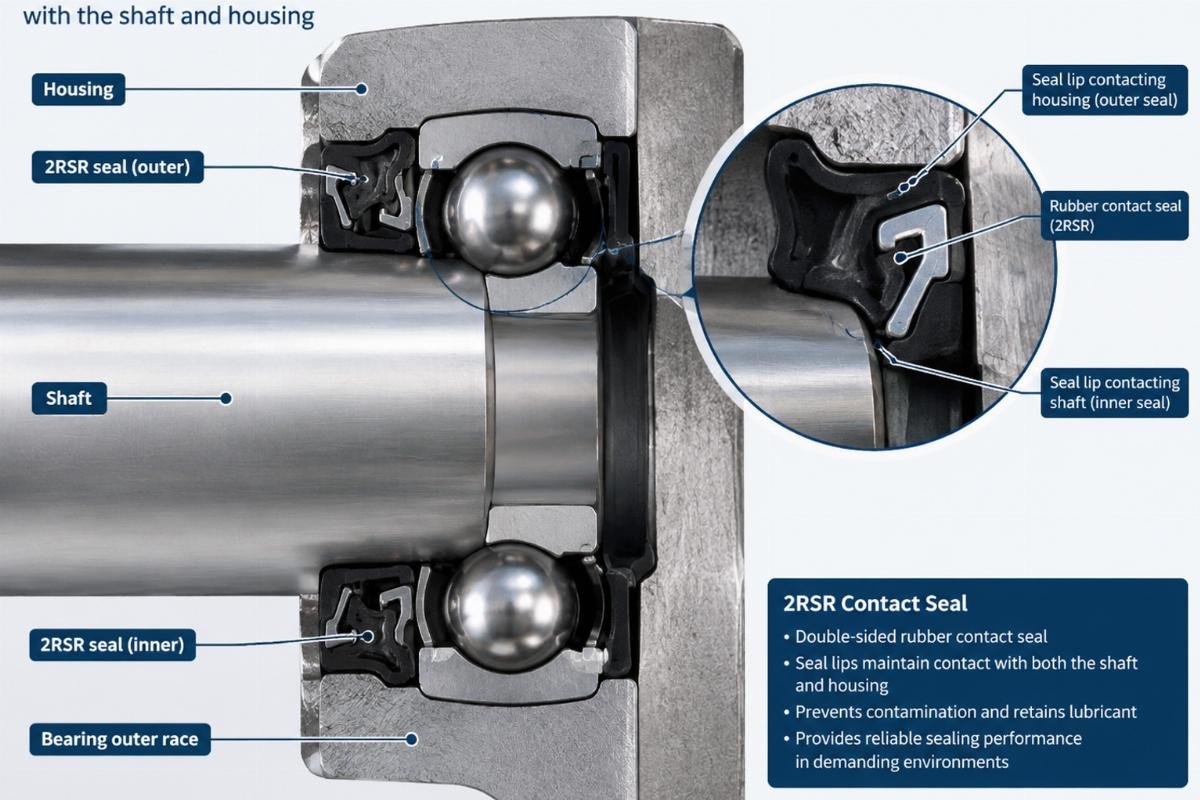
The “2RSR” designation indicates double-sided contact seals, which are vital for protecting the internal components from dust, moisture, and other contaminants. Buyers often think 2RSR seals are maintenance-free forever, but improper shaft tolerances can compromise seal lips prematurely.
In a mining application, a batch of bearings failed due to seal damage. The investigation revealed that the shaft surface finish was too rough, causing excessive wear on the seal lips. This allowed contaminants to enter the bearing, leading to rapid grease contamination and failure. The FAG 3307-B-2RSR-TVH specs include recommendations for shaft and housing fits, which must be followed to ensure seal longevity.
| Seal Aspect | Requirement | Consequence of Failure |
|---|---|---|
| Shaft Finish | Smooth surface | Premature seal wear |
| Shaft Tolerance | Precise diameter | Seal lip distortion |
| Installation | Careful handling | Seal damage during mounting |
| Environment | Contaminant level | Ingress protection failure |
Verifying sealing performance involves more than visual inspection. It requires ensuring that the mating surfaces meet the specified roughness and tolerance values. For global distributors, providing technical datasheets that highlight these requirements helps customers avoid installation errors. This proactive approach reduces warranty claims and enhances customer satisfaction.
When sourcing FAG 3307-B-2RSR-TVH specs, look for suppliers who provide full traceability and quality control reports. Genuine products come with documented verification of material and dimensional accuracy, ensuring that the seals perform as designed. This level of transparency is crucial for maintaining reliability in harsh industrial environments.
Conclusion
Mastering FAG 3307-B-2RSR-TVH specs goes beyond basic dimensions; verifying cage thermal limits and sealing integrity is critical for preventing premature failure.
Success in industrial bearing selection relies on understanding the interplay between mechanical fit, load capacity, and material properties. By focusing on these technical details, buyers can ensure optimal performance and longevity for their equipment.