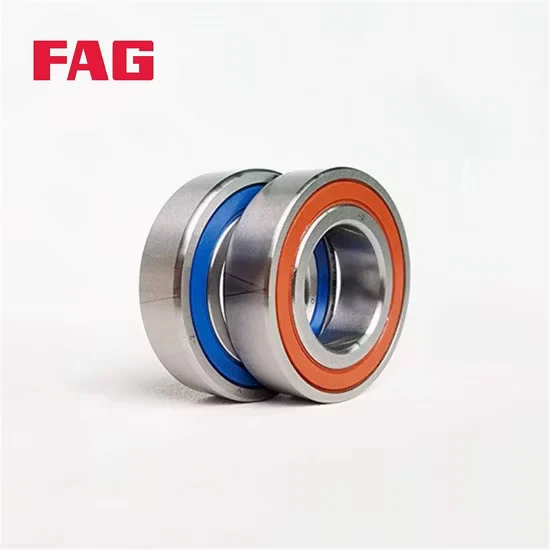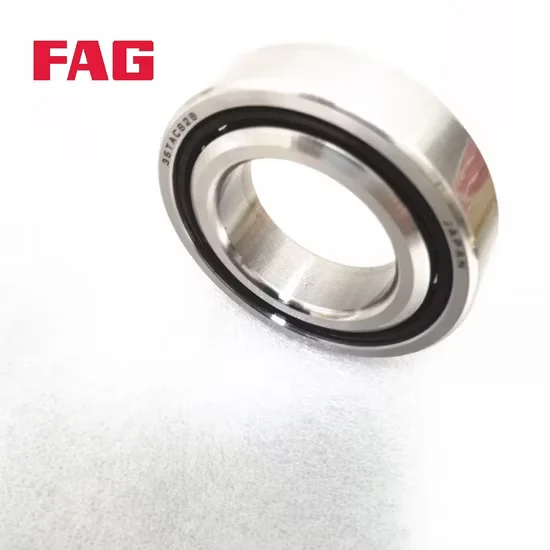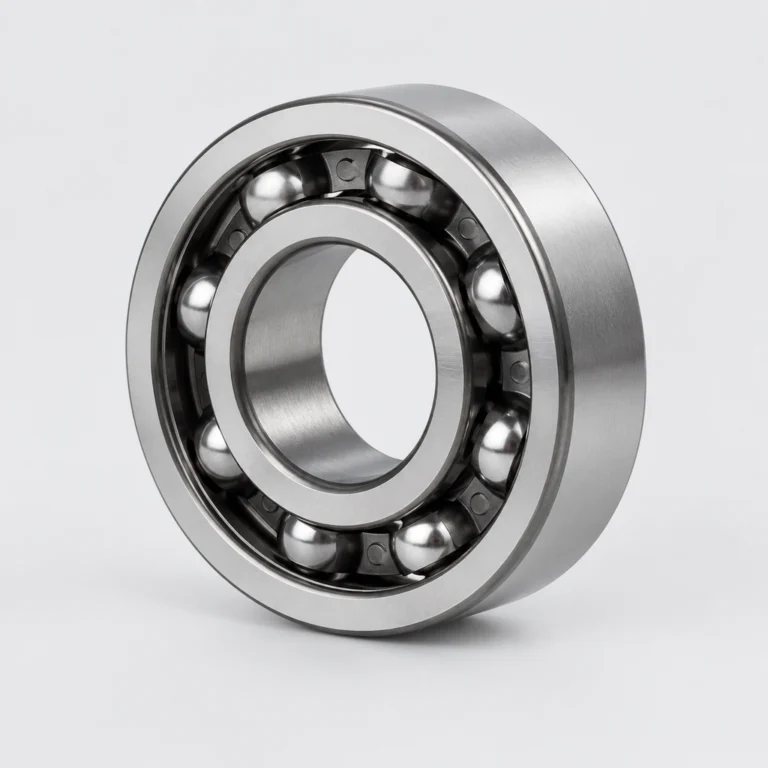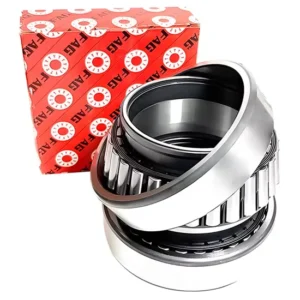
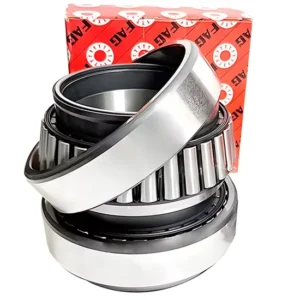
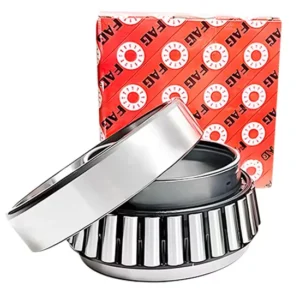
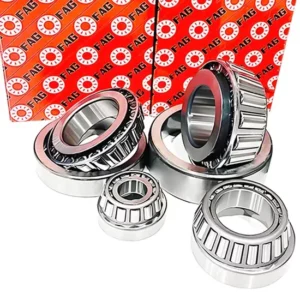
Product details
Description and application notes
Full Traceability Assurance — Every FAG 33018 tapered roller bearing shipped includes verifiable batch documentation linking directly to the manufacturer's production facilities.
Technical Specifications
| Parameter | Value |
|---|---|
| Designation | FAG 33018 |
| Product Type | Tapered Roller Bearing |
| Bore Diameter (d) | 90 mm |
| Outside Diameter (D) | 140 mm |
| Width (T) | 39 mm |
| Lubrication | Grease or Oil |
| Precision Class | P0, P6, P5, P4, P2 |
| Vibration Level | Z1V1, Z2V2, Z3V3 |
| Origin | Germany |
Application Suitability
| Industry | Typical Applications |
|---|---|
| Automotive & Commercial Vehicles | Wheel hub assemblies and heavy-duty truck axles |
| Industrial Power Transmission | Heavy-load industrial gearboxes and speed reducers |
| Heavy Equipment | Construction machinery final drives and marine propulsion shafts |
Why Standard Suffix Assumptions Cause Catastrophic Failures in the FAG 33018 tapered roller bearing
Assuming default internal clearances without verifying the exact operating environment is a primary driver of premature seizure.
In high-temperature desert environments, relying solely on the basic designation while ignoring the need for specific clearance or cage variations often leads to catastrophic breakdowns under heavy loads. When standard stamped steel cages and normal clearances are subjected to extreme thermal expansion, the internal geometry collapses, causing the rollers to skid and the raceways to spall. This exact scenario causes unplanned downtime that far exceeds the initial component cost. Maintenance teams frequently overlook the fact that a basic part number represents a baseline configuration, not a universal solution for every extreme thermal or mechanical boundary encountered in heavy machinery.
Aligning the FAG 33018 tapered roller bearing with Demanding Drivetrain Environments
Selecting the correct internal configuration ensures optimal load distribution across the roller paths, preventing localized stress concentrations that lead to early fatigue. Our engineering team cross-checks your specific thermal and mechanical loads against the standard specifications to prevent internal binding during peak operational cycles. By verifying the exact application parameters, we ensure the selected unit handles both radial and axial forces efficiently without compromising operational stability. This proactive matching process is especially critical in automotive wheel hubs and truck axles, where dynamic load shifts and continuous rotation demand precise geometric alignment to maintain a reliable hydrodynamic lubrication film.
Navigating Thermal Expansion and Lubrication Boundaries
Heavy-duty axles and industrial gearboxes generate substantial friction heat, which directly impacts internal clearance and lubricant viscosity during continuous operation. If the operating temperature rises significantly, standard clearance classes may close up entirely, causing excessive preload, rapid wear, and eventual seizure of the rolling elements. Proper lubrication selection, whether oil bath or grease, must account for these thermal shifts to maintain a stable hydrodynamic film that separates the metal surfaces. Furthermore, preventing contaminant ingress in dusty construction sites requires evaluating the sealing arrangements of the surrounding housing, as abrasive particles will rapidly destroy the optimized roller and raceway geometry if they bypass the external seals.
Decoding the Baseline Designation and Configuration Options
The absence of a suffix in this designation indicates the standard internal clearance and a conventional stamped steel cage, which suits general-purpose applications with moderate temperatures and steady loads. For environments with elevated temperatures or heavy shock loads, buyers must explicitly request modified clearance classes or specialized cage materials to prevent structural fatigue and maintain dimensional stability. The optimized roller and raceway geometry inherently reduces friction, but achieving the desired precision class—ranging from standard P0 up to P2—dictates the final running accuracy and noise levels in high-speed gearboxes. Understanding these baseline parameters prevents the dangerous assumption that a basic part number covers all extreme operational variations, ensuring that the final selection perfectly aligns with the mechanical demands of the specific machinery.
The Compounding Financial Impact of Incorrect Internal Geometry
Installing a unit with mismatched clearance in a high-heat gearbox leads to rapid thermal runaway and catastrophic raceway spalling, destroying the core components within hours. This type of premature failure not only ruins the bearing but often damages adjacent shafts, gears, and housing seals, resulting in extensive secondary repairs and prolonged equipment downtime. According to established reliability frameworks, such misapplications void warranty claims and trigger severe production delays that impact overall facility output. Avoiding these hidden costs requires precise alignment between the baseline specifications and the actual thermal profile of the machinery, ensuring that the internal geometry can withstand the operational environment without collapsing.
Securing Authentic Components Through Verified Supply Channels
Sourcing genuine components eliminates the risk of receiving counterfeit units with substandard metallurgy that fail unpredictably under peak radial and axial loads. We maintain massive spot inventory covering thousands of standard part numbers, ensuring rapid dispatch for urgent maintenance requirements and minimizing equipment downtime. Our team provides cross-brand equivalent model consultation, helping you verify dimensions against legacy equipment manuals when original documentation is missing. Every shipment includes complete traceability documentation, confirming the origin and manufacturing batch to guarantee authenticity. Additionally, we offer long-term after-sales technical support for failure analysis, ensuring your maintenance team understands the root causes of wear and can implement corrective measures for future procurement cycles.
Documentation & Authenticity
- Certificate of Conformity validating the German origin and manufacturing batch for this specific unit.
- Official manufacturer QR code verification to confirm authenticity before installation.
- Dimensional inspection reports confirming the 90x140x39 mm tolerances match the required precision class.
- Material traceability records linking the steel components to the original mill certifications.
Storage, Handling & Mounting
- Store the original packaging in a climate-controlled environment to prevent condensation from altering the factory-applied rust preventative on the 90 mm bore.
- Use induction heating for the inner ring mounting, ensuring the temperature does not exceed the thermal limit of standard bearing steel.
- Keep the unit sealed until the exact moment of installation to prevent desert dust from contaminating the raceways.
- Verify the housing shoulder dimensions to ensure proper axial support for the 140 mm outer ring during heavy axial loading.
Initiating the Technical Review Process
To finalize the exact configuration, provide your equipment's radial and axial load profiles, operational speeds, and ambient temperature ranges. Sharing the OEM equipment number allows our engineering team to perform a precise cross-reference check and L10 life calculation based on actual working conditions. This data ensures the selected unit perfectly matches your mechanical and thermal boundaries without relying on assumptions, delivering a reliable solution for your specific application.
Frequently Asked Questions
Q: How to verify the authenticity of the FAG 33018 tapered roller bearing using official tools?
A: You can verify authenticity by scanning the QR code on the original packaging using the manufacturer's official mobile application. This digital check confirms the production batch and ensures the unit is not a counterfeit. We also provide a Certificate of Conformity with every shipment to guarantee genuine provenance.
Q: What are the correct mounting procedures for this tapered roller bearing in heavy-duty axles?
A: Proper mounting requires heating the inner ring using an induction heater to expand the 90 mm bore safely. Ensure the housing shoulders are clean to support the 140 mm outer ring. After installation, adjust the axial clearance precisely according to equipment specifications to prevent excessive preload during operation.
Q: How to select the appropriate clearance class for industrial gearboxes versus wheel hubs?
A: Wheel hubs typically operate with standard clearance to accommodate thermal expansion from brake heat. Industrial gearboxes running at continuous high speeds may require specific clearance classes to maintain an optimal oil film. Always provide your operating temperatures to our team so we can recommend the exact internal geometry needed.
Q: What is the recommended lubrication strategy for this model in dusty construction environments?
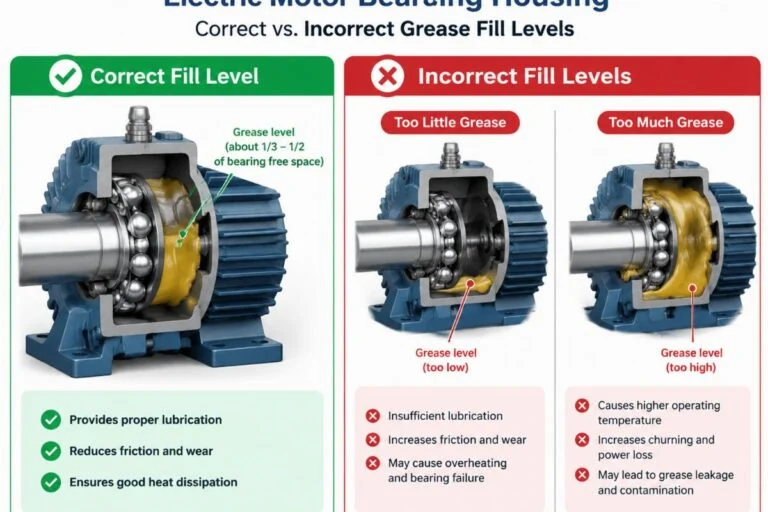
A: In contaminated environments, an oil bath system is preferred as it flushes out wear particles and dissipates heat. If grease is used, select a high-temperature variant and establish strict relubrication intervals. Ensure housing seals are intact to prevent abrasive dust from entering the 39 mm width and damaging the rollers.