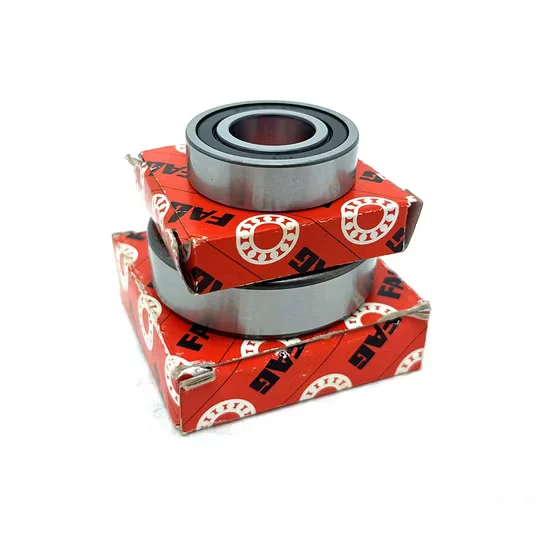
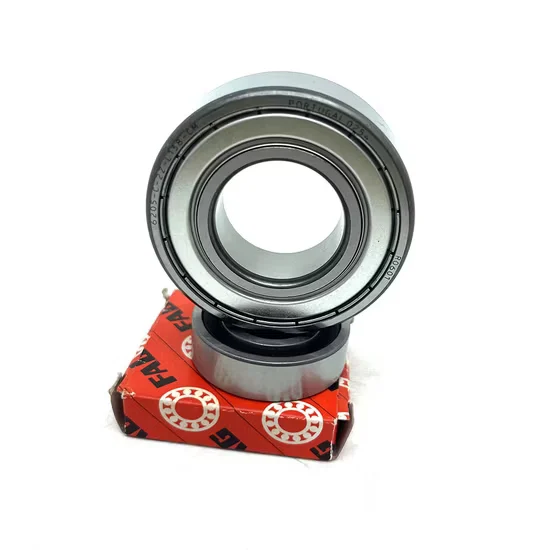
Cheap bearings are the most expensive components in your inventory.
Sourcing genuine, traceable FAG bearings for motor shops through consolidated wholesale channels prevents catastrophic motor failures and significantly lowers total ownership costs by eliminating counterfeit-induced warranty claims and reducing freight expenses via mixed-container consolidation.
I still remember the chill of a Chicago winter when a crate of bearings arrived at a client’s facility. The packaging looked perfect. The logos were crisp. But inside, the steel lacked the specific metallurgical consistency required for high-speed motor applications. Within months, the repair tickets piled up. Motors that should have run for years were burning out in weeks. I was buying from a non-authorized channel to save on unit price, thinking I was being smart. I was wrong. The labor cost of replacing those failed units dwarfed any initial savings. That failure forced a complete overhaul of how I approach sourcing. It wasn’t just about finding a supplier; it was about verifying the chain of custody. Today, when I evaluate FAG bearings for motor shops, I look past the price tag to the documentation trail.

The market is flooded with look-alikes. For a motor shop, the risk isn’t just a returned part; it’s a lost customer who blames your repair quality for a component failure. Understanding why this happens requires looking beyond the surface.
What Caused the Midwest Motor Shop’s Initial Failures?
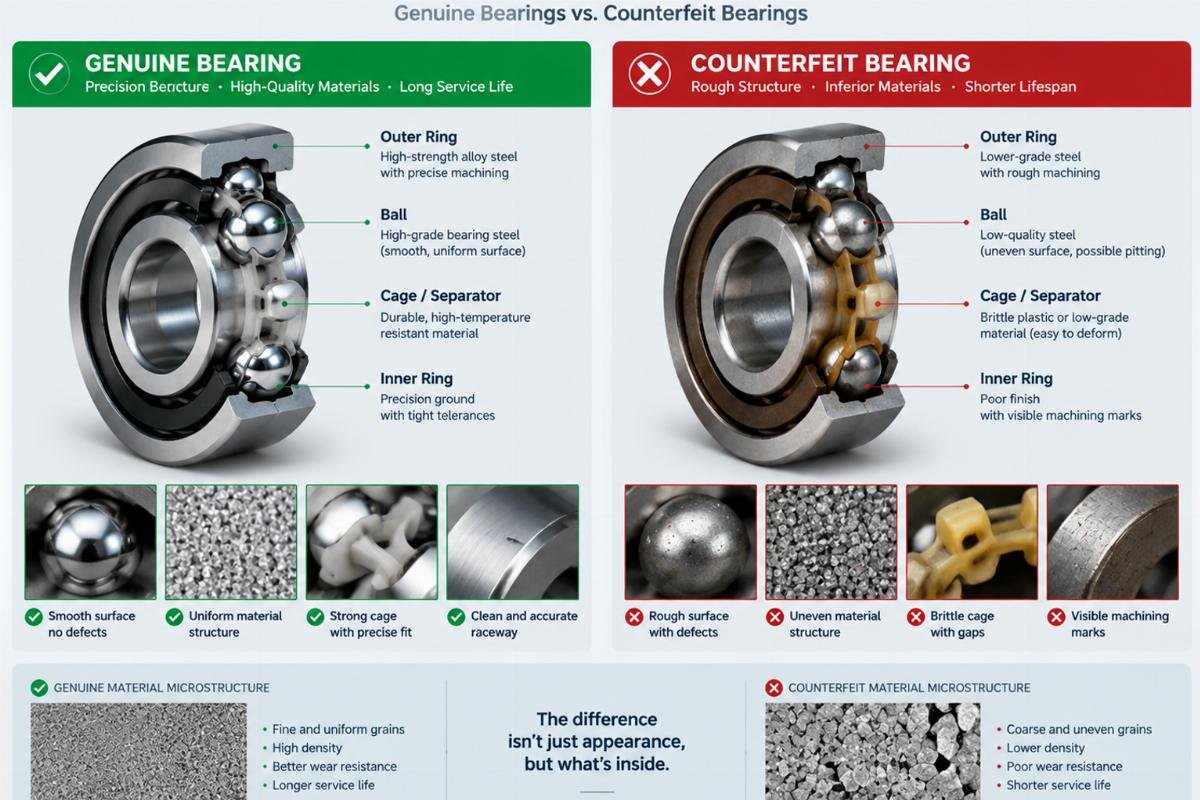
Counterfeit bearings mimic the appearance of premium brands but fail under load due to inferior materials and poor heat treatment.
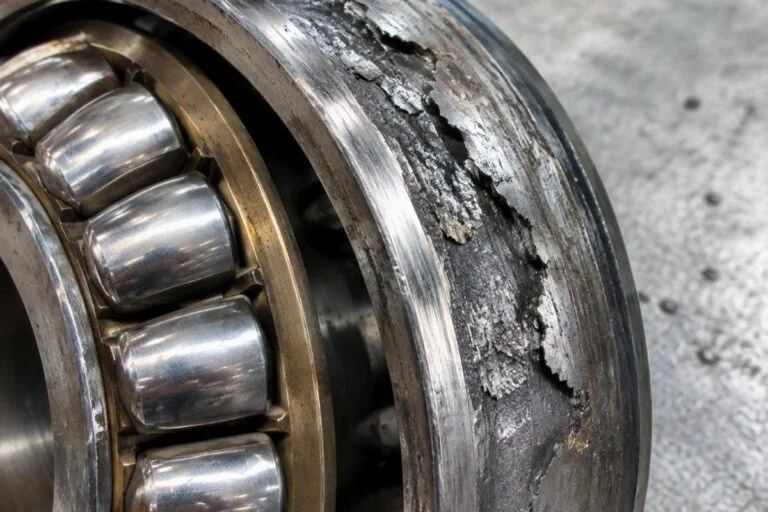
In the case of the Midwest motor shop, the initial spike in failures was not due to poor workmanship by the technicians. The motors were rewound correctly, balanced properly, and aligned within tolerance. The variable was the bearing itself. Counterfeit manufacturers often use lower-grade steel with higher inclusion counts. These impurities act as stress concentrators. Under the cyclic loading of an electric motor, micro-cracks form and propagate rapidly.
The visual differences are subtle. A genuine FAG bearing has a specific surface finish on the raceways that reduces friction and heat generation. Counterfeits often have rougher finishes that generate excess heat,*ature wear and eventual seizure. For a repair shop, this manifests as a “mystery failure.” The motor looks fine, but the bearing is destroyed.
| Feature | Genuine FAG Bearing | Counterfeit/Non-Genuine |
|---|---|---|
| Material Quality | High-purity vacuum-degassed steel | Standard commercial grade steel |
| Heat Treatment | Controlled, consistent hardness | Inconsistent, often too soft or brittle |
| Surface Finish | Precision ground, low roughness | Rougher, visible tool marks |
| Cage Material | Engineered polymer or brass | Cheap plastic or thin stamped steel |
| Traceability | Full batch documentation available | None or forged documents |
The cost implication is severe. A single failed motor in a critical application can cause downtime costing thousands per hour. When a shop uses non-genuine parts, they assume the liability for that downtime. By switching to verified sources, the shop eliminated the ambiguity. The failures stopped because the component reliability matched the design specifications.
How Did Genuine FAG Bearings Solve the Problem?
Authentic materials and precise tolerances restore motor reliability by ensuring consistent performance under thermal and mechanical stress.
The solution was not just buying a more expensive brand; it was buying the correct specification from an authorized source. Genuine FAG bearings for motor shops are manufactured to strict ISO standards. The dimensional tolerances ensure that the fit between the inner ring and the shaft, and the outer ring and the housing, is optimal. Too loose, and you get fretting corrosion. Too tight, and you induce pre-load that generates heat.
When the Midwest shop switched to genuine stock, the change was immediate. The vibration signatures of the repaired motors stabilized. Temperature readings during run-in tests remained within normal ranges. The key difference was the consistency. Every bearing from a genuine batch performs predictably. This allows repair technicians to trust their work. They know that if a motor fails, it is likely due to an external factor like misalignment or voltage imbalance, not a defective component.
This reliability builds trust with end-users. Industrial clients prefer shops that stand behind their repairs with genuine parts. It reduces the number of warranty claims the shop has to process. Instead of spending time arguing about whether a failure was due to a bad part or bad installation, the shop can focus on value-added services like predictive maintenance consulting.
The technical support available with genuine products also helps. Access to detailed datasheets and application guides ensures that the right bearing is selected for the right job. For example, knowing when to use a C3 clearance versus a standard clearance can make the difference between a motor that runs hot and one that runs cool. This level of detail is rarely available with grey-market goods.

Why is Mixed-Container Consolidation Crucial for MRO?
Sourcing multiple SKUs in one shipment optimizes inventory levels and reduces freight costs per unit, making premium brands accessible for small-batch orders.
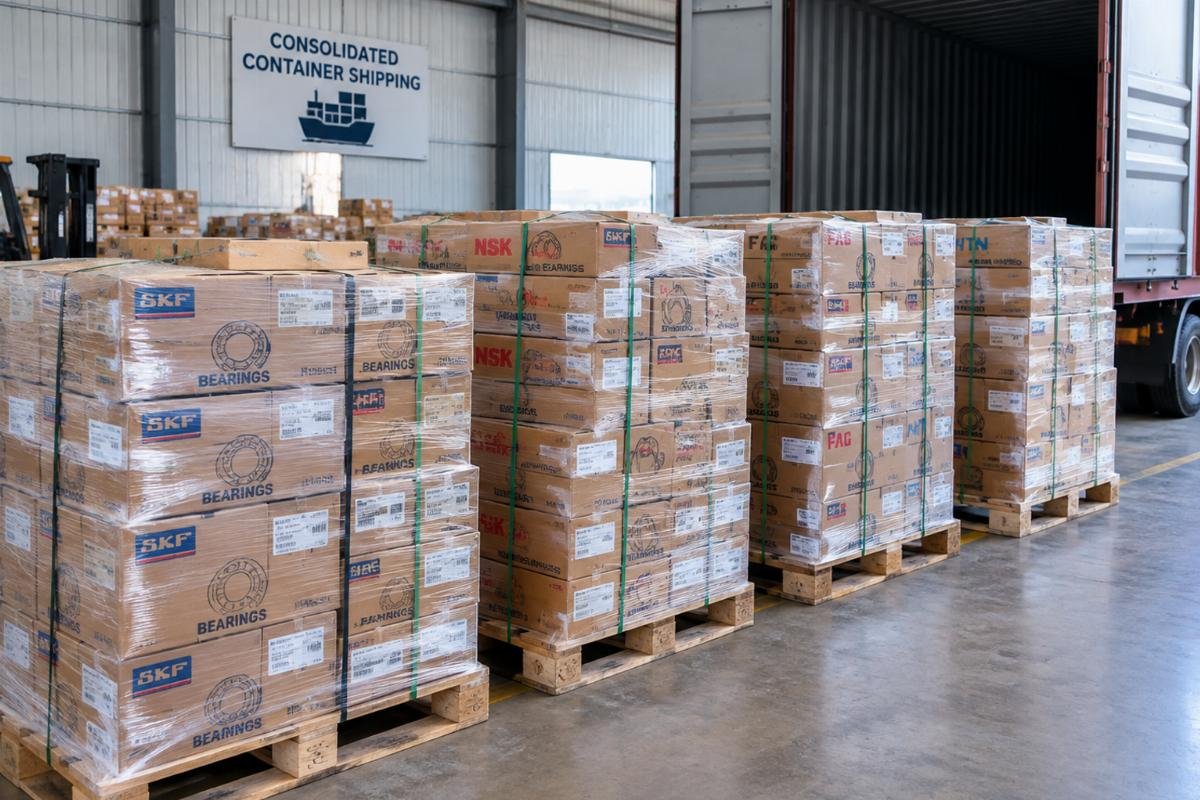
One of the biggest hurdles for independent motor shops is the minimum order quantity (MOQ) imposed by large distributors. Buying a full container of a single SKU is impractical for a shop that services diverse equipment. They need a mix of deep groove ball bearings, spherical roller bearings, and maybe some tapered rollers. Traditionally, this meant paying high air freight rates for urgent small orders or holding excessive inventory to justify sea freight.
Mixed-container consolidation changes this dynamic. By combining dozens of different SKUs into a single Less than Container Load (LCL) or Full Container Load (FCL) shipment, shops can access wholesale pricing without the bulk commitment. This approach allows for a broader inventory range. A shop can stock rare sizes that turn over slowly while keeping high-volume items readily available. The freight cost is spread across all items, lowering the landed cost of each bearing.
For FAG bearings for motor shops, this flexibility is vital. Motor repairs are unpredictable. One week might require a batch of standard 6205 bearings, and the next might need a specific spherical roller for a large pump. A consolidated supply chain ensures that both are available without tying up capital in slow-moving stock. It also simplifies customs clearance. One shipment means one set of documents, one duty payment, and one tracking number. This administrative simplicity reduces the risk of delays and errors.
The environmental benefit is also notable. Consolidating shipments reduces the carbon footprint per unit compared to multiple small air freight parcels. For companies with sustainability goals, this is an added advantage. It aligns operational efficiency with corporate responsibility.
How to Verify Bearing Authenticity?
Strict traceability documentation eliminates counterfeit risks by providing a verifiable chain of custody from manufacturer to end-user.
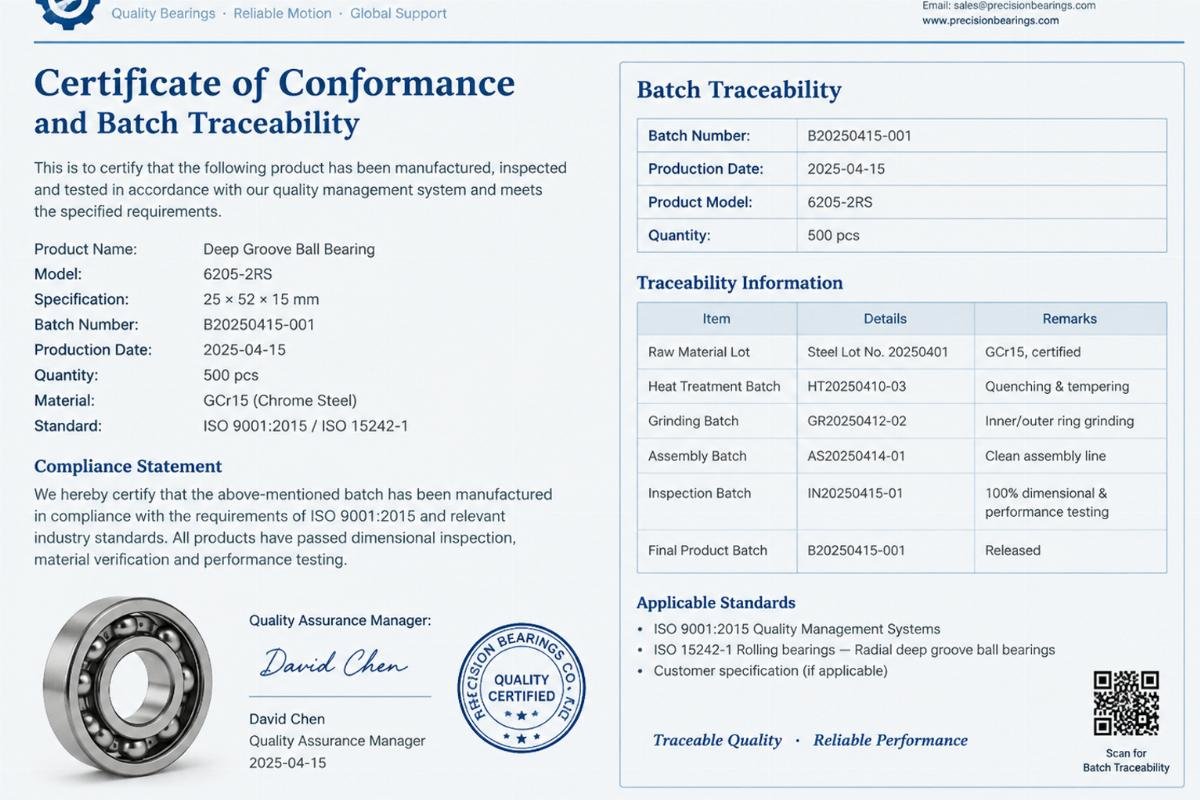
Verifying authenticity is not about inspecting the logo; it is about inspecting the paperwork. Genuine FAG bearings for motor shops come with a Certificate of Conformance (CoC) and often a certificate of origin. These documents link the physical product to a specific production batch. The batch number on the bearing box should match the number on the certificate. This allows for full traceability. If a question arises about the material or manufacturing date, the supplier can trace it back to the factory records.
A reliable supplier will provide these documents proactively. They understand that for MRO clients, proof of authenticity is as important as the product itself. Without it, the bearing is just a piece of steel. With it, it is a certified component. This documentation also helps in warranty claims with the manufacturer if a rare defect occurs.
Buyers should be wary of suppliers who hesitate to provide these documents or offer vague explanations. Genuine distributors have direct access to this data. It is a standard part of their service. Additionally, checking the packaging quality can provide clues. Genuine packaging uses specific materials and printing techniques that are difficult to replicate perfectly. However, packaging alone is not proof. Only the documentation provides legal and technical verification.
For shops dealing with high-value or critical applications, requesting sample traceability docs before placing a large order is a prudent step. It establishes the supplier’s capability and transparency. This due diligence protects the shop’s reputation and ensures that every motor leaving the bench is equipped with a component that meets the original design intent.
Conclusion
Reliability is built on trust, and trust is built on verification.
Sourcing FAG bearings for motor shops requires a shift from price-focused buying to value-focused procurement. By prioritizing genuine products with full traceability and utilizing mixed-container consolidation, shops can reduce failure rates, lower total costs, and build lasting customer trust. The right supply chain partner makes this possible by providing both the authentic products and the logistical flexibility needed in the modern MRO landscape.