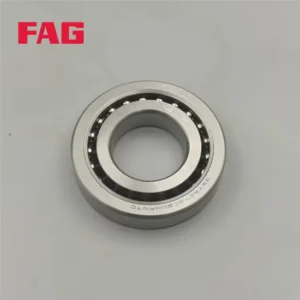

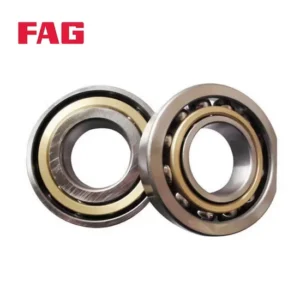
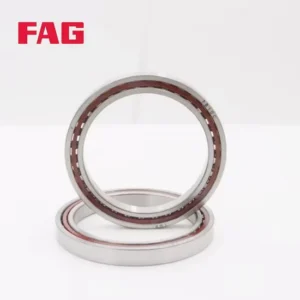

Product details
Description and application notes
Mixed-Brand Sourcing — Consolidating the 3211b Tvh C3 FAG with other premium makes in a single shipment eliminates multi-vendor coordination for your MRO projects.
Technical Specifications
| Parameter | Value |
|---|---|
| Designation | 3211b Tvh C3 FAG |
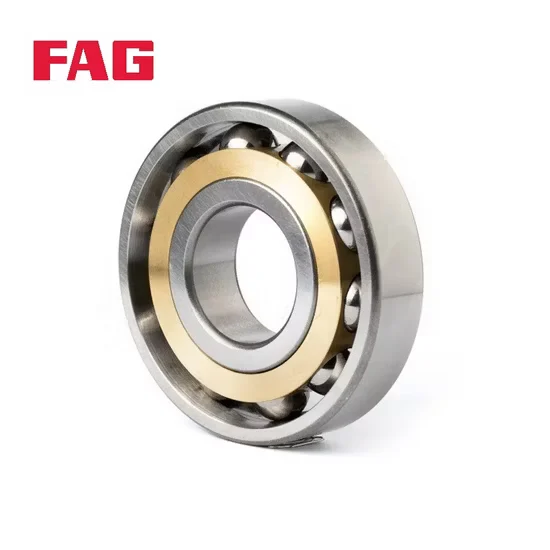
| Bearing Type | Double Row Angular Contact Ball Bearing |
| Cage Material | Polyamide |
| Clearance Class | C3 |
| Precision Class | P0 / P6 / P5 |
| Seal or Shield Type | Open / 2Z / 2HRS |
| Material | Bearing Steel |
| Certification | ISO 15:2017 / DIN 628-3 |
| Origin | Jiangsu China |
Note: The suffixes 'b' and 'Tvh' are unverified and require manufacturer catalog confirmation.
Application Suitability
| Industry | Typical Applications |
|---|---|
| Machine Tool Manufacturing | High-speed spindle assemblies and precision indexing tables |
| Industrial Pumping Systems | High-speed pump impeller shafts and booster stages |
| Robotics & Automation | Articulated joint actuators and precision positioning arms |
| Precision Equipment | Optical measuring devices and automated assembly fixtures |
Why Clearance Selection Dictates Survival for the FAG 3211b Tvh C3 double row angular contact ball bearing
Thermal expansion turns tight clearances into catastrophic seizures.
When operating in extreme ambient heat or high-speed friction environments, specifying a standard clearance instead of a C3 class often leads to internal preload buildup. I have seen this exact failure mode on site in the Middle East, where inadequate clearance caused the rolling elements to bind and halt production entirely. The intense desert heat combined with internal friction rapidly eliminated the internal gap, turning the bearing into a solid block of seized steel. Selecting the correct internal geometry is not just a catalog exercise; it is the primary defense against unplanned downtime in high-temperature environments, ensuring the FAG 3211b Tvh C3 double row angular contact ball bearing maintains its operational integrity under severe thermal stress.
Matching the 3211b Tvh C3 FAG to High-Speed Demands
The dual-row architecture inherently balances combined radial and bidirectional axial loads, making the 3211b Tvh C3 FAG highly suitable for rigid spindle applications and precision positioning systems. By integrating a polyamide cage, the design minimizes rotational mass, which directly supports higher speed capabilities compared to heavier brass alternatives. This weight reduction lowers centrifugal forces on the rolling elements, thereby reducing friction and heat generation at elevated RPMs. Our engineering team frequently cross-references these specific dynamic requirements to ensure the selected configuration aligns perfectly with the operational envelope of your precision machinery, preventing premature fatigue caused by excessive internal loading.
Navigating Thermal and Contamination Challenges
High-speed pump and spindle environments generate significant internal friction heat, which directly impacts lubricant viscosity and clearance stability. If the operating temperature fluctuates wildly, the internal gap must accommodate the differential expansion between the shaft and housing to prevent binding. Furthermore, open or lightly shielded configurations require precise external sealing designs to prevent abrasive particulate ingress, which rapidly degrades the raceway finish and accelerates wear. Proper lubrication intervals and precise grease selection become critical to maintaining the hydrodynamic film under these combined thermal and mechanical stresses, ensuring the polyamide cage remains adequately lubricated without suffering from thermal degradation.
Decoding the Internal Geometry and Cage Dynamics
The C3 clearance class provides a slightly larger internal gap than standard, which is essential for accommodating thermal expansion when the inner ring runs hotter than the outer ring during continuous operation. The polyamide cage offers excellent sliding properties and reduces overall weight, allowing for rapid acceleration and deceleration in robotics and machine tools. However, polyamide has strict upper temperature limits, meaning this specific cage material must not be deployed in applications where continuous ambient heat exceeds its thermal threshold. The non-aligning design demands precise shaft and housing tolerances to prevent edge loading, ensuring the contact angle remains uniform across both rows of balls. When these geometric parameters are respected, the bearing delivers exceptional rigidity and rotational accuracy, which are non-negotiable requirements for precision equipment.
The Cascading Impact of Misapplied Suffixes
Deploying a standard clearance in a high-heat application or ignoring the thermal limits of a polyamide cage inevitably triggers premature failure. According to established failure analysis frameworks, such misapplications manifest as smearing, cage fracture, or catastrophic raceway spalling. The resulting damage rarely stays contained within the bearing; it frequently destroys adjacent shaft journals and housing bores through excessive heat transfer and mechanical vibration. This collateral damage transforms a simple component replacement into a major machinery rebuild, voiding warranties and extending downtime far beyond the initial failure event, ultimately costing significantly more than the price of the correctly specified component.
Securing Authentic Configurations for Critical Machinery
Sourcing the exact FAG 3211b Tvh C3 double row angular contact ball bearing configuration requires more than just matching a part number; it demands verifying the suffix integrity and internal geometry. We maintain massive spot inventory covering thousands of part numbers, ensuring that urgent MRO requests for this specific C3 clearance variant are fulfilled without typical multi-week lead times. Our technical team provides cross-brand equivalent model consultation, so if a direct replacement is needed, the alternative matches the exact clearance and cage material specifications. Every shipment includes complete traceability documentation, guaranteeing that the polyamide cage and internal geometry meet the original manufacturer's strict specifications, giving procurement engineers absolute confidence in the authenticity and reliability of the supplied components.
Documentation & Authenticity
- Certificate of Conformity verifying the C3 internal clearance class before dispatch.
- Original batch traceability records linking the 3211b Tvh C3 FAG to its production run.
- Official manufacturer QR code verification for authenticating the polyamide cage variant.
- Material inspection reports confirming bearing steel composition and heat treatment.
- Dimensional and running accuracy inspection reports validating P0/P6/P5 tolerances.
Storage, Handling & Mounting
- Store the 3211b Tvh C3 FAG in its original packaging to protect the open bearing surfaces from ambient moisture and dust.
- Maintain consistent storage temperatures to prevent condensation inside the C3 clearance gap.
- Use clean lint-free gloves when handling to avoid transferring corrosive sweat to the bearing steel raceways.
- Apply induction heating for the inner ring mounting, strictly monitoring the temperature to prevent degrading the polyamide cage.
- Ensure shaft and housing shoulders are perfectly square to support the non-aligning double row structure without inducing axial distortion.
Engineering Data Required for Technical Verification
To guarantee the FAG 3211b Tvh C3 double row angular contact ball bearing is the optimal fit for your application, please provide the specific radial and axial load profiles alongside your operational speed range. Sharing the ambient and peak operating temperatures allows our engineers to validate the C3 clearance and polyamide cage suitability for your unique environment. If you are replacing an existing unit, supplying the OEM equipment serial number or the exact dimensions of the mounting space enables precise cross-reference verification and L10 life recalculation. This collaborative technical review ensures that every variable is accounted for, eliminating the guesswork from your procurement process and safeguarding your equipment against misapplication.
Frequently Asked Questions
Q: How do I verify the authenticity of the 3211b Tvh C3 FAG?
A: Authenticity is confirmed through original batch traceability records and the manufacturer's official QR code verification system. We provide a Certificate of Conformity and dimensional inspection reports with every shipment. This ensures the internal C3 clearance and polyamide cage strictly match the original engineering specifications, protecting your machinery from counterfeit or substandard replacements.
Q: What is the difference between standard clearance and the C3 class?
A: Standard clearance is designed for normal operating temperatures and loads, while the C3 class provides a larger internal gap. This extra space accommodates thermal expansion when the inner ring operates at a significantly higher temperature than the outer ring. Selecting the correct clearance prevents internal preload buildup and subsequent thermal seizure in high-speed applications.
Q: How should I interpret non-standard or regional suffix variations?
A: Certain manufacturer catalogs may not explicitly list every historical or regional suffix variant, requiring direct cross-referencing with current technical documentation. Our engineering team handles this verification process to confirm the exact contact angle and cage material specifications, ensuring the supplied bearing perfectly matches your required configuration without relying on assumptions.
Q: Can I use a brass cage instead of the polyamide cage for this model?
A: While brass cages offer higher thermal stability and better resistance to certain chemical environments, they are heavier and generate more rotational inertia. If your application involves rapid acceleration or operates within the thermal limits of polyamide, the lighter cage is preferable. Share your specific operating temperatures and speed requirements so we can advise on the optimal cage material selection.
Q: How does the double row design affect shaft alignment requirements?
A: As a non-aligning bearing, the double row structure is highly sensitive to misalignment between the shaft and housing. Any angular deflection will cause uneven load distribution across the two rows of balls, leading to premature edge loading and fatigue. Precise machining of the mounting surfaces and strict adherence to housing tolerances are mandatory to ensure uniform load sharing and maximize service life.