Local stock availability does not guarantee authenticity.
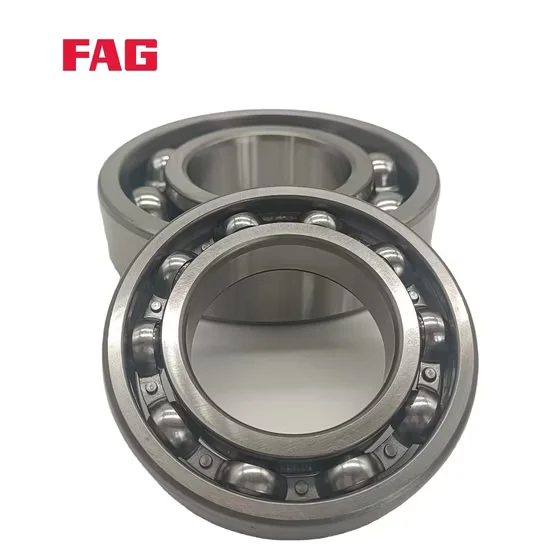
For US HVAC contractors managing critical cooling infrastructure, the only reliable procurement strategy involves sourcing from a verified genuine FAG bearings supplier who provides full traceability documentation, including original mill certificates and customs clearance records, rather than relying on speed or local proximity alone. This approach ensures that every deep groove ball bearing or spherical roller unit installed in high-temperature environments meets the strict dimensional and material integrity standards required to prevent catastrophic fan seizures.
The distinction between a functional component and a production-halting liability often lies in paperwork that most buyers ignore until it is too late. I recall standing in the inspection zone at Jebel Ali Port, watching crates destined for Houston sit under the harsh sun. Years earlier, while working in quality control, I witnessed a Middle Eastern HVAC contractor cut costs by purchasing unverified replacements. The result was a cooling tower fan seizure during a Texas heatwave, leading to a mid-six-figure loss in penalties and downtime. That incident reshaped my understanding of supply chain risk. It was not the price of the part that mattered, but the verifiable chain of custody. Today, my focus remains on ensuring that North American partners receive components with intact provenance, avoiding the pitfalls of mixed-batch inconsistencies that plague the aftermarket.
Why Do HVAC Systems Fail Prematurely with Non-Genuine Bearings?
Counterfeit bearings lack the material purity required for sustained high-load operations.
The primary cause of premature failure in HVAC applications is not always improper installation, but rather the use of components that fail to meet baseline metallurgical standards. Genuine FAG products undergo rigorous quality controls that ensure consistent steel cleanliness and precise heat treatment. In contrast, non-genuine alternatives often utilize inferior alloys with higher inclusion densities, which act as stress concentrators under heavy radial loads.
When a cooling tower fan operates in extreme ambient temperatures, the lubricant viscosity drops, and the bearing raceways experience increased thermal expansion. A counterfeit unit, lacking the precise internal clearance specifications (such as C3 or C4 groups) engineered for these conditions, will quickly overheat. The rolling elements may skid rather than roll, generating excessive friction that leads to immediate seizure. This is not a gradual wear process; it is a sudden mechanical failure that can damage the motor shaft and housing, turning a simple replacement job into a major repair project.
I have seen batches of what appeared to be standard deep groove ball bearings fail within weeks of installation in industrial chillers. The outer rings showed signs of spalling that indicated material fatigue far below the expected L10 life rating. The root cause was traced back to inconsistent hardening depths, a defect common in unauthorized production facilities that do not adhere to the manufacturer’s proprietary thermal processing protocols. For a genuine FAG bearings supplier, maintaining this level of quality consistency is non-negotiable, as it directly impacts the reliability of the entire HVAC system.
How to Verify Genuine FAG Bearings for Cooling Towers?
Traceability documents are more valuable than the physical component itself.
Verifying authenticity requires a systematic check of both physical markers and accompanying documentation. The first step is examining the packaging. Original FAG bearings arrive in branded boxes with specific printing quality, batch numbers, and security labels that are difficult to replicate accurately. However, packaging can be faked. Therefore, the critical verification step involves cross-referencing the batch number on the box with the manufacturer’s certificate of conformity.
A reliable genuine FAG bearings supplier will provide a mill certificate that details the production date, factory location, and quality inspection results for that specific batch. This document serves as the legal proof of origin. Without it, the bearing is essentially unverified inventory, regardless of how authentic it looks.
| Verification Aspect | Genuine Product Characteristics | Counterfeit/Risk Indicators |
|---|---|---|
| Packaging Quality | Sharp printing, correct logo proportions, secure sealing | Blurred text, color mismatches, loose flaps |
| Traceability Code | Unique batch number linked to mill certificate | Missing codes, duplicated numbers across batches |
| Documentation | Full certificate of conformity with inspection data | No papers, or generic “quality pass” slips |
| Surface Finish | Uniform grinding marks, clean raceways | Visible tool marks, rust spots, uneven polishing |
I once assisted a US buyer who faced a customs seizure of a large shipment due to suspected counterfeits. The delay lasted several weeks, halting a multi-site maintenance schedule. The issue was not just the fake parts, but the lack of proper import documentation that could prove their legitimacy. By switching to a sourcing partner who prioritized complete paper trails, the buyer eliminated this risk. The ability to produce a valid certificate upon request is the hallmark of a professional genuine FAG bearings supplier.
What Are the Key Specifications for HVAC Fan Bearings?
Selecting the right bearing type depends on load direction and operating speed.
HVAC systems utilize various bearing configurations depending on the fan design. Axial fans typically require deep groove ball bearings that can handle moderate radial and axial loads. Centrifugal fans in large cooling towers, however, often demand spherical roller bearings to accommodate misalignment and heavier radial forces. Understanding these distinctions is crucial for minimizing vibration and noise.
The choice of lubrication is equally critical. High-temperature greases must remain stable under thermal stress to prevent breakdown. Genuine FAG bearings are often pre-lubricated with specialized greases designed for extended service intervals. Using a generic grease can lead to chemical incompatibility, causing the lubricant to harden or separate, which accelerates wear.
| Bearing Type | Primary Load Capacity | Misalignment Tolerance | Typical HVAC Application |
|---|---|---|---|
| Deep Groove Ball | Radial and Moderate Axial | Low | Small Axial Fans, Motors |
| Spherical Roller | Heavy Radial | High | Large Cooling Tower Fans |
| Cylindrical Roller | Very Heavy Radial | None | High-Speed Centrifugal Blowers |
| Angular Contact | Combined Radial/Axial | Low | Precision Fan Spindles |
A common mistake is substituting a standard bearing for a precision-grade unit without checking the internal clearance. In high-speed applications, insufficient clearance leads to rapid temperature rise. Conversely, excessive clearance causes vibration. A knowledgeable genuine FAG bearings supplier will consult technical manuals to ensure the selected model matches the OEM specifications for load ratings and speed limits. This attention to detail prevents the “one-size-fits-all” errors that frequently result in early failures.
How to Optimize Procurement and Consolidation for US Contractors?
Mixed-batch consolidation reduces freight costs while ensuring spare part availability.
For contractors managing multiple sites, ordering individual SKUs from different distributors is inefficient and costly. Consolidating orders allows for better freight rates and simplified customs clearance. However, mixing brands and sizes requires a supplier with extensive inventory and robust quality control to ensure that every item in the container meets the same authenticity standards.
By working with a global sourcing partner, US contractors can combine urgent spare parts with bulk maintenance stock in a single shipment. This strategy not only lowers the per-unit shipping cost but also ensures that critical replacements are on hand when needed. The key is to verify that the supplier can handle mixed-brand requests without compromising on the traceability of each component.
I have facilitated orders where clients combined SKF, FAG, and NSK bearings in a single container. The challenge was ensuring that each brand’s specific packaging and documentation requirements were met. The result was a significant reduction in overall procurement time and cost, while maintaining full compliance with US import regulations. This approach transforms the supply chain from a reactive cost center into a strategic advantage.
A genuine FAG bearings supplier with global reach can offer this level of flexibility. They maintain spot inventory of thousands of part numbers, allowing for quick fulfillment of emergency orders. More importantly, they provide the technical support needed to select equivalent models if a specific SKU is unavailable, ensuring that the replacement meets or exceeds the original performance criteria. This service is invaluable for MRO teams looking to minimize unplanned downtime.
Conclusion
Authenticity prevents failure; traceability ensures peace of mind.
Sourcing genuine components is not merely about buying a part; it is about securing the reliability of your entire HVAC infrastructure. By prioritizing verified documentation and technical compatibility over initial price savings, contractors can avoid the severe financial and operational consequences of counterfeit failures. Partnering with a reputable genuine FAG bearings supplier who offers transparent traceability and consolidated logistics solutions provides the foundation for long-term system stability and operational efficiency.