Product details
Description and application notes
Verify via QR scan — every FAG 3311-Bd-XL-Tvh double row angular contact ball bearing shipped includes original manufacturer QR codes for instant authenticity checks.
Technical Specifications
| Parameter | Value |
|---|---|
| Designation | FAG 3311-Bd-XL-Tvh |
| Bearing Type | Double Row Angular Contact Ball Bearing |
| Contact Angle | 30° (Bd type) |
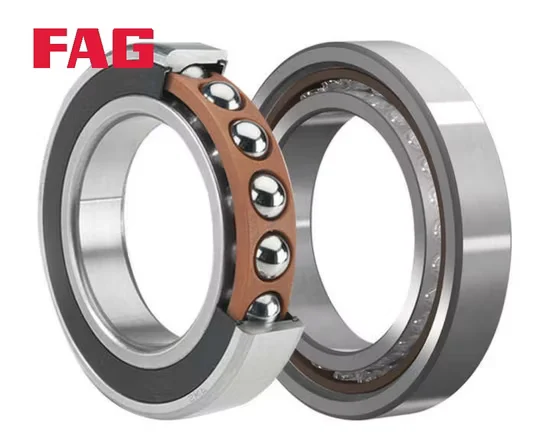
| Cage Material | Polyamide (Tvh) |
| Seal or Shield Type | Open, 2Z, 2HRS options |
| Precision Class | P0, P6, P5 |
| Material | Bearing Steel |
| Rows Number | Double |
| Aligning | Non-Aligning |
The XL suffix indicates a premium performance tier; exact load rating enhancements require official catalog verification.
Application Suitability
| Industry | Typical Applications |
|---|---|
| Machine Tool Manufacturing | High-speed spindle support mechanisms |
| Fluid Handling | High-speed pump impeller shafts |
| Industrial Automation | Robotic arm joint actuators |
| General Manufacturing | Precision equipment drive trains |
When Standard Clearance Destroys High-Speed Pump Shafts
Thermal expansion dictates survival in continuous duty cycles.
I learned this the hard way in a sweltering Riyadh compressor room years ago. We installed standard clearance double row angular contact bearings without calculating thermal growth, and the shaft seized within months due to internal preload spikes. Selecting the right FAG 3311-Bd-XL-Tvh double row angular contact ball bearing requires matching internal clearance to the exact operating temperature, preventing catastrophic unplanned downtime. Engineers often overlook how ambient heat and friction combine to eliminate internal clearance, turning a precision component into a destructive friction weld. Proper specification demands a deep understanding of the thermal gradient across the housing and the cooling capacity of the lubricant.
Matching the 30° Contact Angle to Combined Loads
The 30° contact angle inherent to the Bd design optimizes load distribution when machine tool spindles face simultaneous radial and axial forces. By specifying this exact FAG 3311-Bd-XL-Tvh double row angular contact ball bearing configuration, engineers ensure the raceways handle compound stresses without premature edge loading. Our sourcing network ensures these specific angle variants are readily available for urgent maintenance replacements, avoiding the temptation to accept incorrect substitutes. When a spindle encounters heavy cutting forces, the axial component pushes the rolling elements against the outer raceway; a 30° angle provides the ideal geometric compromise to support both vectors efficiently while maintaining rigidity.
Managing Contamination and Friction in Precision Equipment
High-speed pumps generate significant friction heat, demanding a cage material that minimizes drag while maintaining structural integrity under centrifugal forces. The polyamide cage reduces rolling friction compared to brass alternatives, yet it requires careful monitoring of operating temperatures to avoid thermal degradation. Furthermore, choosing between open, 2Z, or 2HRS sealing depends entirely on the contamination level of the specific machinery environment. An open design allows for superior heat dissipation and external lubrication flushing, whereas the 2HRS contact seals provide essential protection against coolant ingress in harsh machining centers, albeit with a slight increase in rotational torque.
Decoding the Suffix Logic for Operational Longevity
The Bd suffix confirms the 30° contact angle, which is critical for accommodating axial thrust in one direction while supporting radial loads. The Tvh designation indicates a solid polyamide cage guided by the rolling elements, offering excellent high-speed performance and lower noise levels. Selecting P6 or P5 precision over standard P0 directly reduces spindle runout in precision equipment, ensuring tighter tolerances during high-speed milling operations. Understanding these suffixes prevents procurement teams from accidentally ordering standard clearance or stamped steel cage variants that would fail rapidly under demanding continuous duty cycles.
The Financial Impact of Mismatched Bearing Configurations
Installing a 40° contact angle variant instead of the specified 30° Bd type alters the internal load zone, leading to uneven stress distribution and rapid raceway spalling. According to failure analysis frameworks, such misapplications result in premature fatigue that voids equipment warranties and halts production lines. The cost of emergency air freight and lost production vastly exceeds the initial component savings. When maintenance teams accept equivalent replacements without verifying the exact contact angle and cage material, they inadvertently introduce harmonic vibrations that degrade the entire spindle assembly, leading to secondary failures in adjacent seals and gears.
Securing Exact Suffix Matches for Critical Replacements
Mixed-brand procurement often leads to compromised suffix substitutions, but we strictly fulfill the exact Tvh cage and Bd angle requirements without unauthorized alterations. Our extensive spot inventory covers thousands of standard part numbers, allowing us to consolidate this specific bearing with other OEM spares into a single global shipment. We provide complete traceability documentation, ensuring the polyamide cage material and precision grades match the original equipment manufacturer's exact specifications. Buyers frequently face pressure to accept generic alternatives when lead times stretch, but our flexible sourcing model prioritizes exact geometric matches to protect your machinery's operational integrity and maintain the original design life calculations.
Documentation & Authenticity
- Certificate of Conformity verifying the 30° contact angle and P-class precision tolerances.
- Original manufacturer batch traceability records linked to the specific polyamide cage production run.
- Official app QR authentication codes attached to every shipped unit for instant verification.
- Dimensional inspection reports confirming bore and outside diameter limits before dispatch.
Storage, Handling & Mounting
- Store the open-type variants in original packaging to prevent moisture ingress before spindle mounting.
- Use clean lint-free gloves when handling the polyamide cage to avoid surface contamination.
- Keep sealed 2HRS units away from direct UV exposure to prevent premature rubber lip degradation.
- Verify the non-aligning housing bore geometry to prevent outer ring distortion during press fitting.
Engineering Data Required for Technical Verification
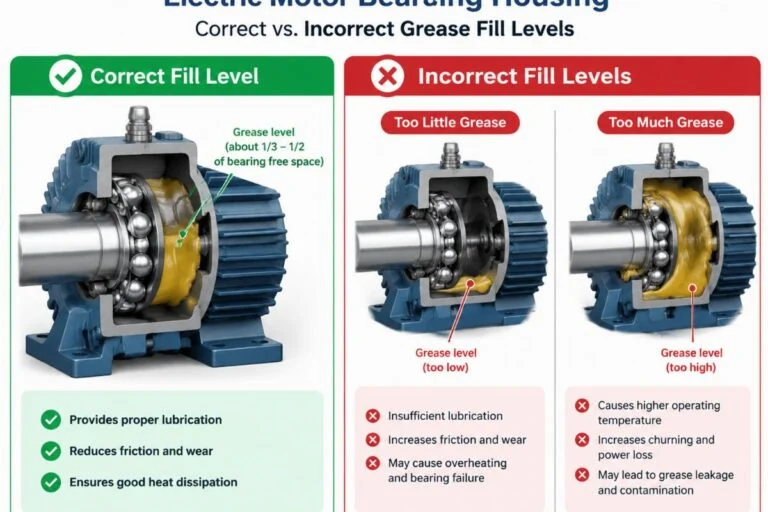
To ensure the selected clearance class matches your thermal expansion profile, please provide the exact operating temperature range and shaft material specifications. Share the original equipment manufacturer part numbers so our engineering team can cross-reference the cage material and precision grade. Supplying the specific radial and axial load vectors allows us to confirm the 30° contact angle of this FAG 3311-Bd-XL-Tvh double row angular contact ball bearing is optimal for your application. We also need to know the lubrication method and replenishment intervals to advise whether an open or sealed configuration will deliver the most reliable service life in your specific operating environment.
Frequently Asked Questions
Q: How do I verify the authenticity of the bearing upon delivery?
A: Every unit we supply includes original manufacturer packaging with a scannable QR code. You can use the official brand application to instantly verify the batch number, production date, and origin. We also provide a Certificate of Conformity that cross-references the specific precision class and polyamide cage material specifications.
Q: What is the difference between the Bd and Da contact angle variants?
A: The Bd suffix designates a 30° contact angle, which balances radial and axial load capacities for general machinery and pump applications. In contrast, the Da variant features a steeper 45° angle, prioritizing higher axial thrust capacity at the expense of radial load limits. Choosing the correct angle is critical for preventing premature raceway fatigue.
Q: Can I substitute a brass cage for the Tvh polyamide cage in high-temperature environments?
A: While brass cages tolerate higher continuous temperatures, substituting the Tvh polyamide cage alters the weight, friction characteristics, and speed limits. The polyamide design is specifically engineered for lower friction and quieter operation in high-speed spindles. Any cage material substitution requires a complete recalculation of the thermal equilibrium and lubrication interval.
Q: Why is cross-referencing equivalent models risky for double row angular contact bearings?
A: Simply matching basic dimensions ignores critical internal geometry differences like contact angle, cage design, and internal clearance. A dimensionally identical bearing from another brand might use a 40° angle or a steel cage, fundamentally changing the load distribution. We always verify the exact suffix string to ensure the replacement matches original dynamic performance requirements.