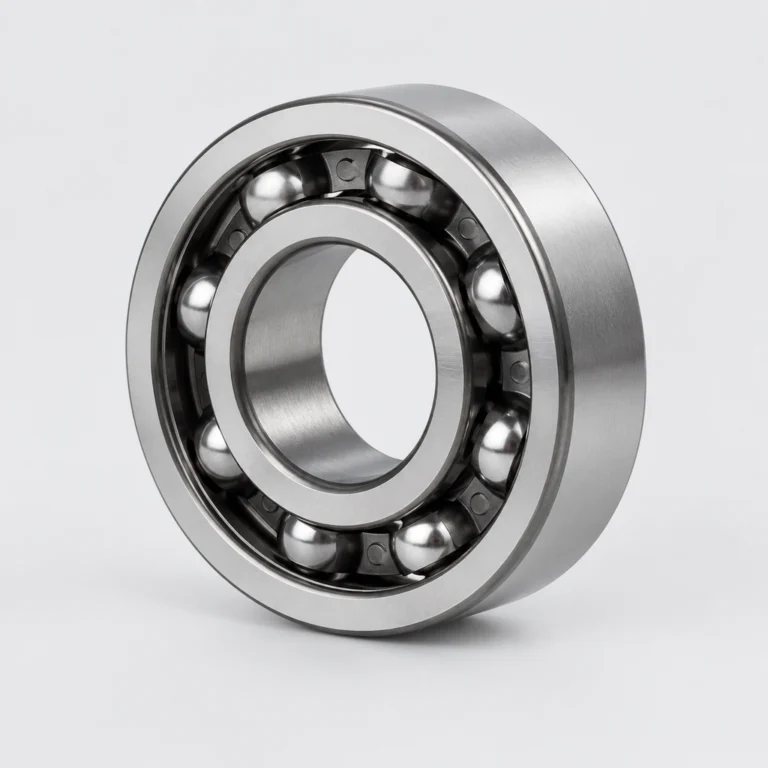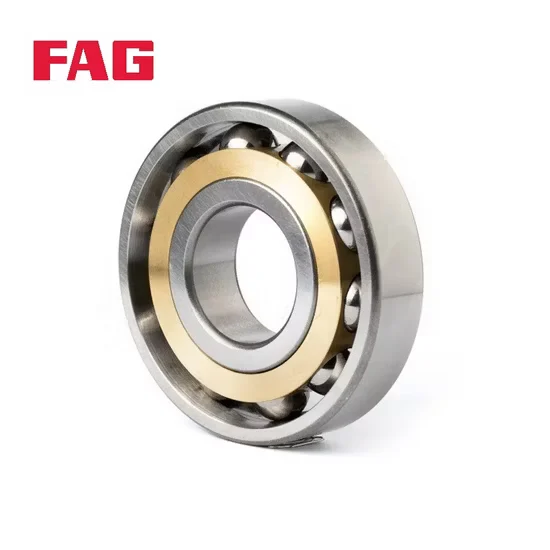

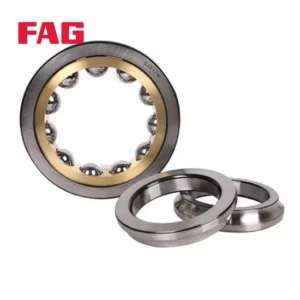
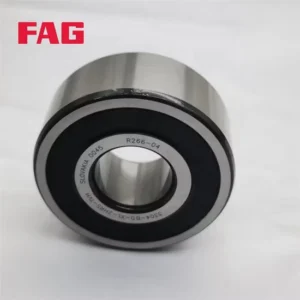
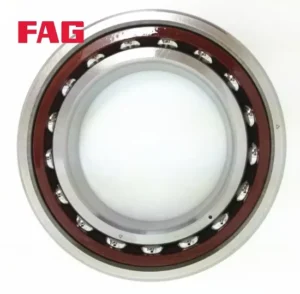
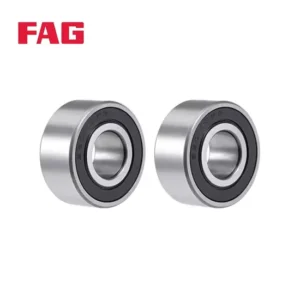
Product details
Description and application notes
Unified Sourcing Network — Consolidate mixed-brand industrial orders without coordinating multiple suppliers when procuring your FAG 3204 double row angular contact ball bearing and companion components.
Technical Specifications
| Parameter | Value |
|---|---|
| Designation | 3204 FAG |
| Bearing Type | Double Row Angular Contact Ball Bearing |
| Rows Number | Double |
| Contact Angle | α=30° (Bd Type) / α=45° (Da Type) |
| Cage Material | Polyamide (Tvh), Sheet Steel, or Brass (MP) |
| Material | Bearing Steel |
| Precision Class | P0 / P6 / P5 |
| Series | 32 Series / 33 Series |
| Standards | DIN 628-3, ISO 15:2017 |
| Origin | Jiangsu China |
Application Suitability
| Industry | Typical Applications |
|---|---|
| Machine Tools | High-speed spindle arrangements requiring rigid radial and axial support |
| Fluid Handling | High-speed pumps handling continuous combined loading |
| Automation | Robotics joints demanding precise rotational accuracy |
| Power Transmission | Gearboxes subjected to simultaneous radial and thrust forces |
Why Ignoring Thermal Expansion Destroys a FAG 3204 double row angular contact ball bearing
Internal clearance mismatch under operational heat causes catastrophic seizure before the steel ever fatigues.
Field experience in high-temperature pump stations reveals a recurring nightmare. Engineers often default to standard clearance without calculating thermal gradients, leading to shaft lock-ups that ruin entire assemblies. When a FAG 3204 double row angular contact ball bearing operates in elevated heat, the inner ring expands faster than the housing, silently eliminating internal play. This preventable failure mode highlights why rigorous operating condition matching matters more than basic catalog selection.
Aligning the FAG 3204 double row angular contact ball bearing with Precision Demands
Selecting the right configuration ensures your machinery handles combined loads without compromising rotational accuracy. Our engineering team cross-references your specific operational parameters against the available polyamide, steel, or brass cage options. This targeted approach guarantees the selected FAG 3204 double row angular contact ball bearing maintains dimensional stability under your exact speed and temperature profiles.
Navigating Combined Loads and Thermal Gradients
Double row configurations inherently manage simultaneous radial and axial forces, but the real challenge lies in thermal management and lubrication breakdown. High-speed pump applications generate significant friction heat, demanding cage materials that resist deformation while maintaining oil film integrity. If the operating temperature fluctuates wildly, the chosen clearance class must accommodate differential expansion between the shaft and housing. Furthermore, precise cage and clearance selection dictates whether high-speed thermal stability or heavy-load vibration resistance takes priority in the assembly design.
Decoding Contact Angles and Cage Materials
The structural behavior of this bearing hinges on specific geometric and material choices. A 30° contact angle (Bd Type) offers a balanced distribution for moderate axial loads, whereas the 45° variant (Da Type) maximizes thrust capacity for heavier directional forces. Cage selection equally dictates operational limits: polyamide (Tvh) cages reduce weight and noise for high-speed runs, sheet steel provides reliable durability for standard industrial speeds, and brass (MP) cages deliver superior vibration resistance and thermal conductivity in demanding gearboxes. Precision classes ranging from P0 to P5 further refine the running accuracy, ensuring tighter tolerances for sensitive machine tool spindles.
The Financial Drain of Overlooked Clearance and Precision
Specifying an inadequate precision class or ignoring thermal clearance requirements triggers a cascade of mechanical failures. Misaligned contact angles accelerate raceway wear, leading to unplanned downtime and premature replacement cycles. According to ISO 15243 frameworks, improper internal geometry selection frequently manifests as smearing or excessive heat generation, ultimately causing catastrophic damage to adjacent shaft components. These hidden costs easily eclipse the initial procurement savings of a poorly configured unit.
Securing Traceability and Technical Verification
Procuring genuine components requires more than just a part number match; it demands verifiable supply chain integrity. We provide complete factory batch traceability for every unit, ensuring the metallurgical properties match original specifications. Our technical team actively reviews your application data to prevent the common mistake of mismatching cage materials for high-speed pump environments. Furthermore, we maintain flexible minimum order quantities, allowing you to source a single emergency replacement or consolidate full-container shipments without compromising on ISO-compliant quality assurance.
Documentation & Authenticity
- Certificate of Conformity validating the specific P0, P6, or P5 precision class.
- Original factory batch traceability documents linking the unit to its production run.
- Official manufacturer app QR verification for immediate authenticity confirmation.
- Dimensional and running accuracy inspection reports confirming DIN 628-3 compliance.
- Material certification verifying the bearing steel metallurgical composition.
Storage, Handling & Mounting
- Retain original factory packaging to protect the polyamide or brass cage from moisture ingress.
- Store in a climate-controlled environment to prevent condensation on the bearing steel raceways.
- Use clean, lint-free gloves during handling to avoid contaminating the precision P5 surfaces.
- Apply induction heating for inner ring mounting to preserve the specific internal clearance class.
- Verify the 30° or 45° contact angle orientation marks before pressing into the housing.
Engineering Review and Selection Support
To ensure optimal performance, provide your specific radial and axial load profiles, operating speeds, and thermal ranges for a comprehensive L10 life calculation. Sharing your OEM equipment numbers allows our team to perform precise cross-reference verification and confirm the correct cage and clearance configuration. Detailing the environmental exposure helps us recommend the most suitable arrangement for your application.
Frequently Asked Questions
Q: How do I choose between the 30° and 45° contact angle variants?
A: The 30° contact angle (Bd Type) is ideal for applications with balanced radial and moderate axial loads, such as general gearboxes. The 45° variant (Da Type) provides significantly higher axial load capacity, making it the preferred choice for machine tool spindles or pumps experiencing heavy thrust forces. Our engineering team can calculate the exact load distribution to recommend the optimal geometry.
Q: What are the operational differences between polyamide, steel, and brass cages?
A: Polyamide (Tvh) cages offer low weight and quiet operation, suiting high-speed applications. Sheet steel cages provide reliable durability for standard industrial speeds and moderate temperatures. Brass (MP) cages excel in high-vibration environments and offer superior thermal conductivity, making them essential for demanding gearboxes where heat dissipation is critical for maintaining lubricant film integrity.
Q: How can I verify the authenticity of the delivered components?
A: Every unit is supplied with original factory batch traceability documentation and a Certificate of Conformity. You can instantly authenticate the product using the official manufacturer app via the QR code printed on the packaging. Additionally, we provide dimensional inspection reports to cross-check the physical tolerances against the stated ISO and DIN standards before installation.
Q: Why is precision class selection critical for machine tool spindles?
A: Higher precision classes like P5 ensure tighter dimensional and running accuracy compared to standard P0 bearings. This minimizes vibration and runout at high rotational speeds, which is absolutely critical for achieving fine surface finishes in machine tool spindles. Selecting the correct precision grade prevents premature wear and maintains the strict tolerances required for precision machining operations.