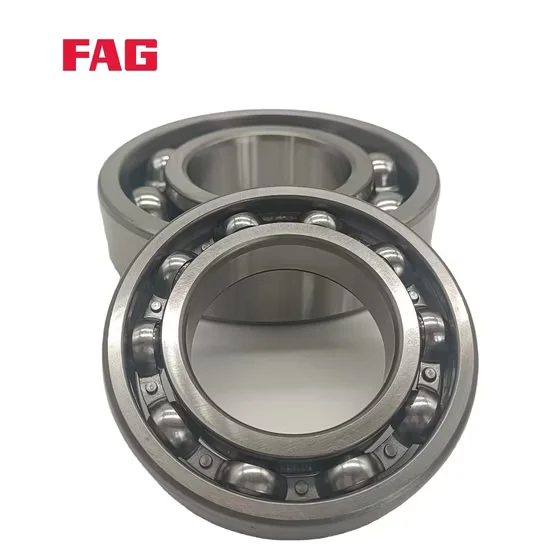
Most buyers assume a 6203-2RSR is the same everywhere. It is not.
The critical difference lies in how US specifications (ABMA/ABEC) define internal clearance and seal material tolerances compared to European DIN standards. For high-temperature motor applications, selecting a FAG 6203-2RSR with C3 clearance under US specs prevents thermal expansion from eliminating running clearance, which is the primary cause of premature seizure in hot climates.
I still recall the silence on the other end of the line from a procurement manager in Riyadh. He had ordered a bulk shipment of standard deep-groove ball bearings for a series of water injection motors. The part numbers matched. The brands were correct. Yet, within weeks, multiple units failed. The issue was not the bearing design itself, but the mismatch between the local ambient heat, the motor’s operating temperature, and the internal clearance specified by default DIN norms rather than the adjusted US specs required for such thermal loads. That incident shifted my entire approach to technical selection. I no longer just check part numbers; I verify the operational environment against the specific tolerance bands defined by regional standards.

Understanding these nuances is essential for anyone sourcing components for industrial machinery in regions with extreme thermal variations. This guide breaks down the specific technical divergences between US and European standards and offers a practical framework for selecting the right configuration.
What Are the Core US Specs for FAG 6203-2RSR?
US specifications prioritize ABMA-defined tolerance classes that differ subtly but significantly from ISO/DIN defaults in terms of fit and clearance.
When sourcing a FAG 6203-2RSR, the base dimensions remain consistent globally due to ISO standardization. However, the interpretation of “standard” clearance and seal performance varies. In the US market, engineers often reference ABMA (American Bearing Manufacturers Association) standards, which align closely with but are distinct from ISO in their documentation of tolerance grades.
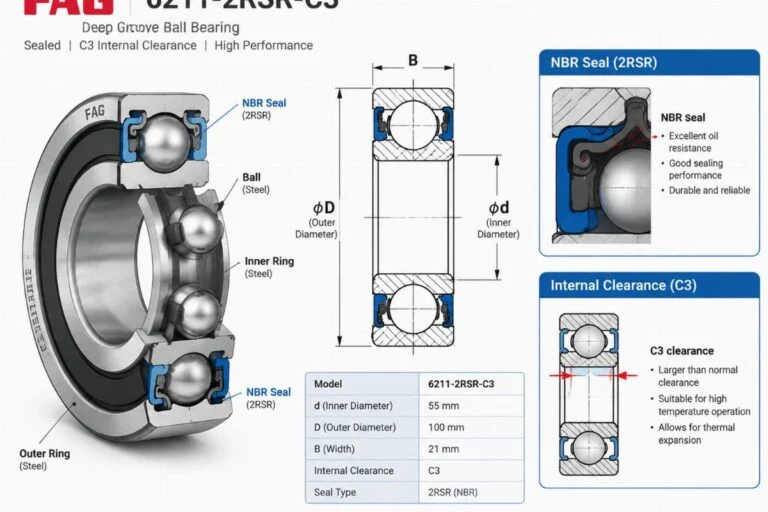
The “2RSR” designation indicates two contact seals made of synthetic rubber, typically NBR (nitrile butadiene rubber). Under US specs, the focus shifts to how these seals interact with specific lubricants and temperature ranges common in North American industrial settings. The “C3” clearance, while an ISO term, is frequently specified in US technical drawings to ensure sufficient room for thermal expansion.
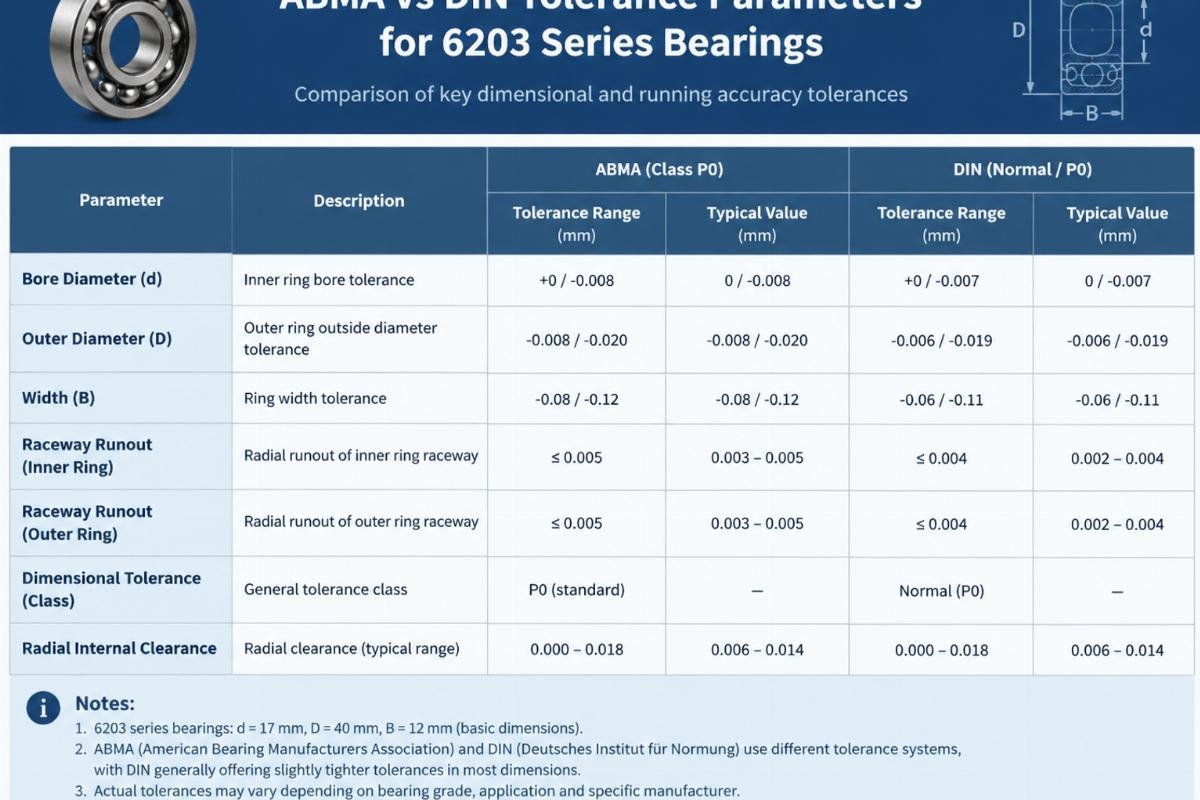
| Parameter | US Spec Focus (ABMA Context) | Standard DIN/ISO Default |
|---|---|---|
| Internal Clearance | Often explicitly specified as C3 for motor apps | Normal (CN) unless stated otherwise |
| Seal Material | NBR optimized for wider temp range | Standard NBR for general use |
| Tolerance Class | ABEC 1 (equivalent to P0) typical | P0 (Normal) typical |
| Lubrication | High-temp grease compatibility emphasized | Standard lithium-based grease |
A common oversight occurs when buyers assume that a “standard” bearing from a European manufacturer automatically meets the thermal requirements of a US-specified motor design. The FAG 6203-2RSR is engineered to handle these demands, but only if the correct clearance variant is selected.
For wholesale distributors, this means that inventory labeled simply as “6203-2RSR” may not suffice for clients requiring high-temperature resilience. Verifying that the stock carries the C3 clearance designation is crucial for avoiding field failures in HVAC or heavy-duty motor applications.
US Specs vs. DIN Standards: What Do Buyers Miss?
The gap between ABEC and DIN standards is not in dimensions, but in the implicit assumptions about operating conditions and clearance reserves.
Many procurement professionals treat bearing part numbers as universal constants. They assume that a FAG 6203-2RSR sourced from a German facility behaves identically to one distributed through US channels. While the steel quality and manufacturing precision are consistent, the application engineering behind the scenes often differs.
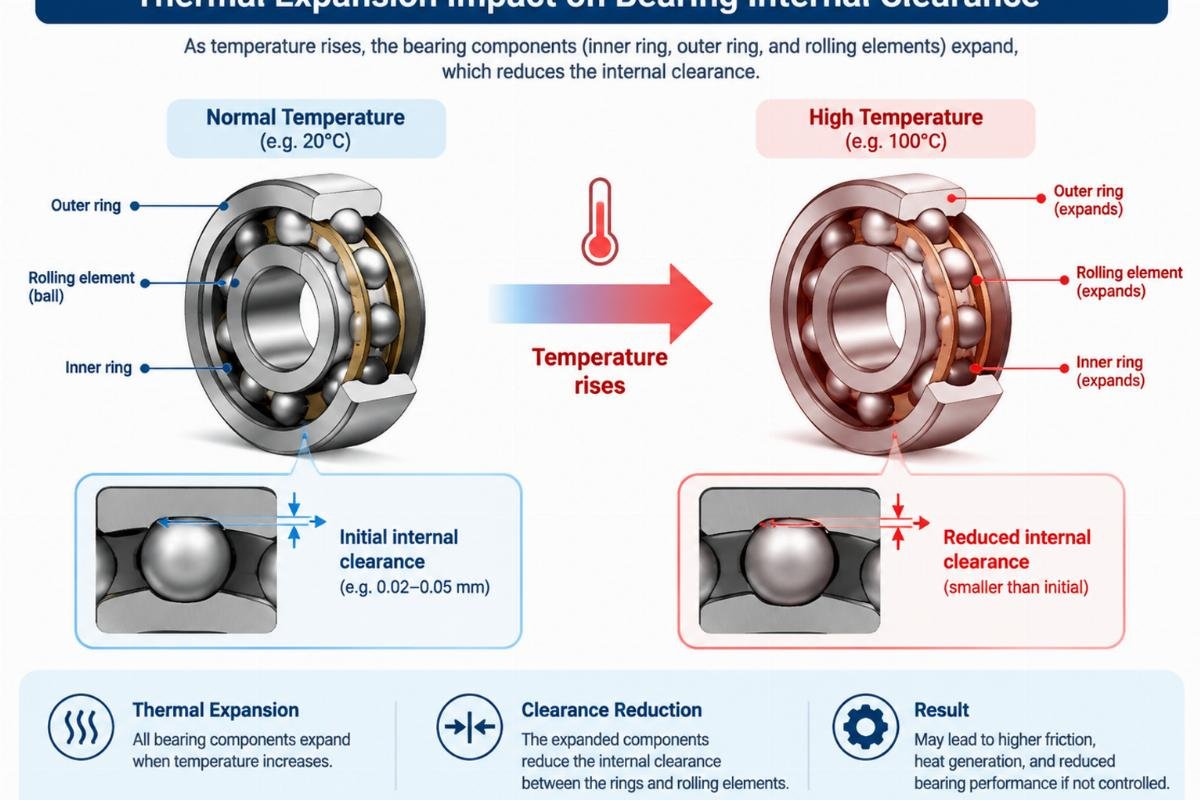
DIN standards typically assume a baseline operating temperature and load condition. US specs, particularly in sectors like oil and gas or mining, often anticipate more extreme variances. The key differentiator is the radial internal clearance. A standard CN clearance might be sufficient for a machine tool in a climate-controlled factory in Europe. However, for a conveyor system in a Latin American mine or a pump in the Middle East, that same CN clearance can vanish as the metal expands, leading to increased friction, heat generation, and eventual failure.
| Feature | DIN Standard Approach | US Spec Adaptation |
|---|---|---|
| Default Clearance | Normal (CN) | Often C3 for industrial motors |
| Seal Friction | Standard torque values | Optimized for start-up torque |
| Temperature Range | Moderate ambient assumptions | Extended high-temp tolerance |
| Application Focus | General machinery | Heavy-duty & harsh environments |
I once reviewed a failure analysis report for a batch of fans installed in a US HVAC project. The bearings had seized after a few months of summer operation. The root cause was not poor quality, but the use of standard clearance bearings in a housing that expanded more than anticipated. Switching to a FAG 6203-2RSR with C3 clearance resolved the issue by maintaining the necessary running gap even at peak temperatures.
This distinction is vital for wholesalers. When clients request quotes for “standard” bearings, asking clarifying questions about operating temperature and load can prevent costly returns and reputation damage. It transforms a transactional sale into a technical partnership.
How to Select the Right 6203-2RSR for High-Temp Uses?
Selection must be driven by calculated thermal expansion rather than generic part number matching.
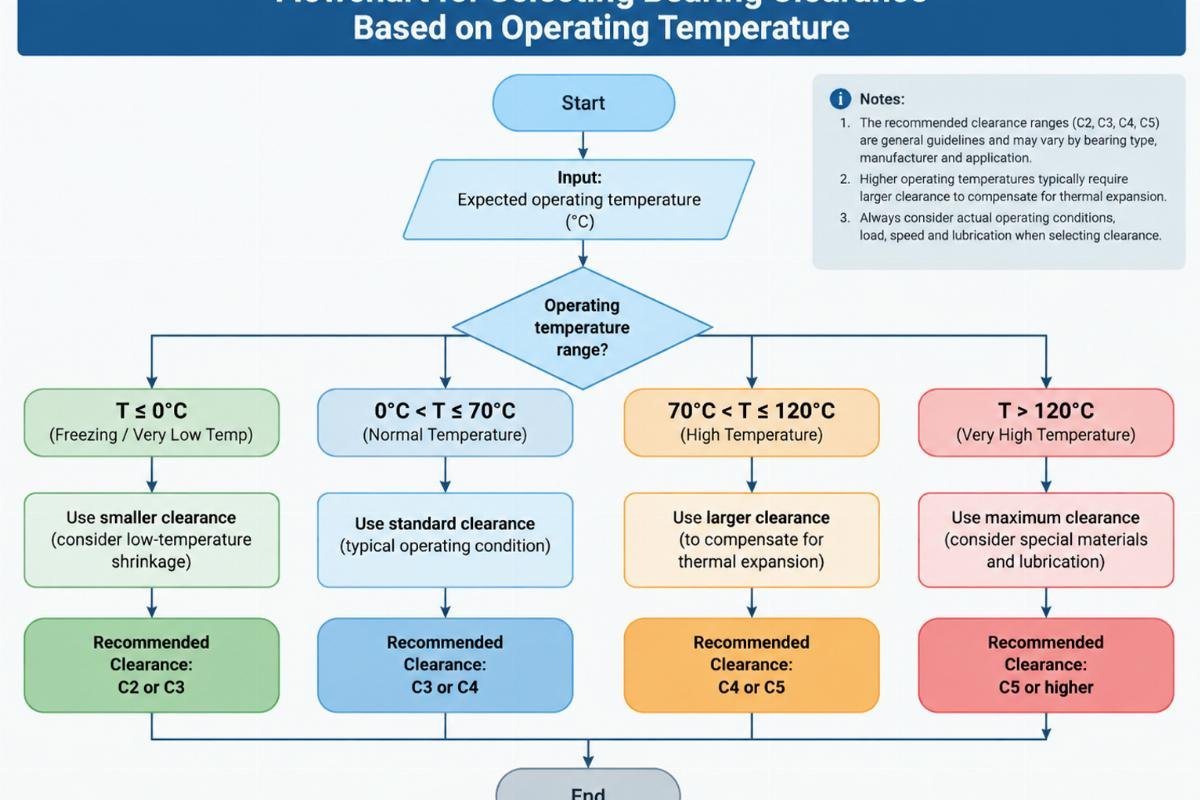
Choosing the correct FAG 6203-2RSR for high-temperature applications requires a methodical approach. It is not enough to rely on the manufacturer’s general datasheet. Engineers and buyers must evaluate the specific thermal dynamics of the application.
First, assess the operating temperature range. If the bearing outer ring is expected to exceed 80°C consistently, standard clearance is likely insufficient. The C3 clearance provides the necessary extra space to accommodate thermal growth without inducing preload.
Second, consider the seal material. The RSR seals on the FAG 6203-2RSR are designed for robust protection, but their performance depends on the lubricant used. In high-temp scenarios, ensuring the grease remains stable and does not break down is critical. The interaction between the seal lip and the inner ring also generates heat; a proper fit minimizes this friction.
- Determine Operating Temperature: Measure or estimate the max steady-state temperature of the bearing housing.
- Calculate Thermal Expansion: Use the coefficient of thermal expansion for steel to estimate how much the inner and outer rings will grow.
- Select Clearance Class: Choose C3 if the calculated expansion reduces the initial clearance by more than half.
- Verify Seal Compatibility: Ensure the NBR seals are compatible with the specific lubricant and temperature range.
A case from a cement plant in Southeast Asia illustrates this. The facility experienced repeated bearing failures in their kiln drive motors. By switching to FAG 6203-2RSR bearings with C3 clearance and verifying the grease specification, they extended the service life significantly. The change was small, but the impact on uptime was substantial.
For distributors, offering this level of technical guidance adds value. It helps clients avoid the trial-and-error approach that often leads to dissatisfaction. Providing data sheets that highlight the C3 clearance benefits can empower buyers to make informed decisions.
Common Failure Modes and How to Avoid Them?
Most failures in high-temp applications stem from clearance elimination and seal degradation, not material defects.
Understanding how and why bearings fail allows for better prevention. In the context of the FAG 6203-2RSR, two primary failure modes dominate in challenging environments: thermal seizure and seal hardening.
Thermal seizure occurs when the internal clearance is completely consumed by heat expansion. The rolling elements become tightly packed, increasing friction dramatically. This generates more heat, creating a vicious cycle that ends in catastrophic failure. This is why the C3 clearance is not just an option but a necessity in many industrial settings.
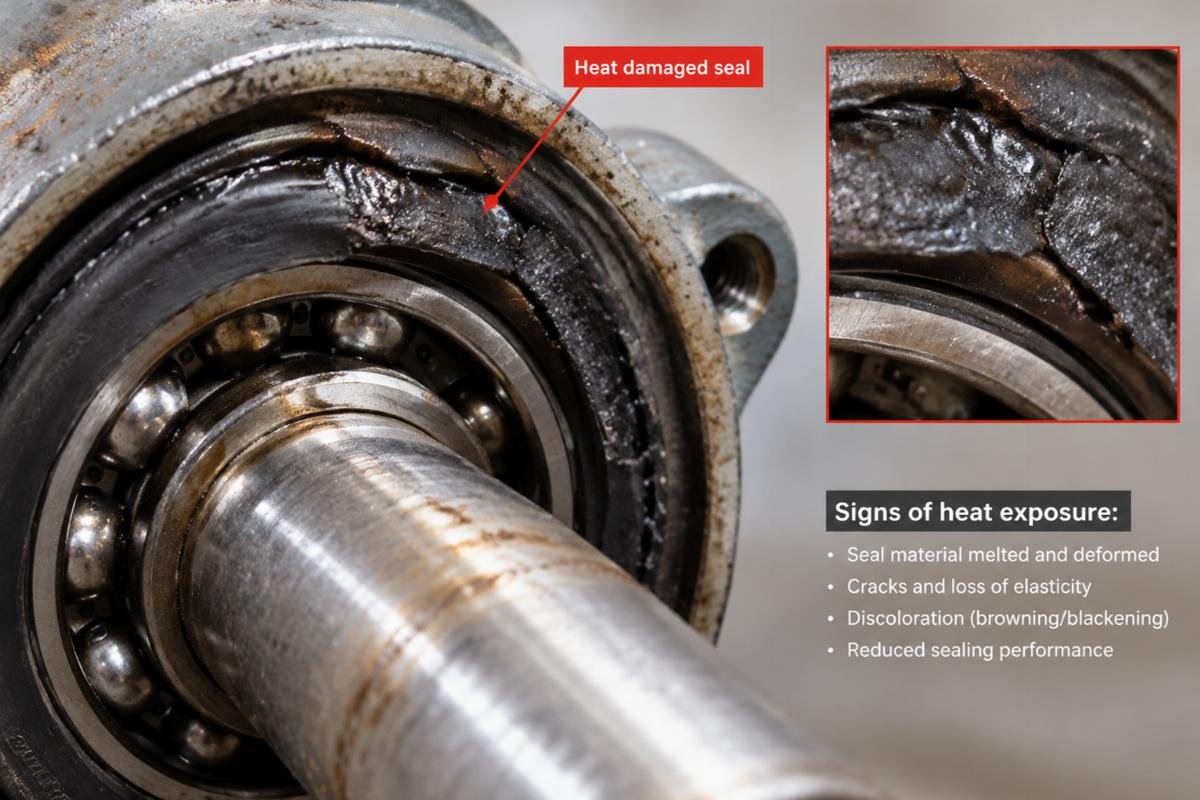
Seal hardening happens when the NBR material is exposed to temperatures beyond its rated limit or incompatible chemicals. The seal loses its elasticity, allowing contaminants to enter and lubricant to escape. Once the seal fails, the bearing is vulnerable to wear and corrosion.
| Failure Mode | Root Cause | Prevention Strategy |
|---|---|---|
| Thermal Seizure | Insufficient internal clearance | Specify C3 clearance for high-temp apps |
| Seal Hardening | Excessive heat or chemical exposure | Verify temp limits and lubricant compatibility |
| Premature Wear | Contaminant ingress due to seal failure | Ensure proper storage and handling |
| Lubricant Breakdown | High operating temperatures | Use high-temp stable grease |
I have seen warehouses where bearings were stored near heat sources, inadvertently aging the seals before installation. Proper storage conditions are as important as technical selection. Ensuring that the FAG 6203-2RSR units are kept in a cool, dry place preserves the integrity of the RSR seals until they are needed.
By focusing on these preventive measures, buyers can maximize the reliability of their equipment. It is not just about buying the right part; it is about maintaining its integrity throughout the supply chain and into operation.
Conclusion
Precision in specification prevents failure in operation.
The FAG 6203-2RSR is a robust component, but its performance depends heavily on matching the right clearance and seal characteristics to the application environment. Understanding the differences between US specs and DIN standards allows for smarter sourcing decisions. Prioritizing C3 clearance for high-temperature uses and verifying seal compatibility ensures long-term reliability. For wholesalers and engineers alike, this attention to detail transforms a simple commodity purchase into a strategic advantage.