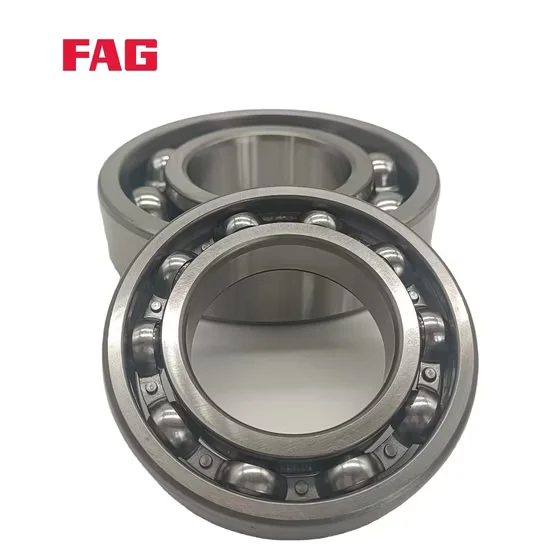
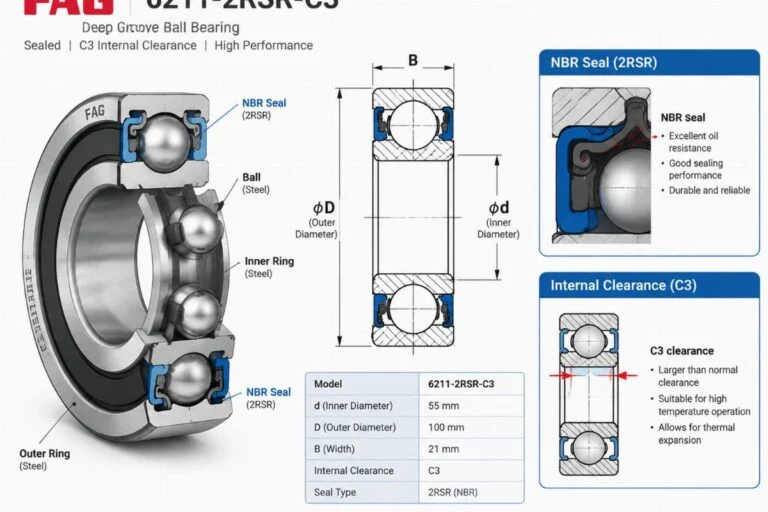
C3 clearance is not a performance upgrade; it is a thermal survival mechanism.
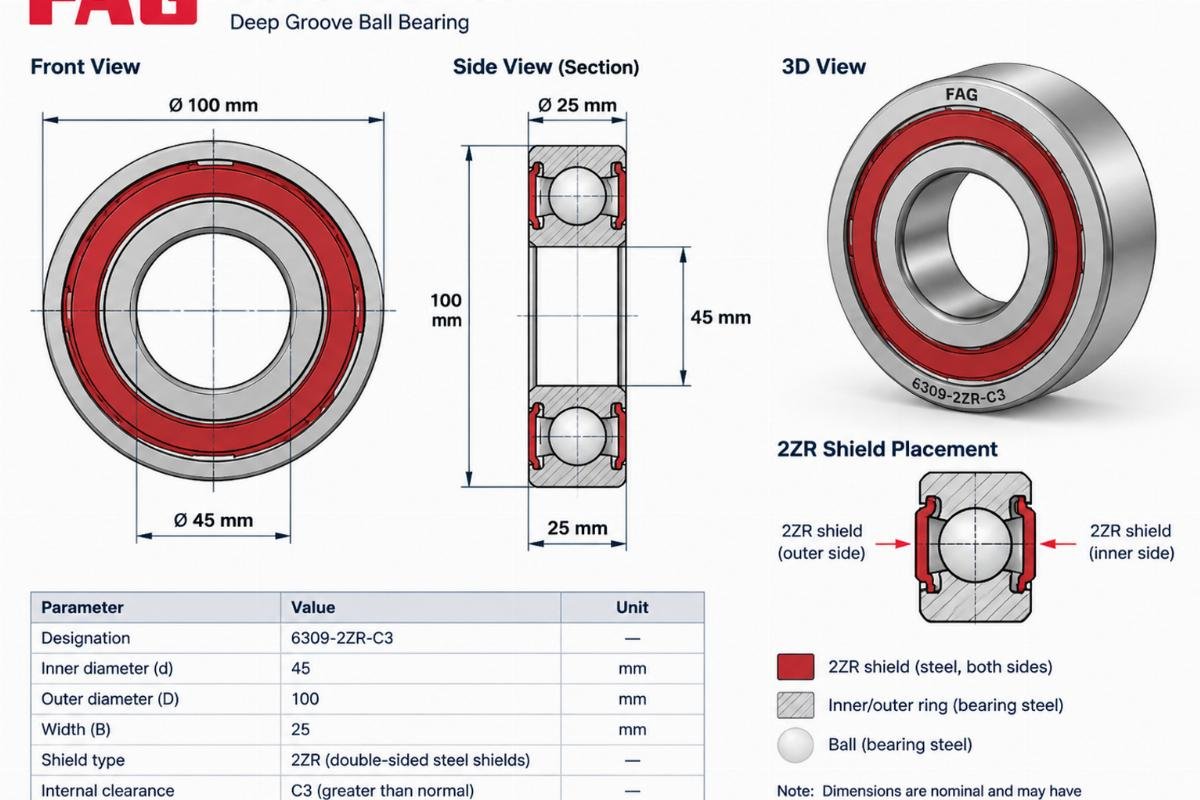
The FAG 6309-2ZR-C3 bearing is defined by its 45mm bore, 100mm outer diameter, and 25mm width, featuring metal shields on both sides and an internal radial clearance larger than standard to accommodate thermal expansion in high-temperature industrial environments. This specific configuration prevents seizure in applications where operating temperatures exceed normal ambient ranges, making it a critical component for mining crushers, cement plant conveyors, and heavy-duty motors. Procurement teams must verify batch traceability and dimensional tolerances against ISO standards to ensure the C3 clearance range is maintained, as counterfeit or mislabeled stock often defaults to standard clearance, leading to premature failure under load.
When I first started handling after-sales support for mining equipment in Dongguan, the most dreaded call was the one that came at midnight. A primary ore processing line had stopped. The silence was heavier than the machinery itself. We rushed to the site, expecting a electrical fault or a hydraulic leak. Instead, we found the main drive motor seized solid. The housing was hot enough to burn skin through gloves. When we finally cut the casing open, the bearing inside was fused to the shaft. It was labeled as an imported premium brand, but the internal clearance was standard. At the operating temperature of that crusher, which regularly hit highs during peak summer loads, the steel rings expanded. With no extra room for this expansion, the balls locked into the raceways. That single component failure cost days of production and a mid-six-figure loss in downtime. Since then, my approach to sourcing has shifted from checking part numbers to verifying the physical logic of the application.
What Are the Core Dimensions of FAG 6309-2ZR-C3?
Precision in bulk procurement means matching the exact geometric envelope, not just the part number.
For MRO operators and distributors, the physical dimensions are the first line of defense against installation errors. The FAG 6309-2ZR-C3 follows the ISO 15 series dimensional plan. Any deviation in these metrics suggests non-compliant manufacturing or counterfeit goods. Understanding these values allows maintenance teams to prepare housings and shafts correctly before the bearing even arrives.
| Parameter | Value | Tolerance Class Reference |
|---|---|---|
| Bore Diameter (d) | 45 mm | ISO 492 Normal |
| Outer Diameter (D) | 100 mm | ISO 492 Normal |
| Width (B) | 25 mm | ISO 492 Normal |
| Chamfer Dimension (min) | 1.5 mm | ISO 15 |
| Mass | Approx. 0.6 kg | Reference Only |
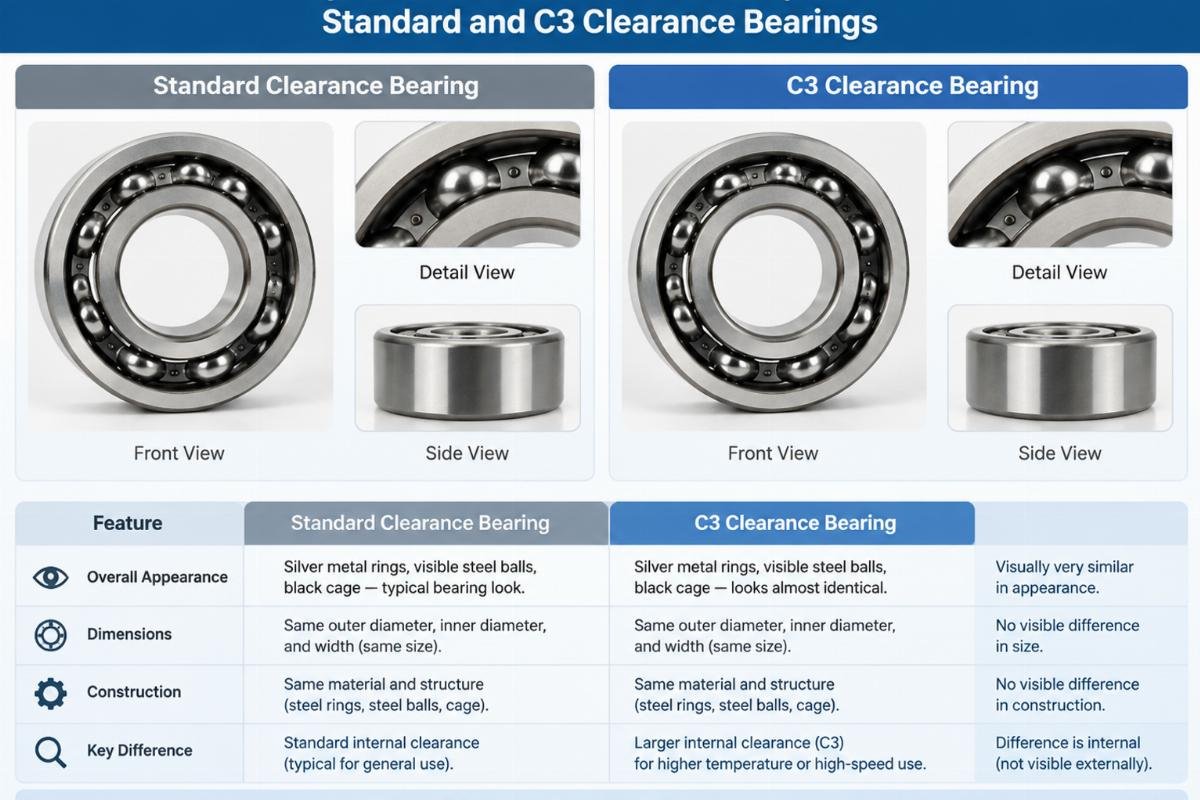
The “2ZR” designation indicates that the bearing is equipped with non-contact metal shields on both sides. These shields are pressed into the outer ring and do not touch the inner ring, allowing for higher speeds than contact seals while providing better protection than open bearings. The “C3” suffix is the critical differentiator here. It denotes a radial internal clearance greater than the standard CN group. In a warehouse setting, a C3 bearing looks identical to a standard one. You cannot see the extra microns of space between the balls and the raceways. This invisibility is why documentation matters.
I once inspected a container of mixed bearings for a wholesaler in Southeast Asia. The boxes were pristine, the logos looked sharp, but the weight felt slightly off on a few units. Upon closer inspection with calipers, the outer diameter was within spec, but the internal fit was tight. These were standard clearance bearings relabeled as C3. In a high-temperature fan application, these would have failed within weeks. For a FAG 6309-2ZR-C3 bearing wholesale supplier for bulk orders, the ability to distinguish these subtle physical differences through rigorous incoming quality control is what separates a reliable partner from a mere box mover.
Why Choose 2ZR Shields and C3 Clearance?
Thermal expansion is silent until it destroys your machinery.
Many buyers assume that C3 clearance is only necessary for high-speed applications. This is a dangerous misconception. While speed generates heat, ambient temperature and external heat sources are equally destructive. In cement plants and steel mills, bearings often operate in environments where the surrounding air is already hot. As the bearing steel heats up, it expands. If the internal clearance is standard, this expansion eats up the running gap. Once the gap disappears, friction spikes, generating more heat, leading to a thermal runaway event.
The 2ZR shields play a complementary role. In dusty environments like mining or aggregate processing, open bearings allow particulate matter to enter the raceway. This abrasion wears down the polished surfaces, creating noise and vibration. Contact seals (RS or 2RS) offer better protection but generate more friction and heat due to rubbing against the inner ring. The 2ZR metal shields strike a balance. They deflect large particles and retain grease without adding significant frictional torque. This makes them ideal for electric motors and gearboxes where heat dissipation is already a challenge.
A European wind farm operator once reported that their gearbox bearings were failing prematurely. The investigation revealed that dust ingress was compromising the lubrication. Switching from open bearings to 2ZR variants extended the service life noticeably. However, they initially ignored the clearance issue. When summer temperatures rose, the new sealed bearings began to overheat. Only after switching to the C3 clearance variant did the temperatures stabilize. The combination of 2ZR protection and C3 thermal allowance created a robust solution for their harsh environment.
When sourcing from a FAG 6309-2ZR-C3 bearing wholesale supplier for bulk orders, it is essential to confirm that the C3 specification is not just a label but a verified physical attribute. Requesting test reports that show radial internal clearance measurements can prevent costly field failures.

Load Ratings and Speed Limits for Heavy Industry
Dynamic load ratings are theoretical limits; real-world life depends on lubrication and alignment.
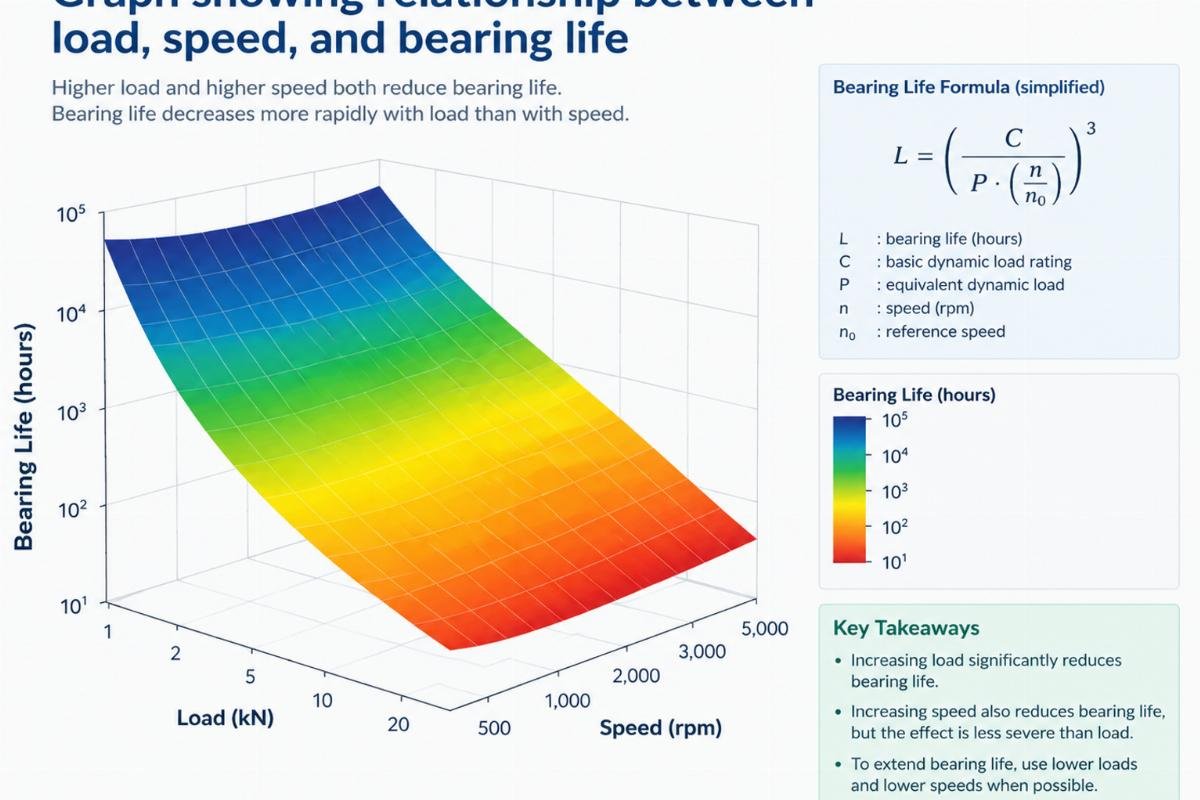
The FAG 6309-2ZR-C3 is designed for moderate to heavy radial loads. Its dynamic load rating (Cr) and static load rating (Cor) define its capacity to withstand forces during rotation and when stationary. However, these numbers are based on ideal conditions: perfect alignment, clean lubrication, and stable temperatures. In heavy industry, these conditions rarely exist.
| Rating Type | Symbol | Significance |
|---|---|---|
| Dynamic Load Rating | Cr | Capacity for rotating applications |
| Static Load Rating | Cor | Capacity for stationary or slow-moving loads |
| Limiting Speed | nG | Max speed with grease lubrication |
| Reference Speed | nθr | Speed limit for thermal equilibrium |
The limiting speed for a 2ZR bearing is generally lower than for an open bearing due to the slight aerodynamic drag and potential for grease churning within the shielded area. However, for most industrial motor applications, the operating speed is well below this limit. The more critical factor is lubrication. The 2ZR shields retain the factory-filled grease, but they also make regreasing difficult or impossible depending on the design. Therefore, the initial grease fill and its quality are*esaler, we consolidated a mixed container of bearings for various industrial clients. One client used the FAG 6309-2ZR-C3 in a high-vibration screen. The frequent start-stop cycles caused the grease to migrate. Because the shields prevented easy relubrication, the bearing ran dry. The solution was not a different bearing, but a higher-quality synthetic grease specified for high-temperature and high-vibration environments. This highlights that the bearing is part of a system. The hardware provides the structure, but the lubrication provides the life.
Sourcing from a knowledgeable FAG 6309-2ZR-C3 bearing wholesale supplier for bulk orders ensures that you receive not just the hardware, but also the technical data sheets needed to select the correct lubrication strategy for your specific application.
How to Verify Authenticity in Bulk Procurement?
Counterfeit bearings look perfect until they fail.
The global bearing market is flooded with counterfeit products. These fakes often use recycled steel, improper heat treatment, and incorrect clearance grades. They are sold at attractive prices but carry a hidden cost of reliability. For a distributor or MRO operator, accepting a bad batch can damage reputation and lead to liability claims from end-users.
Verification starts with documentation. Genuine FAG bearings come with traceability codes that link the product to its manufacturing batch. These codes should be present on the packaging and, in many cases, laser-etched on the bearing itself. Requesting a certificate of origin and material test reports is standard practice. However, documents can be forged. Physical inspection is the ultimate safeguard.
Check the surface finish. Genuine bearings have a smooth, consistent matte or polished finish depending on the type. Counterfeits often have rough machining marks or inconsistent coloring. Check the logo. FAG uses precise laser etching or stamping. Fakes may have blurred or uneven lettering. Most importantly, check the internal clearance. Using feeler gauges or specialized clearance measurement tools can verify if the bearing is indeed C3.

A US buyer once received a shipment of bearings that looked authentic. The boxes were correct, the papers were in order. But when installed, the bearings exhibited high noise levels immediately. Laboratory analysis revealed that the steel quality was substandard, with high inclusion content. The supplier had mixed genuine and fake products in the same container to lower costs. This incident underscores the importance of sourcing from a trusted FAG 6309-2ZR-C3 bearing wholesale supplier for bulk orders who performs rigorous incoming inspections and maintains transparent supply chains.
We handle full-container consolidation for global wholesalers, ensuring that every unit is traced back to the manufacturer’s production facilities. This level of oversight protects our partners from the risks of mixed batches and counterfeit infiltration. By focusing on traceability and technical verification, we help distributors maintain their integrity in local markets.
Conclusion
Reliability is built on verification, not just acquisition.
The FAG 6309-2ZR-C3 is a robust solution for high-temperature and dusty industrial applications, provided its specific clearance and shielding features are matched to the operating environment. Procurement success depends on understanding the technical rationale behind the C3 clearance and 2ZR shields, and implementing strict verification protocols to ensure authenticity. Partnering with a supplier who prioritizes traceability and technical accuracy mitigates the risk of premature failure and protects operational continuity.