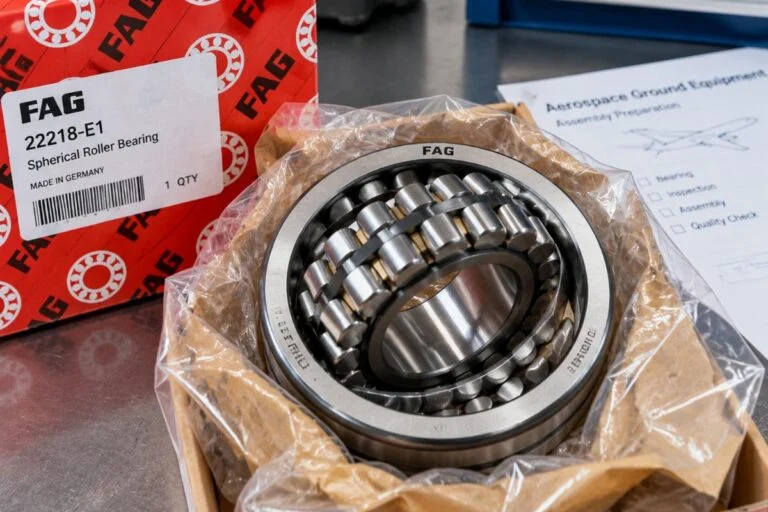
Exact dimensions do not guarantee fit in a paper mill dryer.
Selecting genuine FAG bearings for US containerboard mills requires matching high-temperature and high-humidity operating conditions, not just dimensional accuracy. MRO managers must prioritize seal compatibility and high-temperature grease drop-points over basic size specifications to prevent premature seizure in corrugated dryers.
I still recall the heat radiating from the dryer section of a corrugator in the Midwest. The air was thick with steam, and the noise was a constant, low-frequency hum that vibrated through the soles of my boots. A procurement manager pointed at a seized spherical roller bearing on a dryer roll, his frustration palpable. He had ordered replacements based strictly on the part number, assuming that a genuine product would simply slide into place and perform. It did not. The bearing had locked up within weeks, causing unplanned downtime that cost far more than the component itself. The issue was not the steel quality or the internal geometry. The failure stemmed from a mismatch between the standard seal material and the sustained high temperatures, combined with a lubricant that could not withstand the moisture ingress typical of such environments. This incident reshaped my approach to supplying FAG bearings in US containerboard mills. I learned that technical selection must account for the specific thermal and chemical stresses of the application, rather than relying solely on catalog data.

Understanding why these components fail is the first step toward optimizing maintenance strategies. The following sections detail the technical nuances of selecting and maintaining these critical assets.
Why Do FAG Bearings Fail in Containerboard Dryers?
High heat and moisture degrade standard seals and grease, causing premature seizure.
The dryer section of a containerboard machine presents one of the most hostile environments for rolling bearings. Temperatures often exceed thresholds that standard industrial lubricants and elastomeric seals can handle consistently. When a bearing fails in this zone, it is rarely due to fatigue from load alone. Instead, the root cause is typically the breakdown of the sealing system or the oxidation of the lubricant.
Standard nitrile rubber seals may harden and crack when exposed to continuous temperatures above certain limits, allowing steam and condensate to enter the bearing housing. Once moisture infiltrates the raceway, it mixes with the grease, forming an abrasive emulsion that accelerates wear on the rollers and cages. Additionally, if the grease has a low drop-point, it will liquefy and leak out, leaving the metal surfaces unprotected against friction and corrosion.
In many cases, maintenance teams replace failed units with identical parts without adjusting the specification for the specific zone. A bearing suitable for a cooler end of the line may not survive in the primary drying section. This oversight leads to a cycle of repeated failures. By analyzing the thermal profile of each dryer group, engineers can identify where enhanced sealing solutions or synthetic high-temperature greases are necessary. The goal is to maintain a stable lubricant film despite the thermal expansion and contraction cycles inherent in paper production.
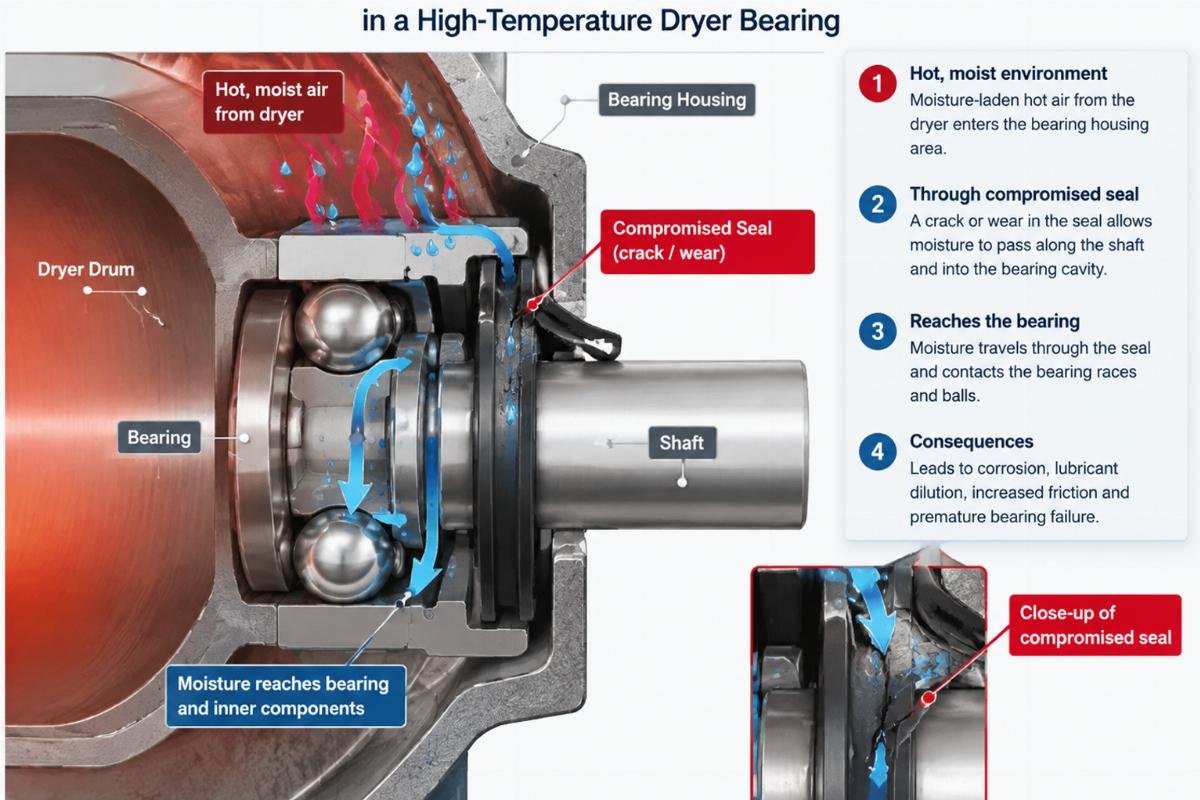
Selecting the right configuration involves more than choosing a brand. It requires a deep understanding of how environmental factors interact with component materials. This is where specialized knowledge becomes crucial for buyers sourcing FAG bearings in US containerboard mills.
How to Select the Right FAG Spherical Roller Bearings?
Match bearing clearance, seal type, and high-temperature grease to specific dryer zones.
Selection is not a one-size-fits-all process. Different sections of the corrugator impose different demands on the bearing assembly. The key parameters to evaluate include internal clearance, seal material compatibility, and lubricant thermal stability.
Internal clearance is critical because dryer rolls expand significantly when heated. If the initial clearance is too tight, thermal expansion can lead to excessive preload, generating heat and causing early failure. Conversely, too much clearance can result in vibration and uneven load distribution. For high-temperature applications, bearings with C3 or C4 clearance are often recommended to accommodate thermal growth.
Seal selection is equally important. Standard rubber seals may not suffice in areas with high steam exposure. Fluoroelastomer or PTFE-based seals offer better resistance to heat and chemicals, maintaining their elasticity and sealing integrity over longer periods. However, these materials come at a higher cost and may require specific installation tools to avoid damage during mounting.
Lubrication strategy must align with the operating temperature. Synthetic greases with high drop-points and excellent water resistance are essential for dryer sections. These lubricants resist oxidation and maintain their viscosity under stress, ensuring consistent protection. Regular monitoring of grease condition can provide early warnings of contamination or degradation.
| Parameter | Standard Application | High-Temperature Dryer Zone |
|---|---|---|
| Internal Clearance | Normal (C2/CN) | Increased (C3/C4) |
| Seal Material | Nitrile Rubber | Fluoroelastomer/PTFE |
| Lubricant Type | Mineral Oil Based | Synthetic High-Temp |
| Thermal Stability | Moderate | High |
| Moisture Resistance | Basic | Enhanced |
This table illustrates the qualitative differences in requirements. Note that exact temperature limits depend on specific grade formulations and should be verified with technical datasheets. Buyers looking for FAG bearings in US containerboard mills must ensure their suppliers can provide components that meet these elevated specifications.
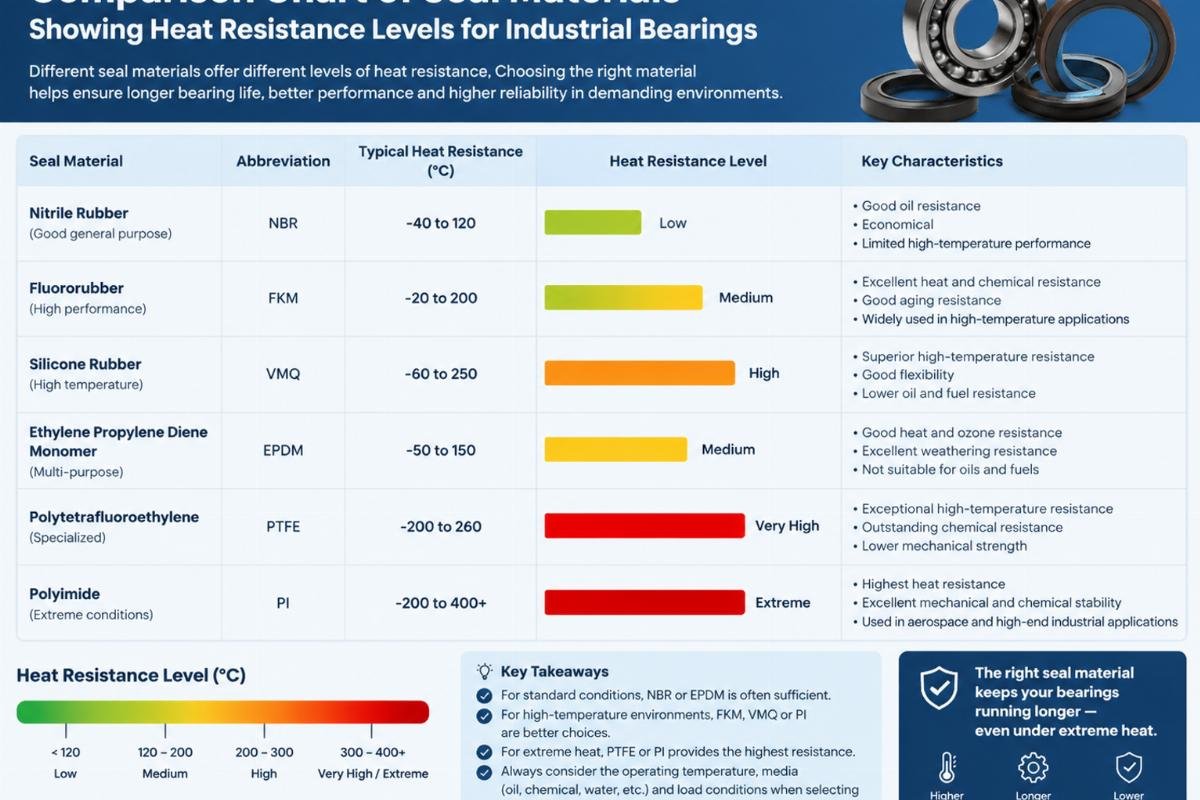
Proper selection reduces the risk of unexpected breakdowns. It transforms maintenance from a reactive chore into a managed process.
What Are the Best Practices for Mill MRO Replacement?
Proactive condition monitoring and flexible mixed-brand sourcing minimize unplanned downtime.
Maintenance strategies in containerboard mills have evolved from simple time-based replacement to condition-based monitoring. Vibration analysis and temperature tracking allow teams to detect anomalies before they lead to catastrophic failure. However, even with advanced monitoring, the speed and accuracy of replacement parts sourcing remain critical.
When a bearing shows signs of distress, the window for replacement is often narrow. Delaying action can result in damage to the roll surface or adjacent components, escalating repair costs. Therefore, having access to a reliable supply chain that can deliver genuine parts quickly is vital. This is where the concept of mixed-brand sourcing becomes valuable. Mills often operate equipment from various manufacturers, requiring a diverse inventory of bearings. A supplier who can consolidate orders for SKF, FAG, INA, and other premium brands simplifies logistics and reduces lead times.
In one instance, a mill faced an urgent breakdown during a peak production period. Their usual vendor could not supply the specific FAG spherical roller bearing needed for the dryer section. By leveraging a network that supported mixed-brand consolidation, they sourced the required unit alongside other routine MRO items from different manufacturers. This flexibility prevented a prolonged shutdown.
Technical consultation also plays a role in effective MRO. Suppliers who understand the operational context can advise on alternative solutions if the exact original part is unavailable. For example, suggesting a bearing with enhanced sealing features for a problematic location can improve long-term reliability. This level of support goes beyond transactional sales, adding value to the procurement process.
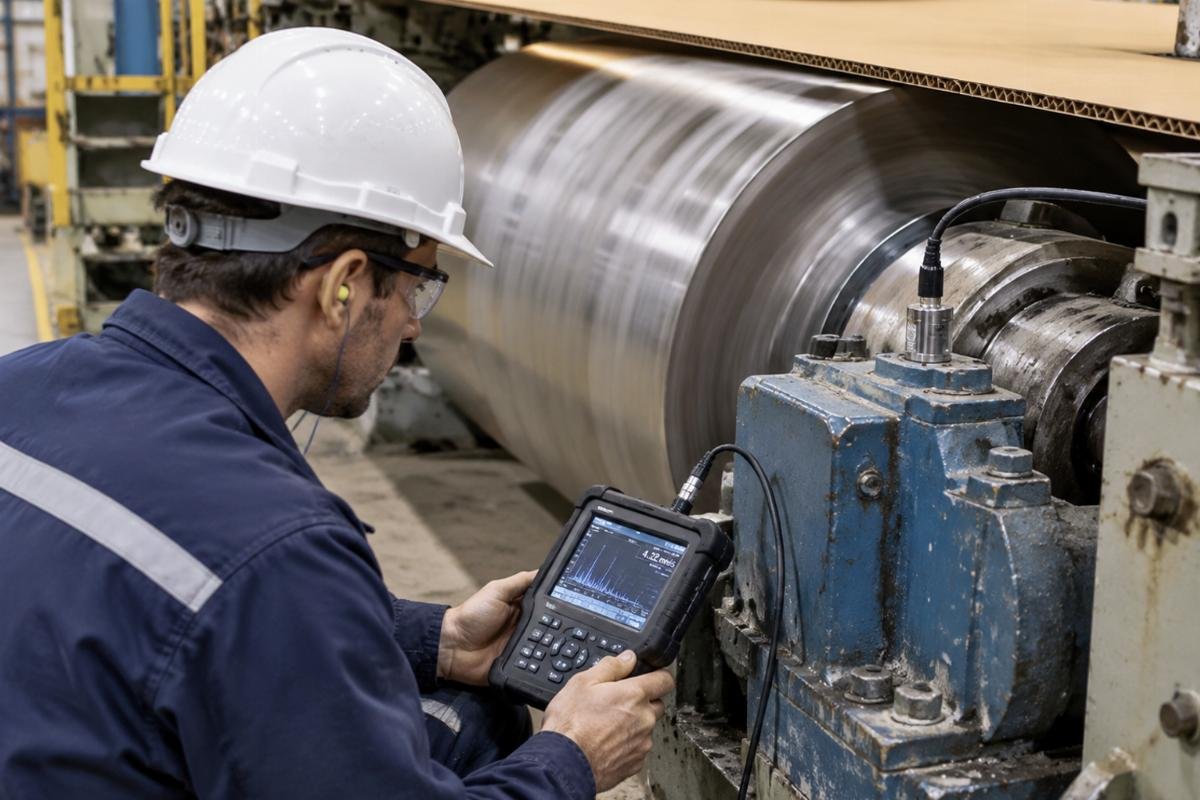
Efficient MRO management relies on both technical insight and logistical agility. Sourcing FAG bearings in US containerboard mills effectively means partnering with suppliers who offer both.
Navigating the Supply Chain for Genuine Components
Traceability and technical verification ensure authenticity in a complex market.
The global bearing market is fraught with counterfeit products that mimic reputable brands. For critical applications like containerboard dryers, using non-genuine parts poses significant risks. Counterfeit bearings often use inferior steel and lack the precise heat treatment required for high-load, high-temperature service. They may appear identical externally but fail prematurely under stress.
Ensuring authenticity requires rigorous supply chain controls. Reputable suppliers provide full traceability documentation, including batch numbers and certificates of conformity. This paperwork allows mills to verify the origin of each component. Additionally, visual inspection of packaging and marking can reveal discrepancies, though professional verification is more reliable.
Sourcing from a provider with a broad portfolio allows for comparative analysis. When a buyer requests FAG bearings in US containerboard mills, they should expect transparency regarding stock availability and origin. Suppliers who maintain large spot inventories of standard and special part numbers can respond faster to urgent needs. This capability is particularly important for mills that operate with lean inventory levels to reduce carrying costs.
Moreover, technical support during the selection phase helps avoid mismatches. A supplier who asks about operating temperatures, speeds, and environmental conditions demonstrates a commitment to application success. This collaborative approach ensures that the selected bearing is not just a commodity item but a tailored solution for the specific challenges of the mill.
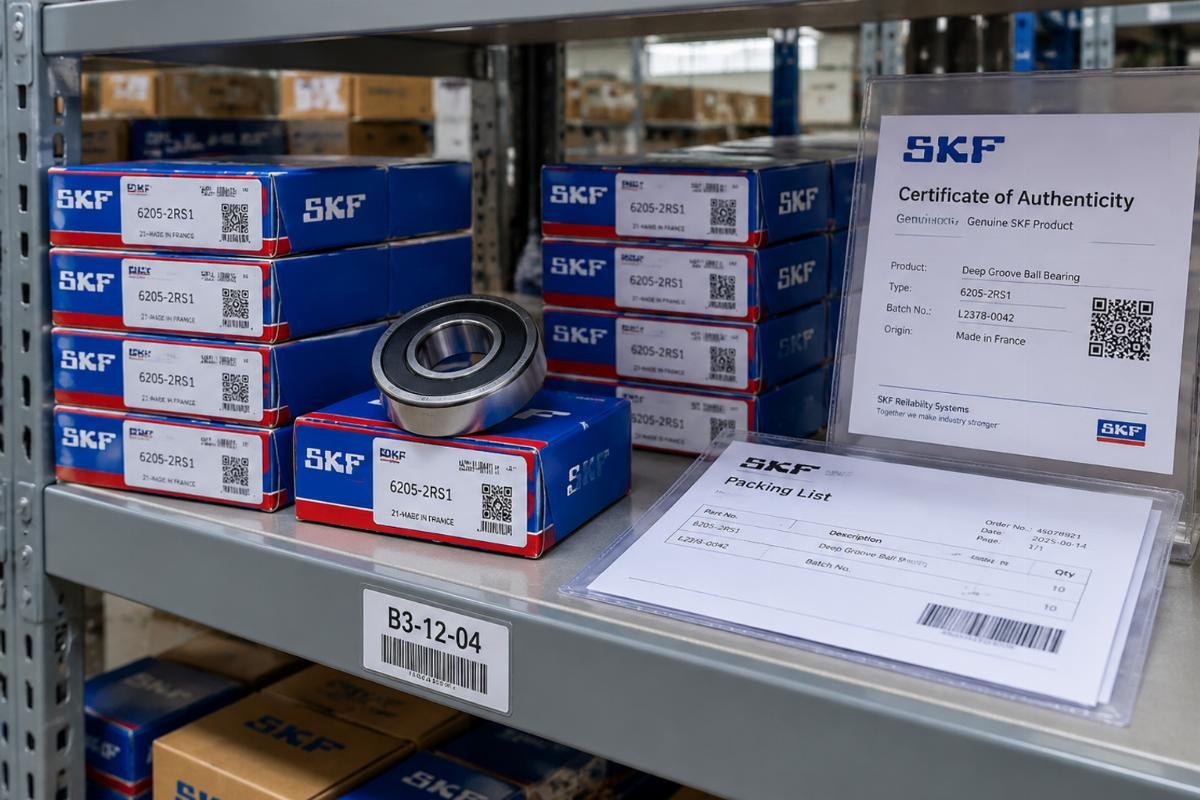
Trust in the supply chain is built on consistency and verification. Mills benefit from partners who prioritize integrity and technical competence.
Conclusion
Performance depends on matching specifications to environmental realities.
Successful operation of containerboard mills relies on selecting bearings that withstand high heat and moisture. Focus on seal compatibility and lubricant stability rather than just dimensions. Partner with suppliers who offer genuine products, technical guidance, and flexible sourcing options to maintain productivity and reduce downtime.