Cheaper aftermarket parts do not save money during harvest; they cost the entire season.
Genuine FAG bearings, specifically spherical roller types with precise C3 or C4 clearance, are critical for maximizing uptime and preventing catastrophic spindle failures in US combines during peak harvest. Sourcing authentic components with verifiable traceability is the only reliable strategy to minimize downtime for MRO operators and ag-equipment dealers.
I still remember the silence of a combine harvester stalled in a North Dakota field. It was mid-October, the sky was gray, and the crop was ready to rot. The issue was not the engine or the electronics, but a seized main spindle bearing. I had approved a batch of replacement units that looked identical to the originals but lacked the internal precision required for heavy agricultural loads. The cost of that single failure was not just the price of a new bearing. It included emergency freight, labor overtime, and the value of the unharvested acreage. That experience shifted my focus entirely to verifying the authenticity and specification of every component leaving the warehouse. Today, when distributors ask for FAG bearings for US farm combines, I do not just check the part number. I check the clearance class and the supply chain origin.
Understanding why these specific components fail requires looking beyond the brand name. It demands an analysis of the operating environment and the engineering standards that govern high-load agricultural machinery.
Why Combine Harvesters Demand Premium FAG Bearings?
Combine harvesters operate in some of the most hostile environments in industrial machinery. They are subjected to extreme vibration, heavy radial loads, and significant contamination from dust, chaff, and moisture. During peak harvest, these machines run continuously for extended hours, generating substantial heat. Standard industrial bearings often fail under these conditions because they are not designed for the specific dynamic load ratings required by agricultural spindles.
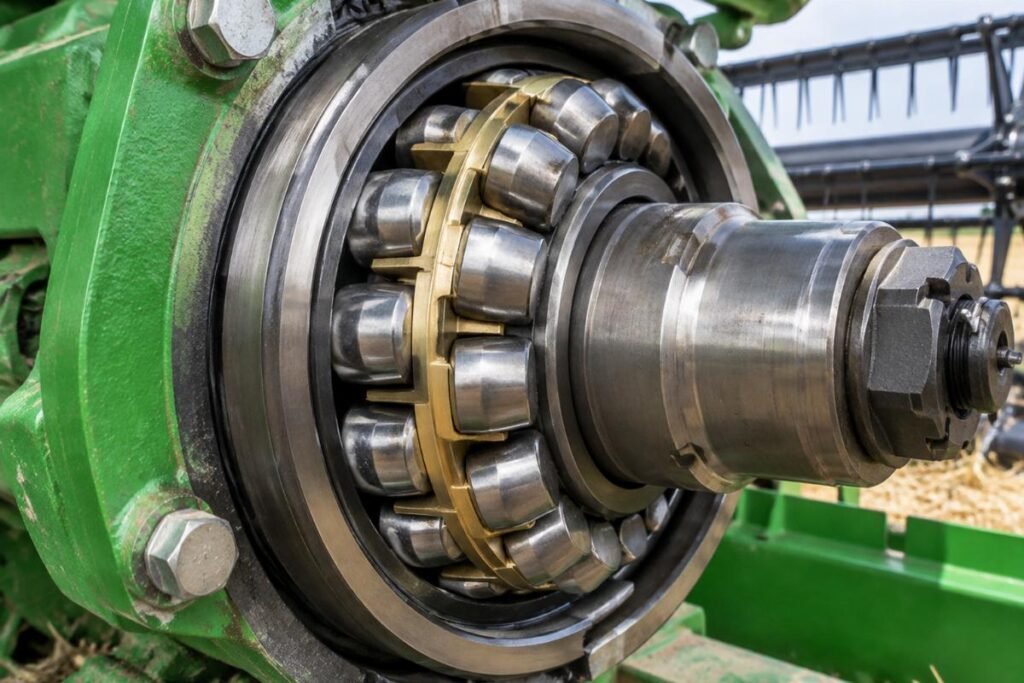
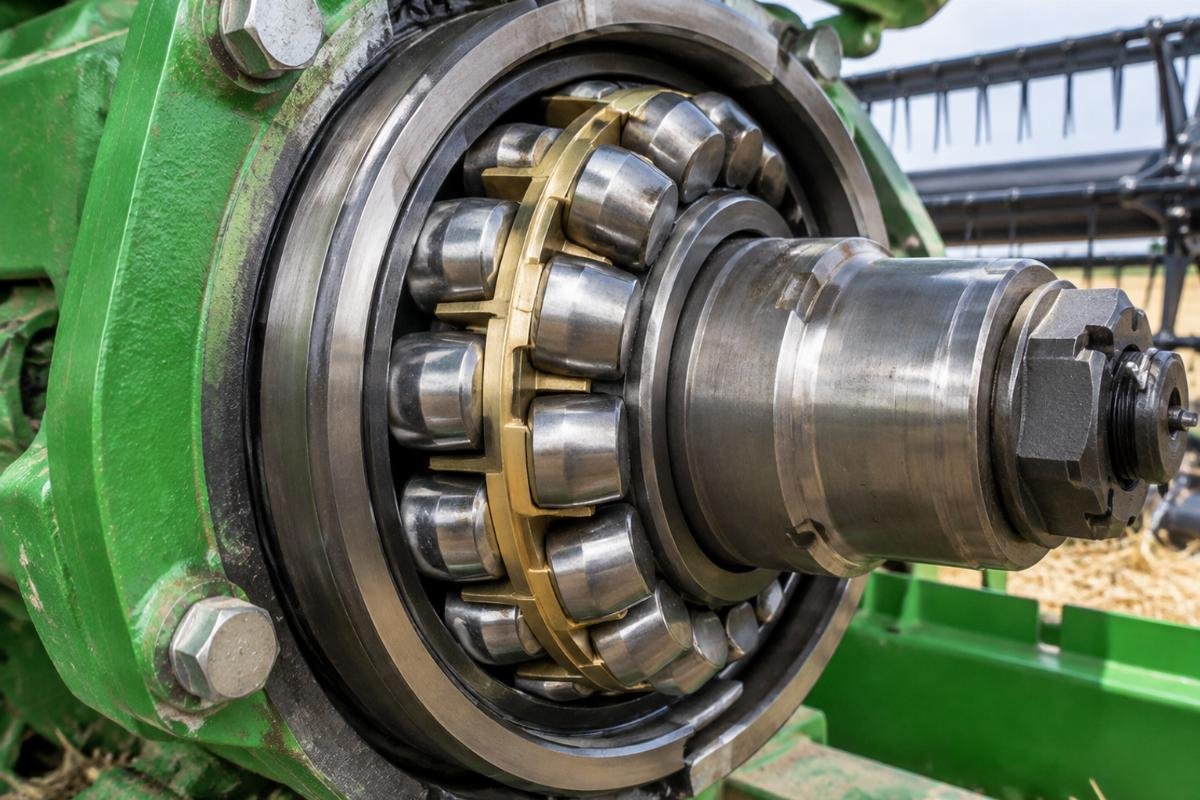
The primary challenge is the combination of shock loading and misalignment. As the combine moves over uneven terrain, the header and threshing mechanisms experience sudden shifts in alignment. This is where the design of spherical roller bearings for combine harvesters becomes essential. Unlike deep groove ball bearings, spherical roller bearings can accommodate angular misalignment without inducing excessive internal stress. This self-aligning capability prevents premature edge loading on the rollers, which is a common cause of early fatigue failure in cheaper alternatives.
Furthermore, the material quality of genuine FAG products plays a crucial role in longevity. The steel used in these bearings undergoes rigorous purification processes to reduce non-metallic inclusions. These inclusions act as stress concentrators that initiate cracks under cyclic loading. In a high-vibration environment like a combine, even microscopic defects can propagate rapidly, leading to spalling and eventual seizure.

For MRO operators, the choice is not merely about brand preference. It is about risk management. A failed bearing in a workshop is an inconvenience. A failed bearing in the field during harvest is a financial disaster. The reliability of FAG bearings for US farm combines stems from their ability to maintain structural integrity under these unpredictable and severe conditions.
Critical Selection: Spherical Roller Bearings & Clearance
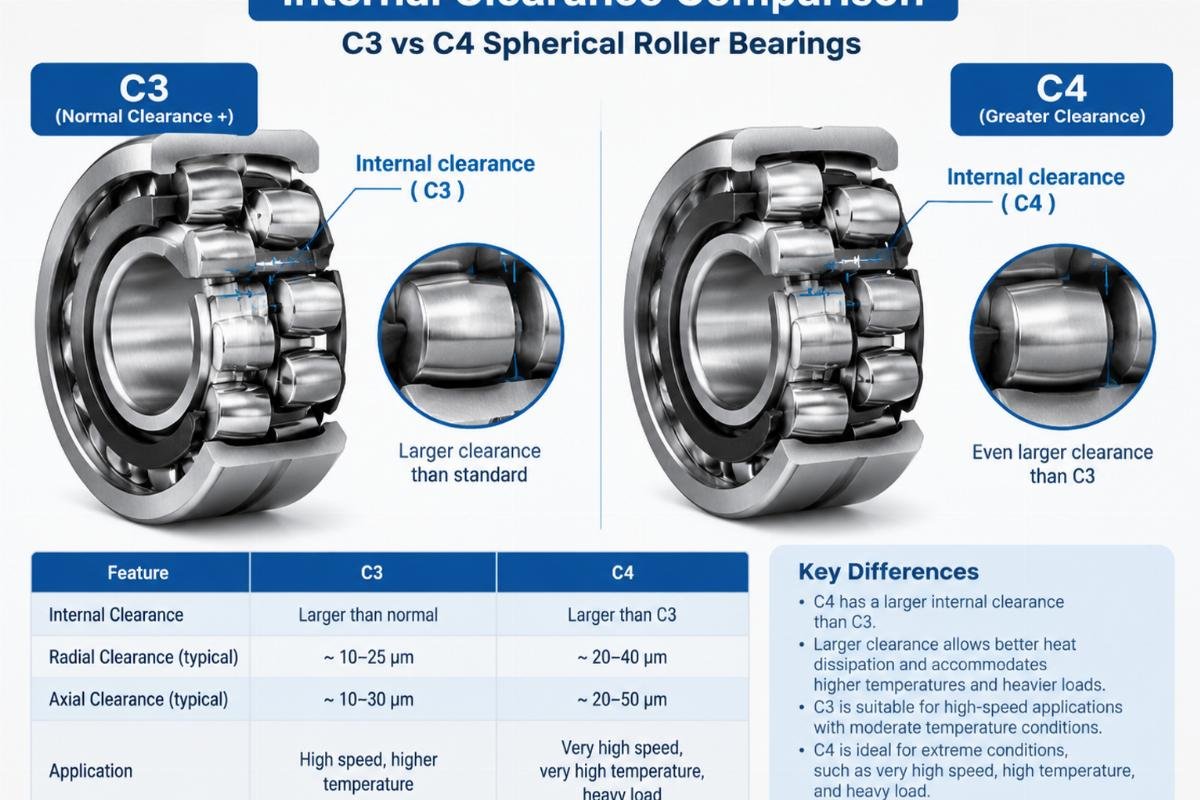
Selecting the correct bearing is only half the battle. The other half is specifying the correct internal clearance. This is where many procurement errors occur. Buyers often assume that a standard clearance (C2 or normal) is sufficient for all applications. However, in heavy agricultural machinery, thermal expansion and heavy loads require larger internal clearances to prevent seizure.
Most combine harvester spindles and main drive systems operate at elevated temperatures due to friction and external heat from the engine and harvested material. As the bearing heats up, the inner ring expands more than the outer ring because it is typically mounted on a solid shaft. If the initial internal clearance is too tight, this thermal expansion eliminates the running clearance entirely. The result is immediate overheating and seizure.
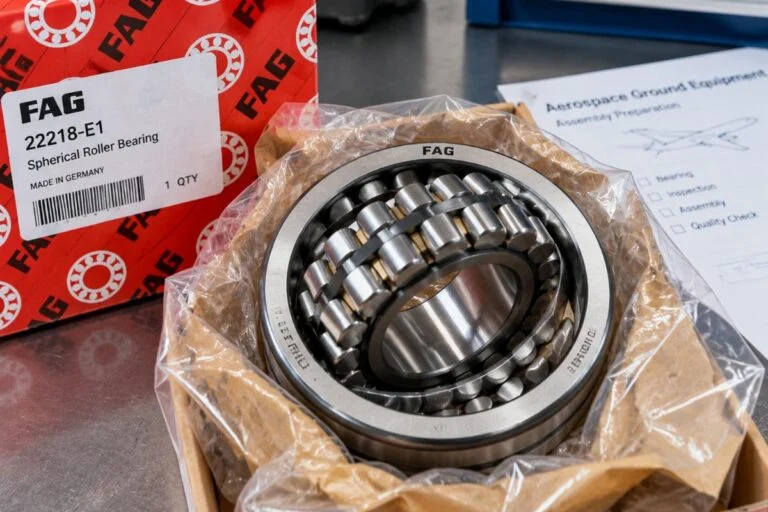
Therefore, selecting genuine FAG agricultural bearings supplier stock with C3 or C4 clearance is often mandatory. C3 clearance provides a moderate increase in internal space, suitable for applications with moderate temperature differentials. C4 clearance offers a significant increase, designed for high-temperature environments or where heavy interference fits are used.
| Clearance Class | Application Suitability | Thermal Expansion Handling | Load Capacity Impact |
|---|---|---|---|
| Normal (CN) | Standard industrial motors, light loads | Poor | Optimal for static loads |
| C3 | Heavy machinery, moderate heat | Good | Slight reduction in static capacity |
| C4 | High temperature, heavy interference fits | Excellent | Noticeable reduction in static capacity |
Choosing the wrong clearance is a silent killer. A bearing with insufficient clearance may run smoothly for a few hours, giving a false sense of security. As the temperature rises during a full day of harvesting, the clearance disappears. The rollers begin to skid rather than roll, generating excessive heat and destroying the lubricant film. This leads to rapid wear and catastrophic failure.
When sourcing combine harvester spindle bearing replacement parts, always verify the original equipment manufacturer (OEM) specifications for clearance. If the OEM manual specifies C3 or C4, do not substitute with normal clearance bearings, even if the dimensions match. The operational safety margin depends on this specific parameter. Our technical team frequently assists clients in cross-referencing OEM part numbers with the correct FAG clearance codes to ensure compatibility.
The Hidden Cost of Aftermarket Substitutes
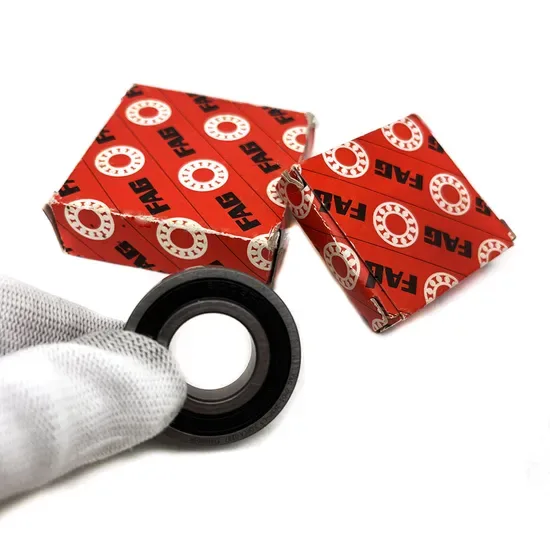
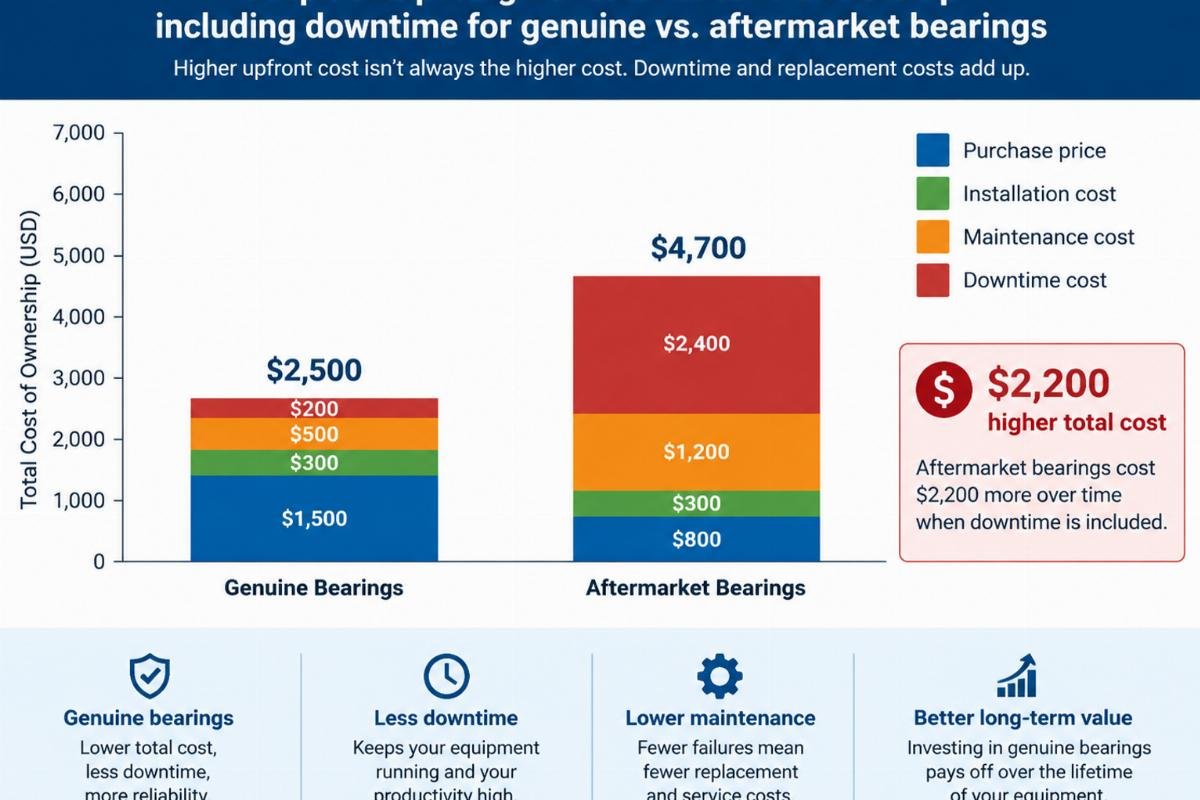
The agricultural after-market is flooded with bearings that claim to be equivalent to premium brands. These substitutes often look identical externally, with similar packaging and labeling. However, the internal differences are profound and costly. The primary misconception is that a lower purchase price translates to lower total cost of ownership. In reality, the cost of a single downtime event far exceeds the savings from using inferior parts.
Consider the scenario of a main spindle failure. The direct cost includes the price of the replacement bearing and the labor to install it. The indirect costs include the loss of harvesting capacity during repair time, the potential spoilage of unharvested crop, and the expedited shipping fees for emergency parts. For a large farming operation, a day of downtime can result in a mid-six-figure loss. Compared to this, the price difference between a genuine FAG bearing and a counterfeit substitute is negligible.
Moreover, inferior bearings often lack consistent quality control. Batch-to-batch variations in hardness, surface finish, and dimensional accuracy are common in low-cost manufacturing. This inconsistency makes it difficult for maintenance teams to predict service life. A bearing that lasts one season may fail in weeks if sourced from a different batch of the same “brand.”
Counterfeit bearings also pose a safety risk. Failed components can cause secondary damage to gears, shafts, and housings. Repairing a damaged spindle housing is significantly more expensive and time-consuming than replacing a bearing. By choosing verified FAG bearings for US farm combines, operators protect their entire mechanical system from collateral damage.
We have seen cases where distributors purchased bulk quantities of unbranded bearings to save on inventory costs. Within months, their return rates spiked, damaging their reputation with local farmers. Switching to a supply chain with full traceability documentation restored their credibility and reduced warranty claims. The value of authenticity is not just in performance, but in business stability.
How to Source Genuine FAG Bearings Globally
Sourcing authentic bearings in a global market requires diligence. Counterfeits are sophisticated, often replicating packaging, holograms, and even serial numbers. For distributors and MRO operators, verifying the supply chain is as important as verifying the product itself. The key is to work with suppliers who provide complete traceability documentation.
Traceability documents link the bearing back to the manufacturer’s production facilities. They include certificates of conformity, material test reports, and batch numbers that can be verified with the brand owner. Without these documents, there is no guarantee that the bearing is genuine. Many reputable suppliers, including our own network, maintain strict protocols to ensure that every unit shipped is sourced directly from authorized channels.
When evaluating a genuine FAG agricultural bearings supplier, ask for proof of authorization or direct sourcing relationships. Be wary of suppliers who cannot provide detailed origin information or who offer prices significantly below market average. While competitive pricing is possible through efficient logistics and bulk consolidation, prices that seem too good to be true usually indicate compromised quality.
Another critical factor is inventory availability. Peak harvest season does not wait for shipping delays. Suppliers with substantial spot inventory of standard and special part numbers can fulfill urgent orders quickly. This reduces the need for expensive air freight and minimizes downtime. Our global logistics network allows for flexible MOQs, ranging from single-unit emergency replacements to full container consolidations, ensuring that clients get exactly what they need, when they need it.
Technical support is also a vital component of sourcing. A reliable supplier should offer cross-brand consultation and help verify part numbers. Misidentification is a common source of error, especially when dealing with older machinery models. Access to technical datasheets and application guidance helps ensure that the selected bearing meets the specific requirements of the machine.
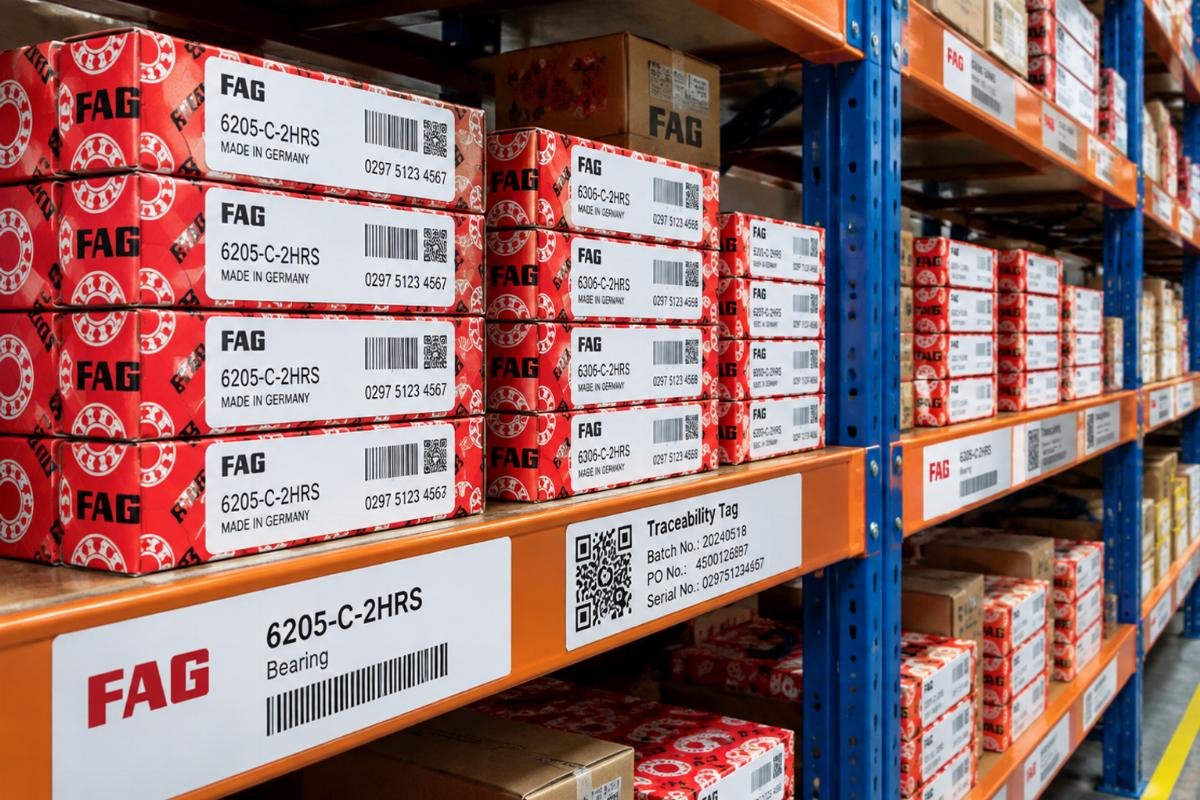
By prioritizing traceability, inventory depth, and technical expertise, buyers can secure a reliable supply of FAG bearings for US farm combines. This approach minimizes the risk of counterfeits and ensures that machinery operates at peak efficiency during the critical harvest window.
Conclusion
Reliability in harvest is built on verified components, not hopeful substitutions.
Genuine FAG bearings with correct clearance specifications are essential for preventing costly downtime in US combine harvesters. Sourcing from suppliers who provide full traceability and technical support ensures that every replacement part meets the rigorous demands of agricultural operations. Protect your harvest by choosing authenticity and precision.