Price is not the priority; traceability is.
Sourcing genuine FAG bearings for US wind turbines requires strict batch traceability documentation and professional mixed-container consolidation to ensure compliance with US customs regulations and avoid costly port seizures.
The humid air in Houston hits you differently when you are standing on the dock, watching a container that should have cleared customs days ago sit idle. I remember the sinking feeling clearly. It was my early days in export, and I had shipped a batch of FAG yaw bearings to a wind farm operator in Texas. To save on freight, I consolidated them with other brands in a single container. The hardware was perfect. The packaging was intact. But the customs broker flagged the shipment because the specific batch traceability certificates for the FAG units were missing from the document packet. The client was furious. The turbine downtime was mounting. That incident taught me that for US wind energy clients, the physical bearing is only half the product. The other half is the paper trail that proves its origin.

This reality shapes how we approach every order today. When you are dealing with critical infrastructure like wind turbines, the margin for error is zero. The following insights detail how to navigate the complexities of sourcing, verifying, and shipping these critical components without falling into the traps that delay projects and inflate costs.
Why Are FAG Bearings Critical for US Wind Turbines?
FAG bearings provide superior load capacity and reliability required for the harsh operational environments of utility-scale wind farms.
Wind turbines operate under extreme and variable loads. The yaw and pitch systems, which adjust the blade angle and nacelle position, undergo constant stress from wind gusts, gravity, and centrifugal forces. Standard industrial bearings often fail prematurely under these conditions. FAG, as part of the Schaeffler group, engineers these components with specific material purity and heat treatment processes designed to resist fatigue crack initiation.
In my previous role in quality inspection, I saw firsthand how micro-defects in steel inclusions could lead to catastrophic spalling under heavy cyclic loads. For US wind farms, where maintenance access is difficult and weather windows are short, using bearings with verified high-load ratings is not a luxury—it is an operational necessity. The consistency of FAG’s manufacturing ensures that each bearing meets the precise tolerances required for smooth rotation and minimal vibration.

When sourcing these components, buyers must look beyond the brand name. The critical factor is ensuring that the bearings are genuine and sourced from authorized channels. Counterfeit or substandard bearings may look identical but lack the metallurgical integrity to withstand decades of operation. This is why working with a supplier who understands the technical specifications of wind turbine applications is vital. They can verify that the specific FAG model matches the OEM requirements for load rating and dimensional tolerance.
How to Ensure Batch Traceability for US Customs?
Complete origin and quality certificates are mandatory to avoid port seizures and ensure smooth clearance for FAG bearings entering the US.
US Customs and Border Protection has tightened scrutiny on industrial imports, particularly those subject to anti-dumping duties or specific country-of-origin regulations. For FAG bearings, this means every unit must be linked to a specific production batch with verifiable documentation. A commercial invoice alone is insufficient. You need the original certificate of origin, the mill test certificate for the steel, and the factory quality inspection report.
I once handled a case where a distributor attempted to clear a shipment of mixed-brand bearings. The non-FAG items cleared quickly, but the FAG units were held for weeks because the traceability documents did not match the batch numbers on the packaging. The cost of demurrage and storage fees far exceeded any savings from cheaper freight. This highlights a common misconception: that price is the primary driver. In reality, incomplete documentation is the most expensive risk in international bearing trade.
To mitigate this, we implement a rigorous document verification process before shipment. Each FAG bearing is checked against its corresponding certificate. The batch numbers on the box, the bearing ring, and the paperwork must align perfectly. This level of diligence ensures that when the container arrives in Los Angeles or Savannah, the customs broker has everything needed for immediate release.
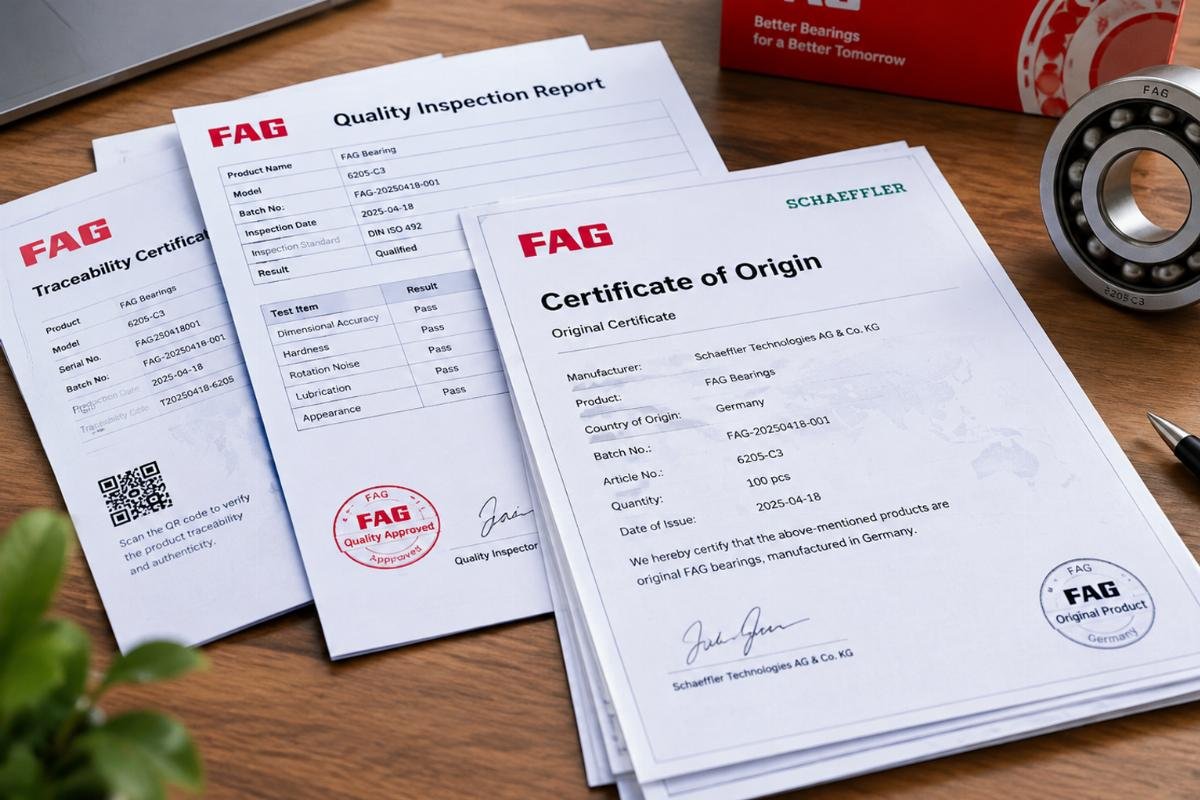
For MRO operators, this traceability is also crucial for warranty claims and failure analysis. If a bearing fails prematurely, having the full history allows engineers to determine if it was a manufacturing defect or an application error. Without this data, you are left guessing, and the manufacturer will likely deny the claim. Therefore, insisting on full traceability is not just about customs; it is about long-term asset protection.
What Is the Best Way to Ship Mixed Brand Bearings?
Professional mixed-container consolidation maximizes space efficiency while maintaining separate and organized documentation for each brand.
Many buyers assume that shipping single-brand containers is safer. While it simplifies documentation, it is often inefficient and costly, especially for MRO orders that require various types and sizes. A more effective approach is professional mixed-container consolidation. This involves carefully planning the load to maximize container volume while keeping different brands and their respective documents strictly separated.
In the early days, I made the mistake of mixing documents in a single envelope for a mixed container. It caused chaos at the destination. Now, we use a color-coded system. Each brand’s bearings are palletized separately, and each pallet has its own dedicated document pouch attached to the outside. Inside the pouch are the packing list, invoice, and traceability certificates for only those items on that pallet. This way, even if the container holds SKF, NSK, and FAG bearings, the customs broker can pull the FAG documents without touching the others.

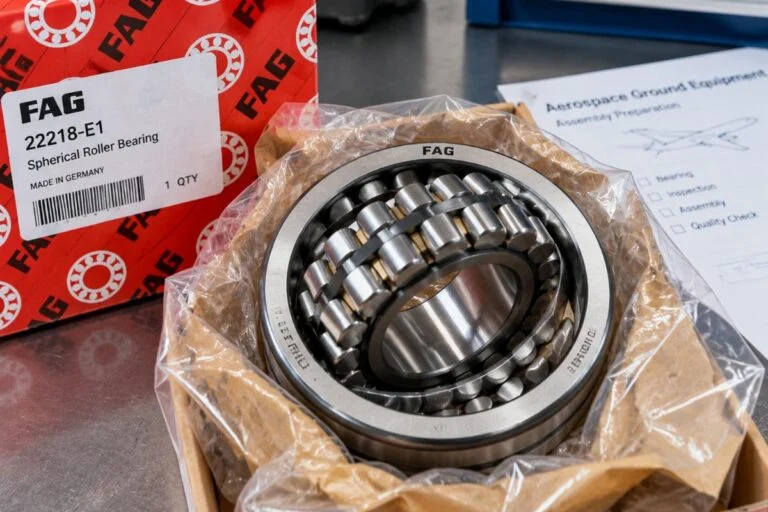
This method requires precise weight distribution planning to prevent damage during transit. Heavy spherical roller bearings are placed at the bottom, while lighter deep-groove ball bearings go on top. We also use moisture-absorbing desiccants to protect against humidity during ocean freight, which is critical for preventing corrosion on precision surfaces. By treating mixed shipments with the same rigor as single-brand ones, we achieve freight savings without compromising compliance or product integrity.
How to Minimize Downtime During Wind Farm MRO?
Fast lead times and precise model matching are essential to keep wind turbines running efficiently during emergency maintenance.
When a wind turbine goes down, every hour counts. The loss of revenue from missed power generation can be substantial. Therefore, the ability to source genuine FAG bearings quickly is a key competitive advantage for MRO operators. This requires a supplier with massive spot inventory and the technical expertise to identify the correct equivalent models if the exact OEM part is obsolete.
I recall a urgent request from a wind farm operator in the Midwest. A main shaft bearing had failed during a storm, and they needed a replacement immediately. Because we stock a wide range of FAG bearings, including large-diameter spherical roller bearings, we were able to locate the exact unit within hours. We arranged for expedited air freight for the critical component while the rest of the MRO kit shipped by sea. This hybrid approach minimized the total downtime and kept the turbine back online before the next weather window closed.

Technical support is equally important. Our team provides cross-brand equivalent model consultation, helping engineers verify that a substitute bearing meets the necessary load and speed ratings. This prevents the risk of installing a component that looks right but performs poorly under stress. By combining fast logistics with deep technical knowledge, we help our clients reduce unplanned outages and maintain consistent power generation.
Conclusion
Traceability and professionalism define success in US wind turbine bearing sourcing.
Sourcing FAG bearings for US wind turbines is not just about buying a product; it is about securing a reliable supply chain that prioritizes compliance and efficiency. Strict batch traceability prevents customs delays, while professional mixed-container consolidation offers cost-effective logistics without sacrificing documentation integrity. For MRO operators, quick access to genuine stock and technical expertise minimizes costly downtime. By focusing on these critical elements, you ensure that your wind farms operate smoothly and profitably.