Matching inner diameters is not enough to guarantee a successful swap.
The direct FAG equivalents for Dodge insert bearings require more than a simple part number cross-reference; they demand a rigorous verification of the locking adapter tolerances and spherical outer diameter curvature. Without checking these specific mechanical interfaces, even genuine FAG units can seize during installation or fail to self-align properly under load.
I still remember the chill in the air at that Chicago industrial exhibition years ago. A frustrated agricultural equipment distributor from the Midwest was venting about long lead times and steep pricing for his standard Dodge pillow block orders. He wanted to switch to FAG for better availability and cost efficiency. I pulled out my catalog, found what looked like a perfect dimensional match, and handed it over with confidence. Weeks later, my phone rang. It wasn’t a thank you call. The entire batch had been returned. The issue wasn’t the bearing quality; it was the installation. The technicians were trying to lock down the set screws on the adapter sleeve, but the bearings were binding against the housing before they could fully seat. I had matched the bore size, but I had ignored the subtle differences in the adapter sleeve thread pitch and the spherical radius of the outer ring. That failure taught me that cross-brand substitution is a minefield of microscopic tolerances.

Navigating this complexity requires a deep understanding of how different manufacturers interpret global standards. For distributors and MRO buyers looking for reliable FAG equivalents for Dodge inserts, the goal is not just to find a part that fits the shaft, but one that fits the entire assembly ecosystem without compromising performance or warranty.
What Are the Direct FAG Equivalents for Popular Dodge Insert Series?
Identifying the correct series mapping is the first step in any cross-reference process.
Dodge uses specific naming conventions for its insert bearing series, such as the standard duty and heavy-duty lines. FAG, being part of the Schaeffler group, follows its own distinct coding system. While the internal bearing geometry—usually a deep groove ball bearing with a wide inner ring—is often similar, the external dimensions and locking mechanisms vary.
| Feature | Dodge Standard Series | FAG Equivalent Series | Compatibility Note |
|---|---|---|---|
| Locking Mechanism | Set Screw / Eccentric Collar | Set Screw / Adapter Sleeve | Verify thread pitch |
| Outer Ring Shape | Spherical | Spherical | Check radius tolerance |
| Seal Type | Triple Lip / Labyrinth | Dual Lip / Felt | Confirm environmental rating |
| Housing Fit | Standard ISO R7 | Standard ISO R7 | Generally interchangeable |
For example, a common Dodge 2-bolt flange unit with a set-screw lock might map directly to a specific FAG Y-series insert when paired with the appropriate housing. However, if the original Dodge unit uses an eccentric collar lock, the FAG equivalent must also feature an eccentric design or be adapted carefully. Simply forcing a set-screw FAG insert into a housing designed for an eccentric lock can lead to misalignment.
A European wind farm operator once faced this exact issue during an emergency repair. They had a stock of FAG inserts but needed to replace a failed Dodge unit in a pitch control mechanism. By assuming the bore size was the only critical factor, they installed the wrong locking type. The vibration caused the set screws to loosen within hours. Switching to the correct FAG equivalent with the proper locking mechanism resolved the issue, but the downtime cost was significant. This highlights why knowing the specific FAG equivalents for Dodge inserts involves more than just looking at a chart; it requires understanding the mechanical function of the lock.

When sourcing FAG equivalents for Dodge inserts, always request the detailed technical drawing for both the original and the proposed replacement. Compare the overall width, the height of the inner ring extension, and the position of the lubrication holes. These small details can determine whether the grease nipple will interfere with the housing bolt or if the seal will rub against the shoulder.
Why Do “Exact” Cross-References Fail During Installation?
The culprit is often the hidden tolerance stack-up in the adapter sleeve and housing bore.
Many buyers assume that if the shaft diameter matches, the bearing will fit. This is a dangerous oversimplification. The interface between the adapter sleeve and the shaft, and between the spherical outer ring and the housing, is where most failures occur. Dodge and FAG may both adhere to ISO standards, but their interpretation of “standard” can differ in the finer details of tolerance bands.
The adapter sleeve is a critical component. It expands to lock the bearing onto the shaft. If the taper angle of the FAG sleeve differs slightly from the Dodge original, the axial advance required to achieve the same radial expansion will be different. Technicians used to tightening Dodge units to a specific feel or turn-count may over-tighten a FAG unit, causing the inner ring to distort or the sleeve to crack.
Consider a mining conveyor application in South America. The maintenance team replaced a batch of Dodge pillow blocks with what they believed were direct FAG swaps. During installation, several bearings became impossible to rotate by hand after tightening the lock nut. The issue was the thread pitch on the lock nut. The FAG nuts had a finer thread, meaning each turn advanced the nut less axially but generated higher clamping force for the same torque. The technicians applied the same number of turns as they did for Dodge, resulting in excessive preload. This seized the bearing elements. Understanding the nuances of FAG equivalents for Dodge inserts prevents such costly errors.

Another common failure point is the spherical outer diameter. The housing bore is machined to a specific radius to allow the bearing to self-align. If the FAG insert’s spherical radius is slightly larger or smaller than the Dodge original, it will either bind in the housing or have excessive play. Binding prevents self-alignment, leading to edge loading on the rolling elements and premature fatigue. Excessive play causes vibration and noise. Always verify the spherical radius tolerance when evaluating FAG equivalents for Dodge inserts.
How to Verify Fit Tolerances Before Bulk Replacement?
Implement a three-step verification protocol to ensure compatibility.
Before committing to a large order of FAG equivalents for Dodge inserts, establish a rigorous testing procedure. This protects your inventory from becoming obsolete scrap and ensures your customers receive parts that install correctly.
- Measure the Shaft and Housing: Start with precise measurements of the existing shaft diameter and the housing bore. Use micrometers for the shaft and bore gauges for the housing. Record the actual tolerance band, not just the nominal size.
- Test Fit the Adapter Sleeve: Place the FAG adapter sleeve on the shaft. Check for smooth sliding without binding. Then, place the bearing over the sleeve and into the housing. Ensure the spherical outer ring seats freely without resistance. Rotate the bearing by hand; it should move smoothly with no gritty feeling.
- Verify Locking Torque: Use a torque wrench to tighten the lock nut or set screws according to the FAG manufacturer’s specifications, not the Dodge ones. Compare the axial displacement of the inner ring with the expected value. If the bearing seizes before reaching the recommended torque, the tolerance stack-up is incorrect.
A grain processing plant in the US implemented this protocol after a previous bad experience. They were switching from Dodge to FAG for their elevator head shafts. By testing a single unit first, they discovered that the FAG seals were slightly thicker, causing friction against the housing cover. They adjusted the housing machining slightly for the new batch, ensuring a perfect fit. This proactive approach saved them from a potential line shutdown.
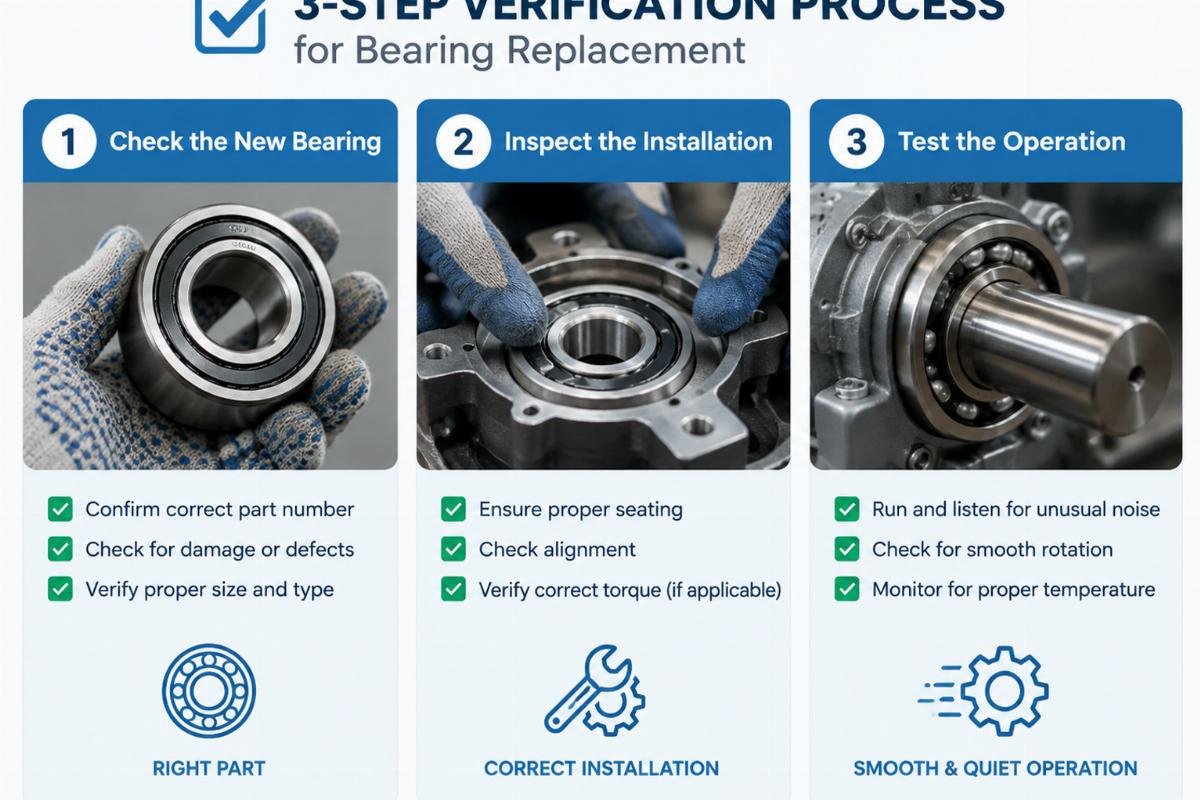
This methodical approach transforms the search for FAG equivalents for Dodge inserts from a gamble into a controlled engineering process. It builds trust with your clients, who value reliability over mere price savings. As a supplier, offering this level of technical support distinguishes you from competitors who simply ship boxes.
Which Sealing & Lubrication Specs Must Match in Harsh Environments?
Seal design and grease compatibility are critical for longevity in dirty conditions.
In harsh environments like mining, agriculture, or food processing, the bearing itself is often protected by the seal. Dodge and FAG use different seal technologies. Dodge might use a triple-lip contact seal, while FAG might employ a non-contact labyrinth seal with felt inserts. These designs have different friction characteristics and protection levels.
If you replace a Dodge unit with a high-friction FAG seal in a high-speed application, the heat generation can degrade the grease rapidly. Conversely, using a low-protection seal in a dusty environment allows contaminants to enter, causing abrasive wear. Always compare the IP rating or the manufacturer’s description of the seal’s effectiveness against dust and water.
Lubrication is equally important. Some FAG inserts come pre-lubricated with a specific lithium-complex grease, while Dodge might use a polyurea-based grease. Mixing incompatible greases can cause the lubricant to soften and leak out, or harden and block the relief path. Check the base oil viscosity and the thickener type. If they differ, purge the old grease completely before installing the new FAG equivalents for Dodge inserts.
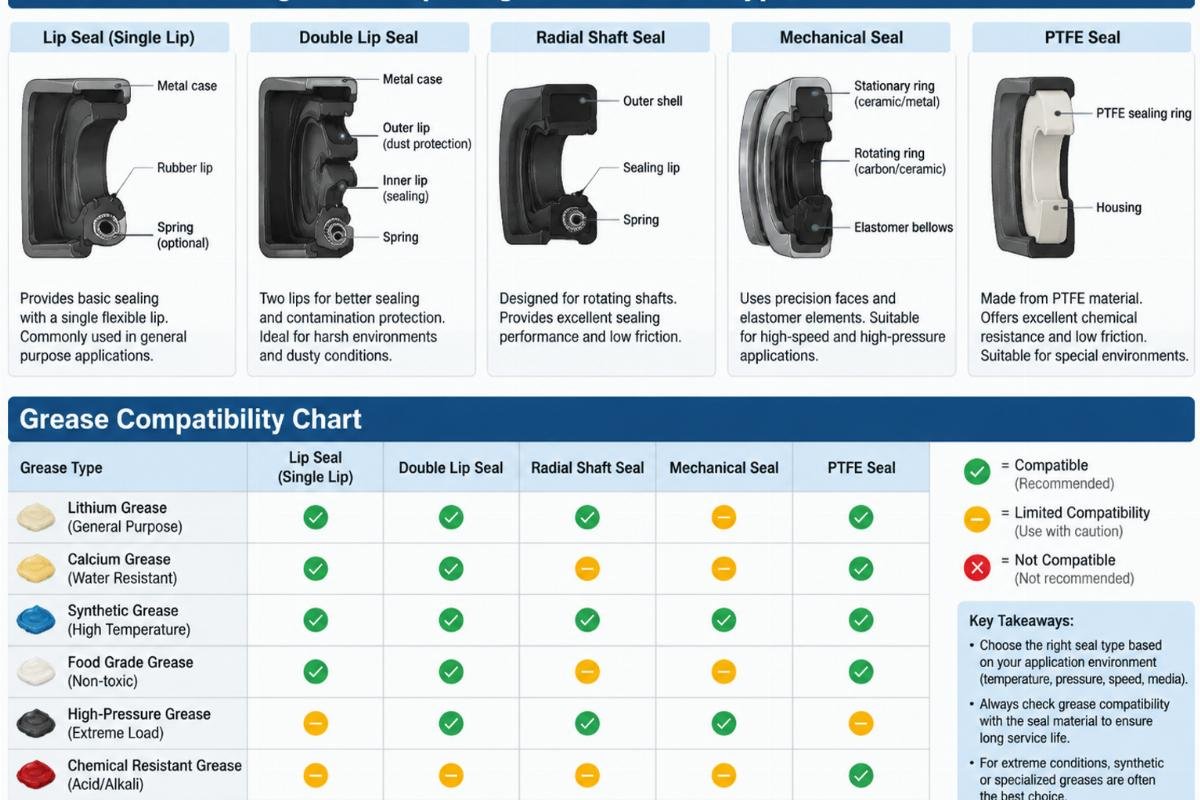
A marine application in Southeast Asia highlighted this issue. A vessel operator switched to FAG inserts for their deck cranes. The new seals were excellent for water resistance, but the pre-packed grease was not compatible with the existing system’s topping-up grease. Within months, the bearings showed signs of starvation. Flushing and re-greasing with a compatible product solved the problem, but it required significant labor. Knowing these details beforehand allows you to advise your customers correctly on FAG equivalents for Dodge inserts.
Conclusion
Successful substitution relies on precision, not just part numbers.
Replacing Dodge inserts with FAG equivalents is a viable strategy for cost reduction and supply chain diversification, but it demands technical diligence. Focus on the adapter sleeve tolerances, spherical radius fit, and seal compatibility. By verifying these factors before bulk procurement, you ensure reliable performance and avoid the pitfalls of assumed interchangeability. This approach secures operational continuity for your clients and reinforces your reputation as a knowledgeable partner in the bearing supply chain.