Exact dimension match does not guarantee fit; internal clearance is the real killer.
Finding accurate FAG equivalents for US pump bearings requires precise matching of internal clearance and cage materials, not just basic dimensions, to prevent catastrophic failures in harsh mining conditions. Simply swapping a standard American brand bearing with a FAG unit of the same outer diameter and bore size often leads to premature seizure because the thermal expansion rates and load zone distributions differ significantly between original equipment manufacturer specifications and generic cross-references.

The copper mine pump failure that nearly cost me my reputation in Monterrey was not due to a counterfeit product or a manufacturing defect. It was a mismatch in radial internal clearance. The original US-specified bearing operated with a specific C3 clearance designed for high-temperature slurry environments. I had supplied a standard FAG equivalent with normal C0 clearance, assuming dimensional parity was sufficient. Within days, the thermal expansion of the shaft exceeded the available internal space, causing the rolling elements to lock up. This incident reshaped my approach to providing FAG equivalents for US pump bearings. Now, every cross-reference request begins with a review of the original equipment drawings and operational temperature profiles, ensuring that the replacement bearing matches the dynamic requirements of the application, not just the static dimensions.
Why Do Standard FAG Equivalents Fail in US Pumps?
Basic dimension matching ignores critical internal clearance and load zones. Many distributors assume that if the bore, outside diameter, and width are identical, the bearing is a direct drop-in replacement. This assumption is dangerous in heavy industrial applications. US pump manufacturers often design their housings and shafts with specific tolerance classes that interact with the bearing’s internal geometry in unique ways. When these nuances are overlooked, the resulting FAG replacement for American pump bearings may fit physically but fail functionally under load.
The primary issue lies in the load zone distribution. In vertical turbine pumps or horizontal split-case pumps common in mining and water treatment, the radial load is not uniformly distributed. If the internal clearance is too tight, the load zone becomes concentrated on fewer rolling elements, leading to localized stress spikes and early fatigue. Conversely, if the clearance is too loose, vibration increases, causing cage wear and lubricant breakdown.
A regional distributor in Latin America once reported a high rate of return for a batch of FAG cross reference for US pump bearings he had sourced. Upon inspection, we found that while the dimensions were correct, the original US bearings had been manufactured with a specialized heat-treated steel grade that allowed for slightly different elastic deformation under load. The standard FAG equivalents, while high quality, reacted differently to the same preload settings. By adjusting the mounting procedure and verifying the housing fits, we resolved the issue, but it highlighted that dimensional equivalence is only the first step in a successful substitution.

To avoid such pitfalls, it is essential to look beyond the part number. The suffixes in bearing codes often indicate crucial variations in sealing, lubrication, and clearance. Ignoring these suffixes when selecting FAG equivalents for US pump bearings can result in a component that is mechanically incompatible with the system’s operational dynamics.
How to Match Internal Clearance for Harsh Mining Conditions?
Selecting C3/C4 clearances based on thermal expansion and operational temperatures is critical for longevity. In mining environments, pumps often handle abrasive slurries at elevated temperatures. The heat generated by friction and the process fluid causes the shaft to expand more than the housing. If the bearing’s internal clearance does not account for this differential expansion, the rolling elements will be forced against the raceways, generating excessive heat and leading to rapid failure.
Standard industrial bearings typically come with Normal (C0) clearance. However, for pump applications involving temperatures above 80°C or significant shaft-to-housing temperature differentials, C3 or even C4 clearance is often required. Determining the correct clearance involves calculating the expected thermal growth of the shaft and subtracting the expansion of the housing, then adding a safety margin for operational loads.
| Clearance Class | Typical Application | Thermal Suitability | Vibration Resistance |
|---|---|---|---|
| C0 (Normal) | General machinery, low temperature | Low | Standard |
| C3 | Electric motors, pumps, moderate heat | Moderate | Improved |
| C4 | High-temperature fans, mining pumps | High | Robust |
In a recent project for a cement plant in Southeast Asia, the client was experiencing frequent failures in their kiln feed pumps. The original US bearings were specified with C4 clearance due to the extreme ambient heat. The local supplier had been providing C3 equivalents, arguing that they were “close enough.” After analyzing the failure patterns, which showed consistent inner ring cracking, we switched to genuine FAG bearings with verified C4 clearance. The service life extended noticeably, reducing unplanned downtime during critical production windows. This case underscores the importance of verifying clearance classes when sourcing FAG bearing equivalents for mining pumps.
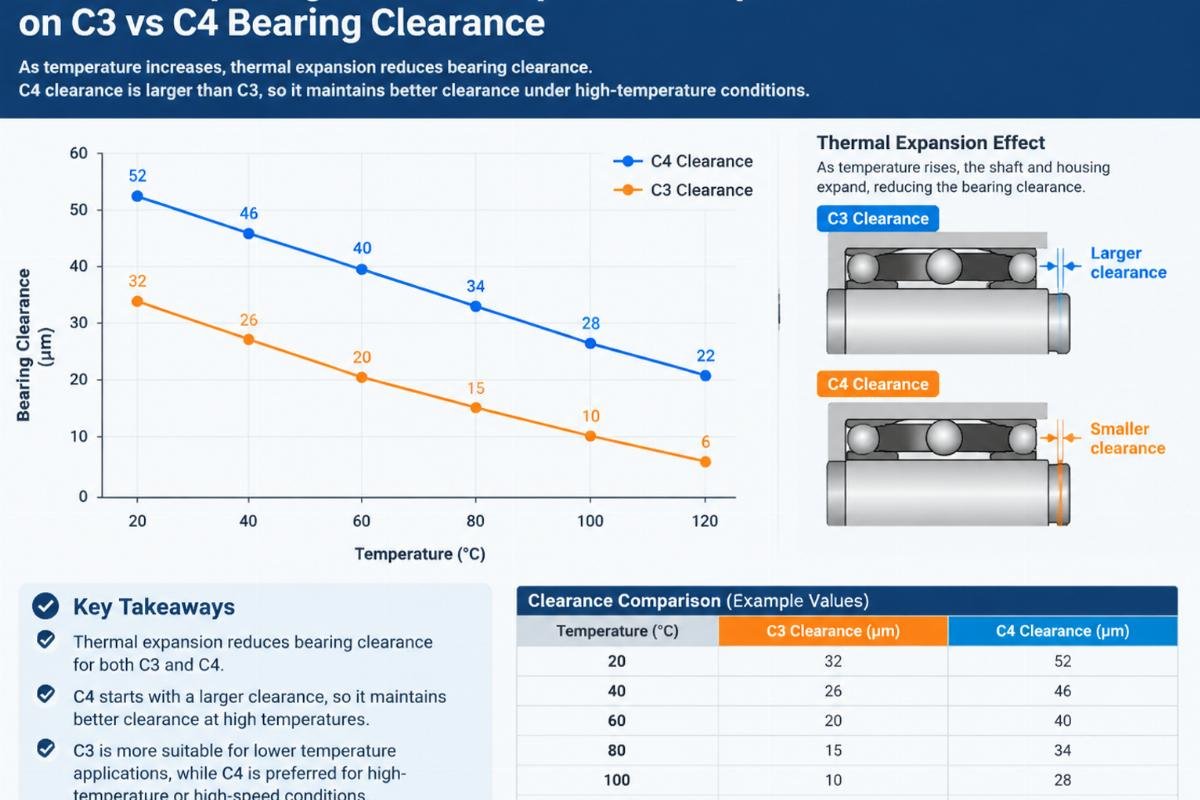
When evaluating FAG equivalents for US pump bearings, always request the technical datasheet specifying the internal clearance range. Do not rely solely on the catalog description, as standard listings may default to C0 unless otherwise specified. Engaging with suppliers who understand these technical nuances ensures that the replacement bearing will withstand the thermal stresses of the application.
Which Cage Material Ensures Maximum Lifespan?
Comparing pressed steel vs. machined brass cages for high-vibration pump applications reveals significant performance differences. The cage, or retainer, holds the rolling elements in place and guides them through the load zone. In high-vibration environments typical of mining and heavy industry, the material and design of the cage play a pivotal role in bearing reliability. Standard pressed steel cages are cost-effective and suitable for many general applications, but they can be prone to fracture under severe shock loads or high-speed operation.
Machined brass cages, on the other hand, offer superior strength and better emergency running characteristics. Brass has a lower modulus of elasticity than steel, allowing it to absorb some shock without fracturing. Additionally, brass cages often provide better lubrication retention due to their surface texture. For pumps handling abrasive materials or operating in conditions with frequent start-stop cycles, upgrading to a brass cage can significantly extend bearing life.
A European wind farm operator faced recurring issues with gearbox bearings failing due to cage fragmentation. The original specifications called for steel cages, but the variable loads and vibrations caused micro-cracks that eventually led to catastrophic failure. By switching to FAG equivalents with machined brass cages, the operator saw a substantial reduction in maintenance incidents. This experience highlights that when seeking FAG cross reference for US pump bearings, the cage material should be a key selection criterion, not an afterthought.

It is also important to consider the lubrication compatibility. Some synthetic lubricants may react differently with brass than with steel, although this is rare in modern formulations. Always verify the lubricant specification with the bearing manufacturer. When sourcing FAG equivalents for US pump bearings, specify the cage material explicitly to ensure it matches the operational demands of the pump. This attention to detail prevents premature failures and ensures consistent performance across the equipment lifecycle.
How to Verify FAG Equivalents Before Bulk Ordering?
Requesting original drawings and traceability docs to avoid counterfeit risks is a non-negotiable step in professional procurement. The market for industrial bearings is flooded with counterfeits that mimic the packaging and markings of premium brands. These fake bearings often use inferior steel and poor manufacturing processes, leading to unpredictable performance and safety hazards. To mitigate this risk, buyers must demand full traceability documentation from their suppliers.
Authentic FAG bearings come with unique serial numbers and batch codes that can be verified with the manufacturer. Reputable suppliers should provide certificates of conformity and material test reports upon request. In one instance, a Middle East steel mill received a shipment of bearings that appeared genuine but failed within weeks. Investigation revealed that the batch codes were duplicated, indicating a sophisticated counterfeit operation. By implementing a strict verification process that includes checking holographic labels and cross-referencing batch numbers with the manufacturer’s database, the mill prevented further losses.
| Verification Step | Action Required | Risk Mitigation |
|---|---|---|
| Visual Inspection | Check packaging quality and printing clarity | Identifies obvious fakes |
| Batch Code Check | Verify serial numbers with manufacturer | Confirms authenticity |
| Material Test Report | Request COC and MTR from supplier | Ensures material quality |
| Dimensional Check | Sample measurement of critical dimensions | Verifies manufacturing precision |
When engaging with a FAG equivalents for US pump bearings wholesale supplier, ask about their sourcing channels and quality control procedures. A reliable partner will have established relationships with authorized distributors or direct factory lines and will be transparent about their supply chain. They should also offer technical support to help you select the correct equivalents, including advice on clearance, cage material, and lubrication.
Ultimately, the goal is to secure a supply of FAG bearing equivalents for mining pumps that delivers consistent performance and reliability. By prioritizing verification and working with knowledgeable suppliers, buyers can protect their operations from the risks associated with counterfeit components. This proactive approach ensures that every bearing installed contributes to the overall efficiency and uptime of the industrial facility.
Conclusion
Precision in clearance and material selection defines successful bearing substitution.
Replacing US pump bearings with FAG equivalents demands more than dimensional alignment; it requires a deep understanding of internal clearance, cage materials, and operational conditions. By focusing on these technical details and verifying authenticity through rigorous documentation, operators can minimize downtime and extend equipment life. Reliable sourcing partners facilitate this process by providing genuine products and expert technical guidance, ensuring that every replacement meets the stringent demands of industrial applications.