Brand reputation does not guarantee fitment.
Selecting between FAG and Moog wheel bearing kits requires analyzing specific dimensional tolerances, vehicle load applications, and field installation realities rather than relying on brand prestige alone. Microscopic deviations in manufacturing standards dictate whether a kit slides into the hub assembly smoothly or requires forceful fitting that compromises structural integrity. For distributors and repair workshops, understanding these technical nuances is critical to avoiding premature failure and ensuring cross-brand compatibility in mixed fleets.

The automotive aftermarket is flooded with options, but the decision often comes down to precision engineering versus robust application design. Having spent years managing documentation at Qingdao Port before transitioning into bearing exports, I learned that shipping the correct part number is only half the battle. The real challenge begins when the crate opens at the destination workshop. A batch of heavy-duty truck bearings sent to Lagos once sat idle for weeks because the local mechanics could not force the Moog kits into hubs designed for FAG tolerances. This was not a defect; it was a mismatch of engineering philosophies. Understanding these differences transforms a potential return claim into a successful installation.
What Are the Core Dimensional Differences Between FAG and Moog?
Micro-tolerance variations dictate whether a kit slides in or requires forceful fitting.
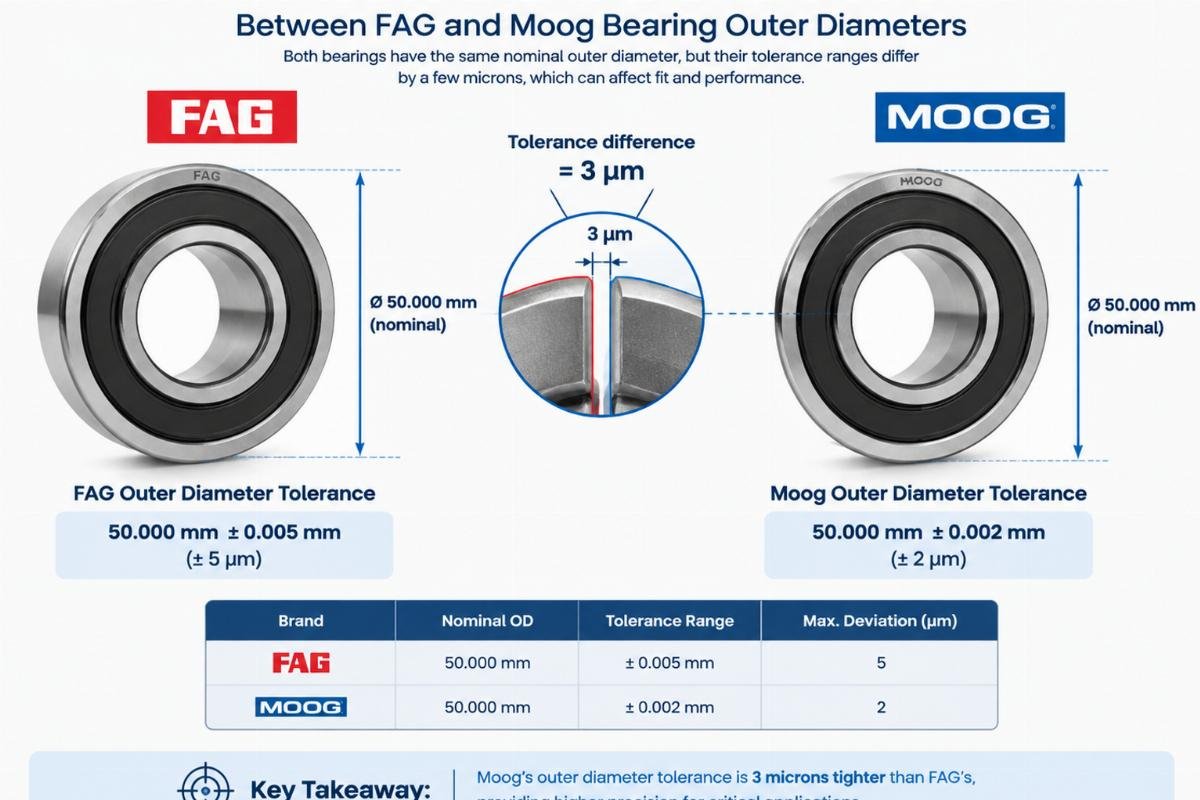
FAG and Moog approach wheel bearing design with distinct engineering priorities. FAG, rooted in German precision manufacturing, typically adheres to strict ISO tolerance classes that prioritize minimal clearance and high-speed stability. Moog, an American brand with a strong presence in suspension and steering components, often designs its wheel bearing kits with slightly more generous tolerances to accommodate wear in older chassis systems and varying thermal expansion rates in diverse climates. These differences are measured in microns, but their impact is felt in Newtons of force during installation.
| Feature | FAG Approach | Moog Approach |
|---|---|---|
| Tolerance Philosophy | Strict ISO precision classes | Application-focused flexibility |
| Seal Design | Integrated low-friction seals | Robust multi-lip protection |
| Hub Compatibility | Optimized for OEM-spec hubs | Designed for varied aftermarket hubs |
| Installation Feel | Smooth slide-in fit | May require mild press-fit adjustment |
When a mechanic attempts to install a Moog kit into a hub machined to tight FAG specifications, the slight variance in outer diameter can cause binding. Conversely, installing a FAG kit into a worn hub designed for Moog’s broader tolerance might result in excessive play once the vehicle is under load. This is not a matter of one brand being superior; it is about matching the component to the existing hardware.
In heavy-duty applications, these small differences amplify. A distributor in Southeast Asia reported that mixing brands within the same axle assembly led to uneven load distribution. The stricter FAG bearing carried the majority of the radial load, while the looser Moog bearing experienced micro-movement, leading to premature spalling. This case highlights why understanding dimensional philosophy is crucial for anyone acting as a FAG vs Moog wheel bearing kits wholesale supplier. It is not just about stocking parts; it is about stocking the right parts for the right regional fleet characteristics.
Which Brand Fits Your Specific Fleet or Vehicle Application?
OEM alignment and load conditions determine the optimal choice between the two.
Vehicle manufacturers design their wheel ends with specific bearing partners in mind. European trucks and passenger vehicles often come equipped with FAG or similar precision bearings from the factory. In these cases, replacing them with a FAG kit ensures that the original equipment manufacturer (OEM) specifications are met, maintaining the intended handling and lifespan. American domestic vehicles and many Asian imports, however, may have been designed with Moog or equivalent components that account for different road conditions and maintenance intervals.
For fleets operating in regions with poor road infrastructure, the robustness of Moog’s sealing technology can be advantageous. Their kits often feature enhanced protection against water and dust ingress, which is critical in muddy or dusty environments. On the other hand, fleets operating on well-maintained highways with high-speed requirements may benefit from the lower friction coefficients associated with FAG’s precision grinding processes.
A mining operation in West Africa found that switching entirely to Moog kits for their off-road haulers reduced seal-related failures significantly. The harsh environment demanded a bearing that could tolerate minor misalignments and contaminant exposure without immediate catastrophic failure. Conversely, a logistics company in Europe sticking to highway transport preferred FAG for its consistent performance at sustained high speeds. As a FAG vs Moog wheel bearing kits wholesale supplier, recognizing these operational contexts allows for better advisory services to clients. It moves the conversation from price per unit to total cost of ownership.

The key is to avoid a one-size-fits-all approach. Distributors should analyze their customer base’s vehicle mix. If the majority of repairs involve older American trucks, Moog inventory should be prioritized. For modern European commercial vehicles, FAG kits are likely the safer bet. This strategic alignment reduces return rates and builds trust with repair workshops that rely on accurate part recommendations.
How to Avoid Field Installation Failures and Premature Wear?
Strict part-number verification and avoiding cross-brand mixing on the same axle prevent catastrophic failures.
Installation errors are a leading cause of premature bearing failure, often misattributed to product defects. One common mistake is mixing brands on the same axle. As seen in the earlier example, differing tolerance levels can cause uneven load sharing. Another frequent issue is improper handling of integrated hub units. Both FAG and Moog offer pre-assembled kits that include sensors and seals. Damaging these sensitive components during installation can lead to immediate ABS warnings or seal leaks.
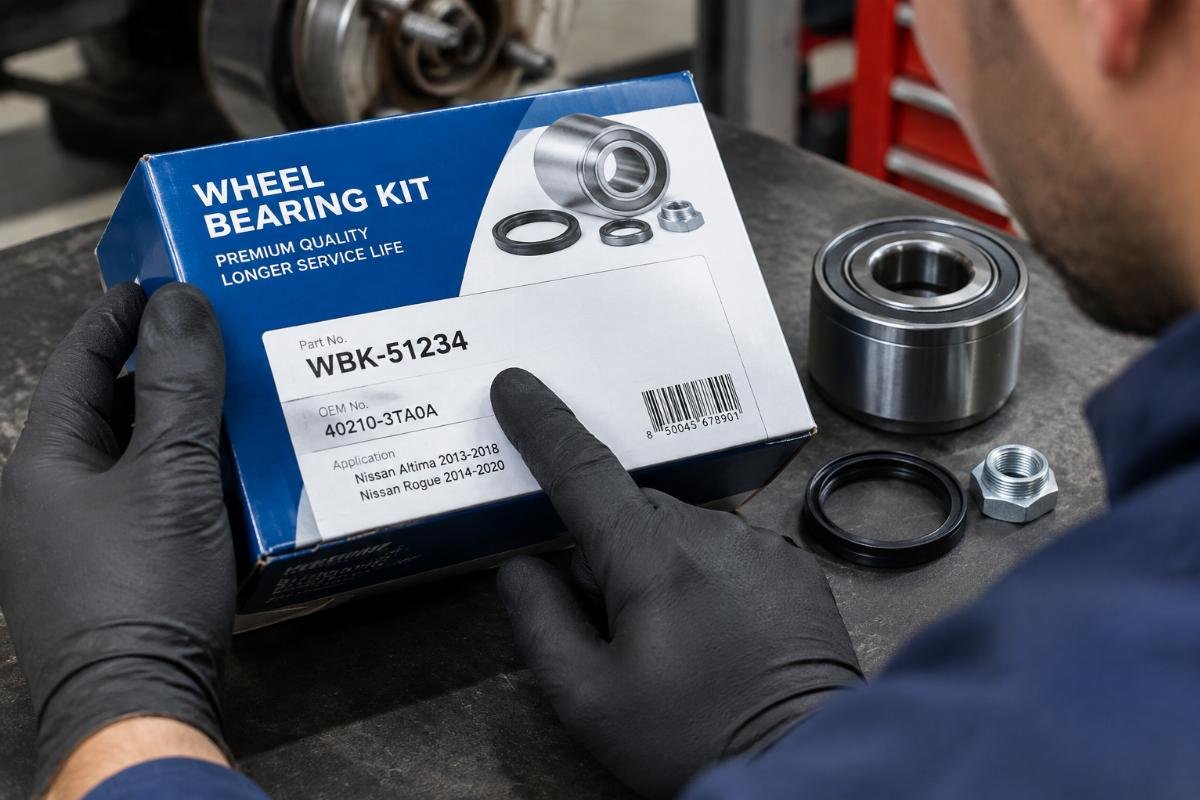
Technicians must verify the part number against the vehicle’s VIN to ensure the correct variant is selected. Even within the same brand, there can be multiple versions of a wheel bearing kit for the same model year, depending on the production month or specific trim level. Using a generic cross-reference without checking these details can result in receiving a kit with incompatible sensor placements or bolt patterns.
Proper tooling is also essential. Using a hammer to seat a bearing instead of a hydraulic press can damage the internal raceways, creating stress points that lead to early fatigue. Both FAG and Moog provide installation guidelines that emphasize the use of proper tools. Ignoring these instructions voids warranties and compromises safety. For wholesalers, providing access to these technical datasheets and installation guides adds value beyond the physical product. It empowers local workshops to perform installations correctly, reducing the likelihood of warranty claims that ultimately affect the supply chain.
The risk of premature wear is highest when the bearing is subjected to loads it was not designed to handle. Selecting a passenger car bearing for a light truck application, even if it fits physically, will result in rapid failure due to insufficient load rating. Always check the dynamic and static load ratings provided in the technical specifications.
How to Source Mixed-Batch Kits Efficiently?
Consolidated sourcing with complete traceability documentation ensures smooth customs and field deployment.
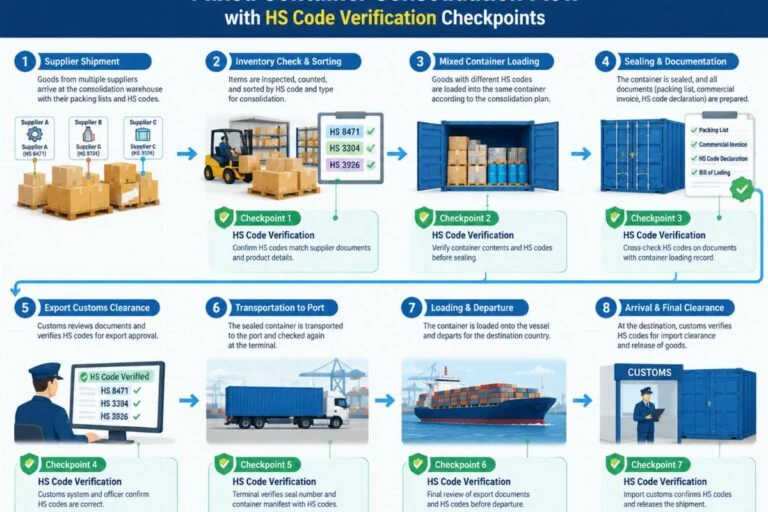
For distributors managing diverse fleets, sourcing both FAG and Moog kits from a single reliable channel simplifies logistics. However, mixing brands in one container requires meticulous documentation. Customs authorities in many countries require precise descriptions of goods, including brand names and part numbers. Inaccurate paperwork can lead to delays, as seen in the Lagos incident where mismatched documentation caused a two-week holdup. Ensuring that the commercial invoice, packing list, and certificate of origin all align perfectly with the physical cargo is non-negotiable.
Traceability is another critical factor. Genuine bearings come with batch numbers that allow for tracking back to the manufacturing facility. This is essential for quality control and warranty purposes. When sourcing from a FAG vs Moog wheel bearing kits wholesale supplier, verify that they provide complete traceability documentation for each brand. Counterfeit products often lack this level of detail, posing a significant risk to end-users.

Efficient sourcing also involves understanding inventory turnover rates. High-demand models should be stocked in larger quantities, while less common variants can be ordered on a just-in-time basis. Working with a supplier who offers flexible minimum order quantities allows distributors to optimize their cash flow while maintaining a comprehensive product range. Additionally, technical support for model selection can help identify equivalent parts across brands, providing flexibility when one brand is out of stock.
The ability to consolidate shipments of different brands reduces freight costs and simplifies import procedures. However, this convenience must not compromise the integrity of the products. Ensure that the supplier has robust quality assurance processes in place to prevent counterfeit items from entering the supply chain. Regular audits and sample testing can help maintain high standards.
Conclusion
Precision and application fit outweigh brand loyalty.
Choosing between FAG and Moog wheel bearing kits is a technical decision driven by dimensional tolerances, vehicle specifications, and operating conditions. Distributors and workshops must look beyond brand recognition to understand the engineering nuances that affect fitment and longevity. By prioritizing accurate part selection, proper installation techniques, and reliable sourcing channels, businesses can minimize failures and maximize customer satisfaction. A strategic approach to inventory management, supported by thorough documentation and technical expertise, ensures smooth operations in the global automotive aftermarket.