The cheapest bearing is the most expensive one you will ever buy.
For heavy-duty trucking and industrial MRO in the United States, selecting between FAG and NTN Bower for wheel ends is not a matter of brand loyalty but of verifying genuine traceability and dynamic load capacity. Counterfeit units often lack the precise heat treatment and seal integrity required for severe-duty applications, leading to catastrophic fatigue failure within thousands of kilometers. Buyers must prioritize suppliers who provide verifiable customs declarations and original packaging over those offering the lowest unit price.
I still remember the dust in Kano. It was red, fine, and relentless. A fleet operator had just installed what he swore were original NTN Bower hub bearings on his long-haul trucks. The paperwork looked perfect, the boxes were crisp, and the price was too good to question. Less than twenty thousand kilometers later, the heat generated by friction welded the inner race to the spindle. The hub assembly was a fused lump of metal. The axle was scrap. The driver stood there, holding the blackened remains, while I realized that the “savings” from the purchase had just cost him ten times more in downtime and replacement parts. That day changed how I view every single tapered roller bearing that crosses my desk.

This experience is not unique to West Africa. It happens in mining pits in Nevada and on construction sites in Texas. The market is flooded with fakes that look identical to the naked eye but fail under the microscopic scrutiny of load and heat. When you are sourcing for a fleet or a distribution center, understanding the technical divergence between genuine FAG vs NTN Bower wheel ends and their counterfeit counterparts is the only way to protect your bottom line.
What are the key differences between FAG and NTN Bower in US wheel ends?
Both brands offer premium tapered roller bearings, but they differ in cage design philosophy and regional supply chain strengths.
In the North American aftermarket, NTN Bower has a legacy presence, particularly in heavy-truck and agricultural applications. Their designs often emphasize robustness in high-contamination environments. FAG, part of the Schaeffler group, brings a German engineering precision that focuses heavily on dimensional stability and optimized internal geometry for reduced friction. While both meet or exceed industry standards for heavy-duty applications, the choice often comes down to specific operational conditions and availability of genuine stock.
| Feature | Genuine FAG Tapered Roller Bearings | Genuine NTN Bower Tapered Roller Bearings |
|---|---|---|
| Primary Design Focus | Precision geometry and low-friction operation | Robustness and high-load capacity in dirty environments |
| Cage Material | High-strength steel or polymer variants depending on series | Heavy-duty stamped steel or machined brass for severe duty |
| Heat Treatment | Controlled case hardening for core toughness | Deep case hardening for surface wear resistance |
| Supply Chain Origin | Global manufacturing with strong European logistics | Strong North American distribution network |
| Traceability | Laser-etched codes linked to batch production data | Distinctive packaging and batch-specific documentation |
A buyer in the Midwest once switched from a local discount supplier to a verified source for FAG components. He noticed that the genuine bearings had a smoother run-in period and maintained lower operating temperatures during sustained highway speeds. This was not magic; it was the result of micron-level precision in the raceway grinding process.
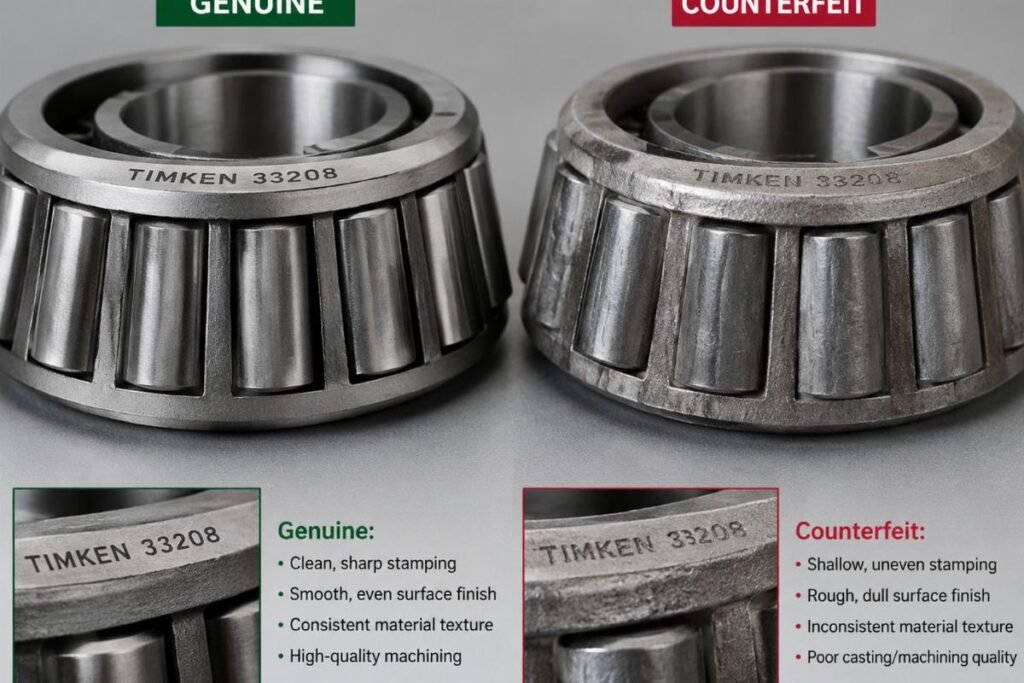
Counterfeit versions of either brand often skip critical steps like superfinishing or use inferior cage materials that deform under shock loads. When evaluating FAG vs NTN Bower wheel ends, do not just look at the logo. Look at the consistency of the rolling elements and the quality of the seal interface. Genuine products will have uniform coloring and sharp, clear markings. Fakes often have blurred stamps or uneven grease packing.

How do genuine bearings outperform counterfeits in harsh environments?
Authentic materials and precise heat treatment ensure significantly longer fatigue life under heavy loads and dust.
Wheel ends operate in one of the harshest environments on a vehicle. They support massive static and dynamic loads while being exposed to water, road salt, brake dust, and extreme temperature fluctuations. A genuine tapered roller bearing is engineered to handle these stresses through controlled metallurgy. The steel used in authentic FAG and NTN Bower products undergoes rigorous vacuum degassing to remove impurities that can become initiation points for cracks.
In contrast, counterfeit bearings often use recycled or substandard steel. Under heavy loads, these inferior materials develop micro-cracks much faster. I have seen fake bearings fail because the rollers themselves deformed, creating flat spots that destroyed the races. This is a direct result of insufficient hardness depth. Genuine bearings maintain their structural integrity because the heat treatment penetrates deep enough to support the surface load without compromising the tough core.
Consider a mining operation in Arizona. The dust there is abrasive and gets everywhere. A fleet using verified genuine NTN Bower bearings reported substantially extended service intervals compared to a previous batch of unverified “OEM” parts. The seals on the genuine units maintained their elasticity and sealing force, keeping contaminants out. The fakes had seals that hardened prematurely, allowing dust to enter and act as a grinding paste inside the bearing.

The difference in fatigue life is not marginal; it is exponential. A genuine bearing might last for hundreds of thousands of kilometers, while a fake could fail in a fraction of that time. This is why focusing solely on the purchase price is a dangerous strategy. The cost of a single roadside breakdown, including towing, lost cargo time, and emergency repairs, dwarfs the savings from buying cheap bearings. When analyzing FAG vs NTN Bower wheel ends, remember that you are buying insurance against failure, not just a metal component.
How can buyers verify the authenticity of FAG and NTN Bower bearings?
Strict verification of customs declarations, traceability codes, and original packaging is mandatory.
The sophistication of counterfeiters has increased. Boxes look real, holograms are copied, and even the grease smells right. However, there are telltale signs that only a disciplined procurement process can catch. The first line of defense is documentation. Every genuine shipment should come with a certificate of origin and a packing list that matches the batch numbers on the boxes. If a supplier cannot provide these documents, walk away.
I always check the laser-etched codes on the bearing rings. Genuine FAG and NTN Bower products have clear, precise markings that are difficult to replicate perfectly. Fakes often have etchings that are too deep, too shallow, or slightly misaligned. Additionally, the packaging itself offers clues. Authentic boxes use high-quality cardboard with sharp printing. The internal wrapping is clean and consistent. Counterfeit packaging often feels flimsy, with smudged ink or poor-quality tape.
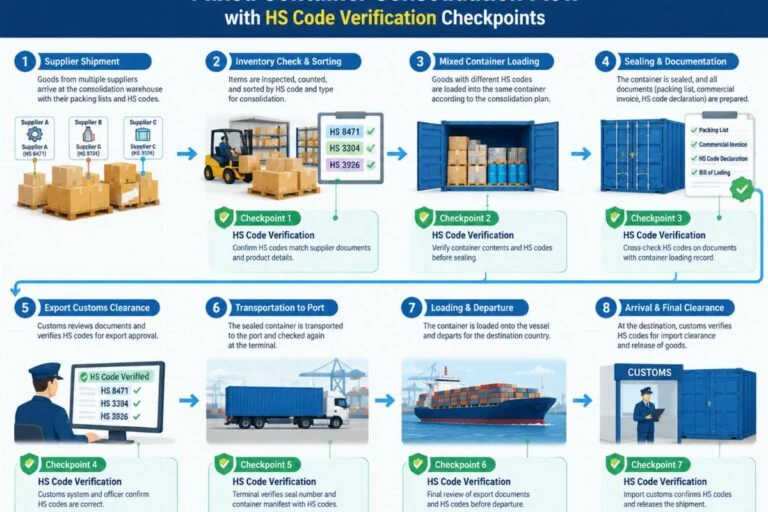
A distributor in Southeast Asia once received a mixed container of bearings. By cross-referencing the serial numbers on the bearings with the manufacturer’s database, he discovered that thirty percent of the stock was fake. These units had been swapped into genuine boxes at a transshipment point. Without strict verification, he would have sold defective products to his customers, damaging his reputation irreparably.
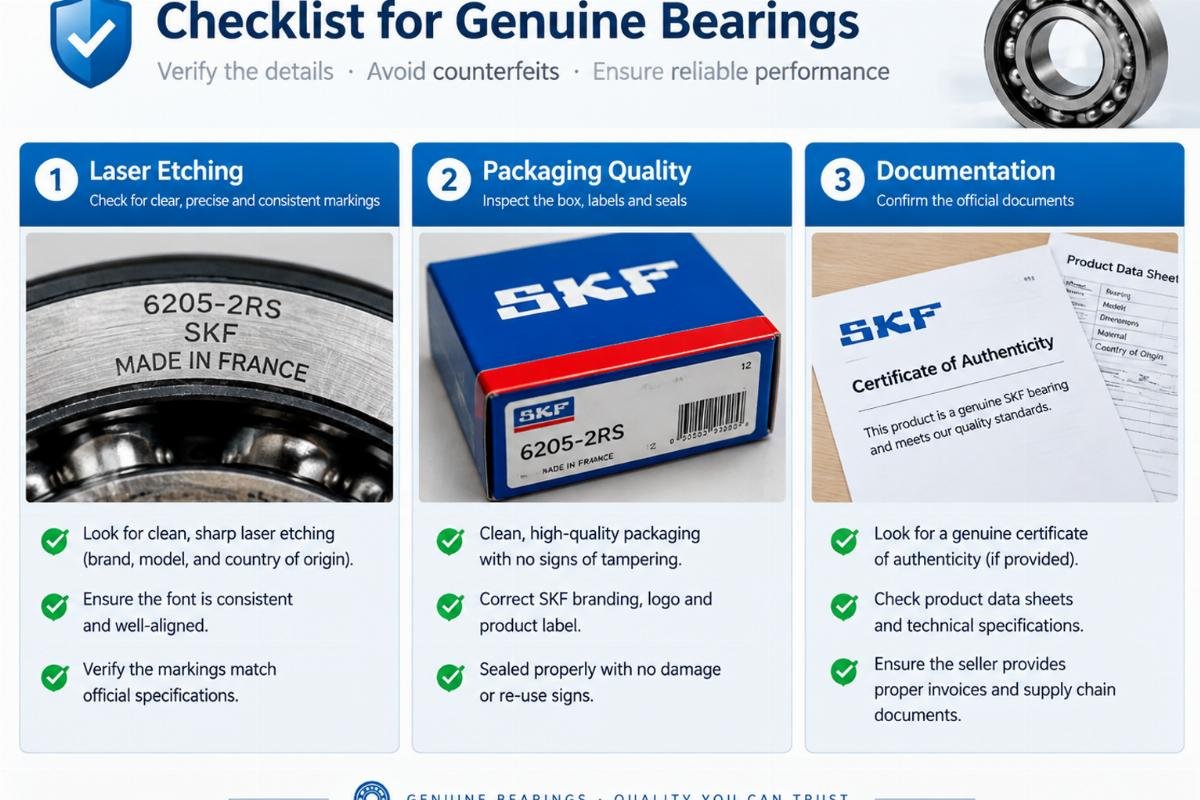
When sourcing FAG vs NTN Bower wheel ends, demand full traceability. Ask your supplier where the goods were manufactured and how they were shipped. A reliable partner will have no issue providing bill of lading details and customs clearance papers. This level of transparency is the only way to ensure that the bearings you receive are exactly what you paid for. Do not accept “trust me” as an answer. In the world of heavy-duty bearings, trust is built on paper trails and physical evidence.
What are the total costs of ownership when choosing wheel end bearings?
Focusing solely on unit price ignores the massive downtime and replacement costs of bearing failures.
The initial purchase price of a bearing is a tiny fraction of its total cost of ownership. When a wheel end fails, the consequences are severe. There is the cost of the new bearing, yes, but also the labor to replace it, the potential damage to the hub and spindle, and the lost revenue from the vehicle being off the road. For a commercial fleet, downtime is the enemy. A single failed bearing can delay a delivery, incur penalty fees, and disrupt scheduling.
Genuine FAG and NTN Bower bearings are designed to minimize this risk. Their superior fatigue life means fewer replacements over the life of the vehicle. This reduces maintenance frequency and keeps vehicles on the road. Counterfeit bearings, while cheaper upfront, often require replacement multiple times in the period a genuine unit would last. This multiplies the labor and parts costs, making them far more expensive in the long run.

Consider the logistical nightmare of an unexpected failure in a remote location. The cost of sending a mechanic and parts to a stranded truck is astronomical. Genuine bearings reduce the probability of such events. When evaluating FAG vs NTN Bower wheel ends, calculate the cost of failure, not just the cost of the part. A slightly higher initial investment in verified genuine products pays for itself many times over in reliability and peace of mind.
Our approach to sourcing reflects this reality. We maintain strict controls over our inventory, ensuring that every FAG and NTN Bower bearing we ship is accompanied by the necessary documentation to prove its authenticity. We understand that for our clients, whether they are distributors in the Middle East or MRO managers in Latin America, reliability is non-negotiable. We do not just sell bearings; we provide the assurance that those bearings will perform when it matters most.
Conclusion
Price is a number; reliability is a promise.
Choosing between FAG and NTN Bower for US wheel ends requires a shift in perspective from short-term savings to long-term value. Genuine bearings offer superior fatigue life, better seal integrity, and verifiable traceability that counterfeits simply cannot match. By prioritizing authentic sourcing and rigorous verification, buyers can avoid the catastrophic costs of premature failure. In the heavy-duty world, the right bearing keeps the wheels turning, and the business moving.