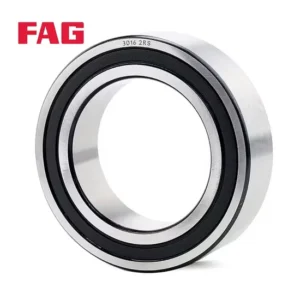
Product details
Description and application notes
Original Batch Traceability — Every FAG 3206-Bd-XL-2z-Tvh double row angular contact ball bearing ships with unbroken factory lot documentation to verify its production origin.
Technical Specifications
| Parameter | Value |
|---|---|
| Designation | FAG 3206-Bd-XL-2z-Tvh |
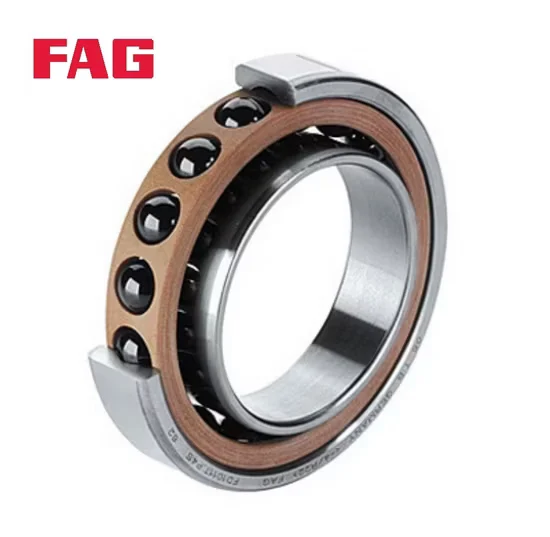
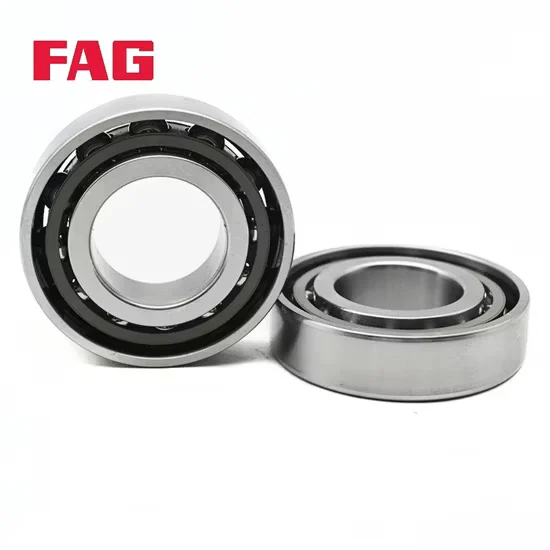
| Product Type | Double Row Angular Contact Ball Bearing |
| Bore Diameter (d) | 30 mm |
| Outside Diameter (D) | 62 mm |
| Width (B) | 23.8 mm |
| Contact Angle | 30° (Bd type) |
| Cage Material | Polyamide (Tvh) |
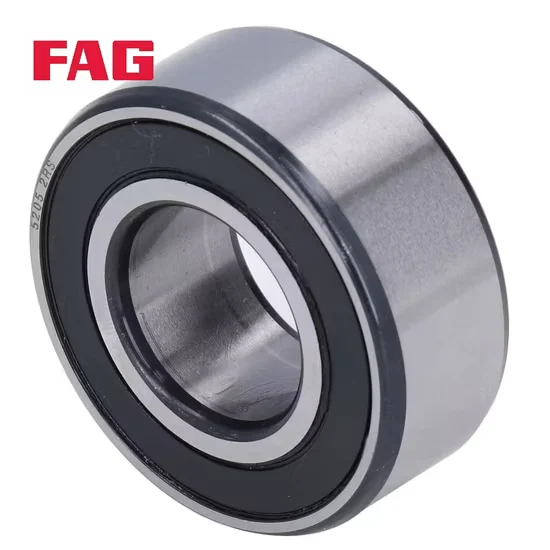
| Seal or Shield Type | Double steel shields (2z) |
| Precision Class | P0 / P6 / P5 |
| Material | Bearing Steel |
| Arrangement | Double row, separated |
| Origin | Jiangsu China |
Note: The XL suffix remains unverified and requires manufacturer catalog confirmation for specific life extension claims.
Application Suitability
| Industry | Typical Applications |
|---|---|
| Automotive | Wheel hub assemblies requiring combined load capacity |
| Machine Tools | High-speed spindle arrangements needing rigid support |
| Precision Equipment | Robotics joints demanding low-friction operation |
Why Shield Selection Dictates the Lifespan of Your FAG 3206-Bd-XL-2z-Tvh Double Row Angular Contact Ball Bearing
Mismatched seals cause more premature failures than inadequate load ratings.
I learned this the hard way at the Hannover Messe years ago when a European client experienced wheel lockups on their heavy transport fleet. We supplied rubber-sealed variants instead of steel-shielded ones for a high-temperature wheel hub application. The rubber degraded rapidly under continuous thermal stress, grease leaked out, and the bearings seized completely on the highway. When specifying a FAG 3206-Bd-XL-2z-Tvh double row angular contact ball bearing, ignoring the critical difference between contact seals and non-contact shields leads to catastrophic thermal runaway. Procurement engineers often focus solely on dynamic load ratings while overlooking how seal friction generates internal heat. This oversight drastically accelerates lubricant breakdown and raceway spalling, turning a minor specification error into a massive warranty claim.
Matching the Polyamide Cage to High-Speed Demands
The polyamide cage design significantly reduces rotational friction, making it exceptionally well-suited for high-speed spindle and robotics applications. By minimizing centrifugal forces acting on the rolling elements, this FAG 3206-Bd-XL-2z-Tvh double row angular contact ball bearing maintains remarkably stable operating temperatures even under continuous duty cycles. The lightweight nature of the cage material also dampens operational vibrations, contributing to a smoother rotational profile. Our engineering team routinely cross-checks cage material compatibility against your specific rotational speeds and lubrication intervals to prevent premature cage wear. Ensuring the cage material aligns with the operational envelope is just as critical as verifying the external dimensions.
Managing Thermal Expansion and Contamination Risks
In automotive wheel hubs and precision machinery, components constantly face a complex combination of radial loads and axial thrusts. The 30° contact angle effectively manages these combined multidirectional forces without compromising the structural integrity of the raceways. However, high-speed operation inevitably generates internal heat, which can alter the internal clearance if not properly accounted for during the initial assembly phase. Furthermore, environments laden with fine particulate matter demand reliable contamination protection to prevent abrasive wear. In these scenarios, non-contact steel shields provide an optimal balance between sealing efficiency and friction reduction, keeping contaminants out without dragging down the rotational speed. Understanding the interplay between thermal expansion, internal clearance, and seal friction is essential for maximizing service life.
Decoding the Suffix Architecture for Precision Selection
Understanding the nomenclature is absolutely critical for avoiding costly procurement errors and ensuring operational reliability. The Bd designation indicates a 30° contact angle, optimizing the load distribution specifically for combined radial and axial stresses encountered in dynamic applications. The 2z suffix confirms the presence of double steel shields, which protect the internal raceways from dust ingress while avoiding the severe friction penalties associated with rubber contact seals. Additionally, the Tvh suffix specifies a glass-fiber reinforced polyamide cage, ensuring quiet operation and reduced weight compared to traditional brass alternatives. Decoding these specific suffixes allows maintenance teams to reorder the exact original equipment specifications without guessing. Missing even a single character in the designation can result in receiving a component that fails within the first few hundred hours of operation.
The Financial Impact of Incorrect Suffix Substitution
Substituting a rubber-sealed variant for a steel-shielded model in high-speed applications inevitably leads to severe unplanned downtime and frustrated end-users. The excessive friction generated by contact seals creates localized hot spots, rapidly degrading the lubricant and accelerating surface fatigue. According to established failure analysis frameworks, lubrication starvation remains a primary driver of premature raceway spalling and catastrophic mechanical seizure. Procuring the exact suffix configuration prevents warranty voidance and protects the broader mechanical assembly from secondary damage caused by bearing disintegration. The true cost of a mismatched bearing includes not just the replacement part, but the labor, equipment downtime, and potential reputational damage associated with a field failure.
Securing Authentic Components Through Rigorous Verification
We eliminate the risk of counterfeit parts by sourcing exclusively through authorized distribution channels and maintaining strict chain-of-custody protocols. When buyers request a FAG 3206-Bd-XL-2z-Tvh double row angular contact ball bearing, we carefully verify the cage material and shield type against the original factory specifications to prevent dangerous suffix mismatches. Our quality assurance process includes comprehensive dimensional inspections aligned with international standards, ensuring the 30° contact angle and shield clearances meet exact tolerances before dispatch. We also provide complete batch traceability, allowing your maintenance team to track the component's origin and production date long after installation. This rigorous approach ensures that the performance characteristics documented in the manufacturer's catalog are exactly what you receive on the loading dock.
Documentation & Authenticity
- Certificate of Conformity validating the original factory production batch for this specific double row arrangement.
- Official manufacturer app QR code verification to confirm the authenticity of the polyamide cage and steel shields.
- Dimensional inspection reports confirming the 30° contact angle and bore tolerances before dispatch.
- Material test certificates verifying the bearing steel raceways and polyamide cage material specifications.
Storage, Handling & Mounting
- Retain the original vapor-phase inhibitor packaging until installation to prevent corrosion on the exposed steel shields.
- Store the components in a climate-controlled environment to protect the polyamide cage from ultraviolet degradation and moisture absorption.
- Use clean, lint-free gloves during handling to avoid transferring skin acids onto the precision-ground 30° contact angle raceways.
- Apply induction heating for mounting on tight-fit shafts, ensuring the temperature does not exceed the thermal limits of the polyamide cage.
Preparing Your Technical Parameters for Selection Review
To ensure the selected configuration perfectly matches your operational requirements, please share your specific radial and axial load profiles along with the maximum continuous operating speed. Providing the original equipment manufacturer part number allows our engineering team to perform a thorough cross-reference check and verify the required internal clearance class. Detailing the ambient temperature ranges and specific contamination levels will help us confirm whether the steel shields and polyamide cage are the optimal choice for your unique application environment. Supplying this technical context enables us to calculate the expected L10 fatigue life and recommend the most appropriate lubrication strategy for your maintenance schedule.
Frequently Asked Questions
Q: How can I verify the authenticity of the FAG 3206-Bd-XL-2z-Tvh double row angular contact ball bearing?
A: You can verify authenticity by scanning the QR code on the packaging using the official manufacturer application. This digital check confirms the original production batch, factory location, and specific suffix configuration, ensuring the component is not a counterfeit replica. We also supply physical traceability documents linking the bearing to its initial manufacturing run.
Q: What does the Bd suffix indicate regarding the contact angle and load capacity?
A: The Bd suffix specifies a 30° contact angle, which is engineered to handle combined radial and axial loads effectively. This specific geometry provides a balanced load distribution, making it highly suitable for applications like wheel hubs and machine tool spindles where multidirectional forces are constantly present during operation.
Q: Why is the Tvh polyamide cage preferred over brass cages in this configuration?
A: The Tvh polyamide cage offers significantly lower weight and reduced rotational friction compared to brass alternatives. This material minimizes centrifugal forces at high speeds, resulting in quieter operation and lower heat generation. It is particularly advantageous in precision equipment where maintaining tight thermal tolerances is critical for overall system accuracy.
Q: What is the difference between the 2z steel shields and 2RS rubber seals?
A: The 2z steel shields provide non-contact protection against dust and large particulates without adding rotational friction, making them ideal for high-speed applications. In contrast, 2RS rubber seals offer superior moisture exclusion but generate more friction and heat. Selecting the correct seal type depends entirely on your specific speed and contamination requirements.
Q: How do I determine the correct precision class for my application?
A: The required precision class depends on the rotational speed and the acceptable level of runout in your machinery. Standard P0 is sufficient for general automotive hubs, while P6 or P5 classes are necessary for high-speed machine tool spindles demanding minimal vibration. Share your equipment specifications so we can recommend the appropriate tolerance grade.