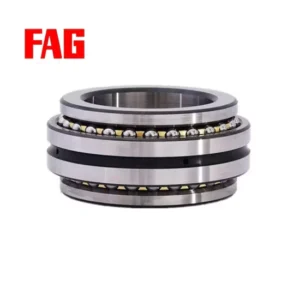
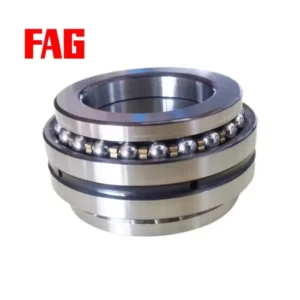
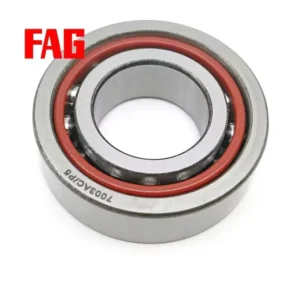
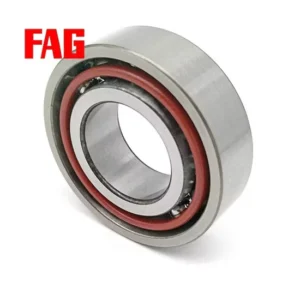
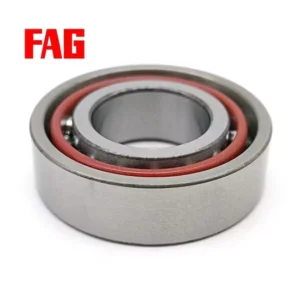
Product details
Description and application notes
Mixed-Brand Sourcing — Consolidate this FAG spindle bearing with SKF or NSK equivalents in a single shipment without juggling multiple vendors.
Technical Specifications
| Parameter | Value |
|---|---|
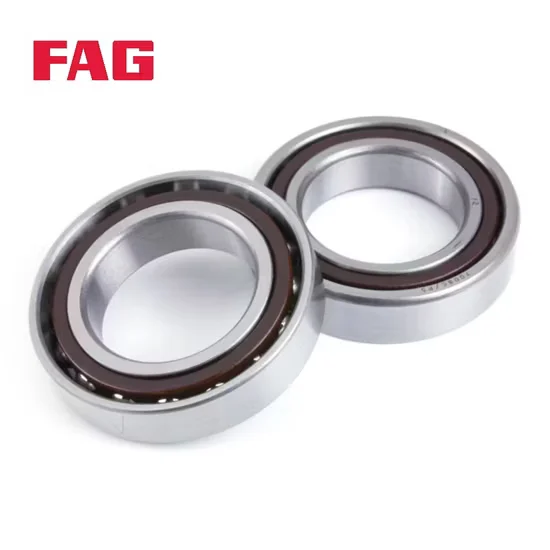
| Designation | B7005-C-T-P4s-Um FAG |
| Bearing Type | Angular Contact Ball Bearing |
| Precision Class | P4s |
| Contact Angle | 15° (C suffix) |
| Material | Bearing steel (available in hybrid ceramic variants) |
| Origin | Jiangsu, China |
| Certification | ISO compliant |
Application Suitability
| Industry | Typical Applications |
|---|---|
| Machine Tools | High-speed spindle configurations requiring P4s running accuracy |
| Precision Equipment | Robotics joint actuators demanding tight dimensional tolerances |
| Pumps & Reducers | High-speed fluid transfer mechanisms with combined loading |
Why Spindle Vibration Ruins Machining Tolerances Before the FAG B7005-C-T-P4s-Um angular contact ball bearing Fails
Micro-vibrations from incorrect preload or clearance destroy surface finish long before catastrophic bearing seizure occurs.
When sourcing replacement parts for high-speed spindles, buyers often focus purely on dynamic load ratings while ignoring the thermal expansion behavior of the shaft and housing. I saw this firsthand in Dubai when a standard steel bearing seized in a desert machine shop because the thermal growth closed the internal clearance completely, causing the spindle to lock up and score the raceways. Selecting the right FAG B7005-C-T-P4s-Um angular contact ball bearing requires matching the precision class and contact angle to the actual operating temperature, not just the catalog speed limit. Ignoring these thermal dynamics leads to rapid degradation of the lubricant film and subsequent metal-to-metal contact.
Aligning P4s Precision with High-Speed Spindle Demands
The 15° contact angle in this configuration optimizes the balance between radial rigidity and axial thrust capacity, which is critical for maintaining tool tip accuracy during heavy milling operations. By supplying the FAG B7005-C-T-P4s-Um angular contact ball bearing with complete traceability, we ensure that the dimensional tolerances match the original equipment manufacturer's strict assembly requirements. This prevents the micro-chatter that typically degrades surface finishes in precision grinding applications. Furthermore, the single-row design allows for flexible paired arrangements, enabling engineers to fine-tune the overall spindle stiffness to match the specific cutting forces encountered in multi-axis machining centers.
Managing Thermal Growth and Lubrication Starvation
High-speed spindles generate immense friction heat, which directly impacts the internal clearance and lubricant film thickness. If the grease base oil viscosity is too low or the relubrication interval is ignored, the rolling elements will skid rather than roll, leading to severe raceway smearing and premature fatigue. Furthermore, the 15° contact angle means the bearing is highly sensitive to axial preload variations caused by thermal expansion of the spindle shaft. Proper installation must account for these thermal shifts to prevent the bearing from running with negative clearance, which drastically increases operating temperatures and accelerates cage wear.
Decoding the Suffix String for Exact Spindle Fit
The 'C' suffix confirms the 15° contact angle, providing the necessary axial stiffness for vertical spindle orientations without overloading the rolling elements. The 'P4s' precision class indicates tighter running accuracy and dimensional tolerances than standard P4, which is essential for minimizing runout in high-frequency machining. This strict adherence to suffix decoding prevents the costly mistake of installing a bearing with the wrong cage design for oil-air lubrication systems, ensuring the component survives the demanding thermal environment of continuous production. Understanding these specific designations guarantees that the internal geometry perfectly aligns with the spindle's dynamic requirements.
The Financial Drain of Unplanned Spindle Downtime
Installing a bearing with an incorrect contact angle or mismatched clearance class inevitably leads to premature failure, but the hidden costs extend far beyond the replacement part itself. The resulting unplanned downtime halts the entire production line, causing missed delivery deadlines and severe contractual penalties. Additionally, the vibration from a degrading bearing can cause catastrophic damage to the spindle housing, motor windings, and expensive tooling, leading to massive repair bills that dwarf the initial component cost. Following ISO 281 life calculation frameworks helps mitigate these risks by ensuring the selected bearing matches the actual load and speed profile of the application.
Securing Authentic Spindle Components with Verified Traceability
Sourcing high-precision spindle bearings requires more than just finding the right part number; it demands absolute certainty in authenticity and batch traceability. We provide complete origin documentation for every FAG B7005-C-T-P4s-Um angular contact ball bearing, ensuring you receive genuine components directly from the manufacturer's production facilities. Our technical team cross-checks the P4s precision class and 15° contact angle against official catalogs to prevent suffix misinterpretation that could ruin a spindle assembly. Furthermore, we consolidate mixed-brand orders, allowing you to source this FAG unit alongside domestic or alternative premium brands in a single shipment, significantly reducing your procurement overhead and simplifying logistics.
Documentation & Authenticity
- Certificate of Conformity verifying the P4s precision class and 15° contact angle specifications.
- Original batch traceability records linking the bearing to the manufacturer's production facilities.
- Dimensional and running accuracy inspection reports confirming strict P4s tolerances before dispatch.
- Material test certificates validating the bearing steel composition for high-speed spindle applications.
- Anti-counterfeit packaging verification ensuring the integrity of the original factory seals.
Storage, Handling & Mounting
- Store the P4s precision bearing in its original anti-corrosion packaging until the exact moment of mounting to prevent raceway oxidation.
- Maintain a stable, climate-controlled environment to avoid thermal shock that could alter the tight P4s dimensional tolerances.
- Use clean, lint-free gloves when handling the 15° contact angle bearing to prevent skin acids from etching the polished raceways.
- Ensure the spindle housing and shaft are machined to the exact ISO tolerances required for P4s class interference fits.
- Verify the specific lubrication protocols required for high-speed spindle applications before breaking the factory seal.
Technical Data Required for Spindle Bearing Verification
To ensure the selected bearing perfectly matches your spindle configuration, please provide the exact radial and axial load profiles along with the maximum operating speed and temperature range. Sharing the original equipment manufacturer's part number or spindle assembly drawing allows our engineering team to perform a precise cross-reference check and verify specific suffix parameters. Additionally, detailing your current lubrication method, relubrication intervals, and environmental exposure helps us confirm if the cage design and clearance class are optimal for your specific machining environment, preventing costly trial-and-error installations.
Frequently Asked Questions
Q: How do I verify the authenticity of the FAG B7005-C-T-P4s-Um angular contact ball bearing?
A: Authenticity is confirmed through complete batch traceability documentation and anti-counterfeit packaging verification. We provide original certificates of conformity that link the specific bearing to the manufacturer's production facilities, ensuring the P4s precision class and material composition meet strict OEM standards.
Q: What do the unverified 'T' and 'Um' suffixes indicate in this designation?
A: These suffixes typically relate to specific cage materials, preload classes, or clearance specifications. Because they are marked as unverified in our current data, we strongly recommend cross-checking them against the official manufacturer catalog or providing your OEM equipment number so we can confirm the exact technical parameters before installation.
Q: Why is the 15° contact angle critical for machine tool spindles?
A: The 15° contact angle, denoted by the 'C' suffix, provides an optimal balance between radial rigidity and axial load capacity. This specific geometry minimizes axial displacement under high-speed rotational forces, ensuring the tool tip maintains strict dimensional accuracy during precision milling and grinding operations.
Q: How does P4s precision differ from standard P4 in ISO standards?
A: The P4s class specifies tighter running accuracy and stricter dimensional tolerances compared to the standard P4 grade. This enhanced precision is essential for high-speed spindles where even microscopic runout can cause severe surface finish defects and accelerate tool wear during continuous machining cycles.