Product details
Description and application notes
Authentic FAG Verification — Scan the official manufacturer QR code on every FAG B7021-E-T-P4s-UL angular contact ball bearing package to confirm original batch traceability before spindle assembly.
Technical Specifications
| Parameter | Value |
|---|---|
| Designation | FAG B7021-E-T-P4s-UL |
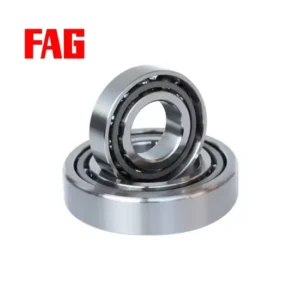
| Bearing Type | Single-Row Angular Contact Ball Bearing |
| Bore Diameter (d) | 105 mm |
| Outside Diameter (D) | 160 mm |
| Width (B) | 26 mm |
| Dynamic Load Rating (C) | 80 kN |
| Static Load Rating (C₀) | 58 kN |
| Limiting Speed (Grease) | 7500 r/min |
| Limiting Speed (Oil) | 12000 r/min |
| Contact Angle | 25° |
| Precision Class | P4s |
| Material | Bearing Steel |
| Origin | Jiangsu China |
Note: Suffixes T, P4s, and UL require manufacturer catalog confirmation for exact technical definitions.
Application Suitability
| Industry | Typical Applications |
|---|---|
| Machine Tool Manufacturing | High-speed milling and grinding spindle assemblies |
| Precision Engineering | Robotics joint actuators and coordinate measuring machines |
| Fluid Machinery | High-speed pump shaft support systems |
Why Ignoring Spindle Bearing Suffixes Destroys Machining Accuracy
A missing pairing or precision suffix turns a high-performance component into a source of chronic vibration.
Early in my career sourcing for Middle Eastern clients, I specified a basic B7021 model for a machine tool spindle rebuild, completely overlooking the critical P4s precision and UL pairing designations. The result was excessive vibration, abnormal heat generation, and scrapped parts that cost the client heavily. When specifying a FAG B7021-E-T-P4s-UL angular contact ball bearing, every single suffix dictates the exact preload and dimensional tolerance required for rigid spindle operation.
Matching Precision Tolerances to High-Speed Spindle Demands
High-speed machining centers demand exceptional rotational accuracy to maintain tight dimensional tolerances on finished parts. The FAG B7021-E-T-P4s-UL angular contact ball bearing delivers the exact running accuracy needed for these demanding environments. Our supply chain ensures that every unit shipped matches the strict dimensional requirements of modern CNC equipment, eliminating the guesswork in spindle rebuilds.
Navigating Thermal Growth and Axial Thrust in Milling Operations
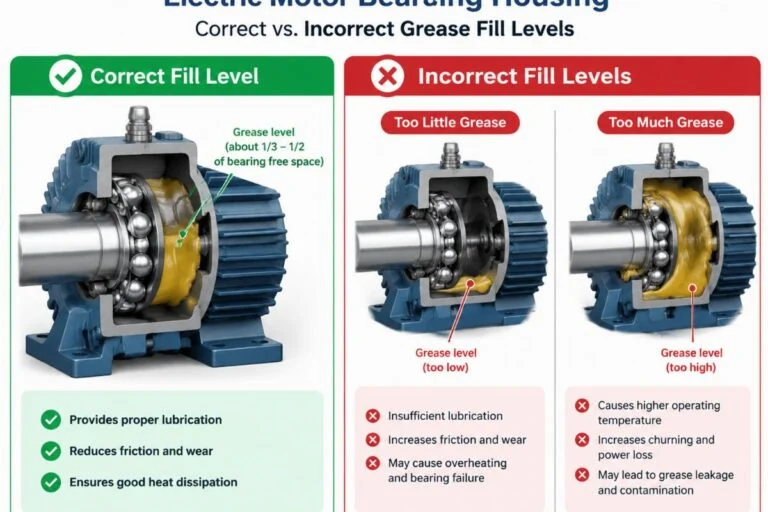
Spindle assemblies generate significant heat during prolonged high-speed cutting, which directly impacts internal bearing clearance and preload stability. A 25° contact angle provides an optimal balance to handle the combined radial and axial thrust loads typical in heavy milling operations. Proper lubrication management is absolutely critical, as oil-air or grease systems must prevent contamination while effectively dissipating friction heat. Incorrect handling of these thermal dynamics inevitably leads to rapid raceway degradation, excessive noise, and premature spindle failure.
Decoding the Engineering Behind the Designation
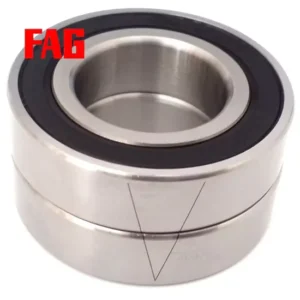
The "E" designation confirms a 25° contact angle, optimizing the internal load distribution for the combined axial and radial forces frequently encountered in vertical spindle orientations. The P4s precision class ensures significantly tighter dimensional and running accuracy compared to standard P4 or P5 grades, which is mandatory for minimizing runout in precision grinding applications. Furthermore, the UL suffix indicates a universal matching arrangement with light preload, allowing these bearings to be mounted in back-to-back or face-to-face pairs without requiring custom shimming during the final assembly.
The Hidden Financial Impact of Incorrect Spindle Arrangements
Selecting a standard clearance bearing instead of a universally matched, preloaded set inevitably results in excessive shaft deflection under heavy cutting loads. This deflection causes poor surface finishes, forcing machine shops to scrap expensive workpieces and endure unplanned downtime for emergency teardowns. According to established failure analysis frameworks, improper preload and mismatched precision grades are primary drivers of premature spalling, abnormal noise, and catastrophic spindle seizure.
Securing Traceable Precision Components for Critical Rebuilds
Sourcing genuine precision components requires much more than just matching a basic part number; it demands rigorous verification of the exact suffix configuration. We specialize in securing the exact FAG B7021-E-T-P4s-UL angular contact ball bearing configuration, ensuring the P4s tolerance and UL pairing are strictly verified before dispatch. Our technical team provides cross-reference consultation to validate equivalent models if lead times fluctuate, while our global shipping consolidation handles the complex logistics of delivering fragile, high-precision packages safely to your facility.
Documentation & Authenticity
- Certificate of Conformity verifying the P4s precision grade and original manufacturing batch.
- Official manufacturer QR code on the packaging for instant digital authenticity verification.
- Dimensional inspection report confirming the 25° contact angle and strict running accuracy tolerances.
- Material traceability documentation linking the bearing steel to its original metallurgical heat number.
Storage, Handling & Mounting
- Keep the UL paired set sealed in its original factory packaging until the exact moment of spindle mounting to preserve the matched preload.
- Wear lint-free cleanroom gloves when handling the exposed raceways to prevent microscopic sweat corrosion on the high-precision P4s surfaces.
- Store the bearings in a climate-controlled environment to prevent thermal shock that could alter the critical 25° contact angle geometry.
- Use induction heaters with precise temperature controls when mounting the inner ring, avoiding localized overheating that compromises the bearing steel hardness.
Preparing Your Spindle Rebuild Specifications
To ensure the selected configuration perfectly matches your machine tool, please provide the exact spindle model number and the required mounting arrangement. Sharing your operational parameters, including maximum rotational speed, axial thrust loads, and the preferred lubrication method, allows our engineering team to verify the L10 life and preload suitability. We can also cross-check OEM equipment manuals to confirm the precise suffix requirements for your specific application.
Frequently Asked Questions
Q: How do I verify the authenticity of the P4s precision grade before installation?
A: You can verify the authenticity by scanning the official manufacturer QR code located on the product packaging using the brand's official mobile application. Additionally, we provide a Certificate of Conformity and a dimensional inspection report that explicitly confirms the P4s tolerance class and the original batch number for full traceability.
Q: What does the UL suffix mean for spindle mounting arrangements?
A: The UL suffix indicates a universal matching arrangement with a light preload. This allows the bearings to be mounted in any configuration, such as back-to-back or face-to-face, without the need for custom shimming. This flexibility significantly reduces assembly time and ensures consistent preload across the entire spindle stack.
Q: Why is the 25° contact angle preferred for certain machine tool spindles?
A: A 25° contact angle, denoted by the E suffix, provides an optimal balance between axial load capacity and high-speed performance. It is particularly suitable for spindles that experience significant axial thrust during heavy milling operations, offering greater rigidity and better resistance to shaft deflection compared to a standard 15° contact angle design.
Q: How should I handle the bearings to maintain their P4s running accuracy?
A: To maintain P4s running accuracy, always keep the bearings in their original sealed packaging until installation and handle them in a clean, climate-controlled environment. Use lint-free gloves to prevent contamination, and avoid applying any impact forces or using uncalibrated tools during the mounting process, as microscopic dents will destroy the precision tolerances.