Lowest price does not win annual contracts; flawless traceability does.
Securing annual FAG supply contracts in the US requires strict adherence to local procurement terms, independent barcode labeling for mixed-batch packaging, and full mill certification traceability. Distributors who prioritize freight savings over customs compliance face port seizures and contract cancellation. A compliant wholesale supplier ensures that every unit, from deep-groove ball bearings to spherical roller bearings, carries verifiable origin documentation and meets US Customs barcode specifications.

The transition from spot buying to framework agreements is often where international distributors stumble. I learned this the hard way in Los Angeles. Early in my career, I managed a shipment for a major US industrial client. Following standard export practices from other regions, I consolidated various FAG bearing types into a single pallet to optimize container space. The invoice was correct, the goods were genuine, but the physical presentation failed. The mixed pallet lacked individual unit barcodes, and the supporting mill certificates were bundled generally rather than linked to specific batch numbers. The cargo was held at the port for weeks while customs agents struggled to verify the contents against the paperwork. The client faced severe production delays, and the annual framework agreement was nearly terminated. That incident reshaped my approach to the US market. It was not about the quality of the steel or the precision of the grinding; it was about the administrative and logistical rigor required by US import regulations.
What are the core US procurement terms for annual FAG contracts?
Compliance prevents contract cancellation, not just delays.
Annual frameworks differ significantly from one-off purchases. Buyers are not just purchasing hardware; they are purchasing risk mitigation. The core terms revolve around authenticity verification and supply chain transparency. US buyers, particularly in heavy industry and MRO sectors, operate under strict internal audit protocols. They require proof that the FAG bearings supplied are genuine original equipment manufacturer products, not counterfeits or refurbished units.
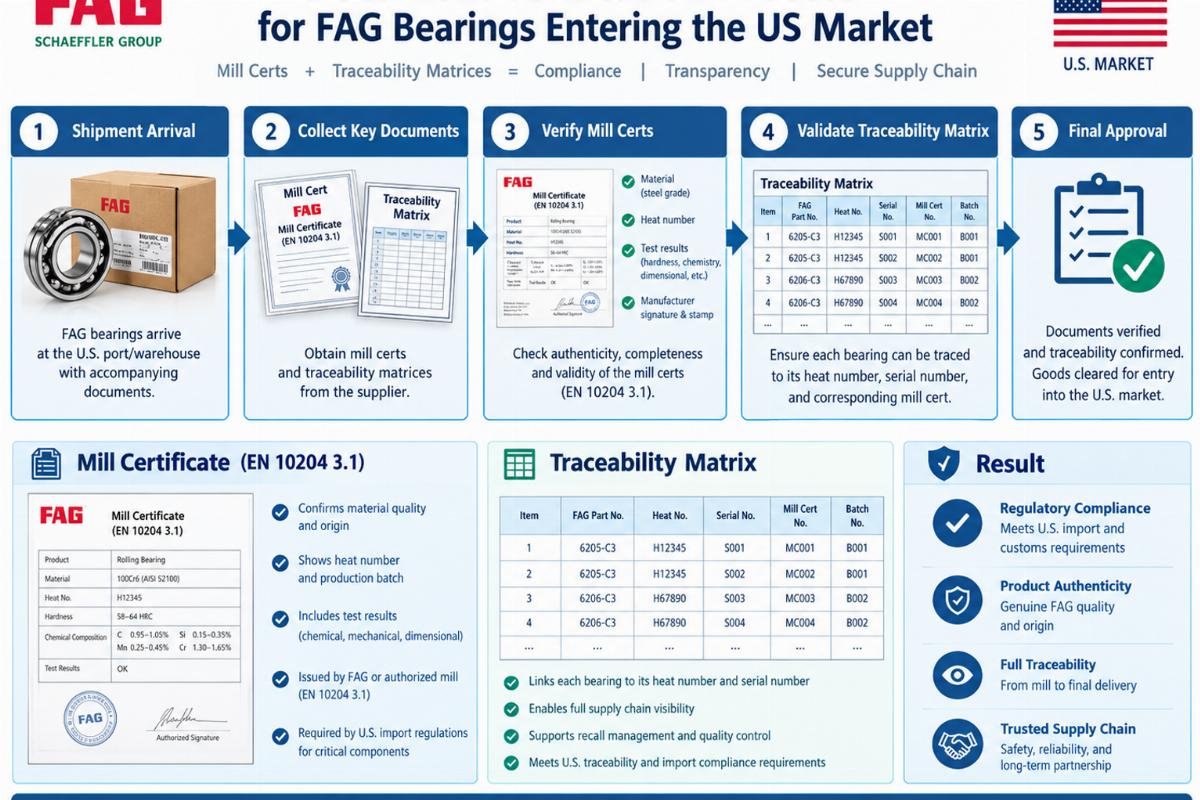
A common misconception is that a simple certificate of origin suffices. In reality, US procurement teams demand a full traceability matrix. This includes mill certificates that link the specific bearing batch to its production run, material composition reports, and heat treatment logs. Without these documents, even genuine products may be rejected during incoming quality inspection. For a wholesale supplier, this means maintaining a robust documentation system that can retrieve specific batch data for any part number, from tapered roller bearings to thrust bearings, instantly.
Furthermore, payment terms and liability clauses in annual contracts often include penalties for non-compliance. If a shipment fails to meet the documented specifications or lacks the required traceability, the buyer may invoke clauses that allow for immediate return of goods at the supplier’s expense. This financial risk outweighs any marginal savings achieved through lower product pricing. Therefore, the primary value proposition of a reliable partner is not just competitive sourcing cost, but the assurance of uninterrupted, compliant supply.
How to package mixed FAG bearings for US customs?
Independent barcodes avoid port holds.
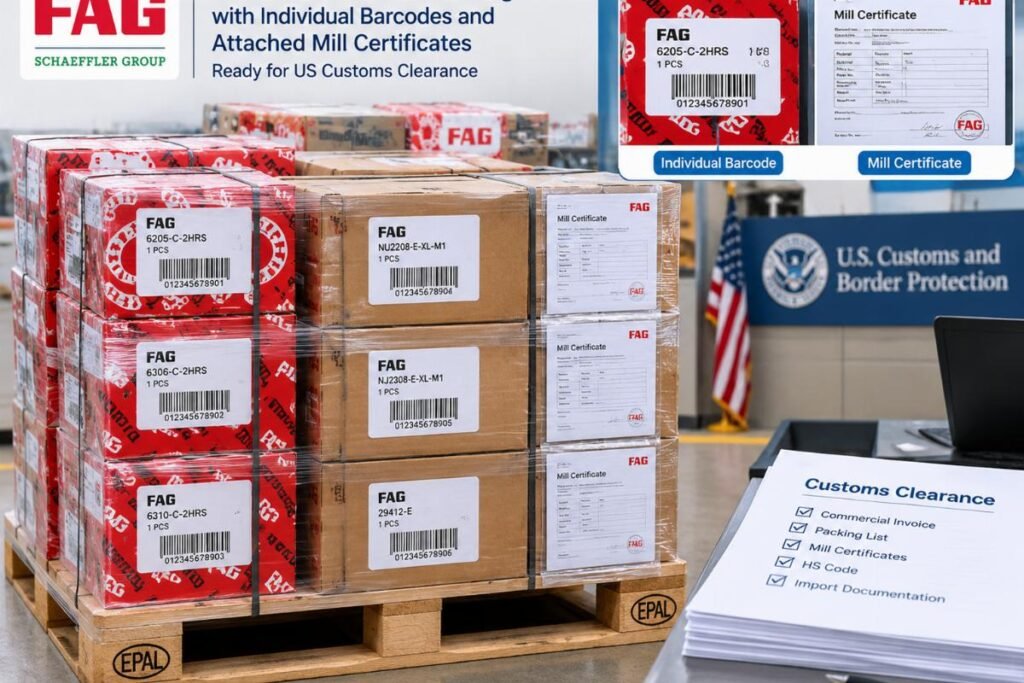
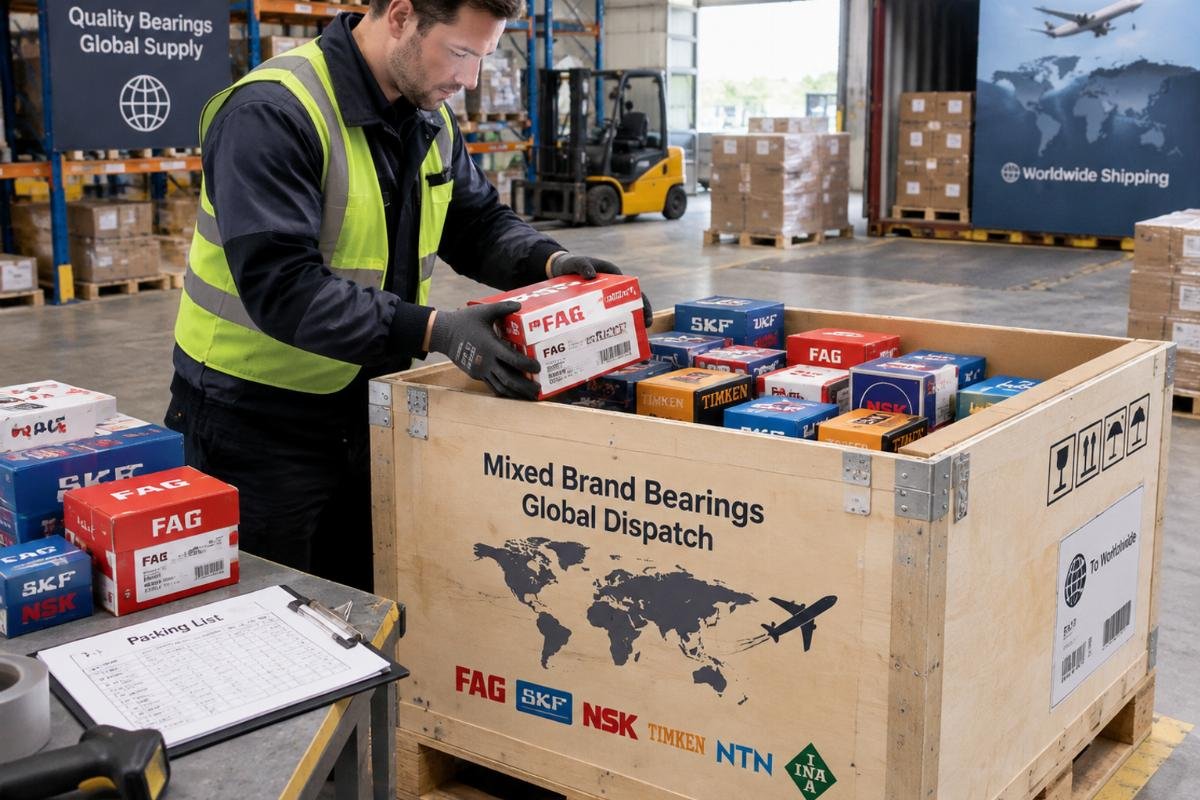
Mixed-batch consolidation is a logistical necessity for distributors serving diverse MRO needs. However, US Customs regulations treat mixed pallets with heightened scrutiny. If a single pallet contains multiple SKUs, such as cylindrical roller bearings alongside angular contact ball bearings, each individual box or unit must have a scannable barcode that matches the commercial invoice line item.
In my early experience, I assumed that a master pallet label was sufficient. This is a critical error. When customs officers inspect a mixed pallet, they need to verify each item without unpacking the entire load. If the inner boxes lack unique identifiers, the shipment is flagged for manual examination. This process can take days or weeks, incurring demurrage charges and disrupting the buyer’s inventory planning. For an annual FAG supply contract, consistent on-time delivery is a key performance indicator. Repeated delays due to packaging errors will lead to disqualification from the supplier list.
Proper packaging also involves weight distribution and pallet stability. Mixed loads often have uneven weight profiles. Heavy spherical roller bearings placed on top of lighter needle bearings can cause damage during transit. A professional approach involves strategic stacking based on weight and fragility, secured with appropriate strapping and shrink wrap. Additionally, the pallet itself must meet ISPM 15 standards for wood packaging material, requiring clear marking of heat treatment or fumigation. Failure to display this mark can result in the entire shipment being refused entry or ordered for re-export.

Which traceability documents are mandatory for US buyers?
Mill certs ensure authenticity.
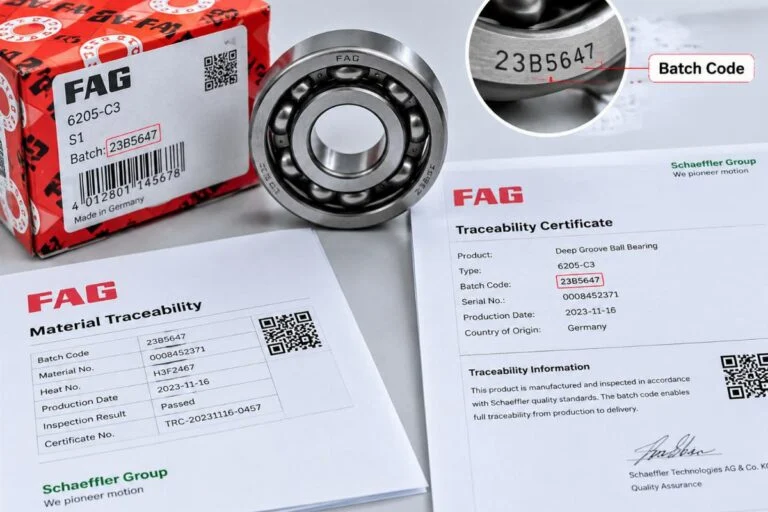
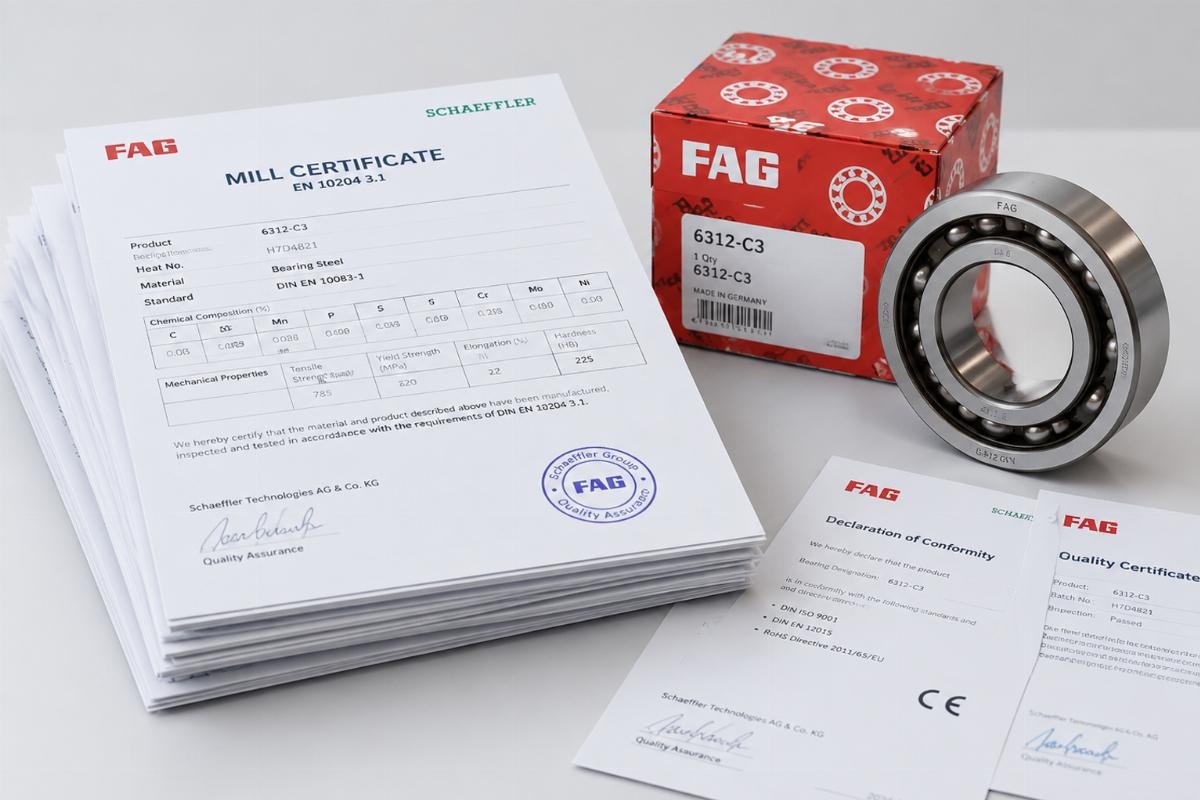
Traceability is the backbone of trust in the bearing industry. For US buyers, the mandatory document set goes beyond the commercial invoice and packing list. The most critical component is the mill certificate, also known as the material test report. This document provides detailed information about the steel grade, chemical composition, and mechanical properties of the bearing components. It serves as proof that the FAG bearings were manufactured according to the brand’s stringent quality standards.
Another essential document is the certificate of conformity. This certifies that the supplied bearings meet the specified dimensional tolerances and performance criteria. For precision applications, such as those in machine tools or wind power generators, buyers may also require inspection reports detailing roundness, surface finish, and noise levels. These reports must be linked to the specific batch number of the delivered goods.
In the context of an annual FAG supply contract, the wholesale supplier must maintain a digital archive of these documents. When a buyer requests a traceability check for a specific part number, the supplier should be able to provide the relevant mill certs and conformity certificates within hours. This capability demonstrates operational maturity and reliability. It also helps buyers comply with their own regulatory obligations, particularly in industries like aerospace, marine, and energy, where failure analysis and root cause determination are legally mandated.
How to balance MOQ flexibility in annual frameworks?
Spot consolidation supports urgent MRO.
Annual contracts often stipulate minimum order quantities to ensure economic viability. However, industrial operations are unpredictable. Emergency breakdowns require immediate spare parts, often in small quantities that fall below standard MOQs. A rigid adherence to MOQs can leave buyers vulnerable during critical maintenance windows. The solution lies in flexible consolidation services.
A proficient wholesale supplier offers the ability to mix urgent spare parts with regular bulk orders. For instance, a single deep-groove ball bearing needed for an emergency repair can be included in a full container load of various other bearing types. This approach allows buyers to meet their urgent needs without incurring disproportionate shipping costs or violating contract terms. It requires sophisticated inventory management and logistics coordination to ensure that small items are not lost or delayed within larger shipments.
This flexibility is particularly valuable for MRO clients in mining, steel plants, and cement production. These environments operate continuously, and unplanned downtime is extremely costly. By offering spot consolidation, the supplier becomes a strategic partner rather than just a vendor. The ability to provide genuine FAG bearings, whether in single units or full container loads, ensures that the buyer’s operations remain resilient. This service model aligns with the long-term nature of annual frameworks, where reliability and responsiveness are valued over transactional efficiency.
Conclusion
Traceability and compliance secure the contract, not just the product.
Success in the US market for annual FAG supply contracts depends on meticulous attention to regulatory details. From independent barcode labeling to comprehensive mill certification, every step must align with US customs and procurement standards. Flexible consolidation services further enhance value by supporting urgent MRO needs without compromising logistical efficiency. A wholesale supplier who masters these elements provides not just bearings, but peace of mind.