Most maintenance teams treat the K suffix as a minor detail, but ignoring the tapered bore installation protocol turns a premium bearing into scrap metal within weeks.
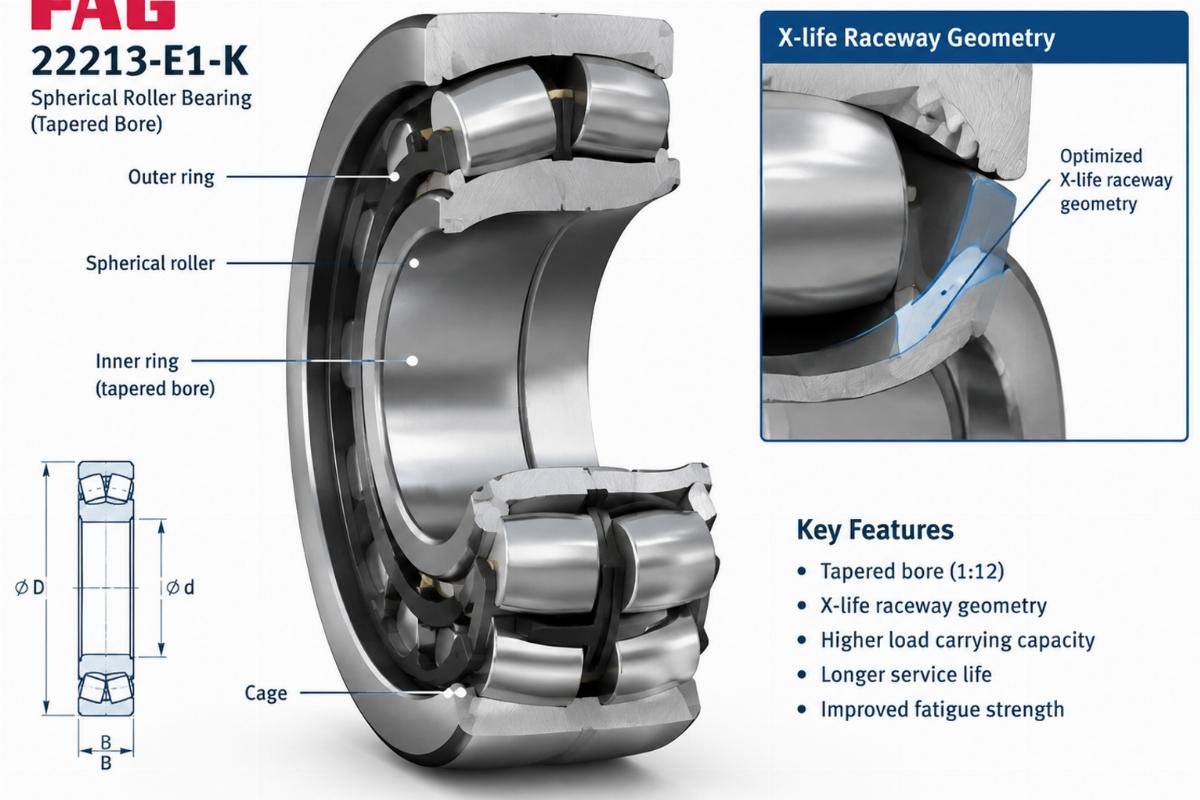
The core specification of the FAG 22213-E1-K is a 65mm inner diameter, 120mm outer diameter, and 31mm width, featuring X-life optimized raceways and a 1:12 tapered bore. For vibrating screens and heavy crushers, this model requires C3 clearance to accommodate thermal expansion and prevent seizure. A genuine FAG 22213-E1-K Spherical Roller Bearing Wholesale Supplier must provide verifiable traceability documents and technical support for tightness measurement during mounting, as improper locknut torque directly eliminates internal clearance and causes catastrophic failure.
I still remember the silence in a South African quarry when their primary vibrating screen stopped. The plant manager showed me a seized 22213 bearing that had overheated and welded itself to the shaft after less than two months of operation. He had purchased a batch based on price alone, assuming all 65mm bore spherical roller bearings were interchangeable. When we inspected the remnants, the cage was distorted, and the rollers showed signs of severe sliding rather than rolling. The issue was not just the counterfeit quality but a fundamental mismatch in clearance and installation method. We replaced the failed units with verified stock, adjusted the fitment to account for the specific vibration loads, and the line resumed operation. This incident reinforced a hard truth: specifications on paper mean nothing if they do not align with the physical realities of the application site.
Selecting the right component involves more than matching dimensions. It requires understanding how the bearing interacts with the shaft, housing, and operational environment. As a FAG 22213-E1-K Spherical Roller Bearing Wholesale Supplier, I see many orders where buyers simply copy part numbers from old maintenance logs without verifying if the original selection was correct for the current operating conditions. This approach ignores critical factors like load direction, speed, and temperature fluctuations that dictate whether a standard or enhanced clearance is necessary.
What Are the Core Specs of FAG 22213-E1-K?
The 22213-E1-K is defined by its robust X-life design and tapered bore, which together offer superior load capacity and misalignment compensation compared to standard cylindrical bore models.
The basic dimensions of this bearing are standardized under ISO 15, with an inner diameter of 65mm, an outer diameter of 120mm, and a width of 31mm. However, the E1 designation indicates an optimized internal geometry with larger and longer rollers, which increases the dynamic load rating significantly. The K suffix denotes a 1:12 tapered bore, which allows the bearing to be mounted on a cylindrical shaft using an adapter sleeve, such as the AH313 series. This configuration is particularly valuable in applications where precise shaft machining is difficult or where frequent disassembly is required for maintenance.
The X-life performance class represents a step up in material purity and surface finish. These bearings exhibit higher fatigue limit values, meaning they can sustain heavier loads for longer periods before showing signs of wear. In practical terms, this translates to extended service intervals and reduced risk of unexpected downtime. For industries like mining and cement production, where equipment runs continuously under harsh conditions, this durability is not a luxury but a necessity. The symmetrical barrel-shaped rollers and the common curvature raceway enable the bearing to accommodate angular misalignment, which is common in long shafts or structures subject to deflection.
| Feature | Standard Spherical Roller Bearing | FAG 22213-E1-K (X-life) |
|---|---|---|
| Internal Geometry | Basic optimization | Enhanced E1 design with larger rollers |
| Surface Finish | Standard grinding | Super-finished raceways and rollers |
| Fatigue Limit | Standard baseline | Noticeably higher fatigue resistance |
| Misalignment Compensation | Standard angle | Optimized for higher angular adjustment |
| Bore Type | Often cylindrical | Tapered (1:12) for adapter sleeve mounting |
When sourcing from a FAG 22213-E1-K Spherical Roller Bearing Wholesale Supplier, it is essential to confirm that the supplied units meet these X-life criteria. Counterfeit or lower-tier substitutes often lack the refined surface treatments and material cleanliness that define the E1 series. Visual inspection of the raceway can sometimes reveal differences in polish quality, but definitive verification requires checking the manufacturer’s certification and batch numbers. The consistency of these physical attributes ensures that the bearing performs as calculated in engineering models, providing reliable support for heavy radial and axial loads.

Why Does Clearance (C3) Matter for Vibrating Screens?
Standard clearance bearings will seize in vibrating screens due to heat-induced expansion, making C3 clearance a mandatory requirement for safe operation.
Vibrating screens operate under unique stress conditions. The continuous oscillation generates significant friction heat, causing the inner ring to expand relative to the outer ring. If a bearing with standard CN clearance is used, this thermal expansion quickly consumes the available internal play. Once the clearance reaches zero, the rollers begin to press against the raceways with excessive force, leading to rapid temperature rise, lubricant breakdown, and eventual seizure. This is a frequent cause of failure in mining and aggregate processing plants.
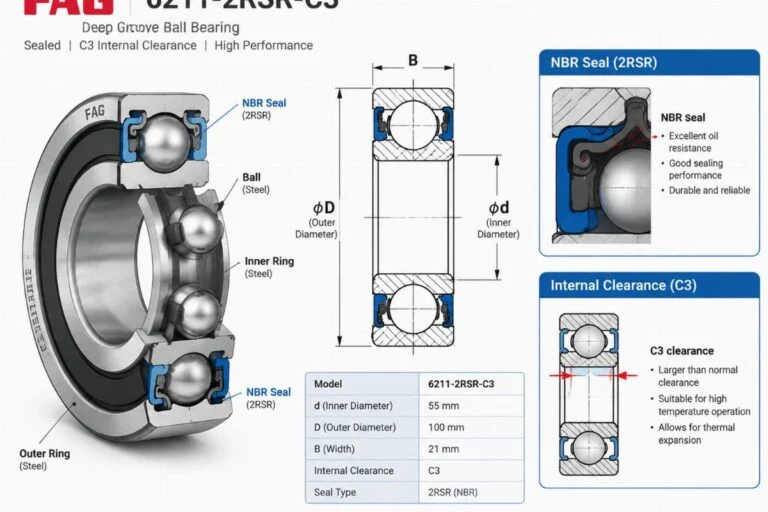
The C3 clearance group provides additional internal space to accommodate this expansion. It ensures that even at elevated operating temperatures, there is sufficient room for the components to move without generating destructive contact pressures. For the FAG 22213-E1-K, selecting the C3 variant is not optional for vibrating screen applications; it is a critical design parameter. Ignoring this requirement often results in premature failure, regardless of the bearing’s brand or quality level. In my experience, many maintenance teams overlook this detail when replacing bearings, assuming that the original part number implies the correct clearance. However, older equipment may have been modified or operated under different conditions, necessitating a review of the current requirements.
A case in point involved a cement plant in Southeast Asia that upgraded its fan system. The original setup used cylindrical bore bearings, which struggled with shaft misalignment caused by thermal growth. By switching to the tapered bore 22213-E1-K with C3 clearance and proper adapter sleeves, they resolved the alignment issues and extended the bearing life substantially. The key was not just the bearing type but the correct clearance selection that accounted for the operational temperature range. This adjustment prevented the tight fit that had previously led to frequent overheating alarms and unplanned shutdowns.
When engaging with a FAG 22213-E1-K Spherical Roller Bearing Wholesale Supplier, explicitly specify the C3 clearance requirement. Do not assume it is the default option. Many suppliers stock standard clearance units for general industrial use, and mixing them up can lead to costly errors. Verification of the clearance code on the packaging and the bearing itself is a simple but vital step in the receiving process. This attention to detail ensures that the bearing can handle the thermal dynamics of the application without compromising performance or safety.

How to Install the Tapered Bore (K Suffix) Correctly?
Incorrect locknut torque on tapered bore bearings eliminates internal clearance, turning a high-performance component into a source of immediate failure.
Installing a bearing with a tapered bore requires a different approach than mounting a cylindrical bore unit. The bearing is typically mounted on an adapter sleeve, which is driven onto the shaft by tightening a locknut. As the sleeve moves up the taper, it expands the inner ring of the bearing, reducing its internal clearance. The goal is to achieve a specific reduction in clearance that ensures a secure fit without preloading the bearing excessively. If the locknut is over-tightened, the clearance becomes negative, causing the rollers to bind and generate excessive heat.
The correct method involves measuring the residual clearance during the tightening process. This is usually done using feeler gauges to check the gap between the rollers and the raceway. The installer tightens the locknut incrementally, checking the clearance after each turn until the specified reduction value is reached. This value depends on the bearing size and the initial clearance group. For the 22213-E1-K, precise measurement is crucial because the X-life design operates with tighter tolerances. Guessing the tightness based on torque alone is unreliable and dangerous, as friction in the threads can give false readings.
I once visited a steel mill in the Middle East where a team had installed new bearings using only a hammer and a drift, estimating the tightness by sound. Within days, several bearings failed due to overheating. The root cause was inconsistent and excessive preload caused by the lack of measurement. After implementing a proper procedure with feeler gauges and documented clearance checks, the failure rate dropped noticeably. This experience highlights the importance of following technical guidelines rather than relying on informal practices.
| Installation Step | Incorrect Practice | Correct Practice |
|---|---|---|
| Tightening Method | Hammering or estimated torque | Incremental locknut tightening with measurement |
| Clearance Check | None or visual guess | Feeler gauge measurement of residual clearance |
| Target Value | Arbitrary tightness | Specific clearance reduction per manufacturer table |
| Verification | No post-installation check | Temperature monitoring during run-in period |
Working with a knowledgeable FAG 22213-E1-K Spherical Roller Bearing Wholesale Supplier can provide access to these technical details. They should be able to supply the relevant mounting instructions and clarify the specific clearance reduction values for the 22213 size. This support helps maintenance teams avoid common pitfalls and ensures that the bearing is installed to perform at its full potential. Proper installation is as important as the quality of the bearing itself in determining service life.

How to Verify Genuine FAG Bearings and Avoid Fakes?
High-quality counterfeits can look identical to genuine parts but fail prematurely, making multi-step verification essential for critical applications.
The market for popular bearing models like the 22213-E1-K is flooded with counterfeit products. These fakes often replicate the external markings and packaging with high accuracy, making visual identification difficult for the untrained eye. However, they typically use inferior steel and lack the precise heat treatment and surface finishing of genuine FAG products. Under heavy load, these substandard materials degrade quickly, leading to spalling, cracking, and sudden failure. The cost of a fake bearing is negligible compared to the downtime and repair expenses caused by its failure.
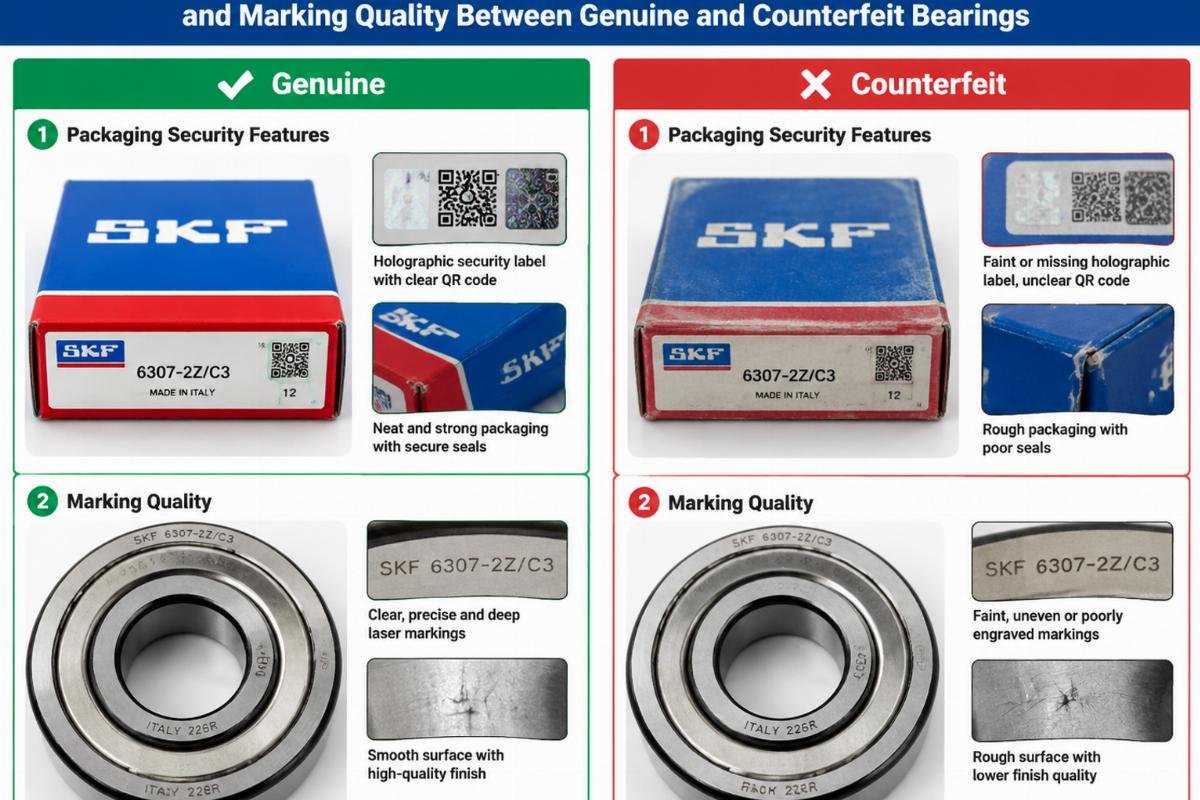
Verification starts with the packaging. Genuine FAG bearings come in boxes with specific security features, including holographic labels and unique serial numbers that can be traced back to the manufacturing batch. The bearing itself should have clear, deeply etched markings that are uniform and precise. Counterfeit items often have shallow or uneven lettering. Additionally, the surface finish of the raceways and rollers should be smooth and reflective, without any visible tool marks or discoloration. Any sign of roughness or inconsistency is a red flag.
A distributor in Latin America recently encountered a batch of bearings that looked authentic but had inconsistent roller sizes. Upon closer inspection using precision micrometers, they found variations outside the acceptable tolerance range. This batch consistency issue is common in substandard production facilities that lack rigorous quality control. By rejecting these parts and sourcing from a verified channel, they avoided potential failures in their clients’ crushing equipment. This incident underscores the need for thorough inspection upon receipt of goods.
| Verification Aspect | Genuine FAG Product | Common Counterfeit Traits |
|---|---|---|
| Packaging Security | Holographic labels, traceable codes | Generic printing, missing or fake codes |
| Marking Quality | Deep, uniform, laser-etched | Shallow, uneven, or stamped poorly |
| Surface Finish | Smooth, mirror-like raceways | Visible tool marks, roughness, or discoloration |
| Dimensional Consistency | Strict adherence to ISO tolerances | Variations in roller size or ring thickness |
Choosing a reliable FAG 22213-E1-K Spherical Roller Bearing Wholesale Supplier is the most effective defense against counterfeits. Reputable suppliers maintain direct links with manufacturers and provide complete documentation, including certificates of origin and conformity. They also have the technical expertise to identify suspicious batches and guide customers through the verification process. This partnership ensures that every bearing installed in your equipment meets the highest standards of quality and reliability.
Conclusion
Precision in specification, installation, and verification defines the reliability of heavy industrial machinery.
The FAG 22213-E1-K is a robust solution for demanding applications, but its performance depends on correct clearance selection and proper mounting techniques. Ensuring authenticity through rigorous verification protects against the hidden costs of counterfeit components. Partnering with a trusted source guarantees access to genuine products and the technical support needed for optimal operation.