Product details
Description and application notes
Mixed-Brand Sourcing — Consolidate FAG and other premium lines in a single shipment without juggling multiple vendors.
Technical Specifications
| Parameter | Value |
|---|---|
| Designation | FAG 22213-EAS. M. C3 |
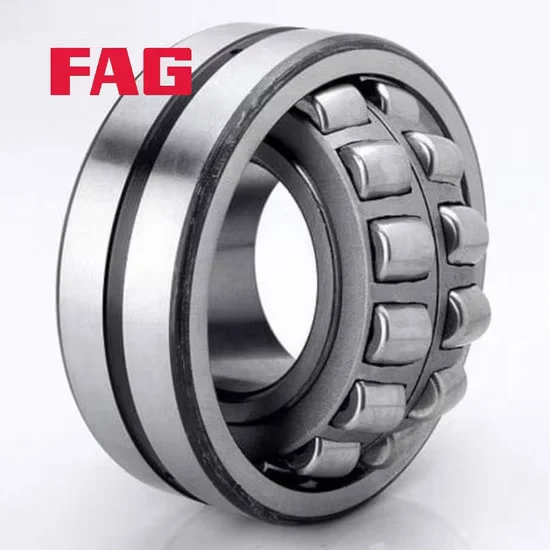
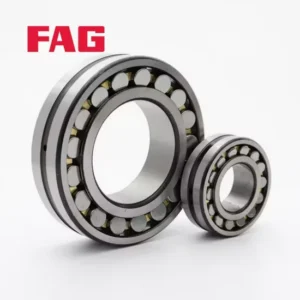
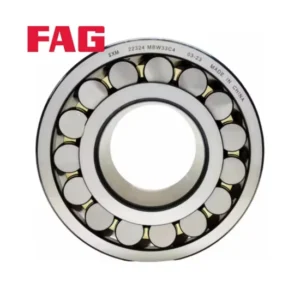
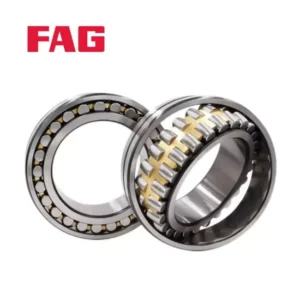
| Bearing Type | Spherical Roller Bearing |
| Structure | Double Row, Self-Aligning |
| Material | Chrome Steel Gcr15 |
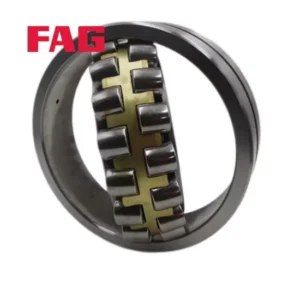
| Cage Material | Machined Brass |
| Internal Clearance | C3 |
| Origin | Jiangsu China |
Application Suitability
| Industry | Typical Applications |
|---|---|
| Mining & Construction | Vibrating screens, jaw crushers |
| Metallurgy | Steel mill equipment, continuous casters |
| Pulp & Paper | Paper machines, dryer rolls |
Why Suffix Accuracy Dictates Survival for the FAG 22213-EAS. M. C3 spherical roller bearing
A mismatched cage material will shatter under high-frequency vibration long before the steel rings yield.
Early in my career, I specified a standard stamped steel cage for a similar 22213 series bearing in a steel mill vibrating screen, ignoring the crucial machined brass requirement. The cage fractured within weeks, causing catastrophic line stoppage and massive financial losses. Suffix precision is not optional; it is the primary defense against premature fatigue and structural collapse in heavy machinery.
Aligning the Machined Brass Cage with Heavy-Duty Demands
Heavy machinery requires components that absorb shock without structural degradation. The FAG 22213-EAS. M. C3 spherical roller bearing utilizes a machined brass cage to maintain roller stability under severe radial loads. Our engineering team provides cross-brand equivalent model consultation to ensure this specific cage design matches your exact vibration profile, preventing the resonance failures common in lighter alternative materials.
Navigating Thermal Expansion and Shaft Misalignment
Industrial environments subject shafts to extreme thermal gradients and heavy deflection. A standard clearance bearing would bind and overheat as the inner ring expands, but the C3 clearance provides the necessary thermal compensation. Furthermore, the self-aligning outer raceway accommodates static and dynamic shaft misalignment, preventing edge loading on the rollers. Proper lubrication intervals must be maintained to flush out abrasive particulates.
Decoding the E, M, and C3 Designations
The "E" suffix indicates an optimized internal geometry with maximized roller dimensions for significantly higher load capacity. The "M" designation confirms a solid machined brass cage, which offers superior durability and heat dissipation compared to pressed steel alternatives in high-vibration scenarios. The "C3" internal clearance is specifically engineered for interference fits and elevated operating temperatures, ensuring the bearing does not preload internally during thermal expansion. These combined features create a highly resilient assembly for extreme industrial environments.
The Hidden Toll of Ignoring Internal Clearance
Installing a standard clearance bearing in a high-temperature or tight-fit application inevitably leads to internal preload. This restricts roller movement, generates excessive friction heat, and accelerates lubricant breakdown. According to failure analysis frameworks, such thermal runaway results in catastrophic cage disintegration and severe raceway smearing. Correct clearance selection is the most cost-effective insurance against unplanned downtime and secondary shaft damage.
Securing Traceability for Critical Spherical Roller Bearings
Sourcing genuine components requires more than a trusted name; it demands verifiable proof. We supply fully traceable units with complete documentation, ensuring the M suffix brass cage is exactly what leaves the factory. Our massive spot inventory covers thousands of standard and special part numbers, eliminating typical multi-week lead times. When official channels face shortages, our competitive sourcing cost and global shipping consolidation keep your maintenance schedules intact without compromising on authenticity or quality assurance.
Documentation & Authenticity
- Certificate of Conformity verifying the exact FAG 22213-EAS. M. C3 designation and batch number.
- Original material certificates confirming Chrome Steel Gcr15 metallurgical properties.
- Dimensional inspection reports validating C3 internal clearance tolerances before dispatch.
- Official traceability documentation linking the physical unit to the manufacturer's production facilities.
Storage, Handling & Mounting
- Store the double-row assembly in its original moisture-proof packaging until installation to protect the machined brass cage from corrosion.
- Use induction heating for the inner ring mounting to preserve the precise C3 internal clearance during thermal expansion.
- Apply clean gloves when handling to prevent acidic skin oils from degrading the Chrome Steel Gcr15 raceway surfaces.
- Ensure the self-aligning outer ring is properly seated in the housing to guarantee full misalignment compensation capability.
Preparing Your Technical Data for Verification
To guarantee optimal performance, share your specific radial and axial load profiles, operating temperatures, and shaft deflection metrics. Providing the original equipment manufacturer part numbers allows our technical team to perform precise cross-reference validation. This detailed data enables us to confirm whether the C3 clearance and machined brass cage configuration perfectly aligns with your unique operational environment and prevents costly mismatches.
Frequently Asked Questions
Q: How to verify the authenticity and traceability of FAG bearings?
A: Authenticity is confirmed through official traceability documentation and batch number verification. We provide original material certificates and dimensional inspection reports that validate the exact designation, ensuring the internal geometry and cage material match the manufacturer's strict production standards.
Q: What is the operational difference between C3 and CN clearance in spherical roller bearings?
A: CN represents standard internal clearance suitable for normal operating conditions. C3 provides greater internal clearance, which is essential for applications involving interference fits, heavy radial loads, or elevated temperatures where thermal expansion of the inner ring would otherwise eliminate the operating clearance and cause premature failure.
Q: Why choose a machined brass cage (M) for heavy-duty vibrating applications?
A: A machined brass cage offers superior structural integrity, better heat dissipation, and higher resistance to high-frequency vibrations compared to pressed steel cages. It prevents roller skewing and maintains precise spacing under severe shock loads, significantly extending the operational lifespan in demanding environments like vibrating screens and crushers.
Q: What does the unverified AS suffix indicate in this designation?
A: The AS segment in this specific designation is an unverified suffix that requires direct manufacturer catalog confirmation. It typically denotes specialized lubrication grooves or specific outer ring modifications, but buyers must cross-check the exact physical dimensions against official technical drawings before procurement.