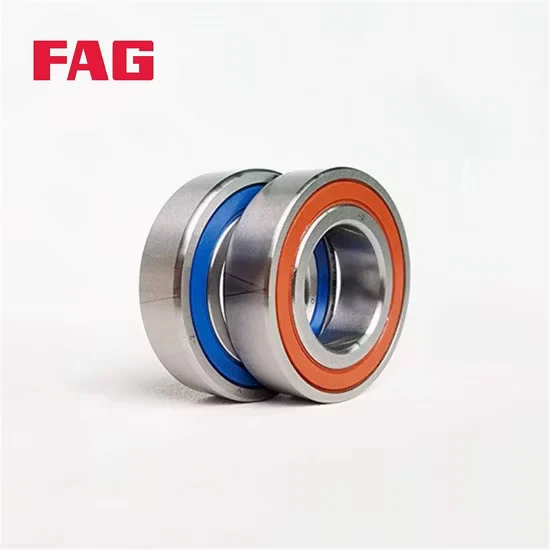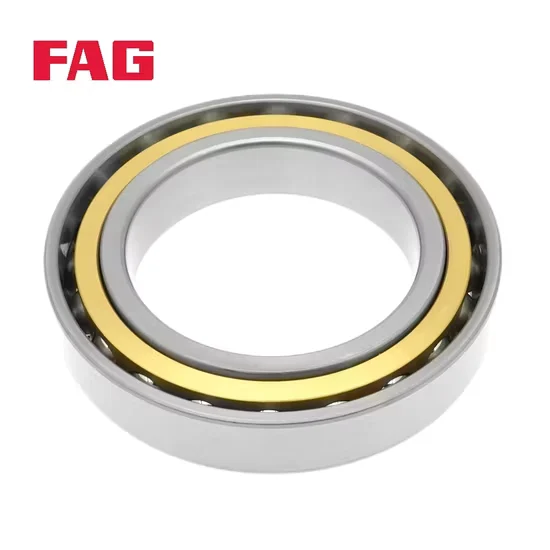
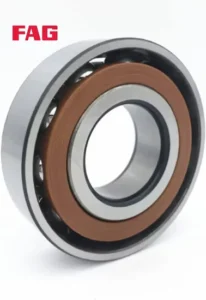
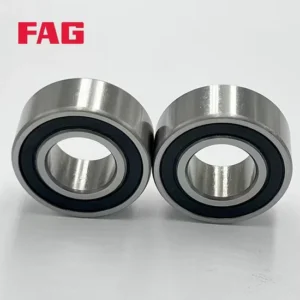
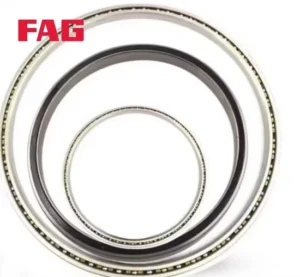
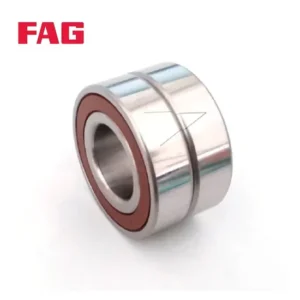
Product details
Description and application notes
Multi-Brand Sourcing Covered — Consolidate your 3302 FAG double row angular contact ball bearing orders with mixed SKF or NSK items in a single shipment without juggling multiple vendors across different time zones.
Technical Specifications
| Parameter | Value |
|---|---|
| Designation | 3302 FAG |
| Bearing Type | Double Row Angular Contact Ball Bearing |
| Number of Rows | Double |
| Contact Angle | α=30° (Bd Type) or α=45° (Da Type) |
| Material | Bearing Steel |
| Cage Material | Polyamide (Tvh), Sheet Steel, or Brass (MP) options |
| Seal or Shield Type | Open, 2Z, or 2HRS options |
| Precision Class | P0, P6, or P5 |
| Standard | DIN 628-3, ISO 15:2017 |
| Origin | Jiangsu China |
Application Suitability
| Industry | Typical Applications |
|---|---|
| Machine Tools | Spindle supports requiring high rigidity and precision |
| Fluid Machinery | High-speed pump shafts handling combined loads |
| Automation | Robotics joint mechanisms needing precise axial positioning |
| Power Transmission | Gearboxes subjected to bidirectional axial forces |
Why the 3302 FAG double row angular contact ball bearing fails in precision spindles when suffixes are ignored
Mismatched cage materials and clearance classes cause premature spindle seizure long before the bearing steel actually fatigues.
Procurement teams frequently order the base designation for machine tool spindles, completely overlooking that high-speed applications demand specific polyamide cages and precise preload setups to survive. When a standard stamped steel cage is installed in a high-RPM environment, friction heat builds up rapidly, leading to catastrophic lubrication breakdown and sudden halts. This exact oversight costs manufacturing facilities weeks of unplanned downtime, expensive shaft repairs, and scrapped production batches. Engineers must recognize that the base number alone does not guarantee operational survival in demanding precision environments.
Aligning the 3302 FAG double row angular contact ball bearing with spindle demands
Machine tool spindles and high-speed fluid pumps require mechanical components that handle combined radial and axial loads without deflecting under continuous stress. The 3302 FAG double row angular contact ball bearing provides the necessary structural rigidity through its double-row geometry, distributing operational forces evenly across the inner and outer raceways. Our engineering team carefully cross-checks your specific load profiles to ensure the selected contact angle and precision class match the operational envelope, preventing micro-movements that degrade machined surface finishes and compromise final product quality.
Managing thermal expansion and lubrication breakdown in high-speed applications
High-speed pump shafts and spindle drives generate significant friction heat during continuous operation, which fundamentally alters internal clearance and compromises the lubrication film thickness. If this thermal expansion is not properly accommodated by the correct precision class and internal geometry, the rolling elements will skid rather than roll smoothly along the raceway. Sealed variants prevent coolant contamination in wet machining environments, while open designs allow for customized oil-air lubrication systems to manage extreme rotational speeds effectively. Selecting the appropriate seal or shield type is absolutely critical to maintaining the lubricant's structural integrity under continuous axial thrust and elevated temperatures.
Decoding contact angles and cage materials for high RPMs
The availability of α=30° (Bd Type) and α=45° (Da Type) contact angles allows design engineers to optimize the load distribution based on whether radial or axial forces dominate the specific application. For high-speed spindles, polyamide (Tvh) cages are typically preferred due to their noticeably lower weight and excellent sliding properties, which minimize centrifugal forces acting on the rolling elements. Conversely, brass (MP) cages offer superior structural durability in applications characterized by heavy vibration or marginal lubrication conditions where polymer structures might eventually fatigue. The choice between P0, P6, and P5 precision classes directly dictates the running accuracy and operational noise levels, ensuring the spindle maintains tight dimensional tolerances during heavy cutting operations.
The financial impact of overlooking internal geometry and clearance
Specifying a standard clearance bearing for a high-precision gearbox often results in excessive vibration, elevated operating temperatures, and premature raceway spalling. When the internal geometry does not match the thermal growth of the shaft, the component operates under unintended preload, drastically accelerating material fatigue. This operational mismatch inevitably leads to catastrophic damage to adjacent gears, voids the original equipment warranty, and turns a minor component replacement into a major drivetrain overhaul. Understanding these hidden costs highlights why precise technical specification is far more valuable than simply chasing the lowest initial purchase price.
Securing traceability and technical alignment for critical machinery
Sourcing genuine components requires much more than just matching the base model number; it demands strict verification of the manufacturing origin and internal metallurgical specifications. We provide full batch traceability for every 3302 FAG double row angular contact ball bearing, ensuring the material properties meet the original design criteria established by the manufacturer. Our technical team actively flags potential mismatches when buyers request standard steel cages for high-RPM applications, strongly recommending the correct polyamide alternatives to prevent field failures. This proactive technical intervention prevents the all-too-common scenario where a basic model number leads to immediate operational breakdown. Furthermore, we consolidate mixed-brand orders, allowing you to procure this specific designation alongside other critical maintenance items in a single, verified shipment.
Documentation & Authenticity
- Certificate of Conformity verifying the DIN 628-3 and ISO 15:2017 compliance for the specific batch.
- Original manufacturer batch traceability records linking the bearing to its production facility.
- Official app QR verification codes printed on the packaging for instant authenticity checks.
- Material inspection reports confirming the bearing steel composition and heat treatment standards.
- Running accuracy inspection data validating the P5 or P6 tolerance limits before dispatch.
Storage, Handling & Mounting
- Keep the 3302 FAG double row angular contact ball bearing in its original unopened packaging to protect the polyamide cage from UV degradation and moisture ingress.
- Store the components in a climate-controlled environment to prevent condensation from compromising the bearing steel raceways before installation.
- Use clean, lint-free gloves when handling open-type variants to avoid transferring skin acids that initiate micro-corrosion on the precision-ground surfaces.
- Apply induction heating for mounting inner rings on tight shaft fits, ensuring the brass or polyamide cage is not exposed to direct localized flame heat.
- Verify the shaft and housing tolerances match the selected P0, P6, or P5 precision class to prevent distortion of the thin outer ring during press-fitting.
Engineering data required for accurate selection validation
To ensure the selected configuration perfectly matches your operational reality, please provide the exact radial and axial load profiles, operational RPM, and steady-state temperatures. Share the OEM equipment number or existing housing dimensions so our technical team can perform a comprehensive cross-reference and calculate the expected L10 life under your specific conditions. If your application involves severe contamination, heavy coolant exposure, or extreme thermal cycling, specify the environmental conditions so we can recommend the optimal 2Z or 2HRS sealing arrangement to protect the internal components.
Frequently Asked Questions
Q: How do I verify the authenticity of the 3302 FAG double row angular contact ball bearing upon delivery?
A: You can scan the QR code on the packaging using the manufacturer's official application to instantly verify the batch origin and production date. Additionally, we supply a Certificate of Conformity and original batch traceability documents that cross-reference the serial numbers, ensuring the component meets all DIN and ISO standards before it enters your facility.
Q: What is the practical difference between P0, P6, and P5 precision classes for this bearing?
A: The P0 class represents standard commercial tolerance suitable for general gearboxes, while P6 and P5 offer progressively tighter dimensional and running accuracy limits. High-speed machine tool spindles typically require P5 to minimize vibration and maintain strict machining tolerances, whereas P6 is often sufficient for high-speed pumps where extreme rotational precision is slightly less critical.
Q: How do I choose between the α=30° and α=45° contact angle options?
A: The α=30° (Bd Type) design provides a balanced capacity for combined radial and axial loads, making it ideal for general power transmission. The α=45° (Da Type) variant features a steeper angle that significantly increases axial rigidity, which is necessary for applications like vertical pump shafts or robotic joints where heavy unidirectional thrust loads dominate the operational profile.
Q: Why is cage material selection critical when replacing a standard stamped steel cage?
A: In high-RPM applications, a standard sheet steel cage generates excessive friction and centrifugal force, leading to rapid lubrication failure. Polyamide (Tvh) cages are noticeably lighter and offer superior sliding properties, reducing heat generation, while brass (MP) cages provide enhanced durability in high-vibration environments where polymer structures might eventually fatigue under continuous mechanical stress.