Standard clearance is often the silent killer in heavy-duty applications.
The core specifications of a FAG 22217-E1 are not merely dimensional data points for a catalog; they are the critical selection criteria for matching extreme operating conditions such as high temperatures and heavy loads. Selecting the wrong internal clearance or bore type leads to premature equipment failure, regardless of the brand’s reputation. For buyers sourcing a FAG 22217-E1, understanding the interplay between its E1 optimized internal design, C3 clearance options, and taper bore configurations is essential for ensuring reliability in mining and industrial sectors.
I still remember the smell of burnt grease and the silence of a stopped production line in a Middle East mine. It was not a lack of effort that caused the shutdown, but a mismatch in technical specification. I had supplied what the purchase order requested: a standard FAG 22217-E1. On paper, it was perfect. In reality, the vibration screen operated at temperatures that expanded the steel beyond the limits of standard CN clearance. The bearing seized. That incident shifted my focus from simply moving boxes to understanding the physics inside the housing. Now, when I discuss a FAG 22217-E1, the conversation starts with the environment, not just the part number.

This guide breaks down the technical nuances of this specific bearing model, helping distributors and OEMs make informed decisions that prevent costly downtime.
What are the core dimensions of FAG 22217-E1?
Precise dimensional adherence to ISO standards is the baseline for interchangeability and fit.
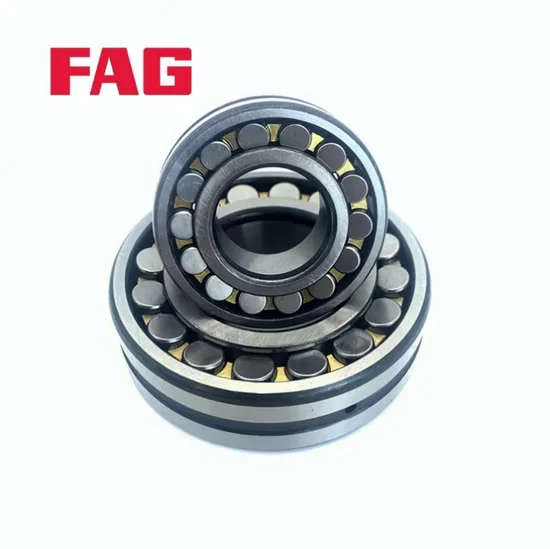
The FAG 22217-E1 belongs to the 222 series of spherical roller bearings, designed to accommodate misalignment and heavy radial loads. Its physical footprint is defined by strict international tolerances. The bearing features a bore diameter of 85 mm, an outside diameter of 150 mm, and a width of 36 mm. These dimensions are critical for designers replacing worn units or specifying new housings.
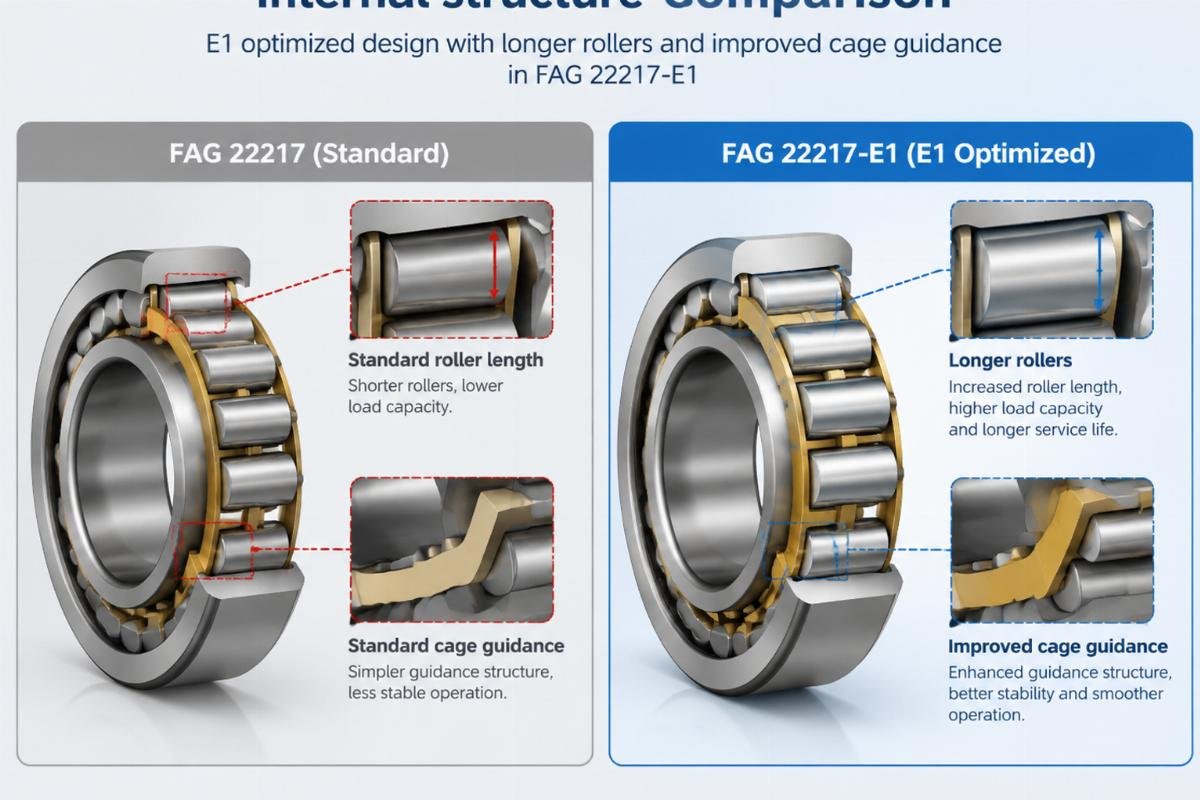
The “E1” designation is not a random suffix; it indicates an optimized internal design. This design typically features a higher load-carrying capacity compared to older generations, achieved through improved raceway geometry and ball arrangement. For a wholesale supplier, recognizing the E1 variant is crucial because it offers superior performance in terms of dynamic load rating without changing the external envelope. This means a customer can upgrade their machinery’s reliability without redesigning the shaft or housing.
When verifying a FAG 22217-E1, the focus must be on the precision of these metrics. A deviation in the outer diameter or width can lead to improper seating in the housing, causing fretting corrosion or uneven load distribution. The E1 design also influences the limiting speed, allowing for smoother operation in high-RPM applications typical of modern industrial drives. Understanding that the dimensions are fixed but the internal capability is enhanced helps buyers appreciate the value proposition of the E1 series over standard designs.

How does the E1 design improve performance?
The absence of a central rib and optimized roller guidance significantly enhance operational life.
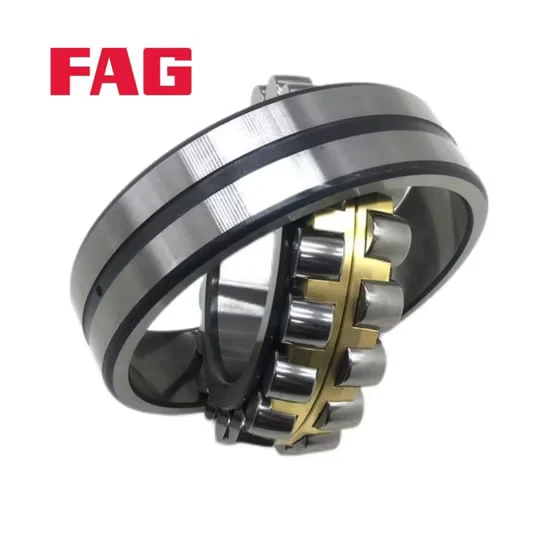
The evolution from standard designs to the E1 series represents a shift in how internal forces are managed. In traditional spherical roller bearings, a central rib on the inner ring guides the rollers. The E1 design eliminates this rib, allowing for longer rollers and a more robust cage structure. This change reduces friction and heat generation, which are primary enemies of bearing longevity.
For a FAG 22217-E1, this internal optimization translates to a higher dynamic load rating. In practical terms, this means the bearing can withstand heavier shocks and continuous loads without succumbing to fatigue spalling as quickly as its predecessors. The improved cage design also ensures better lubrication distribution, keeping the rolling elements separated and reducing wear during start-up and shutdown phases.
From a procurement perspective, specifying the E1 variant is a strategic move for heavy-duty applications. It is not just about buying a bearing; it is about buying extended service intervals. In industries like mining or steel production, where maintenance windows are scarce, the additional capacity provided by the E1 design can mean the difference between a scheduled replacement and an emergency breakdown. The technical advantage lies in the geometry, which allows the bearing to handle higher stress levels while maintaining stability.
Cylindrical vs Taper Bore (K): Which fits your shaft?
Choosing the wrong bore type can lead to incorrect mounting and immediate failure.
The FAG 22217-E1 is available with either a cylindrical bore or a taper bore, designated by the suffix K. This distinction is fundamental to the installation method and the resulting fit on the shaft. A cylindrical bore is mounted directly onto a straight shaft, typically using a press fit or an adapter sleeve. In contrast, the taper bore has a 1:12 taper and is designed to be mounted on a tapered shaft seat or using an adapter sleeve on a cylindrical shaft.
The choice between these two affects the preload and the final internal clearance. When a taper bore bearing is driven up a tapered seat, the inner ring expands, which reduces the internal clearance. If this reduction is not calculated correctly, the bearing can end up with zero or negative clearance, leading to overheating and seizure. This is a common pitfall for those who treat the FAG 22217-E1-K as identical to the standard cylindrical version.
For distributors, stocking both variants is essential because the application dictates the choice. Vibrating screens often use taper bores with adapter sleeves for easier installation and removal. Conversely, fixed gearboxes might prefer cylindrical bores for precise axial positioning. Understanding the mechanical implication of the K suffix prevents the error of supplying a taper bore unit for a straight shaft application without the necessary mounting hardware, or vice versa.

Why C3 clearance is critical for high-temperature sites?
Standard clearance leaves no room for thermal expansion, causing catastrophic lock-up.
One of the most frequent causes of bearing failure in hot environments is the use of standard (CN) clearance. As a bearing operates, it generates heat, and the surrounding environment may also be hot. This heat causes the inner ring, outer ring, and rolling elements to expand. If the initial internal clearance is too small, this thermal expansion consumes the remaining gap, leading to increased friction, more heat, and eventually, seizure.
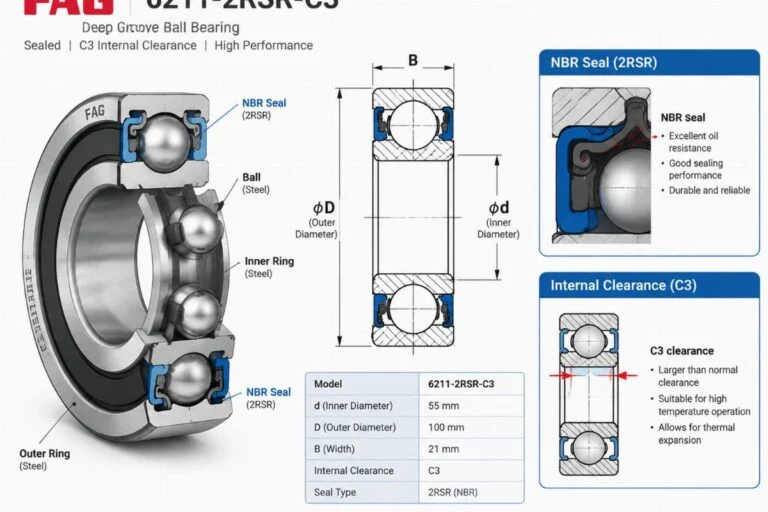
The FAG 22217-E1-C3 features a greater internal clearance than the standard CN group. This extra space acts as a buffer for thermal expansion. In applications like cement kilns, steel mills, or mining crushers, where temperatures can rise significantly, selecting the C3 variant is not optional; it is a necessity. The C3 clearance ensures that even when the metal expands, there is still sufficient room for the rollers to move freely without binding.
I have seen countless cases where a standard clearance bearing was installed in a high-temperature zone, only to fail within weeks. The solution was not a better brand, but a different clearance class. By specifying a FAG 22217-E1-C3, engineers account for the thermal growth of the components. It is a simple specification change that dramatically improves reliability. For buyers, verifying the clearance class is as important as checking the dimensions. Ignoring this detail turns a high-quality bearing into a liability.

Conclusion
Technical precision in selection prevents operational failure.
The FAG 22217-E1 is a robust component, but its performance depends entirely on correct specification. Whether it is choosing the E1 design for higher load capacity, selecting the K taper bore for proper mounting, or specifying C3 clearance for thermal protection, each decision impacts the lifespan of the machinery. Buyers must look beyond the part number to understand the engineering intent behind each suffix.
Sourcing the right bearing requires a partner who understands these technical nuances. By focusing on the specific needs of the application rather than just the catalog entry, businesses can ensure reliability and efficiency. The right FAG 22217-E1 configuration is not just a spare part; it is a safeguard for continuous production.