

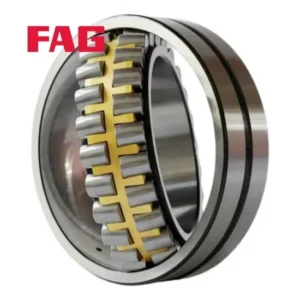

Product details
Description and application notes
Cross-Reference Alignment — verifying clearance, cage type, and load ratings against your exact OEM specifications before dispatch.
Technical Specifications
| Parameter | Value |
|---|---|
| Designation | FAG 22217-E1a-M-C3 |
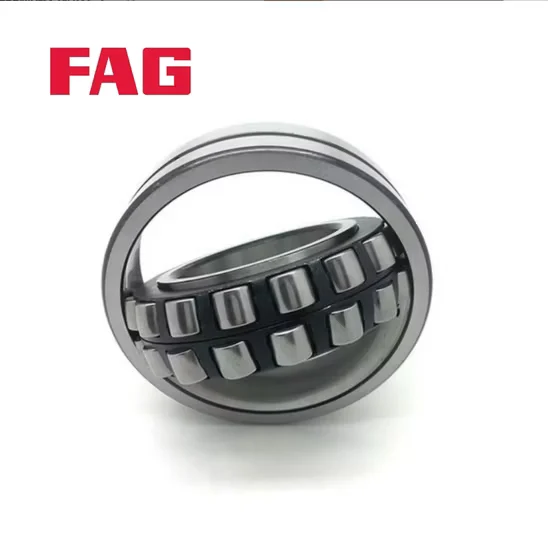
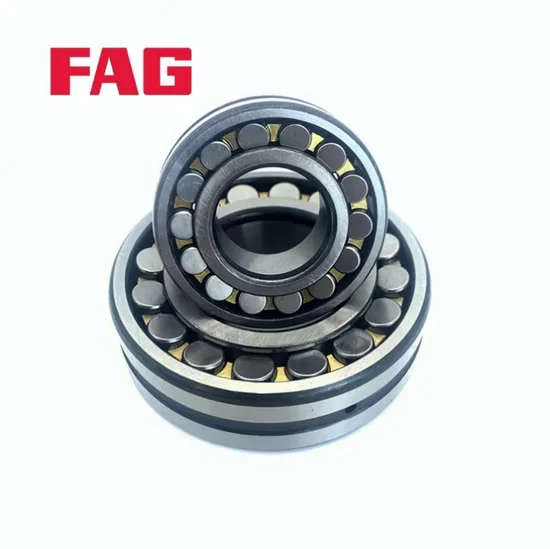
| Bearing Type | Spherical Roller Bearing |
| Bore Diameter (d) | 85 mm |
| Outside Diameter (D) | 150 mm |
| Width (B) | 36 mm |
| Cage Material | Machined Brass Cage |
| Clearance Class | C3 Radial Internal Clearance |
| Structure | Double Row, Self-Aligning |
| Material | Chrome Steel |
The E1a suffix is an unverified designation requiring manufacturer catalog confirmation prior to final cross-referencing.
Application Suitability
| Industry | Typical Applications |
|---|---|
| Mining & Aggregates | Vibrating screen eccentric shafts, jaw crusher pitman bearings |
| Metallurgy | Steel mill continuous caster roll guides, rolling mill gearboxes |
| Pulp & Paper | Paper machine dryer cylinder supports, press section felt rolls |
Why Standard Clearances Fail in Heavy-Duty Spherical Roller Bearing Applications
Thermal expansion turns standard internal gaps into catastrophic seizure points.
In high-temperature environments like cement kilns or steel mills, relying on standard CN clearance often leads to rapid thermal expansion of the shaft and inner ring. The internal gap vanishes completely, causing the rolling elements to skid, generating excessive friction heat, and leading the bearing to seize. Specifying a FAG 22217-E1a-M-C3 spherical roller bearing with enhanced radial clearance prevents this exact failure mode. This specific configuration accommodates the shaft and housing growth under extreme thermal loads, ensuring smooth operation even when ambient and operational temperatures fluctuate wildly.
Matching the Brass Cage to High-Vibration Environments
When operating vibrating screens or heavy crushers, the equipment generates intense structural vibrations that quickly destroy standard pressed steel cages. The machined brass cage indicated by the M suffix in this FAG 22217-E1a-M-C3 spherical roller bearing provides superior structural integrity and excellent damping characteristics. Our engineering team consistently recommends this specific cage configuration for heavy-duty mining equipment to ensure the rolling elements remain perfectly guided during continuous shock loading. The solid brass construction resists cage fracture and maintains precise roller spacing, which is absolutely critical for extending the service life in high-vibration applications.
Managing Thermal and Mechanical Stress in Mill Equipment
Heavy machinery operates under combined radial and axial loads while experiencing significant temperature fluctuations and heavy shock impacts. Standard lubrication often breaks down under these extreme conditions, requiring a bearing design that maintains adequate internal clearance as the inner ring expands. The C3 clearance class is specifically engineered to absorb this thermal growth, while the double-row self-aligning structure effectively compensates for shaft deflection and housing misalignment common in rugged industrial installations. Proper relubrication intervals must be strictly maintained to flush out abrasive contaminants and preserve the optimized internal geometry.
Decoding the Suffix Configuration for Optimal Performance
The designation breakdown reveals critical engineering choices for demanding applications. The M suffix indicates a solid machined brass cage, which offers enhanced durability and resistance to cage fracture under high vibration compared to polymer alternatives. The C3 radial internal clearance provides the necessary thermal expansion room, preventing the preload buildup that destroys standard clearance bearings in hot environments. Furthermore, the E1 designation represents an optimized internal geometry with improved roller profiles and surface finishes, significantly extending the fatigue life under heavy radial loads. Understanding these specific suffixes ensures that the selected component perfectly matches the mechanical and thermal demands of your equipment.
The Hidden Financial Drain of Incorrect Clearance Selection
Selecting a standard clearance bearing for a high-temperature application inevitably results in unplanned downtime and catastrophic damage to the shaft and housing. According to failure analysis frameworks like ISO 15243, thermal seizure caused by insufficient internal clearance is a primary root cause of premature bearing failure in heavy industry. The cost of replacing a seized bearing is negligible compared to the lost production hours and secondary equipment damage caused by a sudden mill shutdown. Correctly specifying the clearance class from the outset protects your operational budget and ensures continuous production reliability.
Securing Authentic Components for Critical Machinery
Sourcing genuine components is critical, as counterfeit bearings frequently fail to meet the metallurgical standards required for heavy loads. We verify every FAG 22217-E1a-M-C3 spherical roller bearing through authorized channels, ensuring the brass cage material and C3 clearance strictly match factory specifications. Our technical team cross-references your exact OEM equipment requirements to prevent the costly mistake of receiving a standard CN clearance unit instead of the specified C3 variant. We also provide flexible consolidation shipping, allowing you to mix this specific model with other maintenance spares in a single container, optimizing your procurement logistics and reducing overall freight costs.
Documentation & Authenticity
- Original factory batch traceability documents confirming the exact production date and material heat number.
- Official brand app QR code verification to guarantee the authenticity of the machined brass cage components.
- Dimensional and running accuracy inspection reports validating the P-class tolerances before dispatch.
- Certificate of Conformity detailing the specific C3 radial internal clearance measurements.
Storage, Handling & Mounting
- Store the spherical roller bearing in its original unopened packaging to protect the machined brass cage from ambient moisture and corrosion.
- Use induction heating for the inner ring mounting, strictly monitoring the temperature to preserve the C3 clearance integrity.
- Avoid using carbon steel tools directly on the bearing surfaces to prevent cross-contamination and localized hardening.
- Ensure the self-aligning outer ring is properly seated in the housing to maximize the misalignment compensation capability.
Preparing Your Technical Requirements for Review
To ensure precise model selection and cross-referencing, please provide your equipment's specific radial and axial load profiles, operating speeds, and ambient temperature ranges. Sharing the original OEM part numbers or equipment nameplate data allows our engineering team to verify the clearance and cage requirements. This technical review guarantees that the proposed configuration perfectly aligns with your operational demands and prevents premature failure. By analyzing your specific working conditions, we can confirm whether the C3 clearance and machined brass cage are the optimal choices for your exact application environment.
Frequently Asked Questions
Q: How does C3 clearance differ from standard CN in heavy machinery?
A: Standard CN clearance is designed for normal operating temperatures and loads. In heavy machinery generating significant heat, the inner ring expands, reducing the internal gap. C3 clearance provides a larger initial radial gap to accommodate this thermal expansion, preventing the rolling elements from skidding and the bearing from seizing under high-temperature conditions.
Q: Why choose a machined brass cage for vibrating screens?
A: Vibrating screens subject bearings to intense structural vibrations and shock loads that can quickly fracture pressed steel or polymer cages. A machined brass cage offers superior structural rigidity, better damping characteristics, and enhanced resistance to fatigue, ensuring the rolling elements remain accurately guided during continuous high-vibration operation.
Q: How can I verify the authenticity of this specific bearing?
A: Authenticity is verified through multiple channels, including scanning the official manufacturer's QR code on the packaging using their dedicated app. Additionally, we provide original factory batch traceability documentation and dimensional inspection reports that confirm the exact material specifications and clearance measurements match the genuine product standards.
Q: How do you handle cross-referencing for equivalent models?
A: Our engineering team utilizes comprehensive databases to cross-reference original equipment manufacturer part numbers with equivalent models from premium global brands. By analyzing the specific load ratings, dimensional tolerances, and internal geometry, we ensure that any proposed alternative perfectly matches the operational requirements of your existing machinery without compromising reliability.
Q: What lubrication practices are recommended for mining applications?
A: Mining environments introduce severe abrasive contaminants that degrade lubricants rapidly. It is essential to establish strict relubrication intervals using high-quality, heavy-duty grease compatible with the operating temperature. Purging the old grease regularly helps flush out particulate matter, protecting the machined brass cage and roller surfaces from abrasive wear.