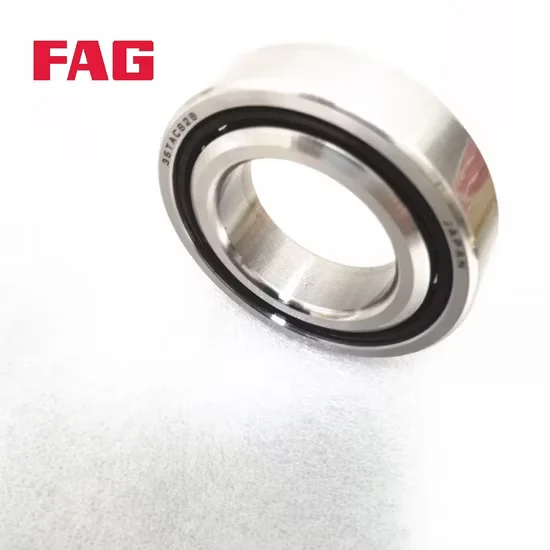

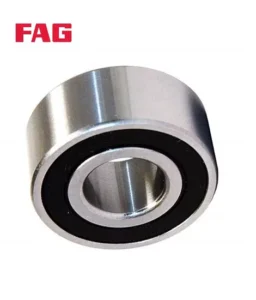
Product details
Description and application notes
Original Batch Traceability — Every 3302-B-2z-Tnh FAG shipment includes manufacturer lot documentation to verify production origin and authenticity.
Technical Specifications
| Parameter | Value |
|---|---|
| Designation | 3302-B-2z-Tnh FAG |
| Bearing Type | Double Row Angular Contact Ball Bearing |
| Bore Diameter (d) | 15 mm |
| Outside Diameter (D) | 42 mm |
| Width (B) | 19 mm |
| Contact Angle | 40° (Suffix B) |
| Seal or Shield Type | Double steel shields (Suffix 2z) |
| Cage Material | Polyamide |
| Material | Bearing Steel |
Application Suitability
| Industry | Typical Applications |
|---|---|
| Machine Tool Manufacturing | High-speed spindle assemblies requiring rigid axial support |
| Precision Engineering | Robotics joint actuators with combined load profiles |
| Industrial Pump Systems | High-speed pump shafts demanding low vibration operation |
Why Spindle Vibration Ruins Perfectly Good FAG 3302-B-2z-Tnh Double Row Angular Contact Ball Bearings
Misaligned contact angles and shield friction generate thermal distortion long before mechanical fatigue sets in.
When sourcing replacements for high-speed spindles, procurement teams often focus solely on dimensional matching while ignoring the thermal limits of shielded designs. I once saw a precision assembly fail because the double steel shields trapped heat during continuous high-RPM operation, causing the inner ring to expand and seize the polyamide cage. Selecting the correct FAG 3302-B-2z-Tnh double row angular contact ball bearing requires understanding how the 40° contact angle interacts with axial preload under thermal stress. If the housing tolerance is too tight, the outer ring cannot expand freely, transferring immense pressure to the rolling elements. This localized stress accelerates raceway spalling and generates harmonic vibrations that ruin surface finishes. Engineers must evaluate the entire thermal ecosystem rather than just the static load ratings.
Matching the 40° Contact Angle to Combined Load Profiles
The 40° contact angle dictated by the B suffix provides substantial axial rigidity, making this 3302-B-2z-Tnh FAG ideal for applications where thrust loads dominate the operational profile. In machine tool spindles, this specific geometry prevents axial drift during heavy cutting operations, ensuring that the tool tip remains perfectly aligned with the workpiece. When radial forces are also present, the double row configuration distributes the combined load across a wider contact patch, reducing Hertzian stress on the raceways. Our engineering team frequently cross-references these complex load characteristics to ensure the selected configuration handles both radial and axial forces without premature fatigue. By accurately mapping the operational forces, we prevent the catastrophic shifting that occurs when undersized bearings are forced to compensate for unexpected thrust vectors during rapid traverse movements.
Navigating Contamination and Lubrication Constraints in Precision Assemblies
Operating in environments with fine particulate matter demands reliable sealing, which the 2z double steel shields provide by blocking metallic debris without the friction penalties associated with rubber contact seals. However, these non-contact shields cannot retain liquid lubricants, meaning this FAG 3302-B-2z-Tnh double row angular contact ball bearing relies entirely on its factory-filled grease. If the operating temperature continually exceeds the thermal limit of standard bearing grease, the lubricant base oil separates and degrades, leading to increased friction and eventual cage failure. Furthermore, the narrow clearance between the shields and the inner ring means that any external contamination bypassing the seal will act as a lapping compound, rapidly destroying the precision raceway finish. Maintenance teams must monitor housing temperatures closely to preserve internal lubricant integrity.
Decoding the Suffix Architecture for High-Speed Precision Assemblies
The B suffix confirms a 40° contact angle, which significantly increases axial load capacity compared to standard 15° or 25° variants, though it slightly reduces the maximum permissible speed due to increased sliding friction. The 2z designation indicates double steel shields, offering a non-contact barrier that protects the polyamide cage and rolling elements from ambient dust while maintaining exceptionally low friction torque. Unlike open bearings requiring continuous external oil-air lubrication, this shielded configuration is pre-lubricated for life, vastly simplifying maintenance in enclosed gearbox housings. The polyamide cage ensures low mass and high-speed stability, minimizing centrifugal forces that would otherwise push the rolling elements against the outer ring. However, this lightweight material restricts continuous operation at elevated temperatures where machined brass cages would be strictly mandatory.
The Destructive Chain Reaction of Suffix Mismatches in Spindles
Substituting a 25° contact angle bearing for this 40° variant in a rigid spindle setup leads to catastrophic axial play under heavy thrust loads, completely compromising the machine's machining accuracy. According to established failure analysis frameworks, this geometric misalignment causes uneven load distribution across the rolling elements, accelerating surface fatigue and generating excessive harmonic vibration. Such unplanned downtime not only halts production schedules but often damages adjacent precision components like spindle noses and tool holders, turning a simple bearing replacement into a major, costly rebuild. Furthermore, using an incorrect cage material in high-speed applications can lead to centrifugal cage disintegration, scattering debris throughout the entire lubrication system and destroying secondary seals and gears in the process.
Securing Authenticity and Technical Alignment in a Complex Market
Sourcing a genuine FAG 3302-B-2z-Tnh double row angular contact ball bearing requires much more than just matching the alphanumeric part number printed on a cardboard box. We provide complete manufacturer lot traceability for every single unit we dispatch, ensuring the internal clearance, cage materials, and dimensional tolerances perfectly match the original equipment specifications. Our technical team actively verifies the 40° contact angle and shield clearances before shipment, preventing the costly assembly rejections that frequently occur when counterfeit or remanufactured bearings fail basic runout inspections. Furthermore, we efficiently consolidate mixed-brand orders, allowing you to source this specific model alongside other required hydraulic or transmission components in a single, fully documented international shipment. This approach eliminates the administrative burden of coordinating multiple vendors while guaranteeing that every rotating component in your machinery meets exacting OEM standards.
Documentation & Authenticity
- Certificate of Conformity verifying the exact production batch and origin for this specific 3302-B-2z-Tnh FAG model.
- Original manufacturer lot traceability documents linking the bearing serial number to factory test records.
- Dimensional inspection reports confirming the 15mm bore and 42mm outer diameter tolerances before dispatch.
- Material certification validating the bearing steel composition and polyamide cage thermal limits.
Storage, Handling & Mounting
- Keep the 2z shielded bearing in its original vacuum packaging until mounting to prevent moisture ingress and grease contamination.
- Avoid using carbon steel tools directly on the bearing steel rings during installation to prevent localized corrosion spots.
- Do not wash the pre-lubricated 2z variant, as solvents will degrade the factory-filled grease and compromise the polyamide cage.
- Apply mounting forces strictly to the inner ring when pressing onto the 15mm shaft to prevent damaging the 40° contact angle raceways.
Engineering Support for Complex Spindle Rebuilds and Retrofits
To ensure optimal performance and longevity, please provide your spindle's maximum operating speed, expected axial thrust loads, and typical ambient temperature ranges during peak production cycles. Our technical team will use these specific operational parameters to verify if the 40° contact angle and polyamide cage configuration adequately meet your L10 life requirements under continuous duty. If you are replacing an obsolete or poorly documented OEM part, share the original equipment manual specifications or physical measurements so we can perform a precise cross-reference validation. We will then recommend the exact mounting preload and housing tolerances required to maximize the bearing's operational lifespan and prevent thermal seizure during high-speed machining operations.
Frequently Asked Questions
Q: What does the B suffix indicate on this specific bearing model?
A: The B suffix designates a 40° contact angle, which optimizes the bearing for heavy axial loads in one direction. This geometry provides greater thrust capacity than standard 15° or 25° variants, making it highly suitable for machine tool spindles and precision pumps where axial rigidity is critical to maintaining tight machining tolerances.
Q: Can the 2z steel shields be removed for relubrication?
A: No, the 2z double steel shields are permanently crimped into the outer ring grooves and cannot be removed without damaging the bearing structure. This configuration is designed for lifelong lubrication using high-quality factory-filled grease, eliminating the need for external relubrication systems while effectively blocking dust and fine particulate contamination.
Q: How do I verify the authenticity of the supplied units?
A: Every unit we supply includes original manufacturer lot traceability documentation and a Certificate of Conformity. You can verify the authenticity by scanning the official manufacturer QR code on the packaging using their dedicated mobile application, which confirms the production facility, date, and exact specifications of the bearing.
Q: Why is the Tnh suffix considered unverified in standard catalogs?
A: The Tnh suffix does not appear in current mainstream public catalogs and typically denotes a specialized or legacy cage design modification. We always recommend confirming this specific suffix requirement with your original equipment manufacturer or providing the exact application parameters so our engineering team can validate the correct polyamide cage variant for your machinery.