The T41A suffix is not a minor specification detail; it is the primary defense against cage failure in high-frequency vibration environments.
For operators managing vibrating screens in mining and aggregate processing, the core requirement is not just a spherical roller bearing with standard dimensions. The critical component is the FAG 22320-E1-T41A, specifically engineered with machined brass cages, specialized internal clearance, and integrated guide rings to withstand extreme acceleration forces. Without the T41A designation, even a genuine E1 series bearing will likely suffer premature structural collapse under continuous vibratory load.

Understanding this distinction requires more than reading a catalog. It demands recognizing how specific design elements interact with the harsh realities of industrial screening. When sourcing from a FAG 22320-E1-T41A spherical roller bearing wholesale supplier, buyers must verify that the supplied units carry the exact suffix required for their application, as visual inspection alone often fails to reveal the internal modifications that define performance longevity.
What Are the Core Specs of FAG 22320-E1-T41A?
The fundamental dimensions of the 22320 series remain consistent, but the E1 design and T41A suffix introduce critical operational enhancements.
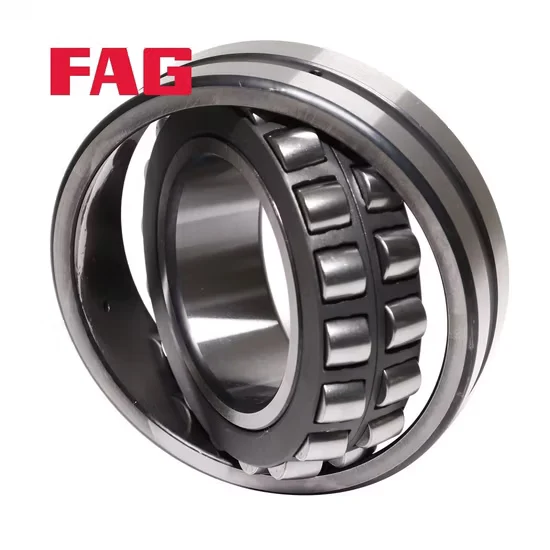
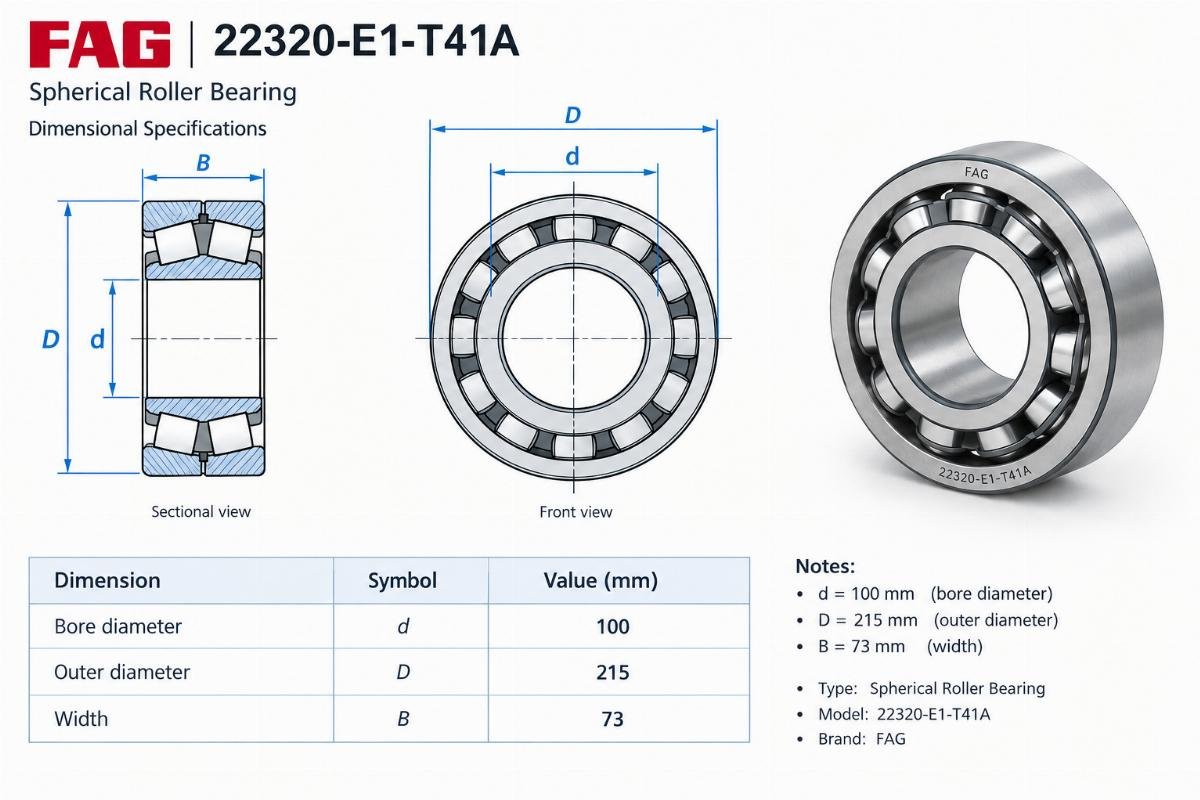
The basic boundary dimensions for this bearing class are 100 mm bore, 215 mm outer diameter, and 73 mm width. These measurements ensure compatibility with standard housing designs used in global vibrating screen manufacturing. However, focusing solely on these physical limits ignores the engineering advancements embedded in the E1 designation and the T41A variant. The E1 series represents an optimized internal geometry that increases dynamic load carrying capacity compared to older standard designs. This improvement allows the bearing to handle heavier radial loads without compromising rotational stability.
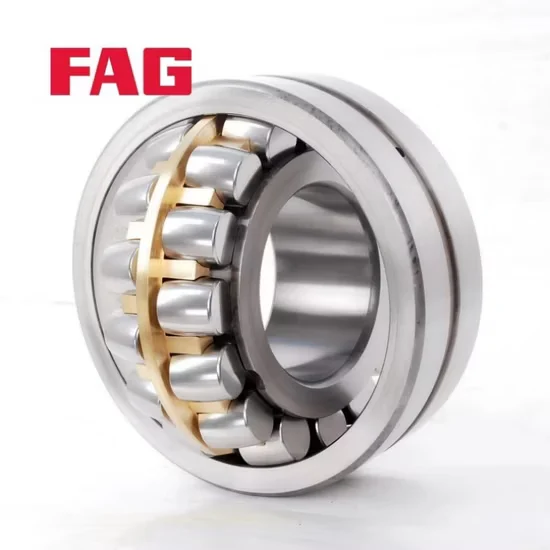
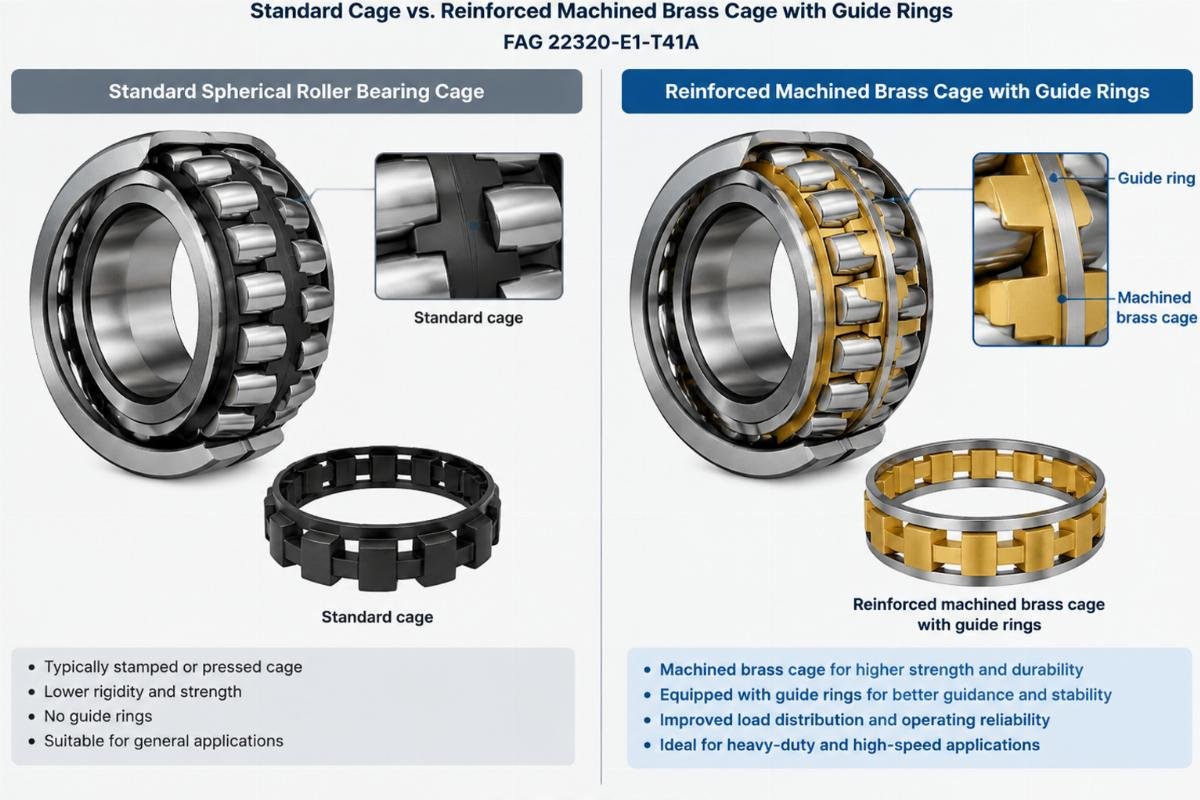
The T41A suffix modifies this baseline further. It indicates a specific combination of features tailored for vibratory applications. These include a machined brass cage, which offers superior strength and resistance to deformation compared to stamped steel alternatives. The suffix also denotes a special internal clearance range, adjusted to accommodate thermal expansion and maintain optimal rolling element movement under high-speed oscillation. Additionally, the presence of guide rings on the cage prevents axial displacement during intense vibration cycles.
Operators often overlook these internal specs until failure occurs. A bearing may fit perfectly into the housing yet fail within weeks if the internal clearance is too tight or the cage material cannot endure the cyclical stress. Verifying these specifications requires access to detailed technical documentation from the manufacturer. Relying on generic dimension charts provides an incomplete picture of the bearing’s capability. When engaging with a FAG 22320-E1-T41A spherical roller bearing wholesale supplier, requesting full spec sheets ensures that the delivered product matches the rigorous demands of heavy-duty screening equipment.
Why Does the T41A Suffix Matter for Vibration Screens?
Standard spherical roller bearings lack the structural reinforcements necessary to survive the high-frequency acceleration typical of vibrating screens.
In aggregate plants and mining operations, vibrating screens operate under constant, high-intensity motion. This environment generates significant inertial forces that act upon every component of the bearing assembly. A standard spherical roller bearing, designed primarily for misalignment compensation and heavy radial loads in static or slowly rotating applications, does not possess the cage retention features needed for such conditions. The T41A suffix addresses this gap by incorporating specific design elements that enhance durability under vibratory stress.
The machined brass cage used in T41A bearings provides greater rigidity than stamped steel cages. Brass is less prone to fatigue cracking under repeated impact loads. Furthermore, the guide rings integrated into the cage structure prevent the rolling elements from shifting axially during operation. This alignment stability is crucial for maintaining smooth rotation and preventing uneven wear patterns that lead to early failure. The special internal clearance associated with the T41A suffix ensures that the bearing operates efficiently despite temperature fluctuations and dynamic loading changes.
Failure to use T41A-specified bearings often results in catastrophic cage breakdown. Operators may observe increased noise, vibration, and heat generation before complete seizure occurs. These symptoms indicate that the cage is deforming or breaking apart under stress. Replacing failed units with standard bearings creates a cycle of recurring downtime and maintenance costs. Selecting the correct suffix from a reliable FAG 22320-E1-T41A spherical roller bearing wholesale supplier breaks this cycle by providing components engineered specifically for the application’s mechanical demands.
Standard 22320-E1 vs. 22320-E1-T41A: A Spec Comparison
Choosing between standard E1 and T41A variants depends entirely on the operational environment, not just load capacity requirements.
While both bearings share the same external dimensions and basic E1 internal optimization, their suitability for different applications diverges significantly. The table below highlights key differences in construction and performance characteristics.
| Feature | Standard 22320-E1 | FAG 22320-E1-T41A |
|---|---|---|
| Cage Material | Stamped Steel or Standard Brass | Machined Brass |
| Cage Design | Standard Window Type | Reinforced with Guide Rings |
| Internal Clearance | Standard C3/C4 | Special Vibratory Clearance |
| Application Suitability | General Heavy Industry | High-Frequency Vibration Screens |
| Resistance to Acceleration Forces | Basic | Robust |
| Risk of Cage Failure in Screening | High | Low |
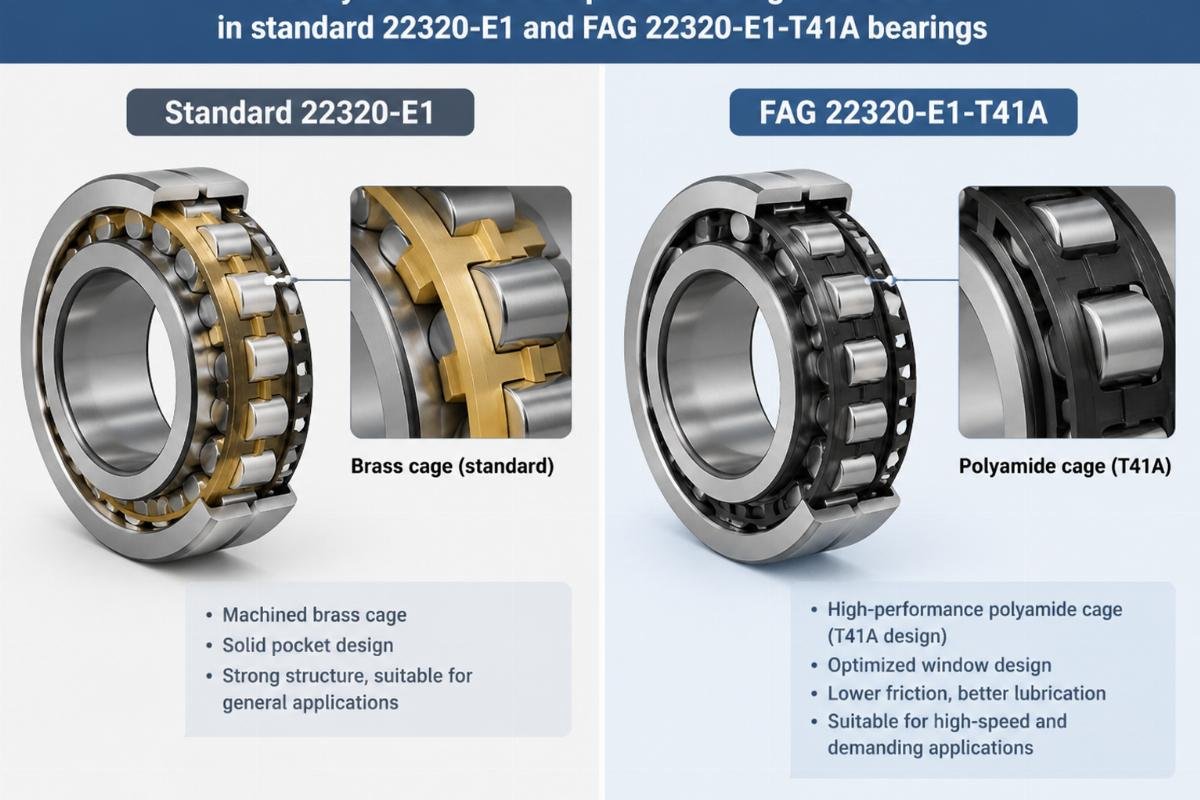
This comparison reveals why substituting a standard E1 bearing for a T41A unit is a risky practice. In general industrial applications involving moderate speeds and stable loads, the standard E1 performs adequately. However, in vibrating screens, the absence of guide rings and specialized clearance makes the standard version vulnerable to rapid degradation. The machined brass cage in the T41A variant offers superior resistance to the shock loads generated by screening media.
A case involving a cross-border shipment mix-up illustrates this point. A distributor inadvertently shipped standard 22320-E1 bearings instead of the specified T41A units to a quarry operation. Within half a month, multiple screens experienced cage failures, leading to unplanned downtime and costly emergency replacements. The incident highlighted that visual similarity does not equate to functional equivalence. Procurement teams must enforce strict part number verification when ordering from a FAG 22320-E1-T41A spherical roller bearing wholesale supplier to avoid such operational disruptions.
How to Verify Genuine T41A Specs and Avoid Procurement Traps
Authenticity verification goes beyond checking packaging labels; it requires tracing technical documentation and physical inspection of key features.
Counterfeit or mislabeled bearings pose a significant risk to industrial operations. Some suppliers may offer bearings labeled as T41A that lack the actual internal modifications. To mitigate this risk, buyers should implement a multi-step verification process. First, request traceability documents from the supplier. Genuine products come with batch-specific certificates that confirm manufacturing origin and specification compliance. Second, inspect the physical bearing for markings. The T41A suffix should be clearly engraved on the outer ring or cage, depending on the manufacturer’s labeling protocol.
Third, examine the cage construction. A machined brass cage has a distinct appearance compared to stamped steel. It feels heavier and exhibits precise machining marks rather than pressed formations. Fourth, verify the presence of guide rings if visible through the cage windows. These rings are essential for axial stability in vibratory applications. Finally, consult with technical experts who can interpret load ratings and clearance data provided in the documentation.
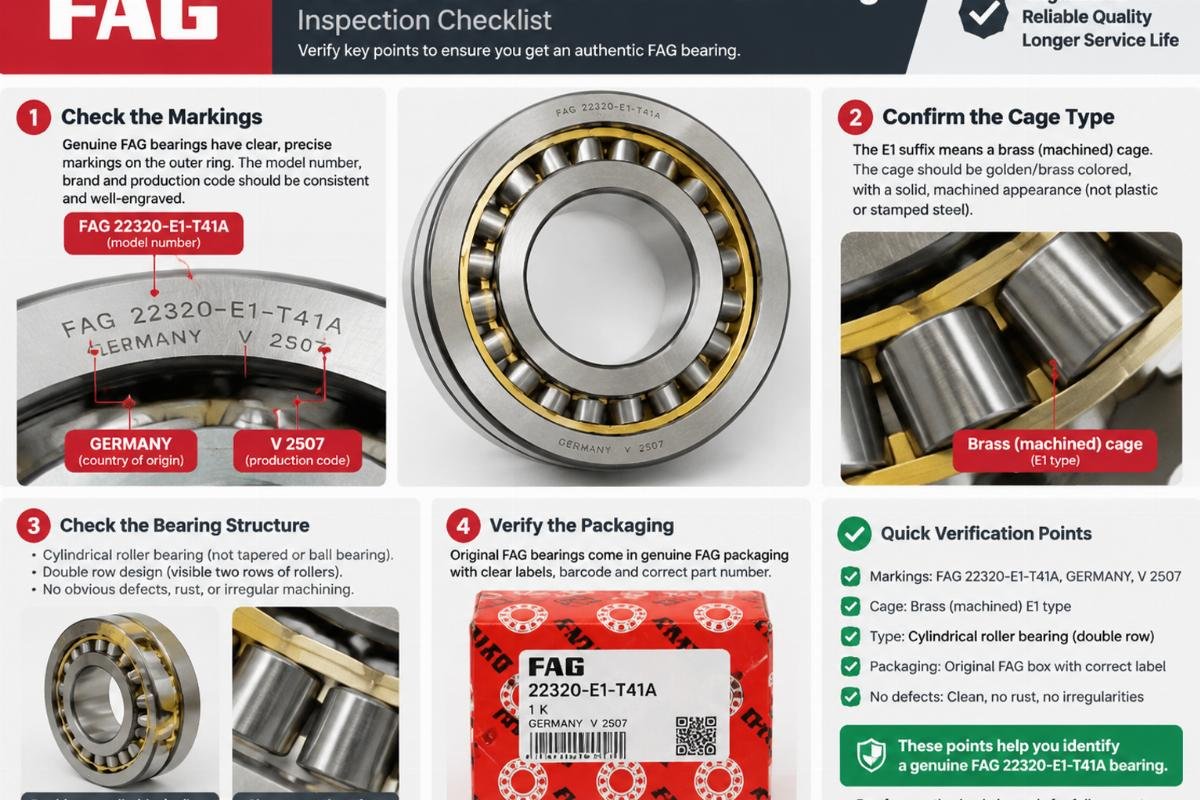
Sourcing from a reputable FAG 22320-E1-T41A spherical roller bearing wholesale supplier simplifies this verification process. Established suppliers maintain direct relationships with manufacturers and adhere to strict quality control protocols. They provide comprehensive support, including mixed-batch container consolidation for diverse inventory needs and technical assistance for model selection. This level of service reduces the likelihood of receiving incorrect or substandard products. By prioritizing traceability and technical accuracy, operators ensure that their equipment receives the intended protection against vibratory stress.
Conclusion
The T41A suffix defines the operational viability of spherical roller bearings in vibrating screen applications.
Ignoring this specification leads to preventable failures and increased maintenance burdens. Operators must prioritize verified T41A units over standard alternatives to ensure equipment reliability. Partnering with a knowledgeable FAG 22320-E1-T41A spherical roller bearing wholesale supplier provides the necessary assurance of product authenticity and technical suitability. This approach safeguards productivity and extends the service life of critical screening machinery.