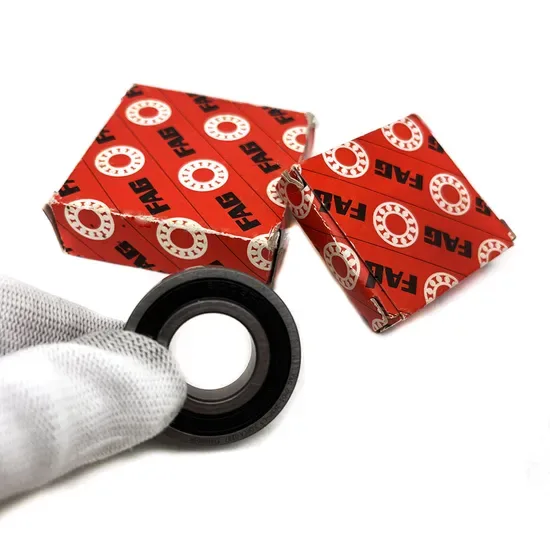
Official channels are not the only safe route for authenticity.
US EV startups can source genuine, traceable FAG bearings with flexible MOQs and cross-brand alternatives by partnering with authorized global distributors who offer mixed-batch consolidation, rather than relying solely on rigid official brand channels that often mismatch agile R&D cycles.
The smell of burnt insulation is distinct. It hangs in the air long after the motor test bench goes silent. I remember standing in a dusty workshop in Lagos, Nigeria, watching a crusher主轴 seize up because a batch of refurbished FAG spherical roller bearings had slipped into the supply chain disguised as new stock. The outer rings looked pristine, but the internal clearance was gone. That failure did not just cost money; it halted an entire mining operation. It taught me that traceability is not paperwork—it is the difference between a running machine and a scrap heap. Today, I apply that same rigor to helping US EV startups. These engineering teams face a different kind of pressure. They need the precision of German engineering for their high-speed motors, but they cannot wait months for pallet-sized orders from official sources. They need agility without compromising on the genuineness of every single unit.
Sourcing components for electric vehicle prototyping is a balancing act. You need parts that meet strict ISO standards, but you also need them in quantities that match your current build phase, not your mass-production forecast. This is where the traditional supply model breaks down. Most assume that buying direct from the brand manufacturer is the safest bet. In reality, authorized global distributors with strict traceability protocols often provide a safer, more flexible alternative for low-volume, high-mix requirements.
Why Do US EV Startups Struggle to Source Genuine FAG Bearings?
High minimum order quantities and long lead times from official channels create bottlenecks for agile EV R&D cycles.
The primary friction point for emerging electric vehicle manufacturers is not availability, but accessibility. Official brand channels are optimized for volume. They operate on economies of scale that require buyers to commit to full pallets or container loads of a single SKU. For a startup refining its third prototype, ordering five hundred units of a specific deep-groove ball bearing is not just inefficient; it is capital-intensive waste.
Furthermore, lead times from central European warehouses can stretch into months, especially during periods of high industrial demand. An EV team pivoting its motor design needs components now, not next quarter. When official sales representatives cite rigid delivery schedules, startups often feel forced to choose between delaying their timeline or risking quality by turning to unauthorized local traders. This is a false dichotomy.
I have seen engineering teams stall because they could not get a mixed batch of angular contact ball bearings and cylindrical roller bearings in one shipment. They needed ten units of one size and fifty of another. The official channel quoted a six-week lead time for each separate line item. By contrast, a flexible supplier with massive spot inventory can consolidate these mixed-brand, mixed-size packages into a single shipment. This approach aligns with the iterative nature of EV development, where designs change weekly and component needs fluctuate daily.
The struggle is real, but it is structural, not inevitable. Startups do not need to compromise on quality to gain speed. They need a partner who understands that a “small” order of genuine FAG bearings is still a critical link in the supply chain. By leveraging suppliers who specialize in mixed-container consolidation, EV teams can maintain their agility while ensuring every bearing meets the original equipment manufacturer specifications.
How to Verify FAG Bearing Authenticity and Traceability?
Implement strict document checks and supplier audits to eliminate counterfeit risks.
Counterfeit bearings are a pervasive threat in the global market. They often look identical to genuine products but lack the metallurgical integrity required for high-speed EV applications. A fake bearing might pass a visual inspection, but under the thermal and load stresses of an electric motor, it will fail prematurely.
Verification starts with the paper trail. Genuine FAG bearings come with complete traceability documentation. This includes material certificates, heat treatment records, and batch numbers that link back to the manufacturer’s production facilities. When sourcing, do not accept vague assurances. Demand the full set of customs and traceability documents. If a supplier cannot provide a verifiable chain of custody, walk away.
I once reviewed a shipment for a client in Southeast Asia where the packaging looked perfect, but the batch numbers on the bearings did not match the accompanying certificate. The discrepancy was subtle—a single digit off—but it indicated that the parts were likely pulled from mixed, unverified sources. We rejected the entire lot. That decision saved the client from potential field failures that could have damaged their brand reputation irreparably.
For US EV startups, the process should be equally rigorous. Request sample-level verification before committing to larger orders. Check the laser etching on the bearing rings. Genuine FAG markings are precise, clean, and resistant to wear. Counterfeits often have shallow or misaligned engraving. Additionally, verify the supplier’s authorization status. While many traders claim to sell genuine products, only those with direct links to authorized distribution networks can guarantee consistent batch-to-batch quality.
Traceability is not just about avoiding fakes; it is about accountability. When a component fails, you need to know exactly where it came from and how it was made. This level of transparency is standard with reputable global suppliers who prioritize long-term relationships over quick transactions. They understand that for an EV startup, every part counts, and every document matters.
Specification Matrix: Official Channels vs. Flexible Global Suppliers
Compare MOQ, lead time, mixed-batch capability, and technical support to find the optimal sourcing partner.
Choosing between official channels and flexible suppliers requires a clear understanding of your project’s needs. The following matrix highlights key differences based on typical procurement scenarios for EV startups.
| Feature | Official Brand Channels | Flexible Global Suppliers |
|---|---|---|
| Minimum Order Quantity (MOQ) | High (Full pallets/containers) | Low (Single-unit to mixed batches) |
| Lead Time | Long (Weeks to months) | Short (Days to weeks, depending on stock) |
| Mixed-Batch Capability | Limited (Single SKU focus) | High (Consolidation of multiple brands/sizes) |
| Technical Support | Standard (General product info) | Specialized (Cross-brand equivalent consultation) |
| Traceability Documentation | Complete | Complete (with verified chain of custody) |
| Pricing Structure | Fixed list prices | Competitive (wholesale-tier for mixed orders) |
A US buyer once struggled to source a specific sealed angular contact ball bearing for a motor prototype. The official channel required a minimum order of two hundred units, with a ten-week lead time. The startup only needed twenty units for testing. By switching to a flexible supplier, they received the exact genuine FAG bearings in two weeks, along with ten units of a compatible NSK alternative for backup testing. This mixed-batch approach allowed them to proceed without tying up capital in excess inventory.
The key advantage of flexible suppliers lies in their ability to consolidate. They hold massive spot inventories of thousands of standard and special part numbers from premium brands like SKF, FAG, INA, NSK, and TIMKEN. This diversity enables them to fulfill complex, low-volume orders that official channels simply cannot handle efficiently. For EV startups, this means faster iteration cycles and reduced logistical overhead.
When evaluating suppliers, look beyond price. Consider the value of speed and flexibility. A slightly higher unit cost may be justified by the ability to receive parts immediately and in the exact quantities needed. This efficiency translates directly into faster time-to-market, which is critical for startups competing in the rapidly evolving EV landscape.
How to Leverage Cross-Brand Equivalents for EV Prototyping?
Utilize reliable alternative brands when exact FAG SKUs face supply bottlenecks.
Supply chain disruptions are inevitable. Even with the best planning, specific FAG SKUs may become unavailable due to global demand spikes or production delays. In these situations, cross-brand equivalents offer a viable solution for prototyping and non-critical applications.
Cross-referencing is not about substituting inferior parts. It is about identifying bearings from other premium brands that meet the same dimensional, load, and speed requirements. Brands like NSK, NTN, and KOYO offer high-precision alternatives that are fully compatible with FAG specifications.
I helped a client in Latin America replace a discontinued FAG cylindrical roller bearing with an equivalent model from NTN. The substitution required careful verification of internal clearance and cage material to ensure compatibility with the high-speed application. After thorough testing, the alternative performed identically to the original, allowing the project to continue without delay.
For EV startups, maintaining a list of approved cross-brand equivalents is a strategic advantage. It reduces dependency on a single source and provides backup options during shortages. However, this strategy requires technical expertise. Not all bearings are interchangeable. Factors such as lubrication type, sealing effectiveness, and thermal stability must be matched precisely.
Suppliers with strong technical support can assist in this process. They provide cross-reference lookup services and parameter verification to ensure that any alternative selected meets the rigorous demands of EV motor applications. This collaborative approach minimizes risk and ensures that performance is not compromised for the sake of availability.
Conclusion
Flexibility and authenticity are not mutually exclusive in bearing sourcing.
US EV startups can achieve both by partnering with suppliers who offer genuine FAG bearings with complete traceability, flexible MOQs, and mixed-batch consolidation. This approach supports agile R&D cycles while mitigating the risks of counterfeits and supply delays. By verifying documentation and leveraging cross-brand equivalents when necessary, engineering teams can keep their projects moving forward efficiently.