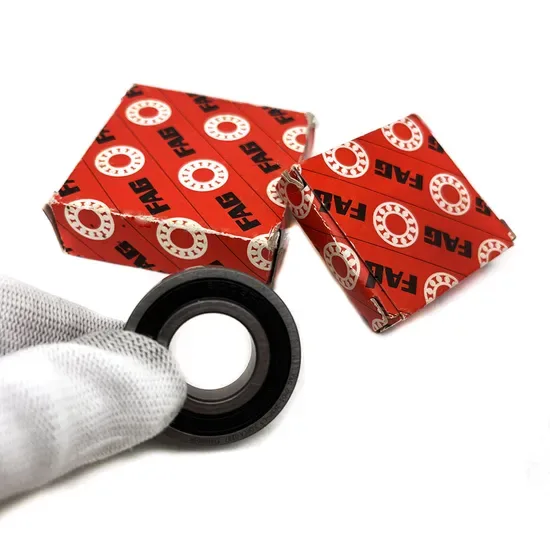
Visual inspection alone cannot detect internally refurbished bearings.
Sourcing authentic FAG bearings for US water utilities demands strict verification of traceability documents rather than relying on physical appearance. Municipal procurement managers must prioritize original mill certificates and customs declarations to avoid catastrophic pump failures caused by counterfeit or re-machined components.
I still remember the email from a frustrated facility manager in the Midwest. His municipal pumping station had suffered an unplanned shutdown, and the teardown revealed deep grinding marks on the inner ring of what was supposed to be a new FAG spherical roller bearing. The component had overheated and seized under continuous load, causing damage that extended far beyond the bearing itself. That incident was not isolated. In the water utility sector, where pumps run continuously against variable radial and axial forces, the integrity of the rolling element is non-negotiable. Many buyers assume that a shiny exterior guarantees quality, but internal re-machining leaves no visible trace until failure occurs.
The market is flooded with components that look identical to genuine products but lack the metallurgical consistency required for heavy-duty water treatment environments. Understanding how to verify authenticity and select the correct specifications is essential for maintaining operational reliability. This guide breaks down the verification process and technical selection criteria specifically for FAG bearings for US water utilities.
Why Do Municipal Pumps Fail Prematurely with FAG Bearings?
Refurbished fakes with internal grinding marks cause overheating and seizing under continuous water pump loads.
Water treatment plants and municipal distribution systems operate under harsh conditions. Pumps are subjected to constant vibration, moisture, and significant radial loads. When a bearing fails in this environment, the consequences are immediate and costly. The primary culprit is often not wear and tear, but the installation of refurbished units sold as new.
In my early days working in manufacturing, I saw how easily a worn bearing could be polished and repackaged. The outer dimensions might meet standard tolerances, but the internal geometry is compromised. For FAG bearings for US water utilities, this is critical because these components are engineered for specific internal clearances and load distributions. A refurbished bearing lacks the precise surface finish on the raceways, leading to increased friction and heat generation.
Consider a case involving a large-scale water distribution project in the Southwest. The maintenance team replaced several failed pumps with what they believed were new spare parts. Within months, multiple units experienced premature seizure. Analysis showed that the lubrication channels were blocked by metal particles generated from improper internal grinding during the refurbishment process.
| Failure Indicator | Genuine New Bearing | Refurbished/Counterfeit |
|---|---|---|
| Internal Raceway Finish | Mirror-like, uniform polish | Visible grinding marks or uneven texture |
| Lubrication Quality | Clean, specified grade | Contaminated or incorrect type |
| Heat Generation | Stable operating temperature | Rapid overheating under load |
| Noise Level | Consistent, low hum | Irregular grinding or clicking sounds |
The cost of downtime in a municipal setting far exceeds the savings from purchasing cheaper, unverified components. When a main intake pump fails, the entire system may need to be taken offline, affecting thousands of residents. Therefore, verifying the origin of FAG bearings for US water utilities is not just a procurement task; it is an operational necessity.
How to Verify Genuine FAG Bearings via Traceability Documents?
Customs declarations and original mill certificates are mandatory; visual checks cannot detect internal re-machining.
Reliance on physical inspection is a flawed strategy for high-value industrial components. The most reliable method to ensure authenticity is through rigorous document verification. Every genuine batch of FAG bearings for US water utilities should come with a complete chain of custody documentation.
The first document to request is the original mill certificate. This document provides details about the steel batch, heat treatment processes, and quality control tests performed at the manufacturing facility. It serves as proof that the bearing was produced according to strict ISO standards. Without this certificate, there is no way to verify the material integrity of the component.
Additionally, customs declaration forms are crucial for imports. These documents show the true origin of the goods and the declared value. Discrepancies between the declared value and the market price of genuine FAG products are a major red flag. If the price seems too good to be true, it likely is. Counterfeiters often undervalue shipments to avoid scrutiny, but this leaves a paper trail that can be audited.
A US buyer once shared how their team streamlined the verification process. By requiring suppliers to provide scanned copies of both the mill certificate and customs clearance documents before shipment, they reduced the time spent on incoming quality inspections significantly. This proactive approach prevented a large batch of suspect components from entering their inventory.
| Document Type | Purpose | Verification Value |
|---|---|---|
| Mill Certificate | Confirms material batch and production standards | High |
| Customs Declaration | Verifies country of origin and declared value | High |
| Packing List | Matches part numbers and quantities | Medium |
| Supplier Invoice | Reflects transaction price and terms | Medium |
For procurement managers, establishing a protocol for document review is essential. Do not accept digital copies that appear edited or incomplete. Request original scans directly from the supplier’s quality assurance department. This level of diligence ensures that every FAG bearing for US water utilities installed in your system is authentic and traceable.
Which FAG Bearing Specs Fit US Water Utility Applications?
Spherical roller bearings with optimized internal clearance and robust sealing are critical for variable radial loads.
Selecting the right specification goes beyond matching the part number. Water pumps operate under dynamic conditions that require bearings capable of handling misalignment and heavy loads. Spherical roller bearings are the preferred choice for many municipal applications due to their self-aligning capability.
However, not all spherical roller bearings are created equal. For FAG bearings for US water utilities, specific features such as internal clearance and seal protection are vital. The internal clearance must be optimized to accommodate thermal expansion during operation while maintaining precise rotor positioning. Incorrect clearance can lead to premature fatigue or excessive play.
Sealing is another critical factor. Water treatment environments are wet and often contain corrosive elements. Bearings must have robust seals to prevent contamination from water and chemicals. IP ratings and seal material compatibility should be verified against the specific pump design.
| Specification Factor | Requirement for Water Pumps | Risk of Incorrect Spec |
|---|---|---|
| Internal Clearance | Optimized for thermal expansion | Seizure or excessive vibration |
| Seal Type | Robust, chemical-resistant | Contamination and corrosion |
| Cage Material | High-strength, guided | Cage fracture under high load |
| Lubrication | Compatible with water exposure | Washout and dry running |
When sourcing these components, consult technical datasheets to ensure the selected model meets the load calculations for your specific pump architecture. Radial and axial force distributions vary by pump type, and the bearing must be sized accordingly. Using a generic equivalent without verifying these parameters can result in suboptimal performance and reduced service life.
How to Build a Reliable Sourcing Matrix for Mixed-Batch Orders?
Consolidating genuine multi-brand orders with complete documentation minimizes procurement risks and lead times.
MRO operations often require a mix of bearing types and brands to maintain various pieces of equipment. Managing multiple suppliers for each brand increases complexity and the risk of receiving counterfeit goods. A more effective approach is to work with a supplier who can consolidate orders across multiple premium brands while maintaining full traceability.
This strategy simplifies logistics and ensures consistent quality standards. By sourcing FAG bearings for US water utilities alongside other reputable brands from a single verified partner, procurement teams can reduce administrative overhead and improve inventory turnover. The key is to ensure that the supplier provides complete documentation for every item in the mixed batch.
Cross-brand equivalent selection is also valuable for urgent MRO needs. If a specific FAG model is out of stock, a qualified supplier can recommend a technically equivalent alternative from another premium brand, provided the specifications match. This flexibility reduces lead times and prevents prolonged downtime.
| Sourcing Strategy | Advantage | Impact on Operations |
|---|---|---|
| Single-Brand Direct | Brand-specific support | Limited flexibility, higher admin load |
| Multi-Brand Consolidation | Simplified logistics, unified docs | Reduced risk, faster clearance |
| Cross-Brand Equivalents | Urgent availability | Minimized downtime |
Building a reliable sourcing matrix involves evaluating suppliers based on their ability to provide genuine products with verifiable documentation. Look for partners who offer ISO-compliant quality assurance and have a proven track record in serving industrial clients. This approach ensures that every component, whether FAG or another premium brand, meets the stringent requirements of US water utilities.
Conclusion
Authenticity verification is the cornerstone of reliable pump maintenance.
Sourcing FAG bearings for US water utilities requires a disciplined approach to documentation and specification selection. By prioritizing traceability over price and understanding the technical demands of water pump applications, procurement managers can prevent costly failures. Ensure every purchase is backed by original mill certificates and customs declarations to guarantee the integrity of your infrastructure.