A factory invoice is not enough to clear customs.
Securing genuine FAG bearings from China under Section 301 requires strict alignment of traceability documents and origin certificates to avoid customs seizures. Without a verifiable brand authorization chain, even authentic products face port delays or rejection.
The smell of diesel and hot metal at the Chicago PTC exhibition always brings back a specific memory. I was standing next to a container manifest that looked perfect on paper. The prices were competitive, the lead times were tight, and the client, a major North American distributor, was ready to sign. We secured the order for a full container of FAG bearings. But when the shipment arrived in Los Angeles, it didn’t move. The cargo sat idle while demurrage charges piled up daily. The issue wasn’t the quality of the bearings inside the boxes. The issue was the paperwork. The origin certificates did not match the traceability documents required by U.S. Customs and Border Protection under Section 301 tariffs. The client rejected the batch entirely. That mid-six-figure loss taught me that in global bearing procurement, documentation is as critical as the steel itself.

This experience is not unique. Many buyers focus solely on unit price, ignoring the complex web of trade compliance that governs high-value industrial components. As a professional global full-range bearing supplier based in China, I have seen how a single missing signature on an authorization letter can halt an entire production line. This guide breaks down the essential steps to ensure your bulk orders of FAG bearings from China are compliant, traceable, and ready for immediate use.
How do Section 301 tariffs impact FAG bearings from China?
Section 301 tariffs add a significant cost layer to imported bearings, requiring precise HTS code classification to avoid overpayment or penalties.
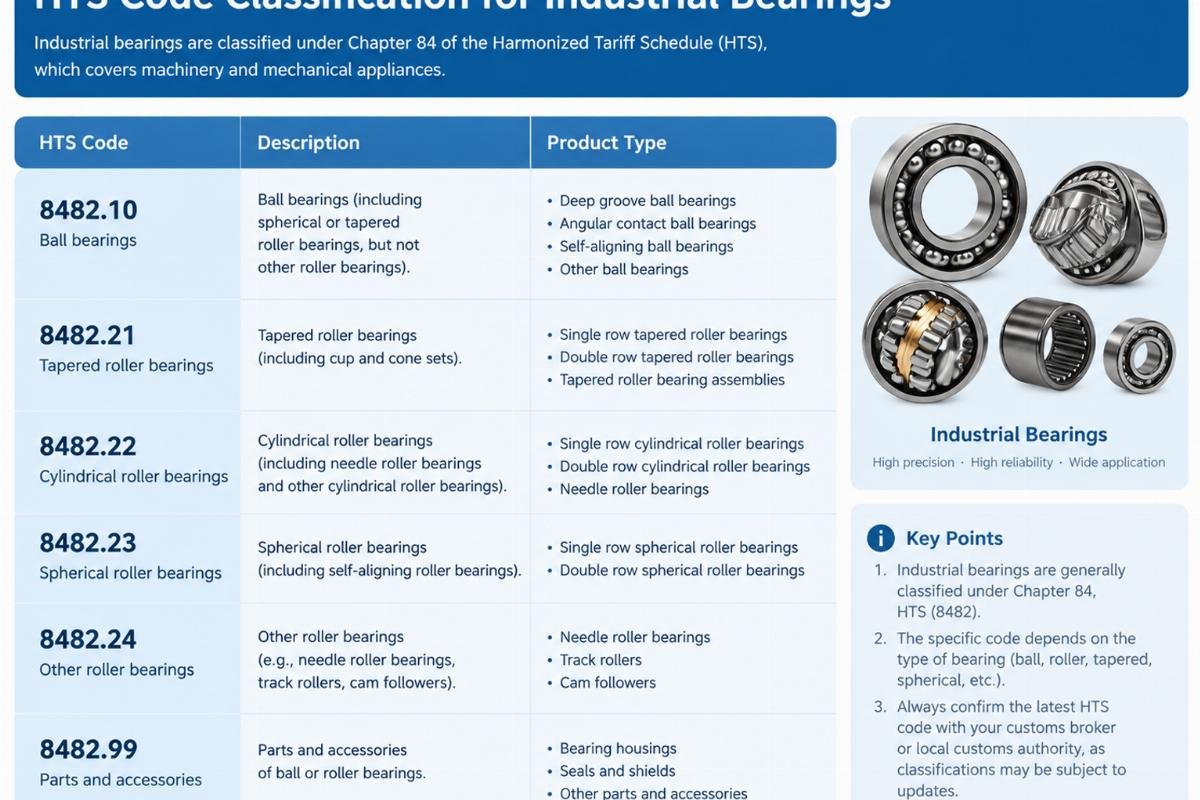
The trade landscape for industrial components has shifted dramatically. For importers sourcing FAG bearings from China, understanding the Harmonized Tariff Schedule (HTS) is no longer just an administrative task; it is a financial imperative. The United States Trade Representative (USTR) lists specific bearing categories under Section 301, which imposes additional duties on goods originating from China.
Misclassifying these items can lead to severe consequences. If you declare a spherical roller bearing under a generic code that does not reflect its specific application or precision grade, customs may flag the shipment for audit. This results in delays that can stretch into weeks. During this time, your inventory is stuck at the port, and your customers are waiting for parts that are physically present but legally inaccessible.
| Classification Factor | Compliant Approach | Risky Approach |
|---|---|---|
| HTS Code Selection | Matches specific bearing type and material | Uses generic “parts” codes to avoid scrutiny |
| Country of Origin | Clearly stated as China with supporting docs | Ambiguous or missing origin declaration |
| Tariff Calculation | Includes Section 301 additional duty | Ignores additional duty, leading to later fines |
A European wind farm operator once faced a similar issue. They ordered a mixed batch of cylindrical roller bearings and deep-groove ball bearings. The supplier used a broad HTS code for the entire container. Upon arrival in Rotterdam, customs officials separated the shipment for manual inspection. The delay lasted several days, causing a noticeable disruption to their maintenance schedule. The cost of expedited shipping to replace the delayed parts far exceeded the initial savings from the lower purchase price.
To mitigate this, verify the HTS codes against the current USTR Section 301 lists before placing your order. Ensure that your supplier provides detailed product descriptions that align with these codes. This proactive step ensures that your FAG bearings import compliance is maintained from the factory floor to the final destination.
What traceability documents are mandatory for FAG bearing clearance?
A complete authorization chain and valid origin certificates are non-negotiable for clearing customs and proving authenticity.
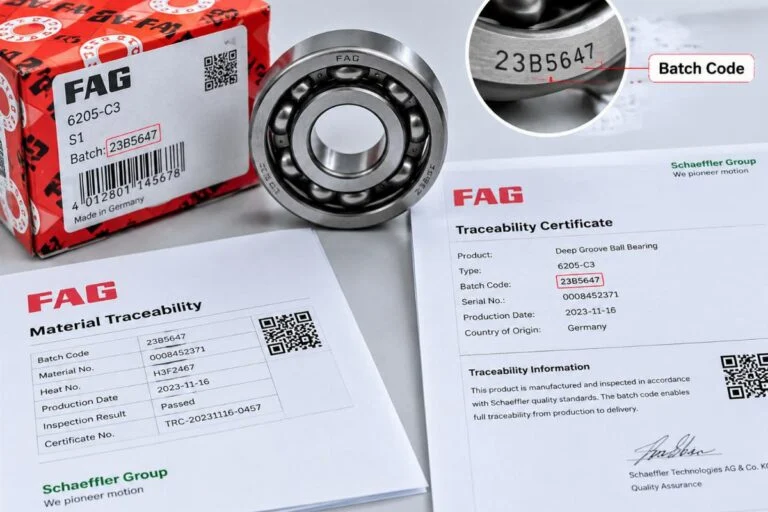
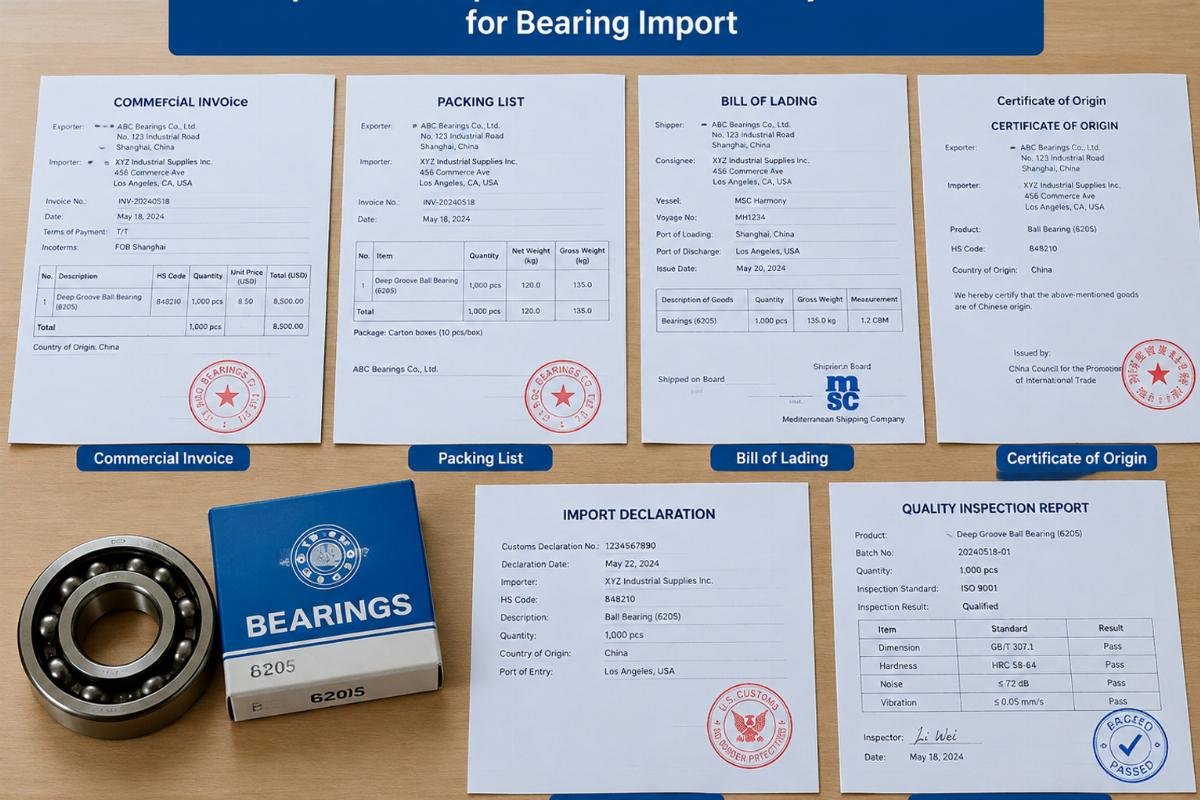
Traceability is the backbone of modern supply chain security. For FAG bearings, this means more than just a box with a logo. It requires a documented journey from the manufacturer’s production facilities to your warehouse. Customs authorities and end-users increasingly demand proof that the bearings are genuine and sourced through authorized channels.
The mandatory documents typically include:
- Certificate of Origin: This document certifies where the bearings were manufactured. For Section 301 purposes, it must clearly state China if that is the source.
- Brand Authorization Letter: This proves that the supplier has the right to sell FAG products. Without this, the goods may be suspected of being counterfeit or parallel imports.
- Mill Test Certificates (MTC): These provide technical data on the material composition and heat treatment of the bearings. They should match the batch numbers on the physical products.
- Commercial Invoice and Packing List: These must detail every SKU, quantity, and value accurately.
A Middle East steel mill learned this the hard way. They received a shipment of tapered roller bearings without a proper authorization chain. Although the bearings were genuine, the lack of documentation triggered a customs audit. The authorities held the container for verification, checking dozens of SKUs against the provided papers. The preparation time to rectify the documents took weeks, during which the mill had to source emergency replacements at a premium price.
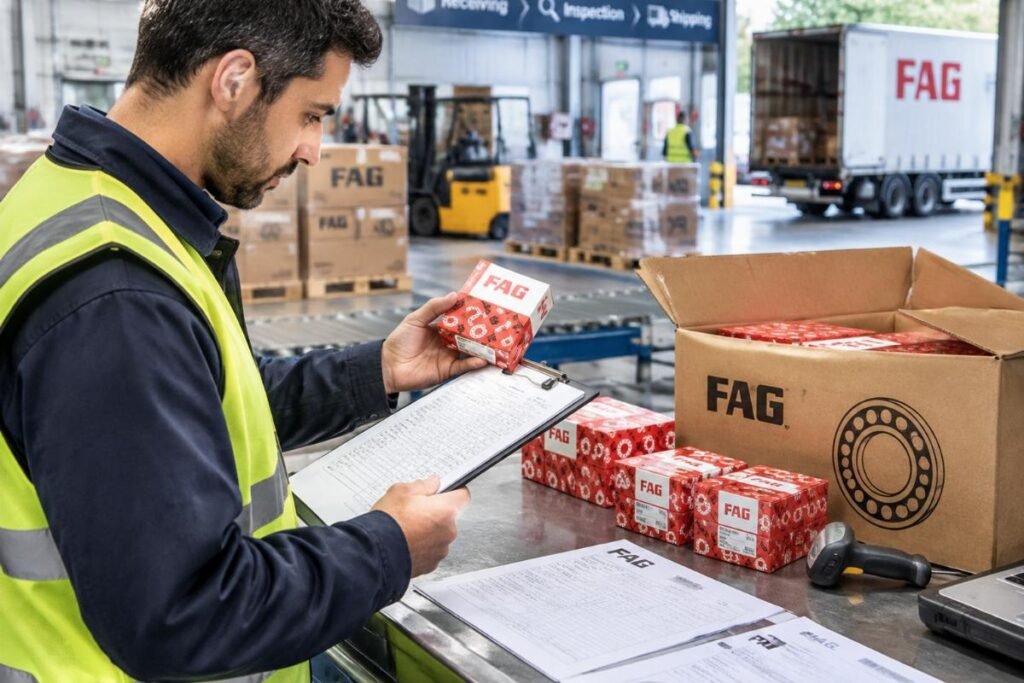
When sourcing from a wholesale supplier for bulk orders, insist on receiving these documents before the ship leaves the port. Verify that the batch numbers on the MTCs match those on the packaging. This level of diligence ensures that your FAG bearings traceability documents are robust and defensible.
Why do factory invoices fail customs audits?
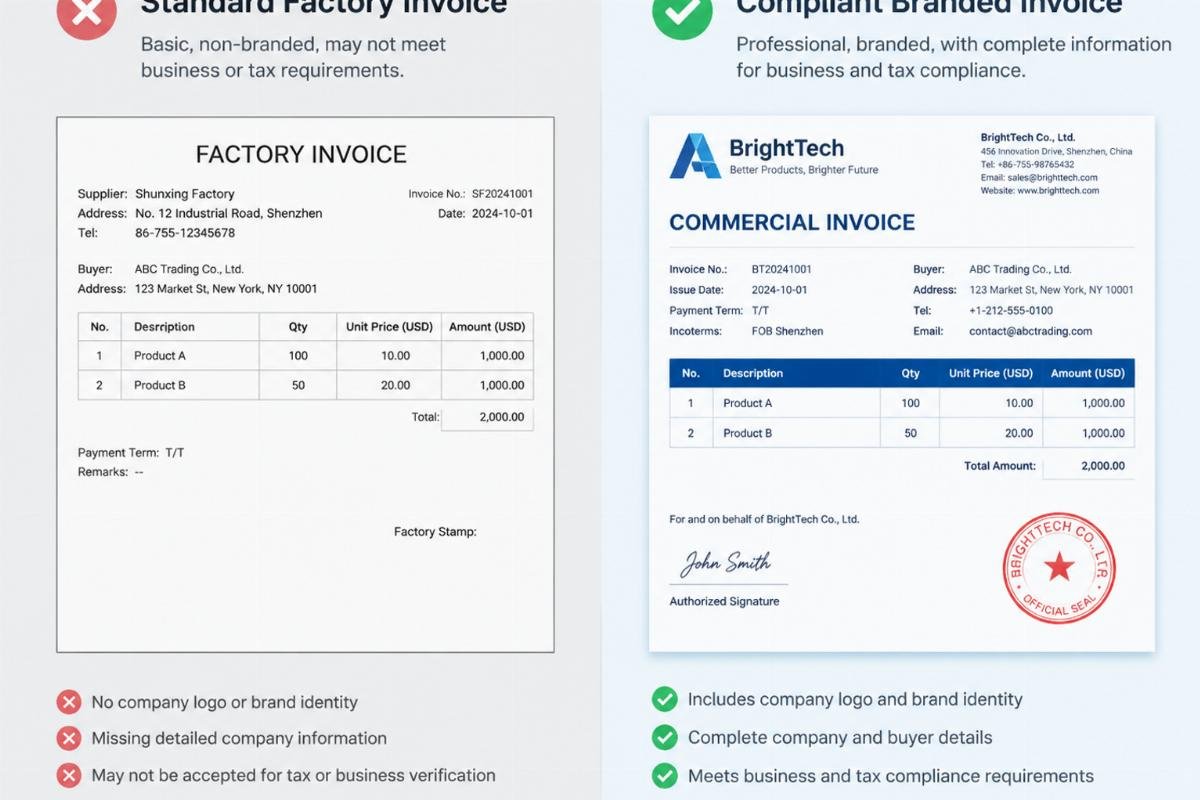
Factory invoices often lack the brand compliance details required by intellectual property laws, leading to seizures.
A common misconception is that a commercial invoice from the factory is sufficient for customs clearance. In reality, customs officers look for evidence of brand ownership and authorization. A standard factory invoice usually lists the item name, quantity, and price. It rarely includes the specific brand authorization details that prove the seller is an approved distributor.
This gap between commercial invoicing and brand compliance is where many shipments fail. Customs agents are trained to spot discrepancies. If the invoice says “Bearings” but the packaging says “FAG,” and there is no accompanying authorization letter, the shipment is flagged. The assumption is that the goods might be counterfeit. Even if they are real, the lack of proper documentation makes them indistinguishable from fakes in the eyes of the law.
Consider a case involving a Latin American automotive parts distributor. They imported a large volume of angular contact ball bearings. The invoice was simple and direct from the manufacturing partner. However, it did not reference the brand owner’s authorization. Customs seized the goods for intellectual property verification. The distributor had to provide retroactive proof of the supply chain, a process that took months and incurred significant legal fees.
To avoid this, ensure your invoices are detailed and linked to your authorization documents. The invoice should reference the authorization letter number and clearly state the brand. This creates a clear paper trail that satisfies customs requirements and protects your investment.
How to build a compliant sourcing strategy for mixed-brand orders?
A structured checklist integrating cross-brand verification and consolidated documentation prevents logistical bottlenecks.
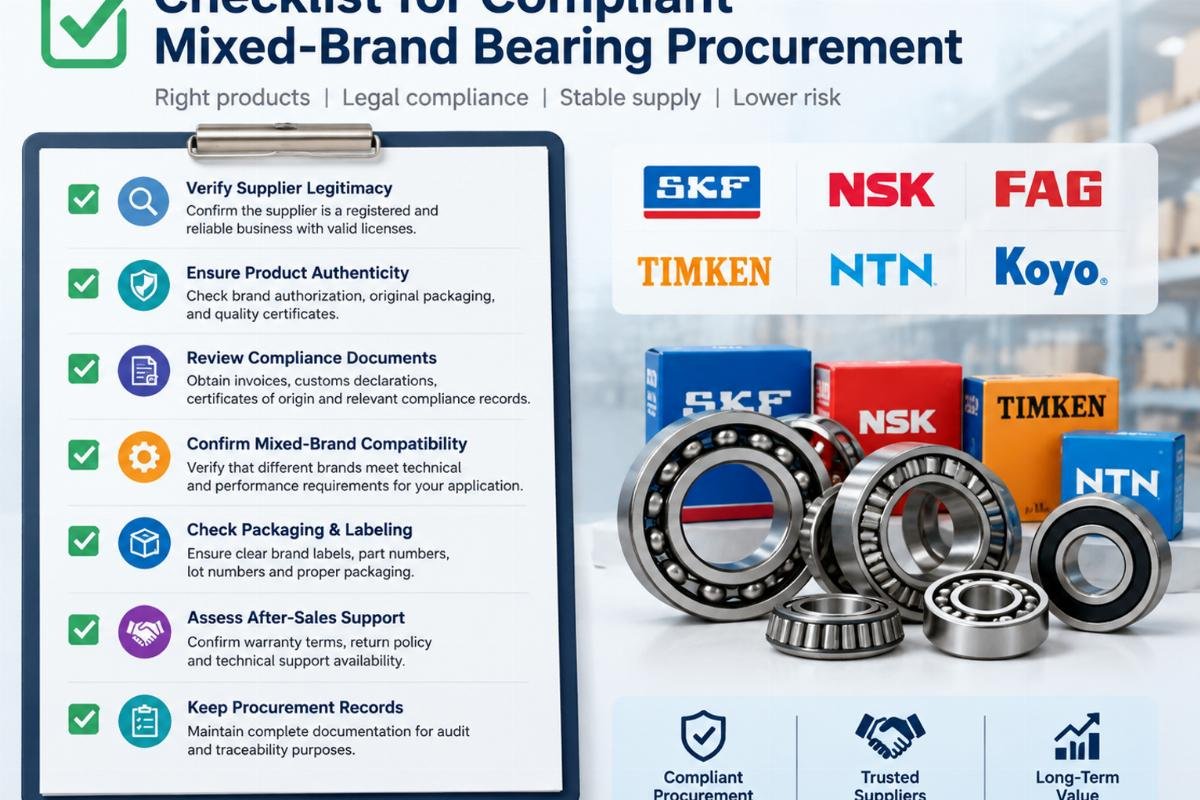
Sourcing mixed-brand orders, such as combining FAG, SKF, and NSK bearings in a single container, adds complexity to compliance. Each brand may have different documentation requirements and authorization chains. A disorganized approach leads to missing papers for specific SKUs, causing partial holds on the entire shipment.
To build a compliant strategy, follow these steps:
- Map Brand Requirements: Identify the specific documentation needed for each brand in your order. FAG may require a different authorization format than NTN or TIMKEN.
- Consolidate Traceability: Work with a supplier who can provide a unified set of documents that covers all brands. This reduces the administrative burden on your side.
- Pre-Shipment Verification: Request digital copies of all documents before the goods are shipped. Check for consistency in batch numbers, origins, and authorizations.
- Technical Cross-Reference: Ensure that the technical datasheets match the ordered models. This prevents disputes over product specifications upon arrival.
A global MRO provider successfully implemented this strategy for their urgent maintenance requirements. They ordered a mixed container of spherical roller bearings and needle bearings from various premium brands. By using a one-stop sourcing solution with complete, verifiable traceability documentation, they cleared customs in record time. The supplier handled the complex web of authorizations, allowing the MRO provider to focus on their core operations.
This approach not only ensures compliance but also enhances efficiency. It allows you to leverage competitive sourcing costs compared to direct official brand channels while maintaining the highest standards of authenticity and documentation.
Conclusion
Documentation is the silent guardian of your supply chain.
Navigating Section 301 tariffs and ensuring FAG bearings import compliance requires more than just finding a low price. It demands a rigorous approach to traceability, authorization, and accurate classification. By prioritizing these elements, you protect your business from costly delays and rejections. Choose partners who understand that genuine products must be backed by genuine paperwork.