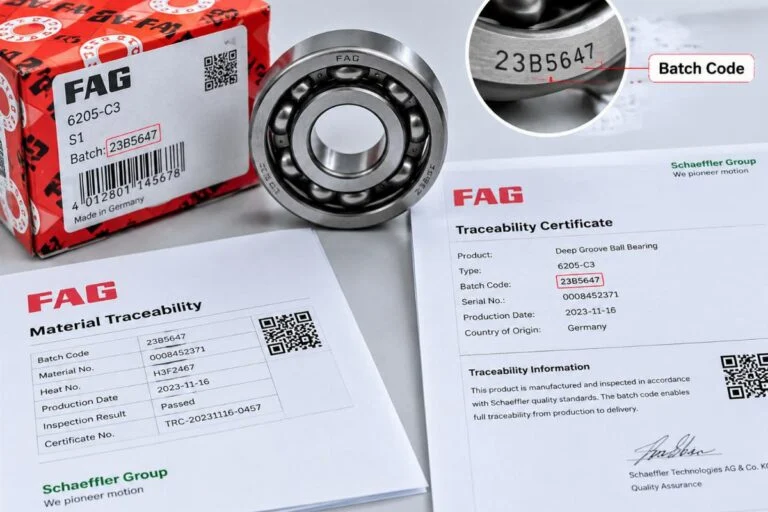
Faster shipping does not fix bad paperwork.
Lead times for FAG bearings in the US typically range from three to five days for air freight shipments drawn from spot inventory, while ocean freight consolidations require thirty to forty-five days. However, these timelines are contingent on accurate HS code classification and complete commercial documentation; errors here can trigger customs detentions lasting weeks, regardless of the shipping speed selected.
I learned this distinction the hard way during a shipment to a maintenance team in Los Angeles. The order consisted of tapered roller bearings intended for an urgent conveyor repair. The physical transit was scheduled correctly, but the commercial invoice listed a generic HS code that did not match the specific bearing type. The cargo sat in Long Beach for two weeks while customs requested clarification. The client’s production line halted, forcing them to pay a premium for emergency air replacements from a different source. The profit from the original order vanished, replaced by a reputational deficit. Since then, I have treated documentation accuracy as a critical component of the delivery timeline, not just an administrative afterthought.
Understanding the true drivers of FAG bearing delivery time USA requires looking beyond the carrier’s transit estimate. It involves synchronizing inventory availability, freight mode selection, and regulatory compliance.
What is the standard lead time for FAG bearings shipped to the US?
Origin and inventory status dictate the baseline timeline, not just the distance.
The perceived lead time often differs from the actual logistical duration because buyers conflate manufacturing time with shipping time. For standard deep-groove ball bearings or spherical roller bearings held in spot inventory, the clock starts when the order is confirmed. If the stock is located in a consolidation hub in Asia, the primary variable is the freight mode. Air freight offers a rapid turnaround, suitable for emergency MRO spares where downtime costs exceed freight premiums. Ocean freight remains the economic choice for bulk stocking orders, such as full container loads destined for regional distributors.
However, if the specific part number is not in stock and must be sourced from the manufacturer’s production facilities, the lead time extends significantly. This is where the value of a supplier with massive spot inventory becomes apparent. By maintaining a broad range of standard and special part numbers, a supplier can bypass the manufacturing queue entirely. For US buyers, this means the difference between waiting months for a factory-direct order and receiving goods in days from a consolidated shipment.
When evaluating import FAG bearings from China to US, it is crucial to verify the stock status before confirming the shipping method. A supplier claiming immediate availability should be able to provide traceability documentation proving the goods are physically present and ready for export. This transparency prevents the common scenario where a buyer selects expedited shipping only to discover the item is still in production.
How do shipping methods impact FAG bearing delivery?
Air freight solves urgency; sea freight solves volume, but neither solves poor planning.
The choice between air and ocean freight is not merely a cost calculation; it is a risk management decision. Air freight, typically taking three to five days, is ideal for high-value, low-volume items like precision angular contact ball bearings used in machine tools. The higher cost is justified by the reduction in inventory holding costs and the mitigation of production downtime risks. Conversely, ocean freight, with a transit time of thirty to forty-five days, is suited for heavy-duty cylindrical roller bearings or large batches of standard units intended for warehouse stocking.
A frequent mistake is assuming that direct orders from European headquarters are always faster for US clients. In many cases, consolidation from Asian hubs offers better spot inventory levels and more flexible minimum order quantities. This approach allows buyers to mix brands and sizes in a single shipment, optimizing freight costs and simplifying customs entry. For example, a mining operator might combine FAG thrust bearings with other premium brand inserts in one consolidated LCL (Less than Container Load) shipment. This strategy reduces the per-unit freight cost and ensures that all necessary components arrive simultaneously for a planned overhaul.
Understanding FAG bearing shipping time also involves recognizing the limitations of each mode. Air freight has strict weight and dimension limits, making it unsuitable for oversized slewing rings or heavy-duty industrial housings. Ocean freight, while capacious, is subject to port congestion and seasonal surcharges. A professional supplier will advise on the optimal mix based on the urgency of the MRO project and the physical characteristics of the bearings.
Why do shipments get delayed at US ports?
Inaccurate HS codes and missing documents cause holds; preparation is key.
The most significant variable in Lead Times for FAG Bearings in the US is often the customs clearance process. A shipment can move quickly across the ocean but stall indefinitely at the port if the documentation is flawed. The Harmonized System (HS) code is the primary identifier used by Customs and Border Protection (CBP) to assess duties and enforce regulations. Using a generic code for a specialized bearing, such as listing a sealed needle bearing under a general ball bearing code, can trigger a manual inspection.
Such inspections can result in detention periods lasting weeks. During this time, the cargo is inaccessible, and demurrage charges accumulate. For a steel plant awaiting replacement spherical roller bearings, this delay can mean extended unplanned downtime. The root cause is rarely malicious intent but rather a lack of technical knowledge in preparing the commercial invoice and packing list. Detailed descriptions, including brand, part number, and specific application notes, help customs officers classify the goods correctly without needing to open the crates.
To avoid these pitfalls, buyers should work with suppliers who understand the nuances of US import regulations. This includes providing certified mill test reports and origin certificates where required. When you import FAG bearings from China to US, ensuring that the supplier’s export documentation aligns with CBP requirements is as important as selecting the right freight forwarder. Proactive communication about the nature of the goods can prevent costly misunderstandings at the border.
How can US buyers optimize procurement?
Consolidated suppliers ensure genuine parts and expert customs handling.
Optimizing procurement involves more than just finding the lowest price; it requires a partner who can manage the complexities of global logistics. A one-stop sourcing solution allows buyers to consolidate orders from multiple brands, such as SKF, NSK, and TIMKEN, alongside FAG products. This consolidation reduces the administrative burden of managing multiple suppliers and simplifies the customs entry process. Instead of dealing with several small shipments, each with its own set of documents and potential delays, the buyer receives a single, well-documented consignment.
Furthermore, working with a supplier who maintains a massive spot inventory provides a buffer against market fluctuations. When demand spikes due to unexpected equipment failures, having access to readily available stock ensures that FAG bearing delivery time USA remains short. This reliability is crucial for MRO managers who are judged on their ability to minimize downtime. The supplier’s role extends to providing technical support, such as cross-referencing obsolete part numbers with current equivalents, ensuring that the correct bearing is ordered the first time.
By leveraging a supplier’s expertise in both product authenticity and logistics, US buyers can transform their procurement process from a reactive scramble into a strategic advantage. This approach ensures that Lead Times for FAG Bearings in the US are predictable and manageable, supporting continuous operations in demanding industrial environments.
Conclusion
Accuracy in documentation outweighs speed in transit.
Reliable delivery of FAG bearings to the US depends on synchronizing inventory availability with precise customs compliance. Buyers who prioritize detailed HS coding and leverage consolidated shipping from suppliers with robust spot inventories can avoid costly port delays. This strategic approach ensures that maintenance schedules are met and production downtime is minimized.