Most returns fail because the paperwork does not match the physical box, not because the bearing is defective.
Handling FAG bearing returns in the US requires strict alignment between physical goods, packing lists, and HS codes to avoid customs penalties and storage fees. For mixed-batch MRO orders, every suffix letter must be itemized individually on the commercial invoice to prevent customs holds and ensure smooth re-entry or disposal.
I still remember the humidity of the Lagos port office, staring at a stack of documents that looked perfect but meant nothing against the reality of a rusted crate. Years later, standing in a warehouse in Los Angeles, I watched a similar scene unfold with a different currency and higher stakes. A shipment of FAG bearings was stuck at the border. The issue was not quality. The issue was that the packing list said “tapered roller bearings” while the boxes contained deep groove ball bearings from a mixed MRO order. The discrepancy triggered a manual inspection. The storage fees accumulated faster than the value of the goods themselves. This is the hidden trap of international trade. The physical product is only half the battle. The documentation is the other half, and it must be exact.

The complexity increases when you deal with mixed batches. In the MRO sector, urgency often leads to consolidating different models into one shipment. This saves freight costs but multiplies customs risks. If you are managing FAG bearings US returns, you cannot treat them as generic industrial parts. They are precision components with specific tariff classifications. A single missing suffix on an invoice can label a high-precision P4 class bearing as a standard commercial item, leading to duty discrepancies and potential fines. The solution lies in rigorous pre-shipment verification. You must align the physical stock, the commercial invoice, and the harmonized system code before the cargo leaves the origin. This is not just about compliance. It is about protecting your margin from invisible logistical drains.
Why Do FAG Bearing Returns Get Stuck at US Customs?
Strict document alignment is the only way out of customs delays.
US Customs and Border Protection (CBP) officers do not have time to open every box. They rely on data. When the data on the entry summary does not match the manifest or the physical inspection reveals a mismatch, the shipment is flagged. For FAG bearings US returns, this often happens due to vague descriptions. Writing “bearings” is insufficient. Writing “ball bearings” is better but still risky if the shipment contains spherical rollers. The Harmonized Tariff Schedule (HTS) requires specificity.
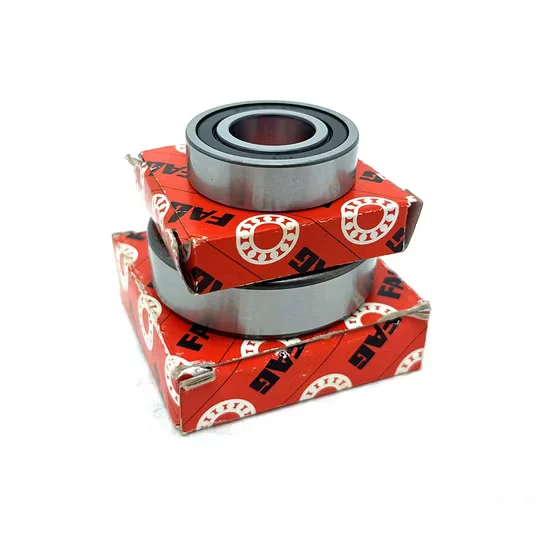
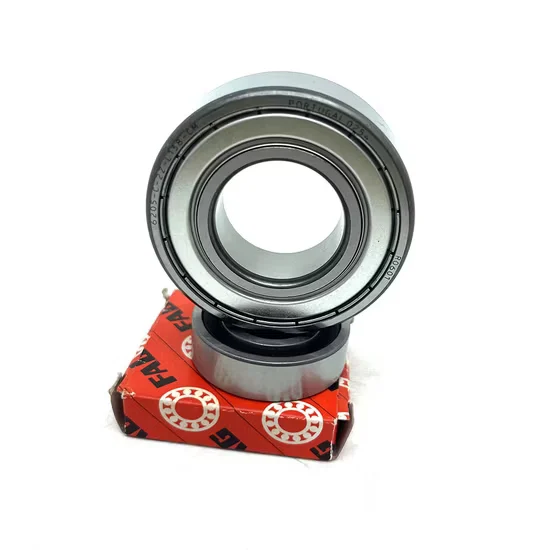
A common mistake is ignoring the suffix letters. An FAG 6205 is different from an FAG 6205-2RSR-C3. The first is an open deep groove ball bearing. The second has rubber seals and increased internal clearance. If the invoice lists the generic model but the box contains the sealed version, the customs value and classification may be disputed. In one case, a distributor tried to return a batch of mixed FAG bearings to China for credit. The invoice listed the base model numbers. The customs exam found sealed units. The discrepancy led to a hold that lasted weeks. The cost of demurrage exceeded the refund value.
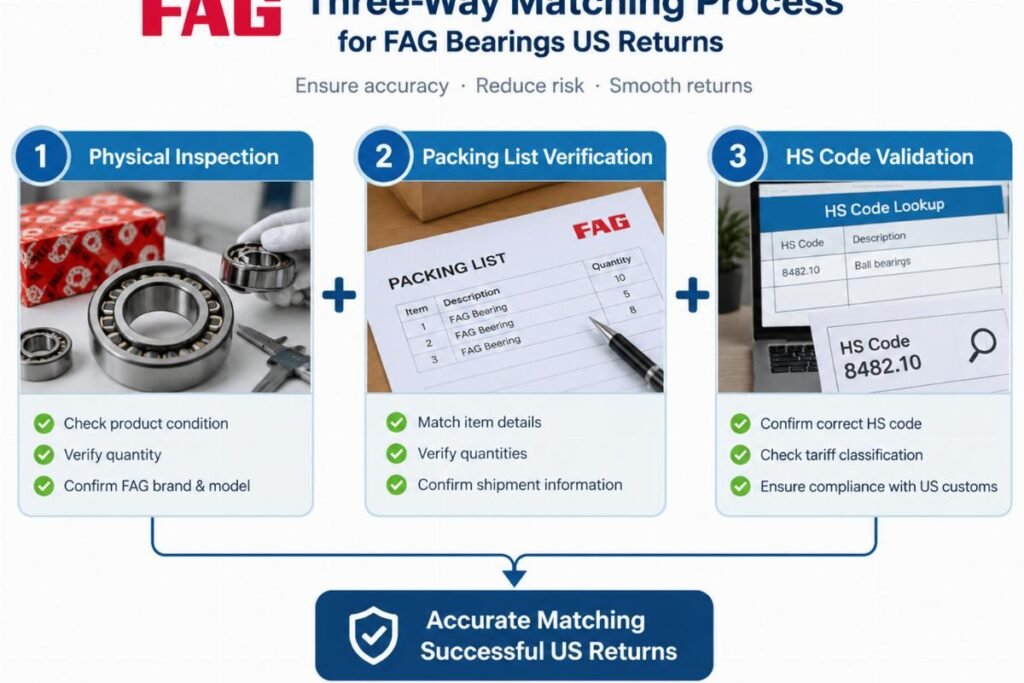
To avoid this, you must implement a three-way matching protocol. First, verify the physical part number against the manufacturer’s catalog. Second, ensure the packing list reflects the exact part number, including all suffixes. Third, confirm that the HS code on the commercial invoice matches the specific type of bearing. For example, radial ball bearings fall under 8482.10, while tapered roller bearings fall under 8482.20. Mixing these up is a red flag.
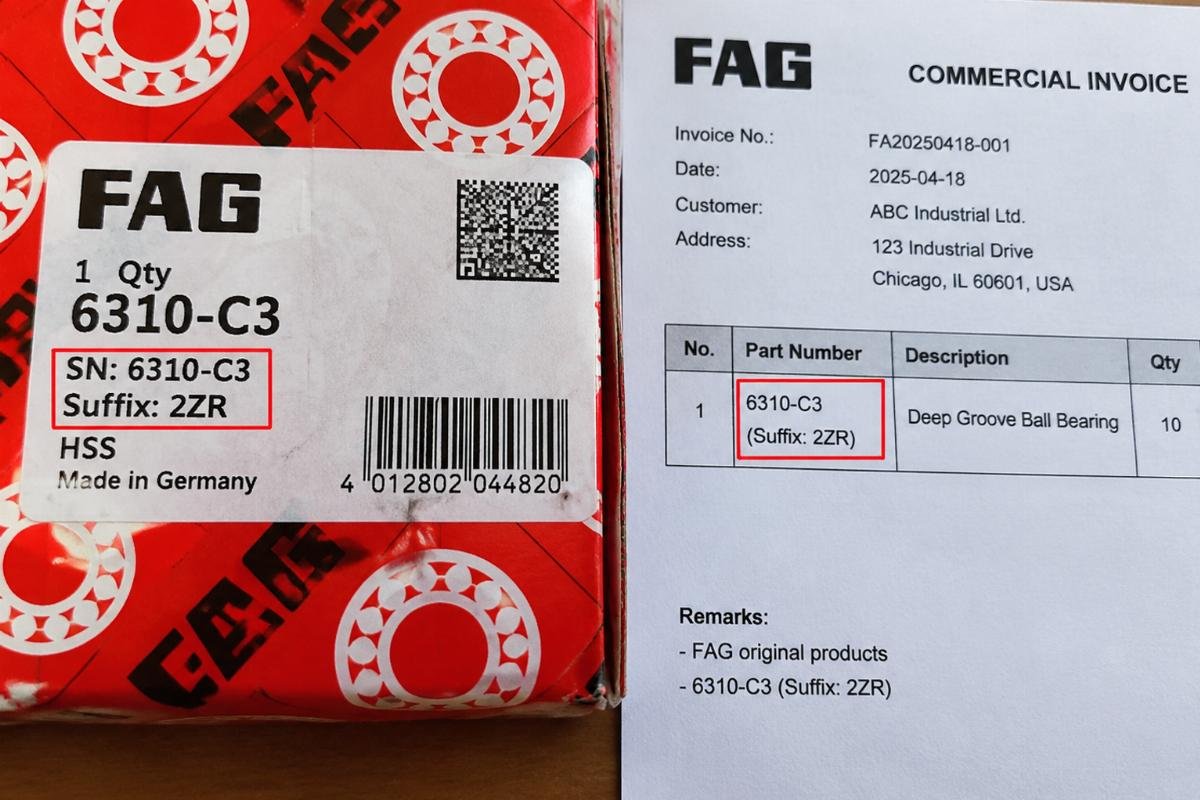
This level of detail is critical for FAG bearings US returns. It ensures that the customs broker can file the entry without ambiguity. Ambiguity leads to exams. Exams lead to delays. Delays lead to fees. By treating the documentation with the same precision as the engineering specs, you remove the primary cause of customs friction. This is not about being overly cautious. It is about understanding how the US import system works. It rewards precision and penalizes vagueness.
How to Prepare Documents for Mixed-Batch MRO Returns?
Itemize every suffix and batch on the packing list.
MRO orders are rarely uniform. A cement plant might need spherical rollers for a crusher, cylindrical rollers for a gearbox, and deep groove balls for a conveyor motor. When these items are returned, they often come back in a single consolidated pallet. This is where the risk of error spikes. If the packing list groups them under a general description, customs will likely inspect the entire pallet to verify the contents. This is time-consuming and expensive.
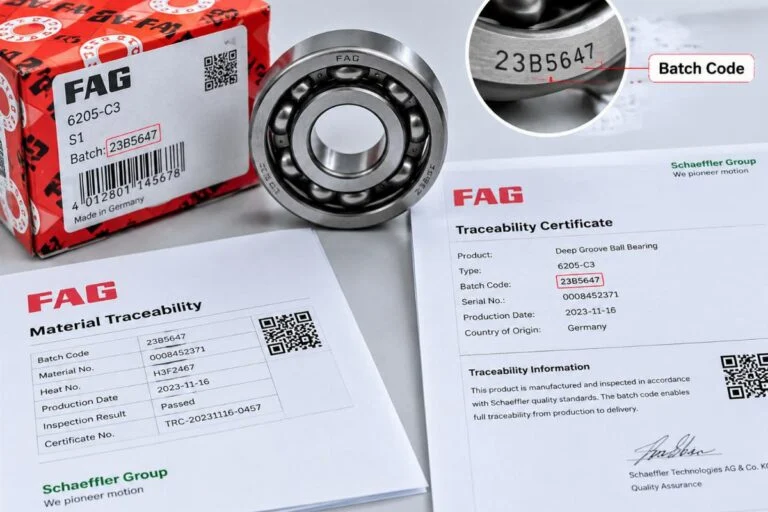
The correct approach is line-item granularity. Each unique part number must have its own line on the packing list and commercial invoice. Do not bundle different types under one quantity. For FAG bearings US returns, this means listing each FAG model separately. If you have ten different models, you should have ten lines. Each line must include the full part number, the quantity, the unit value, and the country of origin.
Consider the case of a US buyer who returned a mixed batch of FAG and SKF bearings. The packing list simply said “Assorted Industrial Bearings, 500 units.” The customs officer opened several boxes. He found FAG spherical rollers and SKF cylindrical rollers. Because the brands and types were not separated, he assumed the declaration was inaccurate. The shipment was held for a comprehensive exam. The buyer had to hire a customs broker to amend the entry, which involved submitting corrected documents and paying additional processing fees. The delay caused production issues at the end-user site because the replacement parts were stuck in customs too.
To prevent this, use a standardized template for your return documentation. Include columns for Brand, Model Number, Suffix, Quantity, Unit Price, Total Value, and HS Code. Verify that the HS code is consistent with the bearing type. For mixed batches, you may have multiple HS codes on one invoice. This is acceptable as long as each line item is clearly associated with its correct code.
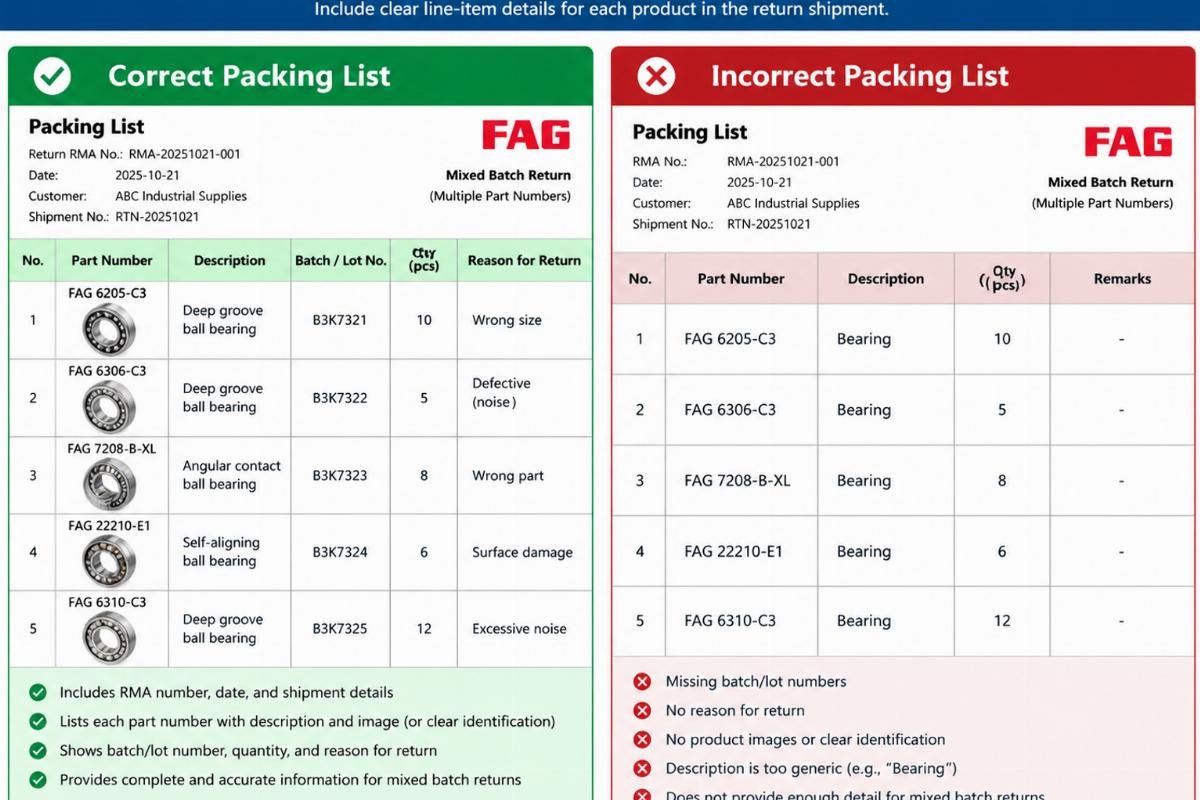
This method also helps with inventory reconciliation. When the goods arrive at the return facility, the receiving team can scan each line item against the packing list. If the documents are precise, the check-in process is fast. If they are vague, the team must manually identify each bearing, which slows down the credit issuance. For wholesalers dealing with FAG bearings US returns, speed is money. Accurate documentation accelerates the entire reverse logistics cycle.
What is the Standard RMA Process for US Distributors?
Clear communication and pre-approval prevent storage fees.
An RMA (Return Merchandise Authorization) is not just a form. It is a contract between the buyer and the supplier. For FAG bearings US returns, the RMA process must begin before the goods are shipped back. The supplier needs to know what is coming, why it is being returned, and how it should be handled. Without pre-approval, the goods may arrive at a warehouse that is not prepared to receive them, leading to rejection or indefinite storage.
The standard process involves several steps. First, the buyer submits a claim with photos and serial numbers. Second, the supplier verifies the authenticity and condition. Third, the supplier issues an RMA number. Fourth, the buyer ships the goods with the RMA number clearly marked on the outside of the package. Fifth, the supplier receives and inspects the goods. Finally, the supplier issues a credit or replacement.
A failure in any step can cause problems. For example, if the RMA number is not on the box, the warehouse may not recognize the shipment. It could be treated as unsolicited goods, which may be discarded or returned to sender at the buyer’s expense. In another case, a buyer shipped FAG bearings back without notifying the supplier of the specific defect. The supplier received them and performed a standard visual inspection. The defect was internal fatigue, which required destructive testing. Because the test was not requested in advance, the supplier refused to accept the claim, citing lack of evidence. The buyer was left with unusable stock and no refund.
To avoid these issues, establish a clear communication channel. Use email or a portal to track the RMA status. Ensure that the RMA number is visible on all documents and packaging. Specify the reason for return in the shipping notes. This helps the receiving team prioritize the inspection. For urgent MRO cases, such as a defective spherical roller in a running plant, request expedited handling in the RMA request. Some suppliers offer fast-track RMAs for critical failures, but this must be agreed upon upfront.
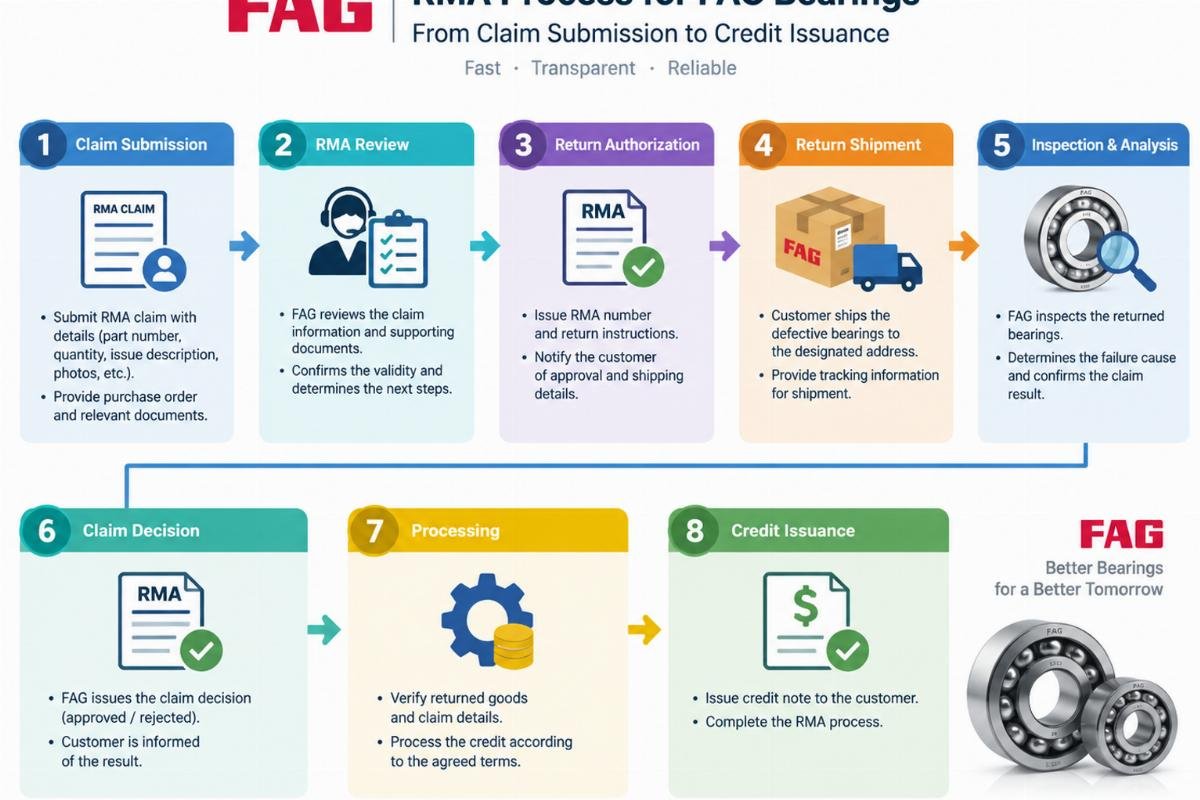
By following a structured RMA process, you reduce the risk of disputes. You ensure that both parties are aligned on the expectations. For FAG bearings US returns, this alignment is crucial. It transforms a potentially contentious transaction into a routine administrative task. It protects the relationship between the distributor and the supplier, ensuring future cooperation.
How to Avoid Hidden Costs in Bearing Return Logistics?
Accurate HS codes and proper palletization.
Logistics costs are not just about freight rates. They include duties, taxes, handling fees, and storage charges. For FAG bearings US returns, hidden costs often arise from improper classification and poor packaging. If the HS code is wrong, you may pay the wrong duty rate. If the packaging is weak, the bearings may be damaged in transit, leading to a total loss.
HS code verification is essential. Bearings are classified under HTS 8482. However, the subheadings vary by type. Ball bearings are 8482.10. Roller bearings are 8482.20 to 8482.50. Thrust bearings are 8482.80. Using a generic code like 8482.90 (parts) for complete bearings is incorrect and can trigger audits. Always use the most specific code available. If you are unsure, consult a customs broker or refer to the official HTS database.
Packaging is equally important. FAG bearings are precision items. They must be protected from moisture, shock, and contamination. Use original packaging whenever possible. If the original boxes are damaged, repack them in sturdy cartons with adequate cushioning. Seal the packages securely to prevent tampering. Label the packages with “Fragile” and “Keep Dry” stickers. For large bearings, use wooden crates or pallets with secure strapping. Ensure that the weight distribution is balanced to prevent tipping during handling.
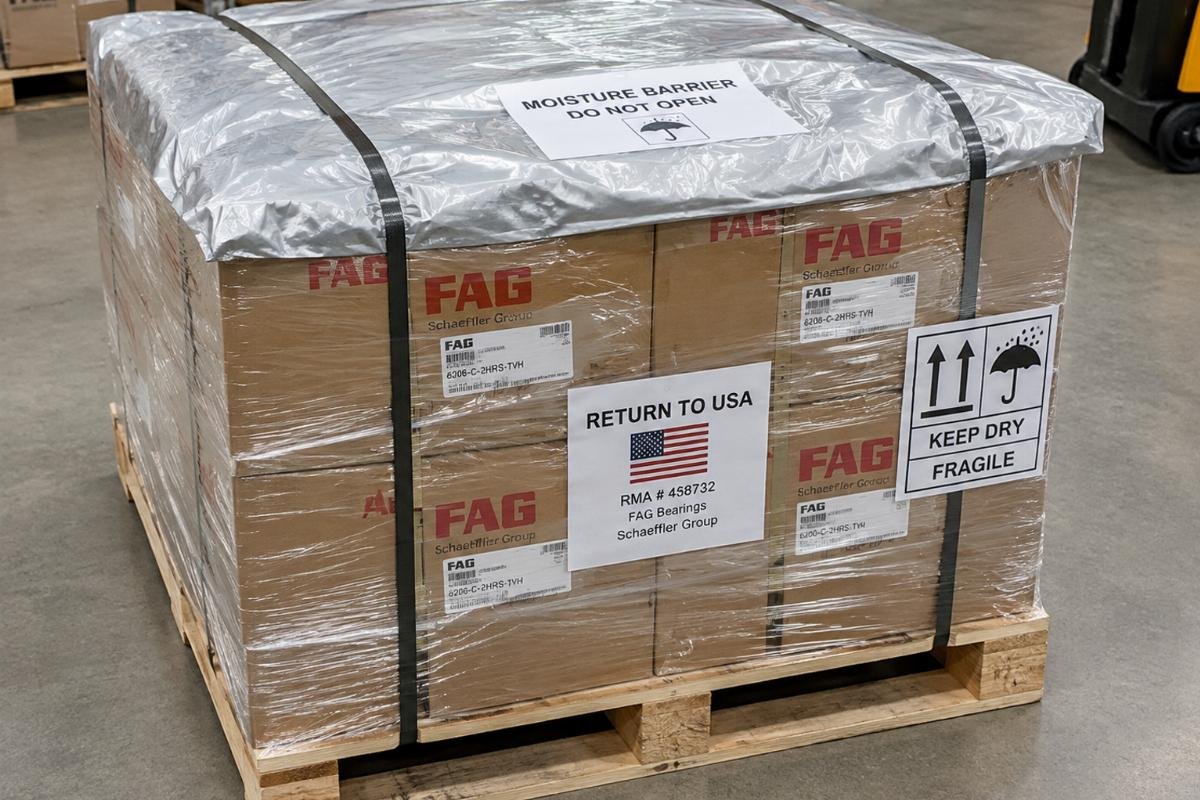
Improper palletization can lead to damage claims being rejected. If the carrier sees that the goods were not secured properly, they may deny liability for any damage. This leaves the buyer with the loss. By investing in proper packaging, you protect the value of the goods. You also facilitate smoother handling at ports and warehouses. Forklift operators can move well-palletized goods quickly and safely. Loose or poorly stacked boxes are prone to falling, which causes delays and injuries.
For mixed batches, label each box clearly with its contents. This helps the receiver sort the goods efficiently. It also reduces the time spent on inspection. Time is money in logistics. Every minute saved in handling is a cost avoided. For FAG bearings US returns, efficient logistics mean faster credits and happier customers. It is a small effort with a significant impact on the bottom line.
Conclusion
Precision in documentation prevents financial leakage in reverse logistics.
Returning FAG bearings to the US or from the US is not merely a transportation task. It is a regulatory and administrative challenge. Success depends on the alignment of physical goods, detailed packing lists, and accurate HS codes. Mixed-batch MRO orders require extra attention to detail to avoid customs traps. By implementing strict three-way matching and clear RMA protocols, distributors can minimize storage fees and accelerate refunds. The goal is not just to move goods, but to move information accurately. This ensures that FAG bearings US returns are handled efficiently, preserving value and maintaining supply chain reliability.