Price wins the quote, but documentation wins the contract.
Successful vendor setup for FAG supply in the US depends entirely on flawless customs compliance and complete traceability, not just competitive unit pricing. Without certified Mill Test Certificates and clear Country of Origin declarations, even genuine inventory faces indefinite detention at ports like Los Angeles or Long Beach.
I still remember the silence on the phone line when a client in Chicago realized their production line would stay idle. We had shipped a container of FAG tapered roller bearings from Ningbo, priced aggressively to beat local distributors. The goods arrived in California, but Customs and Border Protection flagged the shipment. The issue was not the product quality or the brand authenticity. It was a missing material certificate for one specific batch code. The cargo sat in a bonded warehouse for weeks while we scrambled to retrieve digital records from the manufacturer’s archive. That delay cost more in demurrage and lost goodwill than the entire margin of the order. Since then, I have treated paperwork with the same rigor as physical inspection. In the world of industrial imports, the document is the product until it clears customs.
For US regional distributors and MRO buyers, the search for a reliable FAG supplier setup USA often begins with price comparisons. However, the real bottleneck is rarely the cost of goods. It is the ability to prove provenance. When you source from overseas, you are not just buying steel and precision engineering; you are buying a chain of custody that must survive scrutiny by US authorities and your own quality auditors.
What documents are mandatory for FAG customs clearance in the US?
Customs clearance fails when the paper trail does not match the physical cargo exactly.
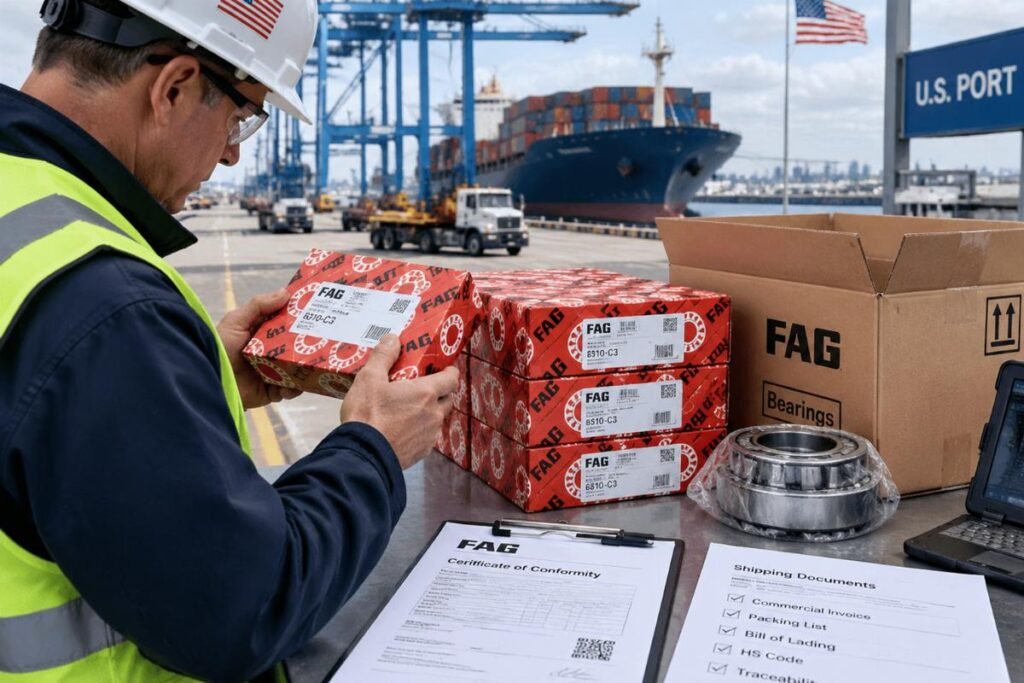
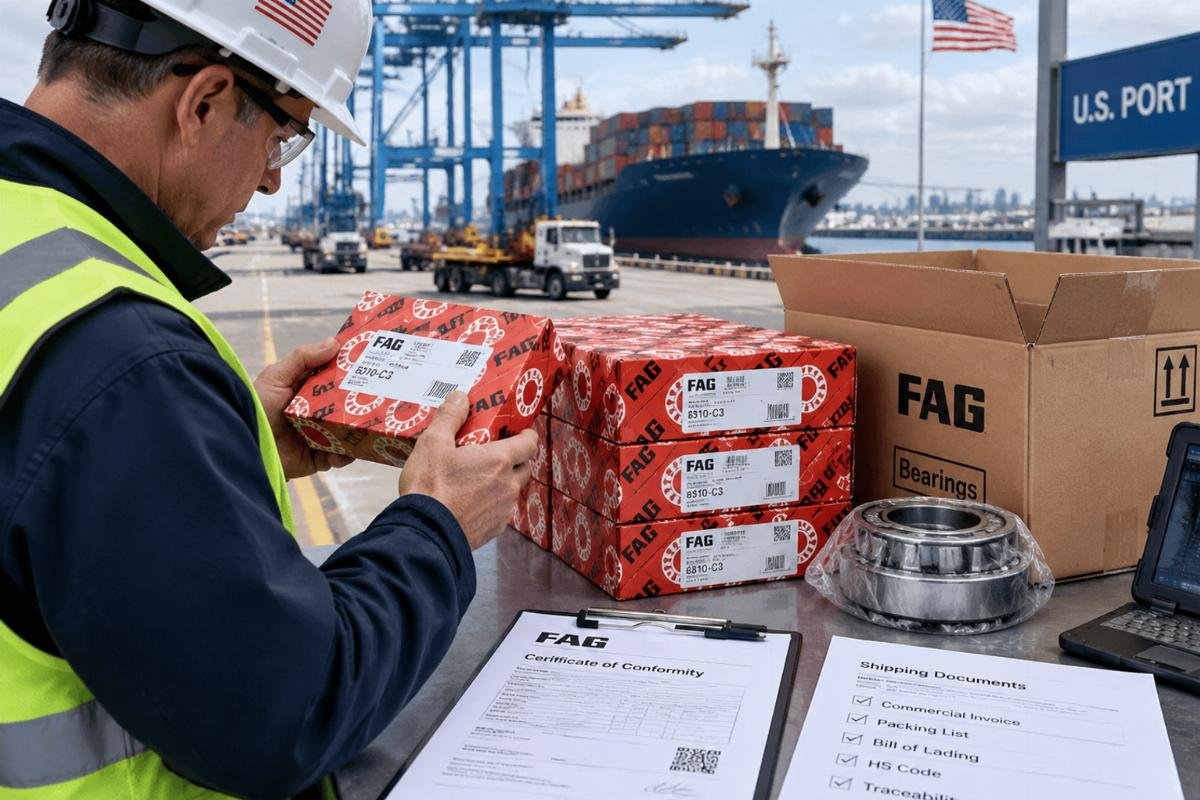
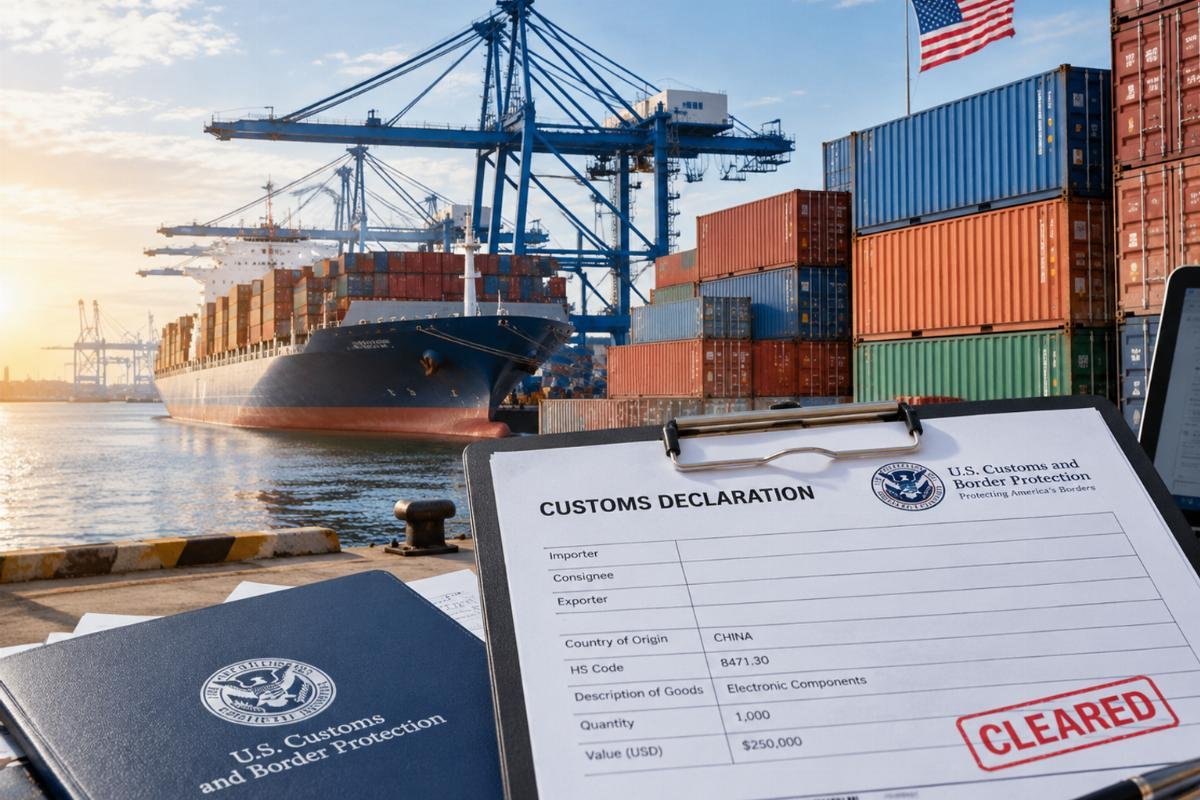
The primary hurdle for any FAG supplier setup USA is navigating the documentation requirements of US Customs and Border Protection. Many buyers assume that a commercial invoice and packing list are sufficient. They are not. For branded industrial components like FAG bearings, CBP officers look for specific proof of origin and material composition.
The two most critical documents are the Certificate of Origin (CO) and the Mill Test Certificate (MTC). The CO confirms where the bearing was manufactured. For FAG products, this is often Germany, but production also occurs in other global facilities. The MTC provides the chemical and physical properties of the steel used. If these documents are missing, illegible, or inconsistent with the invoice, the shipment is held.
I once handled a mixed-container consolidation for a client in Texas. We combined FAG bearings with other brands to optimize freight costs. The invoice listed all items clearly, but the MTC for the FAG batch was attached to the wrong batch number. To the customs officer, this looked like an attempt to obscure the origin. The container was pulled for intensive examination. The delay lasted nearly three weeks. The lesson was clear: every document must map one-to-one with the physical units.
| Document Type | Purpose | Risk if Missing/Incorrect |
|---|---|---|
| Commercial Invoice | Declares value and description | Valuation dispute, duty recalculation |
| Packing List | Details quantity and weight | Physical examination delays |
| Certificate of Origin | Proves manufacturing country | Potential anti-dumping duties, seizure |
| Mill Test Certificate | Verifies material composition | Quality audit failure, customs hold |
When establishing a FAG supplier setup USA, ensure your partner can provide these documents before the vessel departs. Do not wait for arrival. Request digital copies during the production phase. Verify that the batch numbers on the MTC match the labels on the boxes. This proactive step eliminates the majority of port delays.
How to verify FAG authenticity during vendor setup?
Brand labels are easy to forge; mill test reports are not.
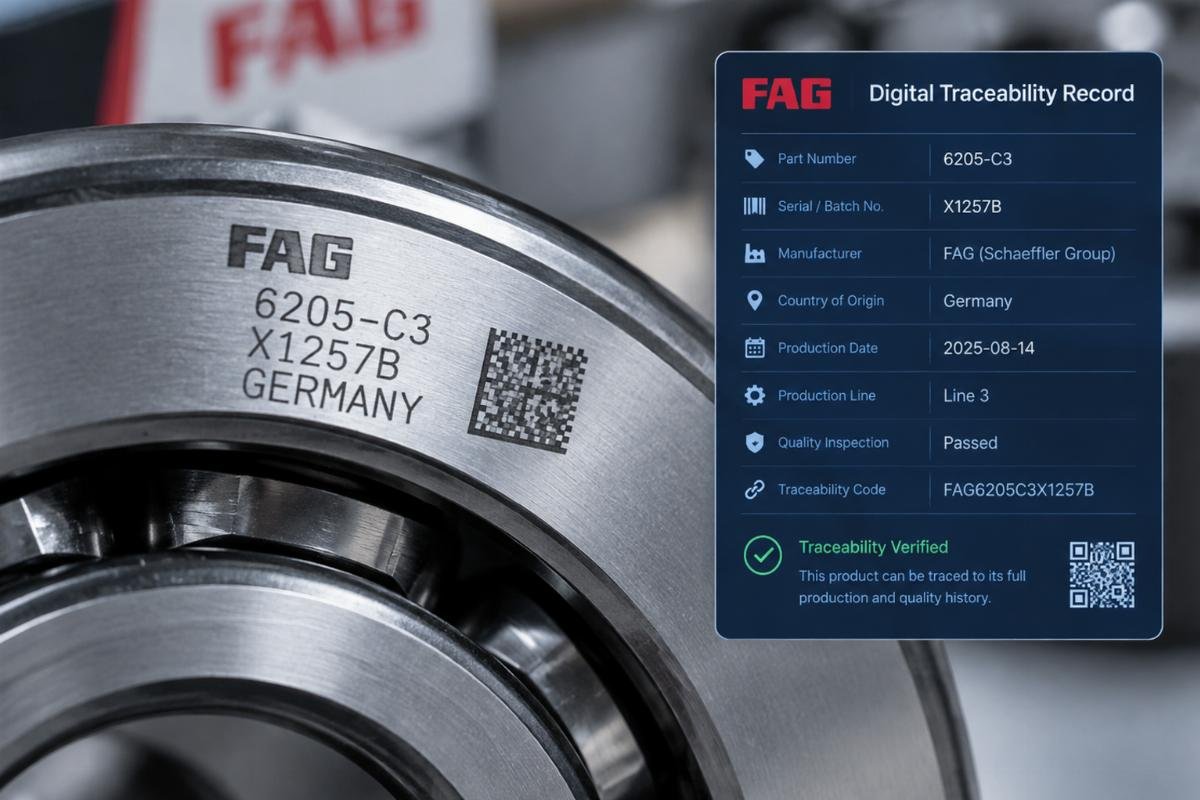
A common misconception among new buyers is that holographic stickers or high-quality packaging guarantee authenticity. Counterfeiters have become sophisticated in replicating visual branding. The true proof of a genuine FAG bearing lies in its traceability documents and the consistency of its technical data.
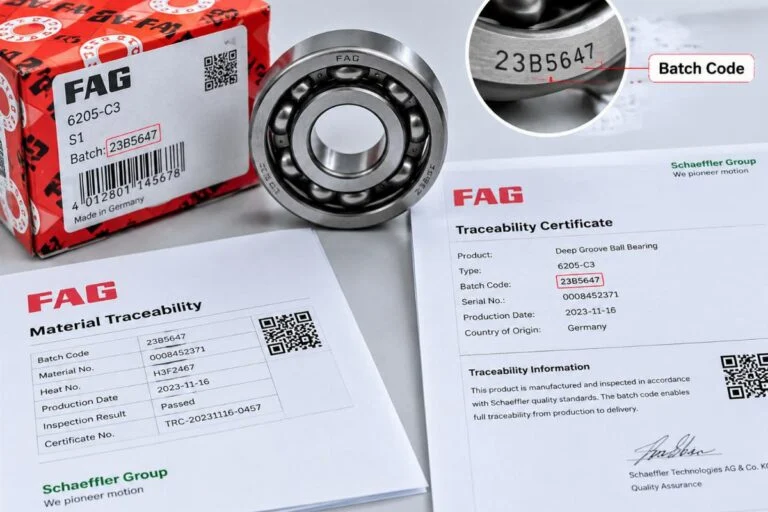
During vendor qualification, ask for a sample traceability package. A reputable FAG supplier setup USA will provide a full set of documents linking the specific bearing serial number to the factory production record. This includes the heat number of the steel, the forging date, and the final assembly location. If a supplier hesitates to provide this level of detail, it is a red flag.
I recall auditing a potential supplier who claimed to have direct access to FAG factory stock. Their prices were significantly below market rate. When I requested the MTC for a recent shipment, they provided a generic template without specific heat numbers. Upon cross-referencing with the manufacturer’s public database, the codes did not exist. The bearings were likely refurbished or counterfeit units repackaged as new.
Authenticity verification also involves physical inspection parameters, though these require expertise. Check the precision grade markings. FAG bearings adhere to strict ISO standards for dimensional tolerance and running accuracy. A genuine P5 or P6 class bearing will have precise laser etching that is difficult to replicate smoothly. However, rely primarily on the paper trail. The MTC is the legal and technical backbone of the transaction.
For US distributors, maintaining a repository of these documents is essential. Clients in heavy industries like mining or wind power often require multi-year retention of traceability data for their own compliance audits. Your supplier must be able to retrieve these records years after the sale. This capability distinguishes a trading company from a strategic partner.
How to optimize MOQ and shipping for mixed-brand FAG orders?
Consolidation reduces freight costs but increases documentation complexity.
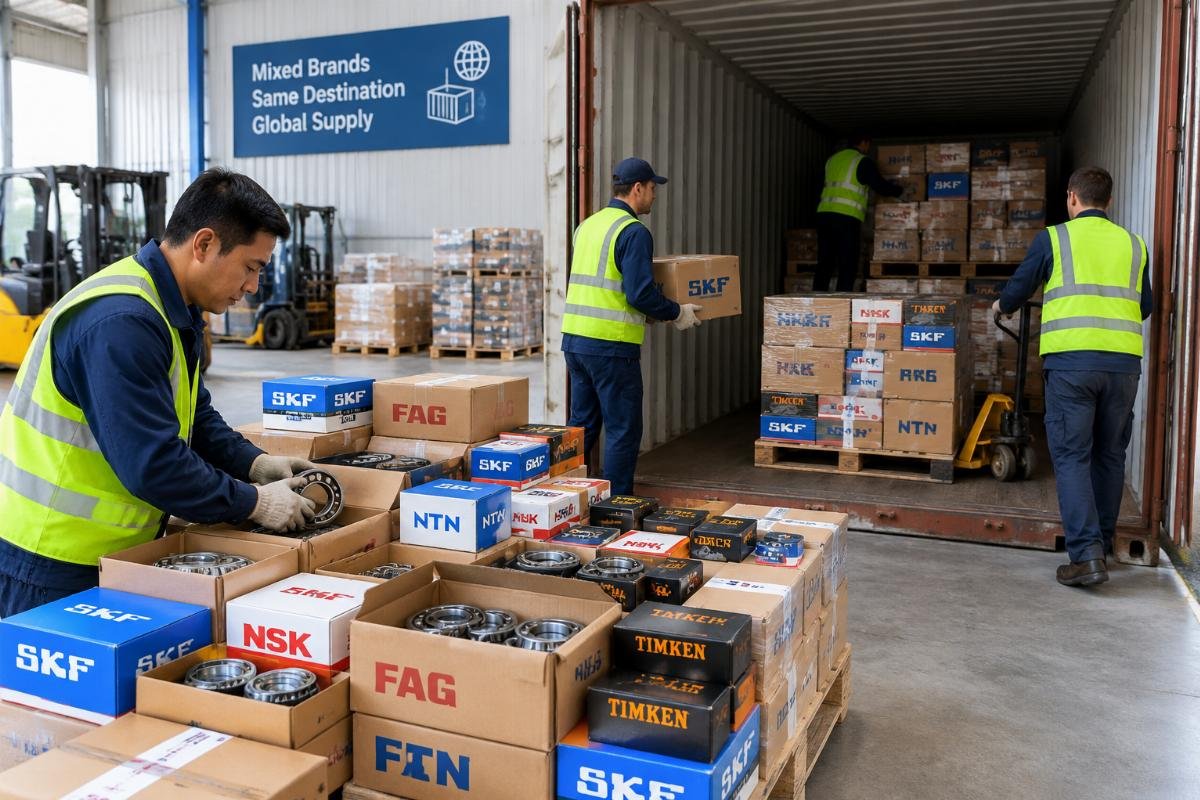
Many US buyers face a dilemma: they need small quantities of various FAG models, but ordering each SKU individually results in prohibitive air freight costs. Full container loads are too large for initial trials or niche replacements. The solution lies in mixed-batch consolidation.
By combining FAG bearings with other compatible brands or different sizes within the same category, you can fill a 20ft or 40ft container efficiently. This approach lowers the per-unit shipping cost significantly. However, it requires meticulous planning. Each brand and batch must have its own separate documentation packet within the master file.
In a recent project for a Middle East steel mill, we consolidated FAG spherical roller bearings with cylindrical roller bearings from another premium brand. The container held over thirty different SKUs. The key to success was the packing list structure. We grouped items by brand and then by batch number. Each group had its own CO and MTC referenced clearly in the master invoice.
This method allows buyers to meet minimum order quantities (MOQ) without overstocking. It also simplifies customs declarations because the total volume justifies the shipping cost, while the detailed breakdown satisfies regulatory requirements. A competent FAG supplier setup USA will manage this consolidation process, ensuring that no single brand’s documentation error jeopardizes the entire container.
| Consolidation Strategy | Benefit | Challenge |
|---|---|---|
| Single Brand FCL | Simple documentation | High MOQ, capital tie-up |
| Mixed Brand LCL/FCL | Lower freight per unit, flexible MOQ | Complex docs, higher risk of partial hold |
| Air Freight Emergency | Fastest lead time | Highest cost, limited volume |
When optimizing for mixed orders, communicate your end-use clearly. If certain FAG models are for critical safety applications, ensure they are packed separately for easier inspection if needed. This foresight prevents the entire container from being held up due to a query about one specific item.
What technical support ensures correct FAG model selection?
Cross-brand equivalence prevents operational failures before they start.
Selecting the right FAG bearing is not just about matching dimensions. It involves understanding load ratings, speed limits, and environmental conditions. Many buyers attempt to replace a discontinued model or a competitor’s brand with a FAG equivalent based solely on outer diameter and bore size. This often leads to premature failure.
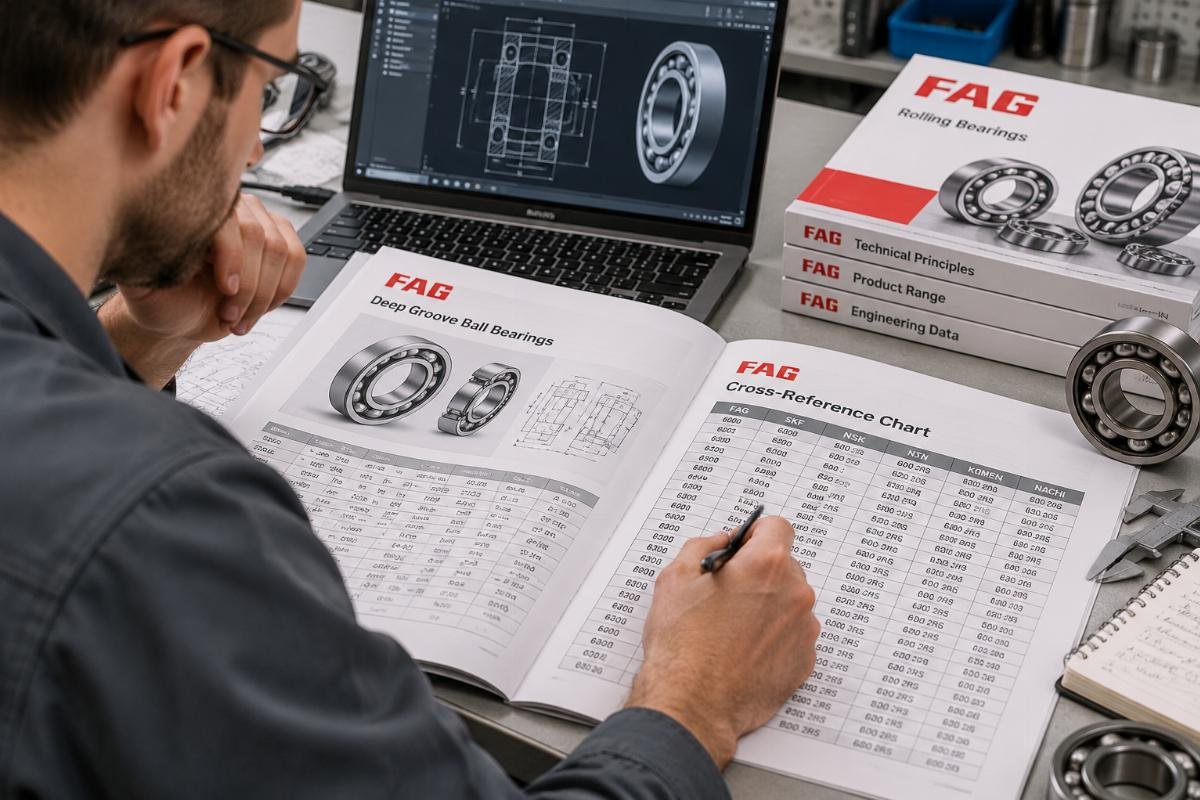
Technical support from your supplier should include cross-brand equivalent consultation. For instance, if you are replacing a SKF or NSK bearing, the FAG equivalent might have different internal clearance or cage material specifications. These differences matter in high-temperature or high-vibration environments.
I worked with an automotive aftermarket supplier who wanted to switch to FAG for their truck wheel hubs. They selected a standard deep-groove ball bearing based on size. Our technical team flagged that the original application required a sealed unit with specific grease compatibility for long-haul durability. We recommended a different FAG series with enhanced sealing technology. The client avoided a potential recall scenario.
A reliable FAG supplier setup USA provides access to engineering datasheets and application guidance. They should help you verify that the selected model meets the ISO precision grades required for your machinery. This support is invaluable during the design phase of new equipment or when troubleshooting recurring failures in existing plants.
Do not rely solely on online catalogs. Engage with suppliers who can interpret your operational data and recommend the optimal FAG solution. This collaborative approach ensures that the bearings you import are not just genuine, but also fit for purpose.
Conclusion
Compliance is the foundation of sustainable sourcing.
Establishing a robust FAG supplier setup USA requires shifting focus from price alone to comprehensive documentation and technical accuracy. Success lies in securing complete traceability, verifying authenticity through mill test certificates, and optimizing logistics through smart consolidation. By prioritizing these elements, US distributors and MRO buyers can avoid costly delays and ensure uninterrupted supply of genuine FAG bearings.