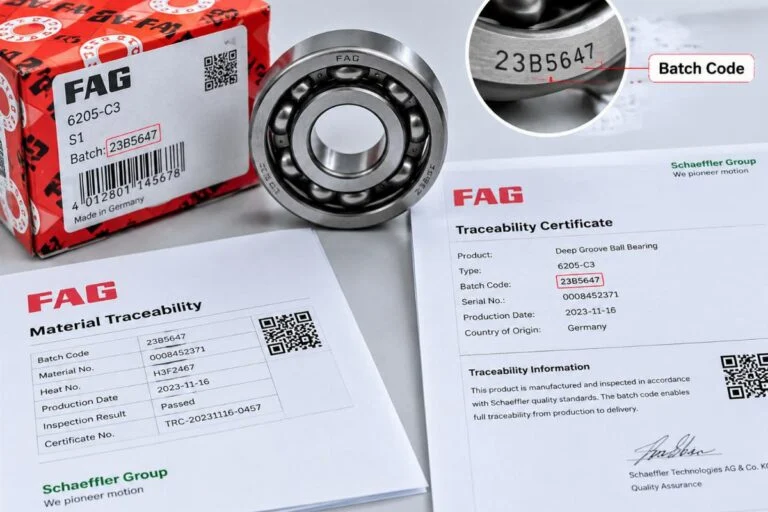
A valid Certificate of Origin is useless if the physical batch codes on the box and inner ring do not perfectly match. US Customs and Border Protection (CBP) strictly verifies US Customs FAG origin marks via laser etching depth, hologram optical features, and consistent batch codes; importers must ensure packaging consistency and complete traceability documentation to avoid seizure.
I still remember the cold sweat that ran down my back when a client in Jakarta opened a container of spherical roller bearings. The models were correct, the grease was fresh, but the font edges on the outer carton looked slightly blurred under the warehouse lights. He sent an email asking if these were high-quality replicas, threatening to cancel our entire contract. That incident taught me that knowing bearing parameters is not enough. You must understand how customs officers inspect the physical packaging. In the years since, I have learned to identify US Customs FAG origin marks by touch and sight, focusing on the subtle details of laser etching and tape texture that separate genuine stock from counterfeit goods.

Understanding these inspection criteria is critical for any distributor importing into the United States. Below, we break down exactly what CBP looks for and how you can secure your supply chain.
What specific origin marks does CBP look for on FAG boxes?
CBP focuses on laser-etched country of origin, QR or hologram tags, and consistent batch inkjet codes rather than simple printed text. Many buyers assume that a printed “Made in Germany” label is sufficient, but customs inspectors use advanced tools to verify the permanence and quality of these marks.
The primary marker is the laser etching on the box itself. Genuine FAG packaging features deep, clean laser etching that cannot be wiped off with solvents. Counterfeit boxes often use surface-level printing that fades or smudges. Inspectors check for the consistency of this etching across all units in a shipment. If one box has a sharp, deep mark and another has a faint, uneven impression, it triggers a secondary inspection.
Additionally, the batch code is crucial. This code must appear on the outer box, the inner plastic wrap, and the bearing ring itself. Any discrepancy between these three locations is a red flag. For example, if the box says Batch A but the inner ring says Batch B, CBP will likely detain the shipment for verification. This level of detail is why US Customs FAG origin marks are more than just regulatory compliance; they are a core part of brand authentication.
Another key element is the hologram tag. Modern FAG boxes include security holograms that change color and pattern when tilted. CBP officers are trained to look for these optical features. A flat, static sticker is an immediate sign of potential fraud. The hologram must peel off cleanly without leaving residue, a feature that is difficult for counterfeiters to replicate accurately.

How does CBP verify the authenticity of these marks?
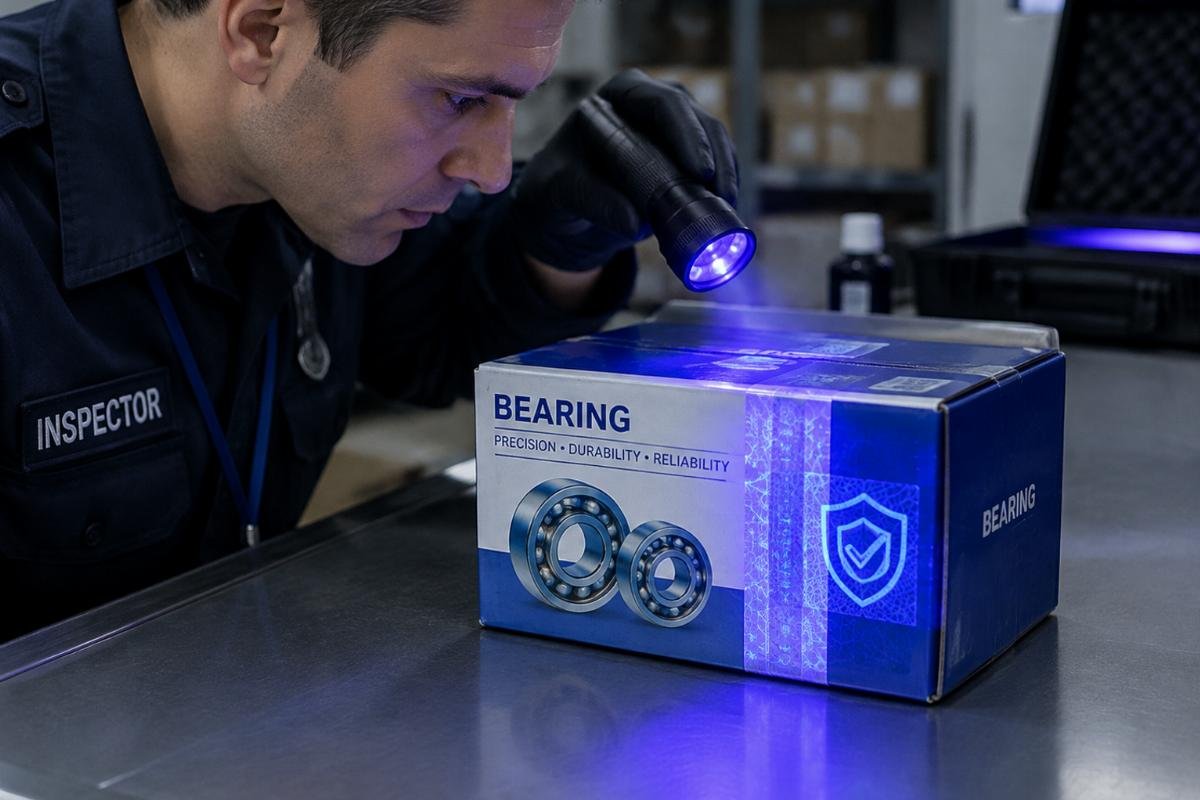
Inspectors use UV lights and tactile checks to verify hologram peel-off features and tape textures. It is not enough for the marks to look correct to the naked eye; they must pass physical and optical tests conducted at the port of entry.
One common method is the UV light test. Genuine FAG packaging often includes invisible security fibers or inks that glow under ultraviolet light. Counterfeit boxes rarely invest in this level of security, so they remain dark under UV inspection. This simple test can quickly filter out low-quality fakes before a more detailed examination is needed.
Tactile checks are equally important. Inspectors run their fingers over the laser-etched areas to feel the depth. Genuine etching has a distinct texture that can be felt, whereas printed text is smooth. They also check the sealing tape. Original FAG boxes use specific tape with a unique texture and adhesive pattern. If the tape feels too thin, too thick, or has a different gloss level, it raises suspicion.
In one case, a wholesaler in Texas faced a delay because the tape on his shipment had a slightly different sheen than usual. Although the bearings were genuine, the packaging had been resealed during transit. CBP held the cargo for several days while they verified the contents. This highlights the importance of maintaining original packaging integrity throughout the shipping process. Understanding US Customs FAG origin marks includes knowing how these physical traits are tested.
What documents must match the physical origin marks?
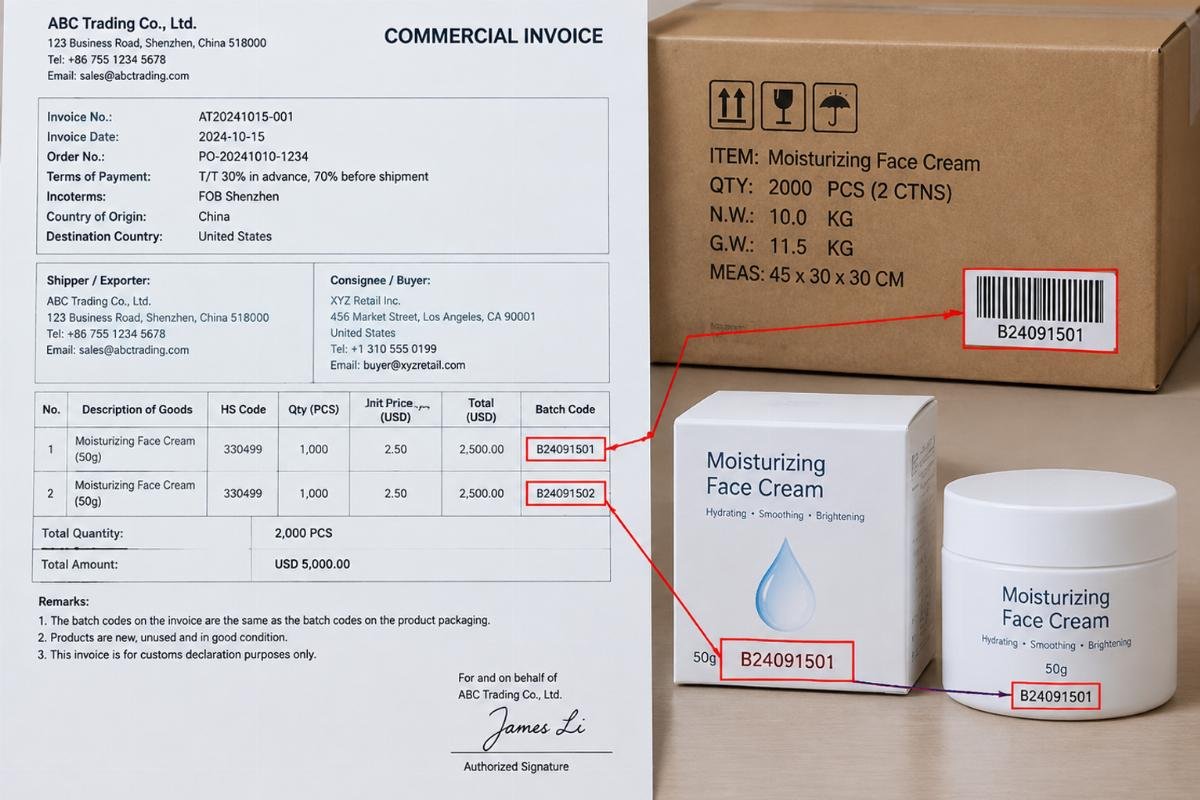
Commercial invoices and Certificates of Origin must exactly mirror the box batch codes and origin country. A common mistake is treating documentation as a separate administrative task. In reality, CBP cross-references every document against the physical goods.
The Certificate of Origin must state the exact country of manufacture listed on the box. If the box says “Germany” but the certificate says “European Union,” it may cause confusion or delays. Precision is key. The batch numbers on the invoice must match those on the boxes. If you are shipping mixed batches, each batch must be clearly listed and corresponding to the specific cartons.
Missing or mismatched documents are a leading cause of customs holds. An MRO buyer once ordered emergency spares for a mining operation. The shipment arrived on time, but the batch codes on the invoice did not match the boxes due to a clerical error. The cargo was held for weeks while the supplier corrected the paperwork. The cost of downtime far exceeded the value of the bearings.
To avoid this, implement a pre-shipment audit. Check that every document aligns with the physical US Customs FAG origin marks. This includes verifying the spelling of the manufacturer’s name, the address, and the product description. Even minor typos can trigger manual reviews, slowing down the clearance process.
How can importers avoid customs delays and seizures?
Implement strict pre-shipment packaging audits and secure full traceability documentation. Prevention is far cheaper than dealing with a seized shipment. By adopting a rigorous quality control process, you can minimize the risk of customs issues.
Start with a visual inspection of the packaging before it leaves the warehouse. Check for clear laser etching, intact holograms, and consistent batch codes. Use a checklist that mirrors CBP’s inspection criteria. If any box shows signs of damage or inconsistent marking, replace it immediately. Do not ship mixed-quality packaging in the same container.
Next, ensure full traceability. Keep records of where each batch was produced and how it was packaged. This documentation can be presented to CBP if questions arise. Having a clear paper trail proves that you are a diligent importer who values authenticity.
Finally, consider working with suppliers who offer consolidation services. Mixing brands and sizes in one shipment can complicate inspections if the packaging standards vary. A professional supplier can ensure that all items meet the required US Customs FAG origin marks standards before consolidation. This reduces the likelihood of one problematic item holding up the entire container.
For example, a regional distributor in Latin America reduced his customs delays by switching to a supplier who performed pre-shipment audits. The supplier checked every box for proper marking and documentation alignment. As a result, the distributor experienced smoother clearance and fewer unexpected costs. This approach not only saves time but also builds trust with end customers who receive genuine, properly documented products.

Conclusion
Strict adherence to packaging and documentation standards is essential for smooth customs clearance. By understanding how CBP verifies US Customs FAG origin marks, importers can avoid costly delays and seizures. Focus on laser etching quality, hologram authenticity, and document consistency to protect your supply chain.