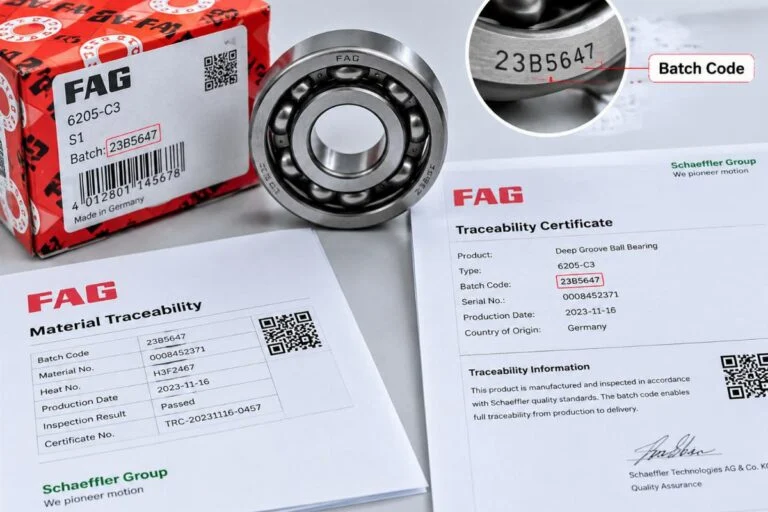
A stamped piece of paper is not proof of authenticity.
A valid Certificate of Conformance for FAG orders must strictly match the batch numbers on the physical packaging and the customs declaration data; rigorous document verification is the only reliable method to prevent production halts and customs seizures caused by counterfeit certificates.
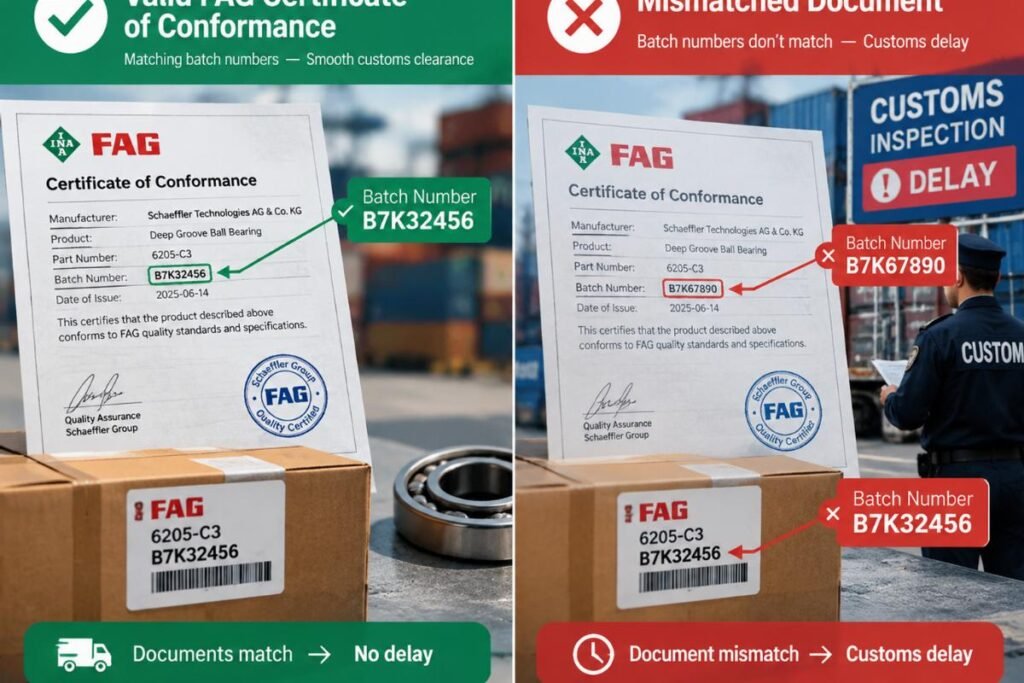
I still remember the silence in the warehouse office in Qingdao when the customs broker called. It was not a good silence. We had just received a container of bearings, and the clearance process had stopped dead. The issue was not the goods themselves, but the paperwork. The supplier had provided a Certificate of Conformance that looked perfect at a glance—official logos, clear fonts, and a professional stamp. However, the batch number on the certificate did not match the laser-etched code on the bearing boxes. To customs officials, this discrepancy signaled potential fraud or misdeclaration. The container was held for inspection, delaying the shipment by days and forcing a critical production line to wait for parts that were physically sitting at the port. That incident shifted my entire approach to procurement. I learned that in the global bearing trade, the document chain is as vital as the steel itself.
This experience is not unique. Many buyers focus exclusively on unit price or lead time, overlooking the administrative backbone that keeps goods moving across borders. For distributors and OEMs sourcing from a FAG Certificates of Conformance: Wholesale Supplier for Bulk Orders, understanding how to verify these documents is essential for securing supply chain stability.
What exactly must a valid FAG Certificate of Conformance include?
It must contain exact batch numbers, part numbers, and manufacturer details that perfectly match the physical goods.
A Certificate of Conformance (CoC) is often mistaken for a generic quality assurance letter. In reality, for premium brands like FAG, it is a traceability document linking the specific item to its production history. A valid CoC is not a template filled in later; it is generated from the manufacturer’s quality management system at the time of production.
Key elements that must be present and verifiable include:
- Exact Batch/Lot Number: This is the most critical field. It must correspond precisely to the code laser-etched or printed on the bearing packaging and the bearing itself. Even a single digit mismatch invalidates the document for traceability purposes.
- Part Number and Description: The description must match the order specification exactly, including any suffixes that denote internal clearance, cage material, or precision class.
- Manufacturer Details: The document must clearly state the producing facility. For FAG bearings, this typically refers to specific plants within the Schaeffler Group network.
- Date of Manufacture: This helps determine the shelf life and storage conditions of the bearing.
- Authorized Signature or Stamp: While digital signatures are becoming common, the document must bear an official validation mark from the quality department.
Buyers often receive formatted PDFs that look authentic but lack dynamic data linkage. A genuine CoC is part of a broader documentation suite. When sourcing from a FAG Certificates of Conformance: Wholesale Supplier for Bulk Orders, you should expect these documents to be original or certified copies, not scanned images of scanned images, which can obscure details and facilitate forgery.

How to cross-verify the CoC against packaging and customs documents?
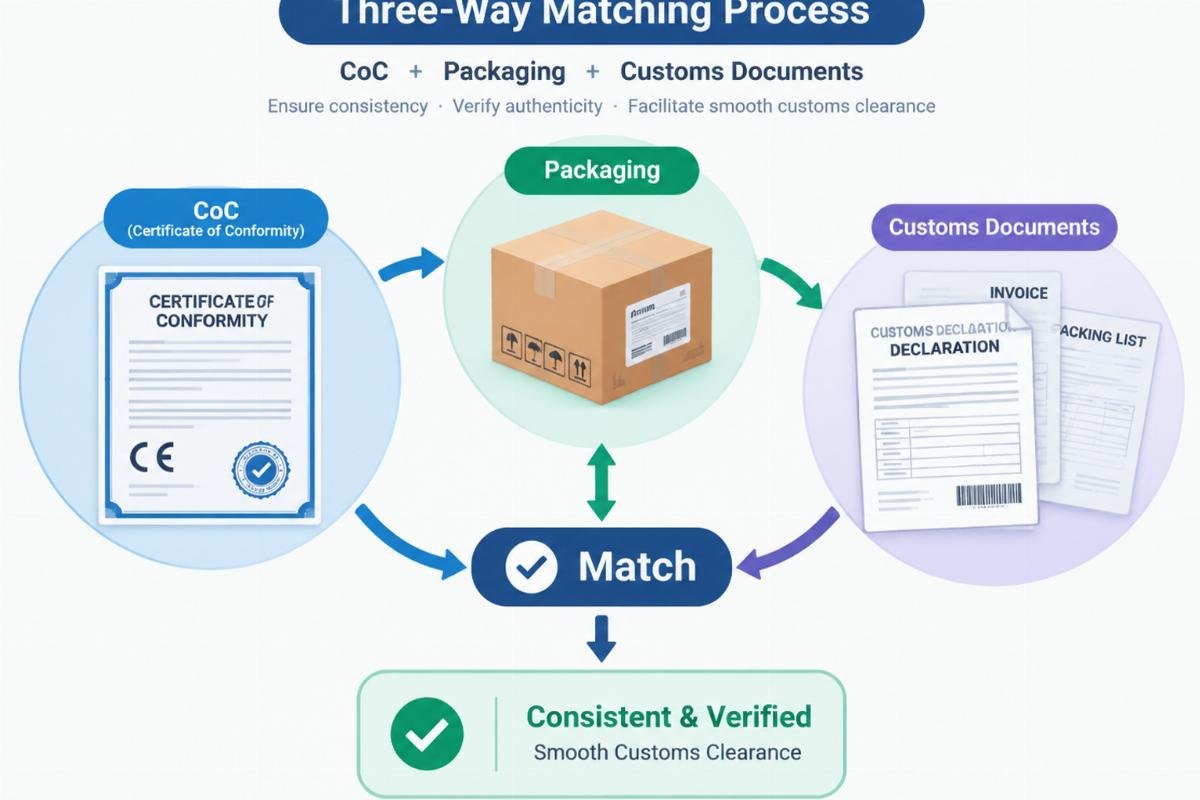
Implement a strict three-way matching rule to eliminate discrepancies before shipment.
Verification is not a passive activity. It requires active cross-referencing of three distinct data sources: the Certificate of Conformance, the physical packaging, and the customs declaration or bill of lading. This process, often called “three-way matching,” is the industry standard for high-value industrial components.
The verification process involves:
- Physical Inspection: Check the batch number on the bearing box. For bulk orders, spot-check multiple boxes to ensure consistency. The laser marking should be clear and permanent.
- Document Comparison: Compare the batch number from the box with the CoC. They must be identical. Then, check the part number and quantity.
- Customs Data Alignment: Ensure the information on the CoC matches the commercial invoice and packing list submitted for customs clearance. Discrepancies here are the primary cause of port delays.
A common error occurs when suppliers mix batches from different production runs to fulfill a large order but provide a CoC for only one batch. This creates a mismatch for the other portions of the shipment. A reliable FAG Certificates of Conformance: Wholesale Supplier for Bulk Orders will provide separate CoCs for each distinct batch or a consolidated document that explicitly lists all batch numbers included in the shipment.
| Verification Point | Valid Document Trait | Risk Indicator |
|---|---|---|
| Batch Number | Matches packaging laser mark exactly | Mismatch or missing number |
| Part Number | Includes all technical suffixes | Generic description only |
| Origin | Specific manufacturing plant listed | Vague or missing origin |
| Format | Clear, high-resolution, original file | Blurry scan or edited PDF |
What are the risks of accepting mismatched or forged certificates?
It leads to severe customs seizures and catastrophic on-site equipment failures.
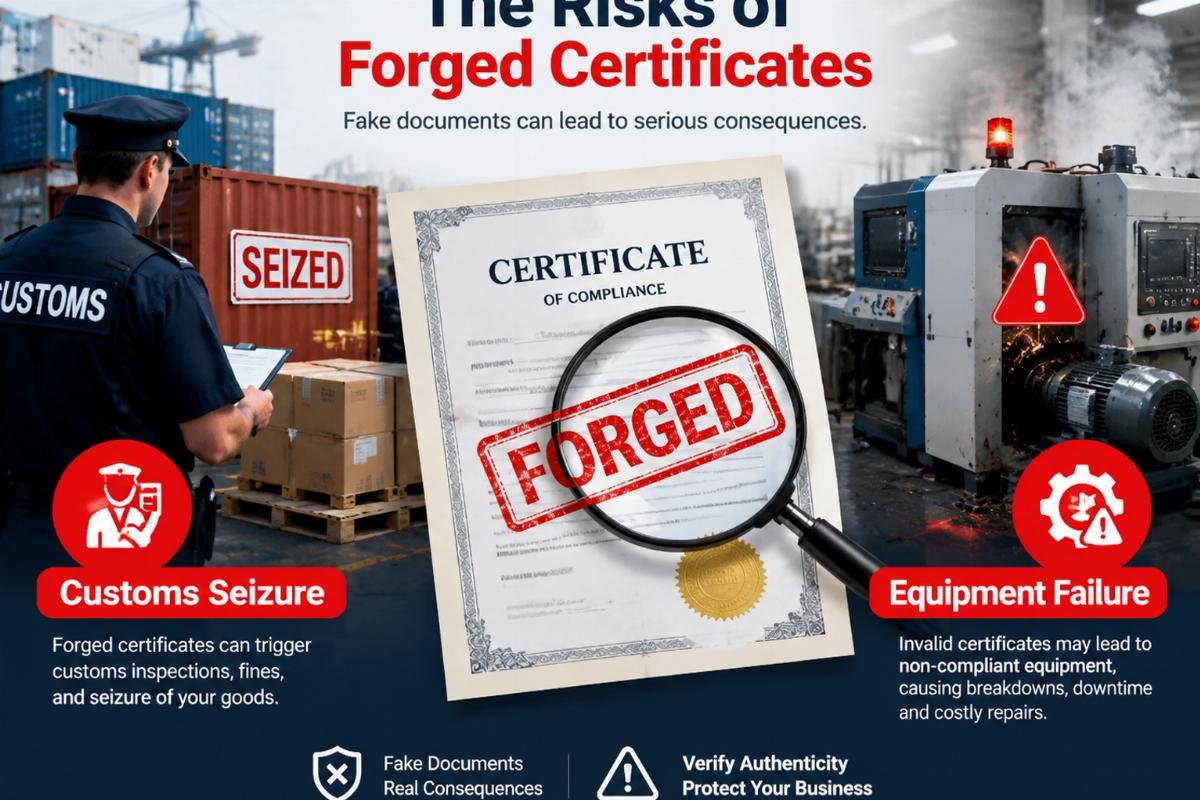
The temptation to overlook minor document errors is high when facing tight deadlines. However, the consequences of accepting mismatched or forged certificates are disproportionately severe. The risk extends beyond administrative inconvenience to tangible financial and operational damage.
First, customs authorities in many regions have tightened inspections for industrial goods due to concerns over counterfeit products and sanctions compliance. A mismatched CoC raises red flags, leading to physical inspections, sampling, and potential seizure of the entire container. The resulting demurrage charges and delay penalties can far exceed the savings from a lower purchase price.
Second, and more critically, a fake certificate often accompanies counterfeit or substandard bearings. Without a valid traceability chain, there is no guarantee that the bearing meets the specified load ratings or precision classes. In heavy industries such as mining or wind power, a bearing failure can cause unplanned downtime lasting days or weeks. The cost of replacing a failed bearing is minor compared to the lost production revenue and potential damage to adjacent machinery.
A European wind farm operator once reported that a batch of bearings with questionable documentation failed prematurely, leading to a turbine shutdown. The investigation revealed that the CoCs were fabricated, and the bearings were not genuine FAG products. The total cost of the incident, including crane rental and lost energy generation, was substantial. This underscores why partnering with a trusted FAG Certificates of Conformance: Wholesale Supplier for Bulk Orders is a risk mitigation strategy, not just a purchasing decision.
How to request and audit traceability documents from suppliers?
Demand original mill certificates and customs declarations, not just formatted PDFs.
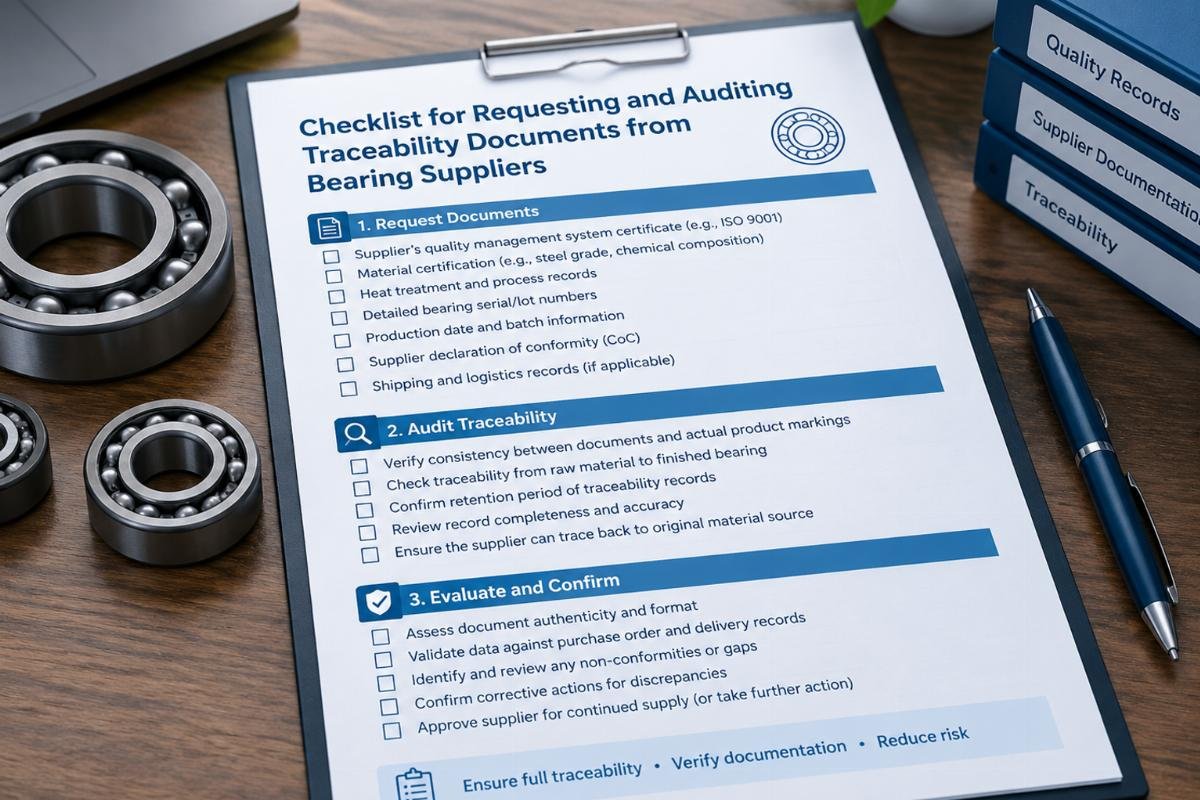
Securing genuine documentation requires proactive communication during the quotation and ordering phases. Buyers should not assume that CoCs will be provided automatically or correctly. Instead, they must specify their documentation requirements as part of the purchase order terms.
When auditing a supplier, ask for the following:
- Original Mill Certificates: For certain applications, especially in regulated industries, a simple CoC may not suffice. Request the original mill certificate that details the material composition and heat treatment records.
- Customs Declaration Copies: Ask for samples of previous customs declarations for similar shipments to verify that the supplier consistently declares goods accurately.
- Traceability Files: Some suppliers offer enhanced traceability packages that include inspection reports and loading photos. These additional layers of verification provide greater confidence in the product’s authenticity.
Be wary of suppliers who hesitate to provide these documents or who offer vague excuses about “proprietary information.” Genuine manufacturers and authorized distributors understand the importance of transparency. A professional FAG Certificates of Conformance: Wholesale Supplier for Bulk Orders will have established processes for generating and verifying these documents efficiently.
Furthermore, verify the supplier’s ability to handle mixed-brand or mixed-size orders without compromising documentation integrity. Complex orders require meticulous attention to detail to ensure that each item is accompanied by the correct certificate. This level of service distinguishes reputable suppliers from those who merely move boxes.
Conclusion
Document integrity is product integrity.
Verifying Certificates of Conformance is not bureaucratic busywork; it is a critical defense against counterfeit goods and supply chain disruptions. By insisting on exact batch number matches and rigorous three-way verification, buyers protect their operations from costly delays and failures. Sourcing from a reliable FAG Certificates of Conformance: Wholesale Supplier for Bulk Orders ensures that every bearing delivered is backed by verifiable, authentic documentation, securing both compliance and performance.