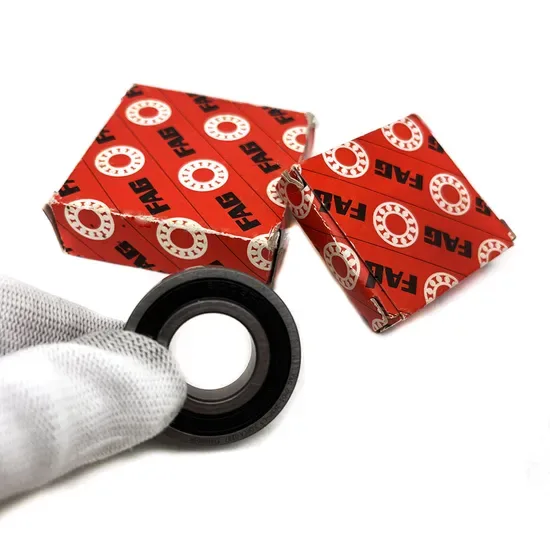
The cheapest bearing on the invoice is often the most expensive component in your annual maintenance budget.
Calculating the true payback math for FAG X-life bearings requires shifting focus from unit price to Total Cost of Ownership (TCO), where extended service intervals and reduced unplanned downtime offset the higher initial investment. For US plant MRO buyers, the justification lies not in the sticker price but in the operational continuity these premium components provide under harsh industrial conditions.
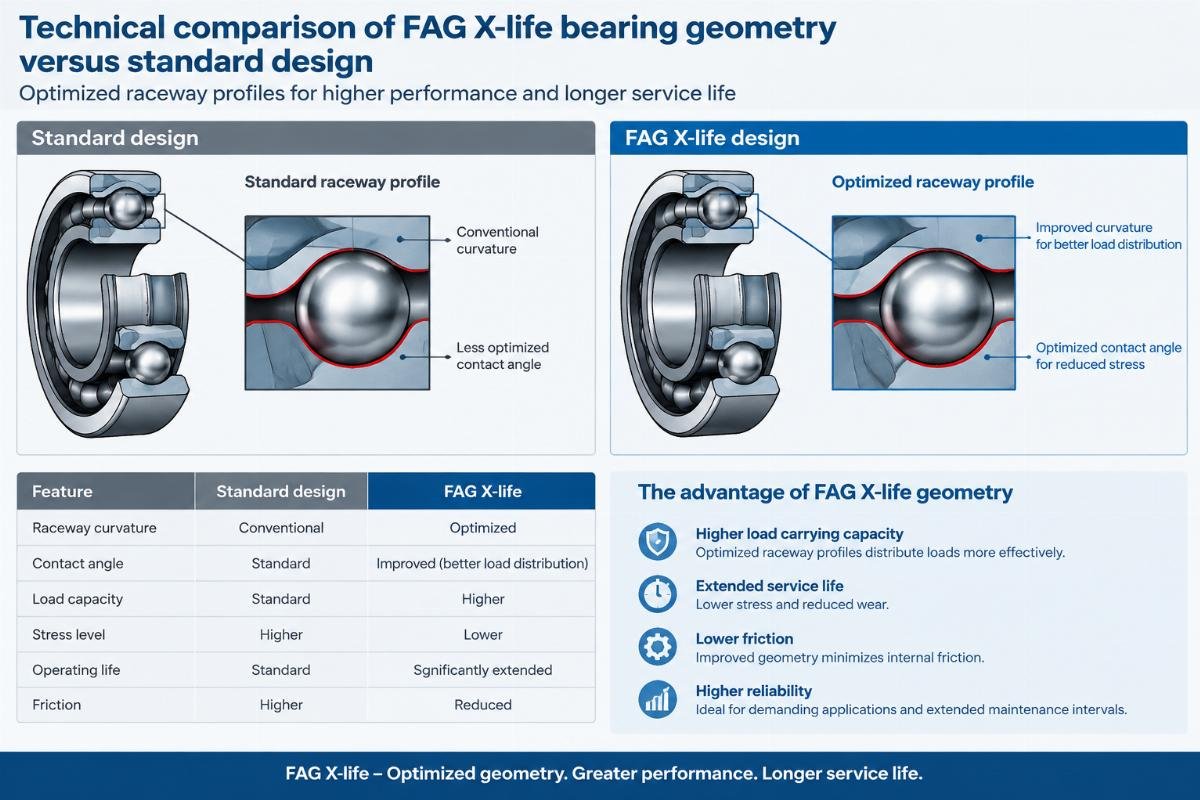
I still remember the humid heat of a refinery in Nigeria, standing over a disassembled pump that had seized after only a few months of operation. The procurement team had opted for a generic alternative to save on upfront costs, ignoring the specific load ratings required for that high-vibration environment. When the shaft locked up, the resulting three-day production halt cost the facility far more than the price difference between ten sets of premium bearings and the cheap replacements. That incident reshaped how I approach sourcing. Now, when I speak with maintenance managers in the United States who hesitate at the quote for FAG X-life products, I do not argue about brand prestige. I pull out the ledger from that African site and walk them through the hidden costs of failure. The numbers rarely lie, and once the full lifecycle expenses are mapped out, the decision becomes clear.
Why Do Standard Bearings Fail Prematurely in US Plants?
Standard grade bearings often lack the internal geometric optimizations necessary to withstand the extreme loads and contamination levels found in modern US industrial facilities.
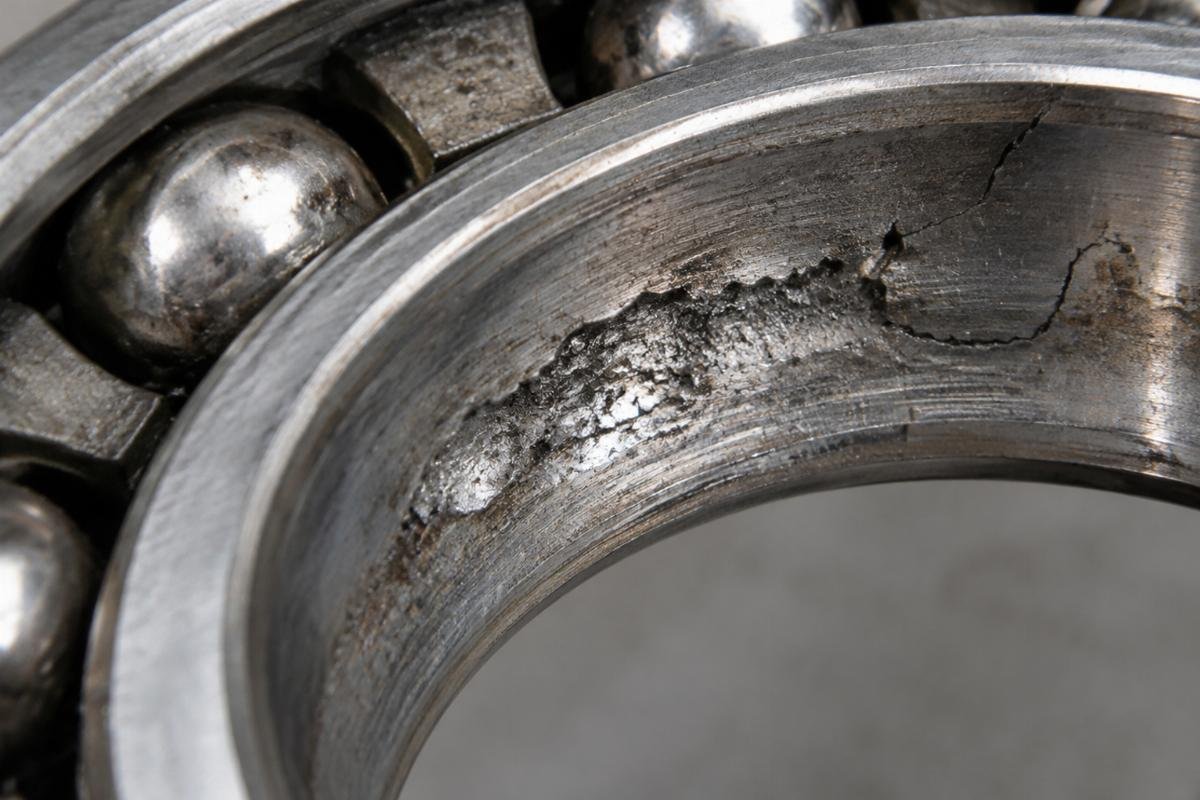
In many manufacturing and processing plants, equipment operates under conditions that push standard bearings beyond their design limits. While a basic deep-groove ball bearing might suffice for light-duty applications, it struggles in environments characterized by heavy shock loads, misalignment, or inadequate lubrication. The primary reason for premature failure in these scenarios is not always external abuse but internal stress concentration. Standard bearings typically feature conventional raceway profiles that can lead to edge stresses under real-world operating conditions, accelerating fatigue crack initiation.
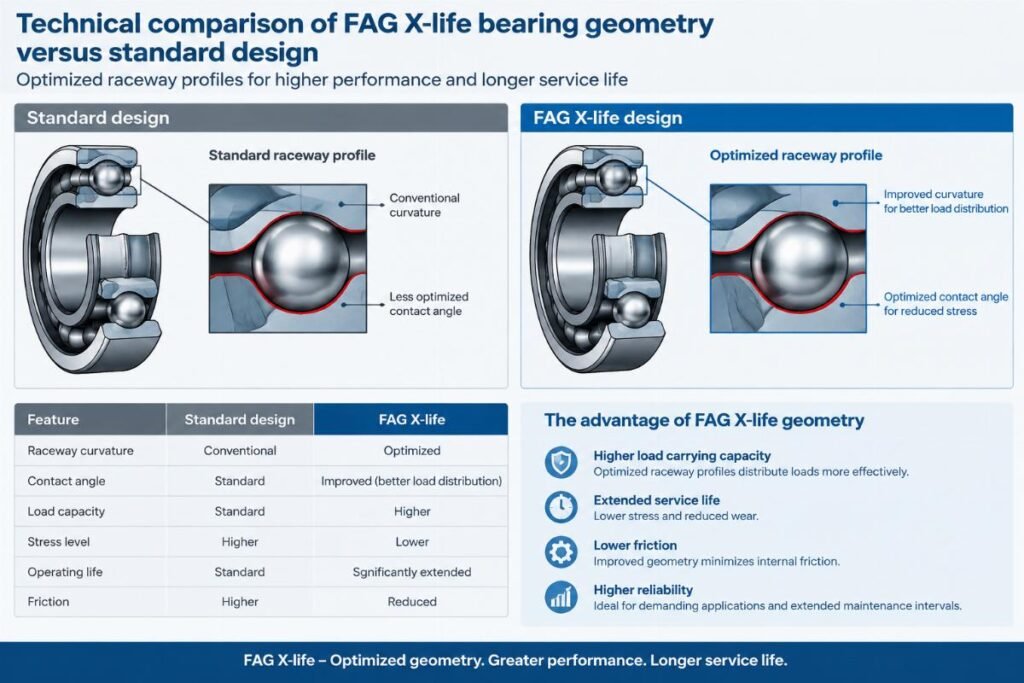
Consider a conveyor system in a mining operation. The dust ingress and constant vibration create a hostile environment. A standard bearing may begin to show signs of distress within months, requiring frequent relubrication and eventual replacement. In contrast, FAG X-life bearings utilize an optimized internal geometry that distributes load more evenly across the rolling elements. This design reduces friction and heat generation, which are key contributors to early failure.
From my experience coordinating supplies for global clients, I have seen that the majority of failures attributed to “bad luck” or “operator error” are actually predictable outcomes of using components mismatched to the application severity. The optimized surface finish and controlled nitrogen infusion in X-life bearings enhance their resistance to these harsh conditions. This is not merely a marketing claim but a measurable engineering advantage that translates directly into longer mean time between failures (MTBF). For a plant manager, this means fewer emergency shutdowns and a more predictable maintenance schedule.
How to Calculate the True Payback Math for FAG X-life?
Accurate ROI calculation for premium bearings must include unit price, labor costs for replacement, and the financial impact of unplanned downtime.
Many procurement departments evaluate bearing purchases based solely on the line-item cost. This approach ignores the significant expenses associated with maintenance labor and production losses. To determine the true payback math for FAG X-life bearings, one must adopt a Total Cost of Ownership (TCO) model. This model aggregates all costs incurred over the bearing’s lifecycle, providing a holistic view of its economic value.

The TCO formula for a bearing application can be broken down into several key variables:
- Initial Purchase Price: The cost of the bearing itself.
- Installation Labor: Hours spent by technicians to replace the unit, multiplied by the hourly labor rate.
- Downtime Cost: The revenue lost per hour during unplanned stoppages.
- Maintenance Frequency: How often the bearing requires relubrication or inspection.
- Energy Consumption: Friction losses that contribute to higher electricity bills over time.
In a typical US manufacturing plant, the cost of downtime can dwarf the price of the bearing. A single hour of unexpected stoppage in a continuous process line can result in a mid-six-figure loss. If a premium bearing extends the service life meaningfully and reduces the frequency of replacements, the savings in labor and avoided downtime quickly offset the higher initial price.
I recall assisting a client in the Midwest who was skeptical about upgrading their gearbox bearings. By tracking their maintenance logs, we calculated that each replacement event required four hours of skilled labor and caused two hours of partial production loss. Switching to FAG X-life bearings doubled the relubrication intervals and extended the overall lifespan significantly. The reduction in maintenance events alone covered the price premium within the first year, not even accounting for the avoided downtime risks. This is the essence of the payback math: it is not about saving money on the part, but about saving money on the process.
Standard vs. X-life: Which Specs Justify the Premium?
Comparing technical specifications reveals that X-life bearings offer superior load ratings and friction characteristics that justify the investment for critical and high-speed applications.
When evaluating whether to upgrade from standard to premium bearings, a side-by-side comparison of key performance indicators helps clarify the value proposition. The following matrix highlights the qualitative differences between standard industrial bearings and FAG X-life equivalents across typical parameters.
| Feature | Standard Industrial Bearing | FAG X-life Bearing | Impact on Operations |
|---|---|---|---|
| Internal Geometry | Conventional profile | Optimized raceway contour | Reduced edge stress, longer fatigue life |
| Surface Finish | Standard grinding | Super-finished raceways | Lower friction, reduced heat generation |
| Load Capacity | Basic dynamic rating | Enhanced dynamic load rating | Handles heavier loads without premature failure |
| Lubrication Intervals | Standard frequency | Extended intervals | Reduced maintenance labor and lubricant use |
| Contamination Resistance | Basic sealing options | Enhanced sealing integration | Better performance in dirty environments |
| Precision Class | Standard tolerance | Tighter tolerance control | Improved runout, lower vibration levels |
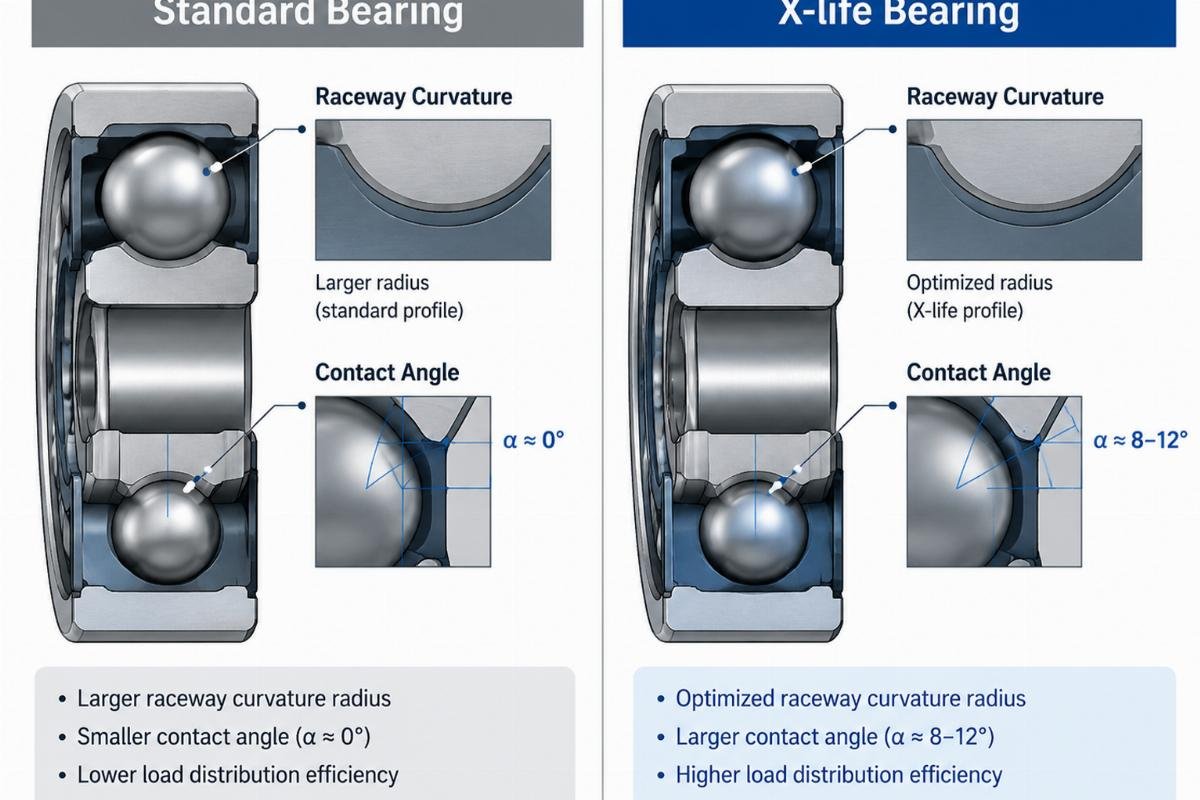
The enhanced dynamic load rating of X-life bearings allows them to operate under heavier loads without compromising longevity. This is particularly relevant for applications such as crushers, mixers, and heavy-duty pumps where shock loads are common.
Furthermore, the super-finished surfaces reduce friction, which not only lowers operating temperatures but also contributes to energy efficiency. In high-speed applications, such as those found in machine tools or fans, this reduction in friction can lead to noticeable energy savings over time. The tighter tolerance control ensures smoother operation, reducing vibration that can damage surrounding components like seals and shafts.
A counter-intuitive insight from my field experience is that premium bearings often yield the fastest payback in high-speed standard applications, not just in critical heavy machinery. The reduced heat generation at high RPMs prevents lubricant breakdown, a common cause of failure in standard units. This extends the service life meaningfully and reduces the risk of catastrophic failure that could damage the entire assembly.
How to Source Genuine FAG X-life at Competitive Costs?
Partnering with a global full-range supplier ensures authenticity, traceability, and competitive pricing for genuine FAG X-life bearings.
Sourcing premium bearings requires vigilance against counterfeit products, which can mimic the appearance of genuine items but lack the internal quality controls. For US plants, ensuring the authenticity of FAG X-life bearings is critical to realizing the expected performance benefits. A reliable supplier provides complete traceability documentation, verifying that each bearing originates from the manufacturer’s production facilities and meets strict quality standards.

Working with a professional global full-range bearing supplier offers several advantages over buying directly from local distributors or online marketplaces. These suppliers maintain massive spot inventories covering thousands of standard and special part numbers, enabling fast lead times for urgent maintenance requirements. They also offer flexible MOQs, accommodating both single-unit emergency orders and bulk project shipments.
From a procurement perspective, consolidating orders with a supplier who stocks multiple brands allows for better negotiation leverage and simplified logistics. Instead of managing separate accounts for SKF, FAG, NSK, and TIMKEN products, a single partner can provide a mixed-brand solution that optimizes the overall procurement budget. This approach reduces administrative overhead and ensures consistent quality across the entire bearing inventory.
I have observed that many US buyers initially hesitate due to concerns about shipping times from international suppliers. However, with strategic stock positioning and efficient global shipping consolidation, lead times can be competitive with domestic sources, especially for hard-to-find sizes. The key is to establish a long-term partnership with a supplier who understands the specific technical requirements of your industry and can provide cross-brand equivalent model consultation. This technical support helps in selecting the right bearing for the application, avoiding costly mismatches and ensuring optimal performance.
Conclusion
Investing in FAG X-life bearings is a strategic decision that pays off through reduced downtime and lower total maintenance costs.
The payback math for premium bearings becomes evident when viewing them through the lens of Total Cost of Ownership rather than initial purchase price. By extending service life and minimizing unplanned stops, FAG X-life bearings deliver tangible value to US industrial operations. Sourcing these components through a reputable global supplier ensures authenticity and supports a more efficient, cost-effective maintenance strategy.