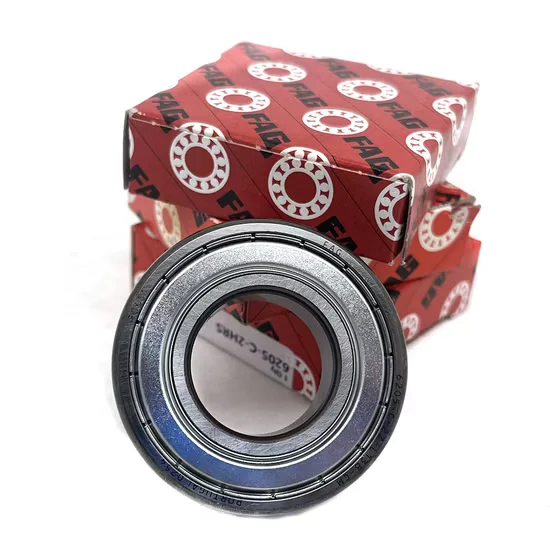
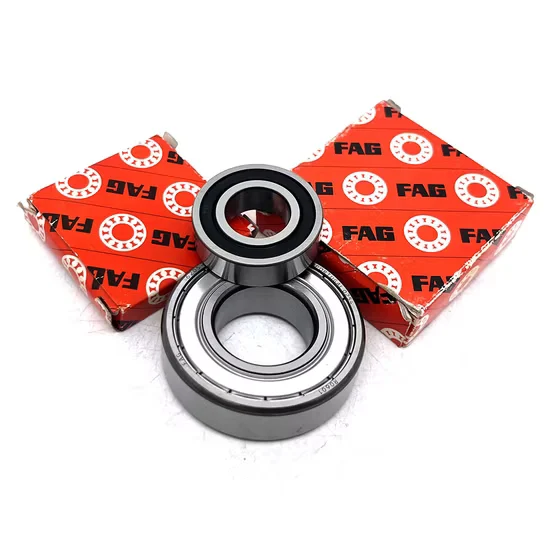
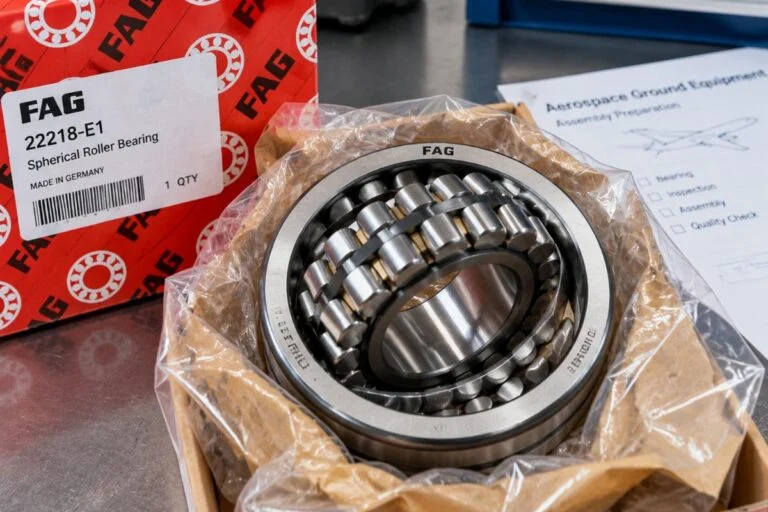
The cheapest bearing on the invoice is often the most expensive component in your maintenance budget.
Selecting genuine FAG bearings with correct internal clearances for US HVAC systems minimizes unplanned downtime and outweighs initial procurement savings from unofficial channels. The core thesis is simple: field emergency repair labor and lost cooling capacity costs dwarf the marginal price difference of authentic parts. For HVAC OEMs, MRO operators, and distributors, the priority must shift from unit price to total cost of ownership, ensuring every deep groove ball bearing and cylindrical roller bearing meets strict ISO standards for thermal expansion and load capacity.
I still recall the humidity in Tanjung Priok port, watching a container of bearings destined for a major US HVAC contractor being opened for inspection. The order was for deep groove ball bearings intended for large industrial chillers. To cut costs, the buyer had sourced them through an unauthorized intermediary rather than a verified channel. As I pulled samples from the batch, the feel was wrong. A quick check of the internal clearance revealed values far outside the acceptable C3 range required for high-temperature compressor operations. These were not just substandard; they were ticking time bombs. Had they been installed, the excessive play would have caused severe vibration, leading to catastrophic compressor failure within weeks. That single incident reinforced a hard truth: in the HVAC industry, traceability is not paperwork; it is insurance against operational collapse.

This experience drives my approach to sourcing. When you deal with FAG bearings in US HVAC systems, you are not just buying steel rings and rolling elements. You are buying precision engineering that withstands continuous heavy loads and thermal cycling. The following sections detail why specification matters, how counterfeits fail, and how to verify authenticity in a global supply chain.
Why FAG Bearings Dominate US HVAC Compressors and Chillers?
High precision and superior load capacity ensure stable operation under the continuous heavy loads typical of commercial HVAC infrastructure.
US HVAC systems, particularly large-scale chillers and industrial compressors, operate under conditions that demand exceptional reliability. Unlike intermittent automotive applications, these machines run for thousands of hours during peak cooling seasons. The bearings must handle significant radial and axial loads while maintaining micron-level precision to prevent noise and vibration.
FAG bearings are engineered to meet these demands. Their manufacturing processes focus on homogeneous steel structures and precise raceway geometry. This results in lower friction and reduced heat generation, which is critical in enclosed compressor environments where cooling oil flow may be limited during startup or shutdown phases.
For MRO operators, the choice of brand impacts maintenance intervals. A genuine FAG deep groove ball bearing, when selected with the correct internal clearance, can last significantly longer than a generic equivalent. The key lies in the material purity and heat treatment consistency. Impurities in lower-grade steel create stress concentration points, leading to premature spalling. In contrast, premium bearings use vacuum-degassed steel, minimizing inclusion density and extending fatigue life.
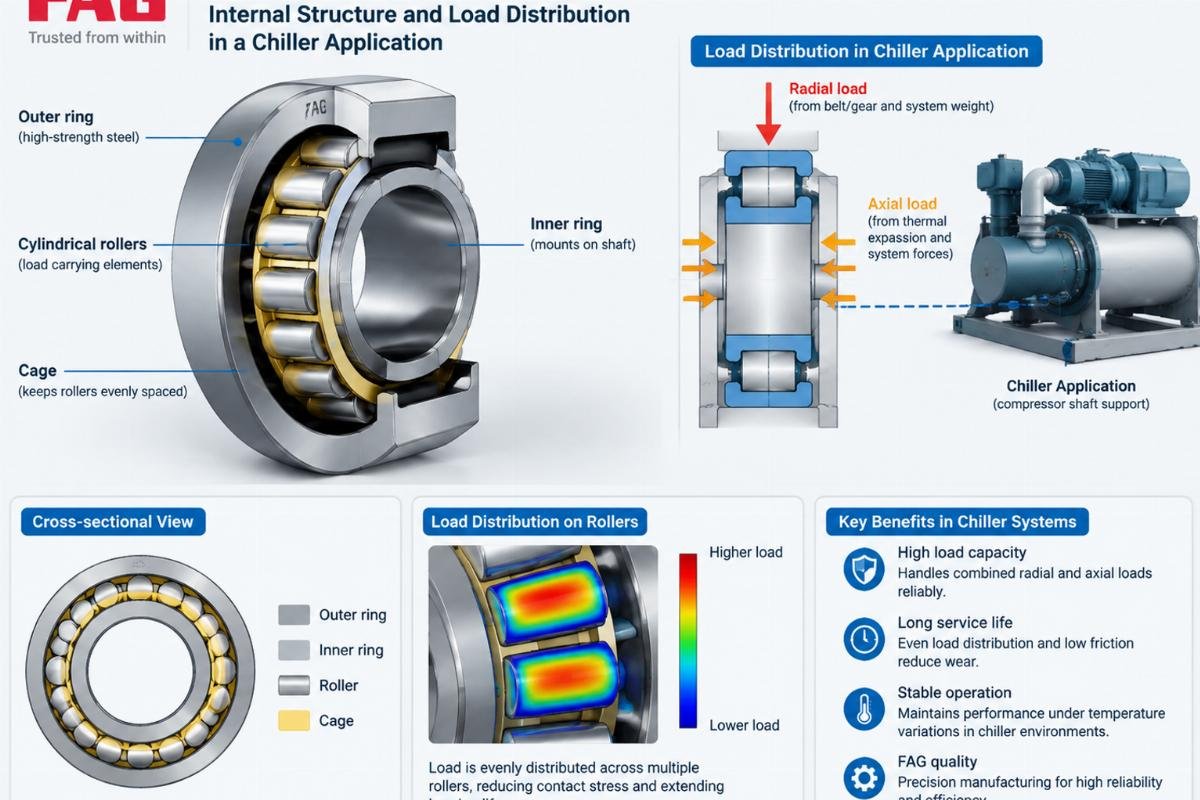
When specifying FAG bearings in US HVAC systems, engineers often prioritize the C3 internal clearance standard. This clearance accounts for the thermal expansion of the shaft and housing during operation. If the clearance is too tight, the bearing will overheat and seize. If it is too loose, vibration increases, damaging the compressor valves and motor windings. This specific technical requirement is why generic substitutes often fail in HVAC applications, even if their dimensional tolerances appear correct on paper.
What Happens When HVAC Systems Use Non-Genuine or Wrong-Spec Bearings?
Excessive clearance leads to severe vibration, overheating, and catastrophic compressor failure, resulting in costs far exceeding the initial savings.
The most common failure mode in HVAC systems using non-genuine bearings is vibration-induced damage. I have analyzed numerous failed units where the root cause was traced back to bearings with inconsistent internal geometry. In one case involving a large commercial chiller, the replacement bearings sourced from an unverified supplier had excessive radial play. Within months, the vibration amplitude increased to levels that triggered safety shutdowns.
The cost analysis was stark. The initial savings on the bearings were negligible compared to the emergency repair costs. The technician had to dismantle the entire compressor head, replace damaged rotors, and flush the oil system. The downtime during peak summer months meant lost revenue for the facility owner.
Another frequent issue is premature wear in fan motors. Continuous operation requires bearings that can handle both radial loads from the fan blade weight and axial loads from air pressure. Non-genuine bearings often lack the optimized cage design and lubrication retention features of genuine FAG products. This leads to dry running and rapid degradation of the rolling elements.
| Failure Mode | Root Cause in Non-Genuine Bearings | Operational Impact |
|---|---|---|
| Excessive Vibration | Inconsistent internal clearance and poor raceway finish | Compressor valve damage, motor winding failure |
| Overheating | High friction due to surface roughness and improper lubrication | Oil breakdown, seized compressor |
| Premature Wear | Low-quality steel with high inclusion density | Shortened service life, frequent replacements |
| Noise Generation | Poor geometric accuracy of rolling elements | Customer complaints, regulatory non-compliance |
This table illustrates why FAG bearings in US HVAC systems are the preferred choice for critical applications. The consistency in manufacturing ensures that each bearing performs predictably, reducing the risk of unexpected failures. For distributors and MRO providers, offering genuine parts is not just about quality; it is about protecting their clients from costly operational disruptions.

How to Verify Authenticity and Traceability When Sourcing FAG Bearings?
Demand original mill certificates and authorized channel documentation to avoid counterfeit losses and ensure supply chain integrity.
The global bearing market is flooded with counterfeits that mimic the packaging and markings of premium brands. For buyers of FAG bearings in US HVAC systems, verification is crucial. Authenticity cannot be determined by visual inspection alone, as modern fakes are sophisticated. Instead, rely on documentation and supply chain transparency.
Genuine bearings come with traceability documents that link the product to the manufacturer’s production facilities. These documents include batch numbers, material certificates, and quality control reports. When sourcing from a supplier, request these records before shipment. A reputable supplier will provide full traceability, allowing you to verify the origin of each bearing.
I once assisted a client in Southeast Asia who received a shipment of bearings with suspicious packaging. The boxes looked authentic, but the batch numbers did not match the manufacturer’s database. By cross-referencing the documentation with the official records, we identified the goods as counterfeit. The supplier was unable to provide valid mill certificates, confirming the fraud. This incident highlights the importance of working with suppliers who prioritize transparency.
Key verification steps include:
- Check the packaging for holographic seals and correct branding fonts.
- Verify the batch number on the bearing ring against the provided certificate.
- Request proof of authorization from the manufacturer or an authorized distributor.
- Inspect the bearing surface for smoothness and consistent marking quality.
For large projects, consider implementing a incoming inspection protocol that includes dimensional checks and hardness testing. While this adds a step to the procurement process, it prevents the installation of defective parts. Suppliers who offer technical selection support and cross-brand equivalence consultation can help navigate these complexities, ensuring that the specified FAG bearings in US HVAC systems meet the exact requirements of the application.
How to Calculate the True Cost of Bearing Failure in HVAC Maintenance?
Unplanned downtime and emergency freight costs dwarf the initial price difference of genuine parts, making total cost of ownership the critical metric.
Many procurement managers focus on the unit price of bearings, ignoring the hidden costs of failure. In the HVAC industry, the cost of a bearing is a small fraction of the total maintenance expense. The real costs arise from labor, downtime, and secondary damage.
Consider a scenario where a non-genuine bearing fails in a critical chiller during peak cooling season. The immediate cost includes the emergency replacement bearing, which may need to be air-freighted at a premium rate. More significantly, the labor cost for emergency repair is substantially higher than scheduled maintenance. Technicians may need to work overtime, and specialized tools may be required.
Furthermore, the downtime itself has a financial impact. Commercial buildings rely on HVAC systems for comfort and compliance. A prolonged outage can lead to tenant complaints, lease penalties, and reputational damage. In industrial settings, process interruptions can result in significant production losses.
| Cost Component | Scheduled Replacement | Emergency Failure |
|---|---|---|
| Bearing Unit Price | Standard wholesale rate | Premium emergency rate |
| Freight Cost | Sea freight (low cost) | Air freight (high cost) |
| Labor Cost | Standard hourly rate | Overtime and emergency rates |
| Downtime Impact | Minimal, planned outage | Significant, unplanned outage |
| Secondary Damage | None | Potential compressor or motor damage |
This comparison shows that investing in genuine FAG bearings in US HVAC systems is economically sound. The higher initial cost is offset by the reliability and longevity of the product. For MRO operators, this means fewer emergency calls and more predictable maintenance schedules. For distributors, it builds trust with clients who value reliability over short-term savings.

Conclusion
Reliability in HVAC systems is built on precision, not penny-pinching.
Choosing genuine FAG bearings with the correct specifications is a strategic decision that protects operational continuity. By prioritizing traceability, verifying authenticity, and calculating the true cost of ownership, HVAC professionals can avoid the pitfalls of counterfeit components. The integration of high-quality bearings into maintenance strategies ensures efficient, long-lasting performance for US HVAC systems.