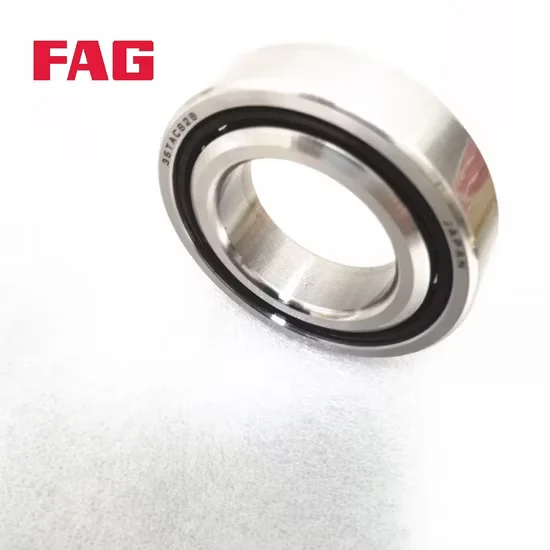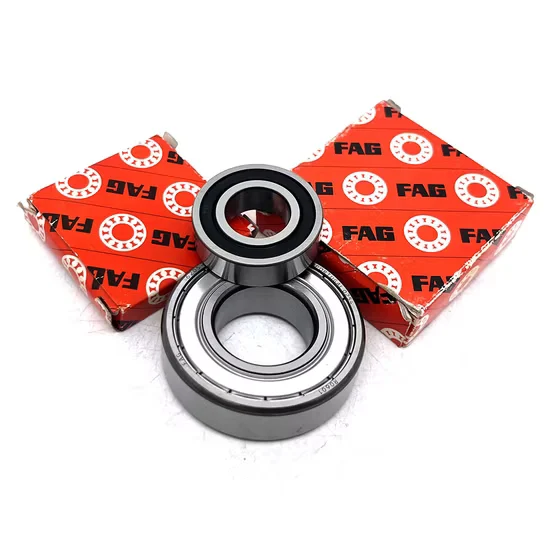
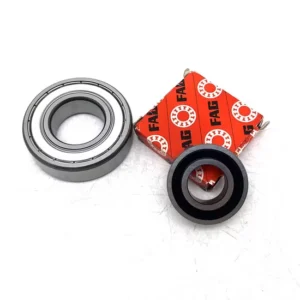
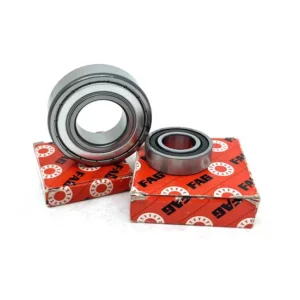
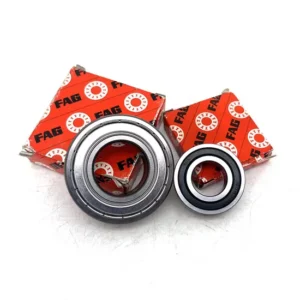
Product details
Description and application notes
Original Batch Traceability — Every unit in this mixed-model assortment ships with manufacturer lot codes for full lifecycle tracking.
Technical Specifications
| Parameter | Value |
|---|---|
| Designation | 6204 695 6301 688 6807 6309 6206 6505 |
| Product Type | Deep Groove Ball Bearing |
| Bore Diameter (d) | Standard size options |
| Outside Diameter (D) | Standard size options |
| Width (B) | Standard size options |
| Seal or Shield Type | Available in metal shield, rubber seal, or open variants |
| Precision Class | P0, P6, P5, P4 options |
| Material | Bearing steel construction |
| Vibration Level | Z1V1 to Z4V4 grading |
| Lubrication | Grease or oil filled |
| Origin | Shandong, China |
Application Suitability
| Industry | Typical Applications |
|---|---|
| Automotive Parts | Alternator pulleys, tensioner assemblies, and transmission shafts |
| Electric Motors | Rotor support in high-speed cooling fans and drive motors |
| Pumps & Gearboxes | Impeller shafts and low-to-medium load gear reduction stages |
Sourcing the FAG 6204 695 6301 688 6807 6309 6206 6505 deep groove ball bearing for Automotive MRO
Mixed-model procurement demands strict lot segregation to prevent cross-contamination of precision grades during transit and storage.
Buying assorted deep groove ball bearings for fleet maintenance often results in mismatched clearances or compromised packaging. I have seen maintenance teams in the Middle East pull a standard clearance bearing from a bulk bin, only to watch it seize in a high-heat alternator application within weeks. Proper documentation and physical segregation at the sourcing stage prevent these costly field failures.
Matching Radial Load Profiles to Chassis Components
The FAG 6204 695 6301 688 6807 6309 6206 6505 deep groove ball bearing series covers a wide spectrum of radial load capacities, from thin-section micro bearings to medium-wide variants. Selecting the correct cross-section ensures the raceway geometry handles the specific radial forces without excessive edge loading. Our engineering team cross-checks your equipment load data against the dynamic load ratings of each specific model in the package.
Environmental Sealing and Thermal Expansion Challenges
Dust ingress and thermal cycling are the primary enemies of rotating assemblies in arid climates. When ambient temperatures spike, the internal clearance of a standard bearing shrinks, potentially causing the rolling elements to skid and generate excessive friction heat. Choosing between non-contact metal shields and contact rubber seals dictates the balance between contamination exclusion and rotational friction. Proper lubrication selection further stabilizes the friction torque across varying thermal gradients.
Decoding Precision and Vibration Grades for Smooth Operation
Vibration and noise control are critical when these bearings support high-speed electric motors or precision automotive accessories. The Z1V1 through Z4V4 vibration classifications indicate the strictness of the geometrical tolerances and surface finish applied to the raceways. A higher grade minimizes the resonant frequencies that can transfer structural noise into the vehicle cabin or machinery housing. Furthermore, selecting P5 or P4 precision classes reduces the radial runout, ensuring smoother rotation at elevated RPMs. The standard bearing steel material provides the necessary core hardness and fatigue resistance for these dynamic applications. Understanding these internal geometry metrics allows buyers to specify the exact performance tier required for their assembly.
The Hidden Costs of Incorrect Internal Clearance
Specifying the wrong internal clearance for a given thermal environment leads to premature failure mechanisms that void equipment warranties. If the clearance is too tight, thermal expansion eliminates the rolling gap, causing catastrophic seizure and collateral damage to the shaft and housing. Conversely, excessive clearance induces vibration and accelerates surface fatigue under radial loads. Following ISO 281 guidelines for life calculation ensures the selected clearance aligns with the actual operating temperature and fit tolerances.
Why Our Sourcing Strategy Protects Your Maintenance Budget
Sourcing a mixed-model package like this requires rigorous attention to detail that generalist traders often overlook. We verify the exact precision class and vibration grade for each individual part number before consolidation, preventing the accidental mixing of P0 and P6 grades in the same shipment. Our facility provides cross-brand equivalent model consultation if a specific OEM part number faces allocation shortages. Every batch is backed by complete traceability documentation, ensuring you know the exact production origin of every unit. We also offer flexible consolidation shipping, allowing you to combine these automotive bearings with heavy-equipment spares in a single container.
Documentation & Authenticity
- Certificate of Conformity verifying the P0-P4 precision grades for each specific model number.
- Original manufacturer batch traceability records linking lot codes to production dates.
- Official app QR authentication support for verifying genuine origin upon receipt.
- Material inspection reports confirming standard bearing steel metallurgy and hardness.
- Dimensional and running accuracy inspection reports validating Z1V1-Z4V4 vibration limits.
Storage, Handling & Mounting
- Keep the mixed-model assortment in original packaging to prevent humidity ingress and preserve factory grease.
- Store thin-section models like the 688 and 6807 flat to prevent cage distortion under their own weight.
- Use clean lint-free gloves when handling open-type variants to avoid skin acid corrosion on the raceways.
- Verify the exact seal configuration before pressing into housings to avoid damaging rubber lips during installation.
- Apply induction heating for inner ring mounting on larger medium-wide models to maintain precise interference fits.
Inquiry Guidance for Technical Verification
To ensure accurate L10 life calculations and technical review, please share your specific radial and axial load profiles, operating speeds, and ambient temperature ranges. Providing the exact OEM equipment numbers allows our engineering team to perform precise cross-reference validation for each model in the assortment. Detailing the environmental exposure, such as dust or moisture levels, helps us recommend the optimal sealing and lubrication configuration for your application.
Frequently Asked Questions
Q: How to verify the authenticity of the FAG 6204 695 6301 688 6807 6309 6206 6505 deep groove ball bearing upon delivery?
A: Authenticity is confirmed by scanning the manufacturer's QR codes via the official verification app, which cross-references the unique batch numbers against the central production database. We also provide original certificates of conformity and physical packaging that matches the brand's current anti-counterfeiting standards, ensuring every unit in your mixed-model package is genuinely sourced.
Q: What are the cross-reference equivalents for these models if original stock is unavailable?
A: While we prioritize genuine supply, our engineering team can identify dimensionally and performance-equivalent models from other premium global brands when allocation constraints occur. We cross-check the dynamic load ratings, precision classes, and internal geometry to ensure the alternative meets your exact operational requirements without compromising the assembly's reliability.
Q: How to choose between metal shields and rubber seals for automotive applications?
A: Metal shields offer lower friction and are suitable for high-speed, clean environments, while rubber contact seals provide superior exclusion of fine dust and moisture. The choice depends on the specific contamination level and thermal limits of the application; our technical team evaluates your operating environment to recommend the most appropriate sealing configuration for each part number.
Q: What is the difference in running accuracy between the available precision classes?
A: Higher precision classes feature tighter tolerances for bore diameter, outside diameter, and radial runout, which directly reduces vibration and noise at high speeds. While standard grades suffice for general industrial use, automotive and high-speed motor applications often require upgraded precision to ensure smooth rotation and extended service life under dynamic radial loads.
Q: How do vibration levels affect the performance of high-speed electric motors?
A: Strict vibration grading minimizes the transmission of structural noise and prevents resonant frequencies that can degrade motor efficiency and bearing life. Selecting a higher vibration class ensures the raceway surface finish and geometrical accuracy are optimized for smooth, quiet operation, which is critical for sensitive automotive and precision machinery applications.