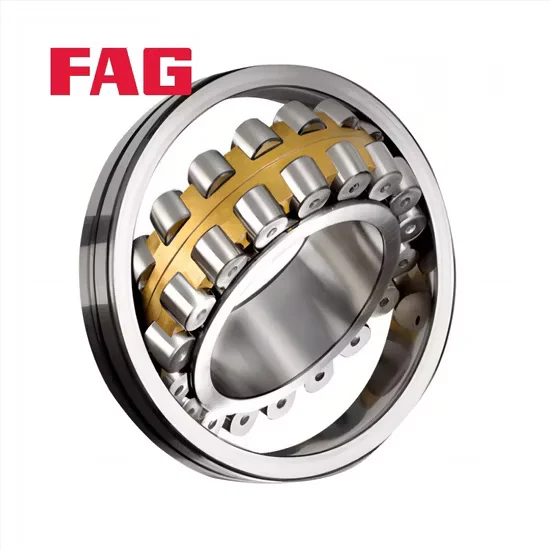
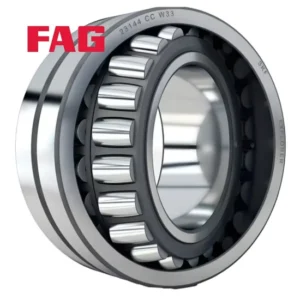


Product details
Description and application notes
Cross-Reference Alignment — We verify dimensional interchangeability across FAG, SKF, and NSK catalogs before dispatching mixed-brand project orders.
Technical Specifications
| Parameter | Value |
|---|---|
| Designation | 22244-E1-K |
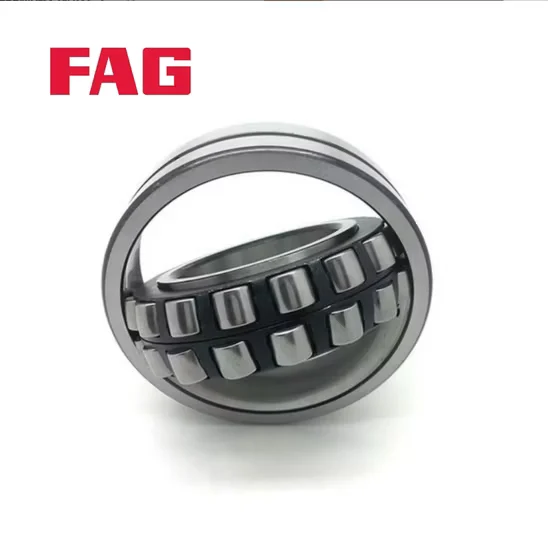
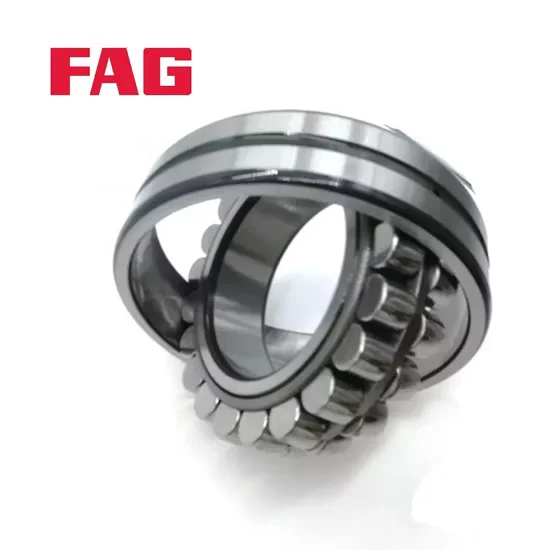
| Bearing Type | Spherical Roller Bearing |
| Bore Type | Tapered Bore (1:12) |
| Arrangement | Double Row, Self-Aligning |
| Material | Chrome Steel Gcr15 |
| Cage Material Options | Steel / Brass / Nylon |
| Precision Class Options | P0, P2, P4, P5, P6 |
| Origin | Jiangsu China |
Note: The E1 suffix denotes an internal design variant that remains unverified and requires manufacturer catalog confirmation for exact load ratings.
Application Suitability
| Industry | Typical Applications |
|---|---|
| Mining & Aggregates | Vibrating screen eccentric shafts, jaw crusher toggle plates |
| Metallurgy & Steel Mills | Continuous caster roll segments, rolling mill gearbox shafts |
| Pulp & Paper | Paper machine dryer cylinder journals, press roll bearings |
Why Misaligned Shafts Destroy Standard Bearings in Heavy Machinery
Self-aligning capability prevents catastrophic edge loading under severe shaft deflection.
In steel mill continuous casters and mining vibrating screens, shaft misalignment is inevitable due to heavy dynamic loads, structural deflections, and thermal expansion. Standard rigid bearings quickly suffer from localized stress concentrations, leading to premature spalling, excessive heat generation, and unplanned downtime. Selecting a FAG 22244-E1-K spherical roller bearing mitigates this by accommodating angular errors, ensuring uniform load distribution across the roller paths and significantly extending the service interval.
Matching the Tapered Bore to Heavy-Duty Vibratory Loads
When mounting on adapter sleeves in vibrating equipment, the tapered bore design ensures a tight interference fit that prevents inner ring creep under oscillating loads. Our engineering team cross-checks the sleeve dimensions and shaft tolerances to guarantee the correct radial internal clearance reduction during installation. This precise fit is critical for maintaining the operational stability of the FAG 22244-E1-K spherical roller bearing in high-vibration environments, preventing the cage from experiencing destructive resonant frequencies.
Managing Thermal Expansion and Lubrication Starvation
Heavy-duty applications generate substantial friction heat, which alters internal clearance and degrades lubricant viscosity over time. If the bearing operates at elevated temperatures without adequate oil flow or proper grease replenishment, the rolling elements can skid, causing severe surface distress and smearing. Proper clearance selection, combined with consistent relubrication intervals, is essential to counteract thermal expansion and prevent lubrication starvation in continuous operation. Furthermore, environmental contaminants in mining sites demand effective sealing solutions to protect the raceways.
Decoding the K Suffix and Internal Geometry
The K suffix explicitly defines a 1:12 tapered bore, which is mandatory for installations utilizing adapter or withdrawal sleeves. This specific taper ratio allows maintenance crews to precisely control the drive-up distance and residual radial clearance during mounting. Unlike cylindrical bore variants, this configuration prevents inner ring creep on the shaft under heavy radial loads. The double-row self-aligning arrangement further compensates for housing misalignment, protecting the raceways from edge stress.
The Hidden Financial Impact of Incorrect Bore Selection
Installing a cylindrical bore bearing on a tapered shaft sleeve, or ignoring the required drive-up distance, inevitably results in catastrophic interference fits. This leads to immediate seizure, inner ring cracking, or accelerated fatigue failure, voiding any manufacturer warranty and triggering costly production halts. Adhering to the mounting guidelines outlined in ISO 281 prevents these avoidable mechanical disasters. Proper training on measuring residual clearance ensures the bearing operates within its designed hydrodynamic lubrication regime, protecting the overall equipment effectiveness and minimizing unplanned maintenance costs.
Securing Genuine Components for Critical Mill Equipment
Sourcing authentic components requires more than just matching the basic dimension; it demands rigorous verification of the internal design suffixes and cage materials. We supply genuine products with complete traceability documentation, ensuring the exact internal geometry matches your OEM specifications. Our massive spot inventory covers thousands of part numbers, allowing us to consolidate mixed-brand emergency orders rapidly across global facilities. Furthermore, our technical team provides cross-brand equivalent model consultation to prevent substitution errors that compromise machine reliability, ensuring you receive the exact configuration required for your specific application.
Documentation & Authenticity
- Certificate of Conformity validating the Gcr15 chrome steel material purity and heat treatment.
- Original manufacturer batch traceability records linking the specific K suffix bore to production data.
- Dimensional inspection reports confirming the 1:12 taper angle and P-class running accuracy.
- Anti-counterfeiting verification labels matching the outer ring laser marking for authenticity checks.
Storage, Handling & Mounting
- Store the tapered bore unit in its original VCI packaging to prevent corrosion on the exposed inner ring surface.
- Use induction heaters with precise temperature control to mount the bearing onto the adapter sleeve without damaging the cage.
- Measure the drive-up distance and residual radial clearance continuously during sleeve tightening to prevent inner ring expansion.
- Keep the bearing sealed until the exact moment of installation to avoid particulate contamination in the steel mill environment.
Engineering Support for Precision Selection
To ensure optimal performance, please provide your specific radial and axial load profiles, operating temperatures, and shaft deflection limits. Our technical team will calculate the required drive-up distance and recommend the appropriate internal clearance class for your application. Supplying the OEM equipment number also allows us to perform a thorough cross-reference verification before dispatch.
Frequently Asked Questions
Q: How does the K suffix affect the mounting procedure compared to a cylindrical bore?
A: The K suffix indicates a 1:12 tapered bore, meaning the bearing must be driven onto an adapter or withdrawal sleeve. This requires calculating the precise drive-up distance to achieve the correct radial internal clearance reduction. Unlike cylindrical bores that use interference fits directly on the shaft, this method allows for adjustable clearance and easier disassembly during maintenance.
Q: What are the cross-reference considerations between 22244-E1-K and 22244-Be-XL-K?
A: While both share the same basic dimensions and tapered bore, the internal design suffixes denote different roller geometries and cage constructions. Substituting one for the other without verifying the dynamic load ratings and speed limits can lead to premature failure. Always consult the manufacturer catalog or our engineering team to confirm interchangeability for your specific load conditions.
Q: Which internal clearance class is recommended for vibrating screens?
A: Vibrating screens typically require C3 or C4 internal clearance to accommodate the additional centrifugal forces, thermal expansion, and heavy shock loads. A standard CN clearance would close up during operation, causing excessive friction and overheating. We recommend providing your exact operating temperature and vibration amplitude so we can specify the optimal clearance class.
Q: How do I choose between steel, brass, and nylon cages for this application?
A: Brass cages offer superior resistance to high vibrations and shock loads typical in crushers, while steel cages are cost-effective for standard heavy-duty operations. Nylon cages provide lower friction but are limited by operating temperature and chemical exposure. The selection depends entirely on your specific rotational speed, load profile, and ambient temperature constraints.