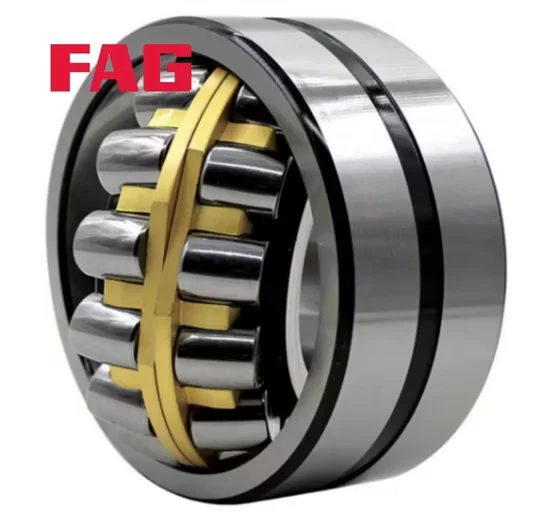


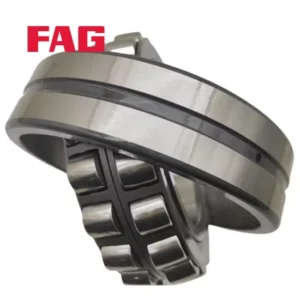
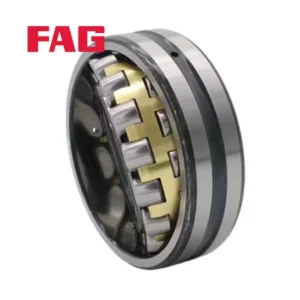
Product details
Description and application notes
Official App QR Verification — Every FAG 23052-E1-K spherical roller bearing we dispatch features scannable QR codes for instant authenticity checks via the manufacturer's official app.
Technical Specifications
| Parameter | Value |
|---|---|
| Designation | FAG 23052-E1-K |
| Bearing Type | Spherical Roller Bearing |
| Bore Type | Tapered Bore (1:12) |
| Structure | Double Row, Self-Aligning |
| Main Material | High-carbon chrome steel variants |
| Origin | Jiangsu China |
Note: The E1 suffix denotes an internal design variant; specific catalog confirmation is recommended for exact internal geometry details.
Application Suitability
| Industry | Typical Applications |
|---|---|
| Mining & Construction | Jaw crusher eccentric shafts, vibrating screen exciter mechanisms |
| Metallurgy | Steel mill continuous casting machine roll segments |
| Pulp & Paper | Paper machine dryer cylinder bearings |
Why Crusher Shafts Seize Before the Steel Yields
Thermal expansion destroys standard clearances in heavy vibrating equipment.
When sizing a FAG 23052-E1-K spherical roller bearing for a jaw crusher, many procurement engineers focus solely on dynamic load ratings and basic dimensions. However, I have seen entire mineral processing lines halt unexpectedly because the chosen clearance class completely ignored the immense frictional heat generated during continuous, high-impact crushing cycles. Without adequate internal clearance to accommodate thermal growth, the rolling elements bind tightly against the raceway. This metal-to-metal friction rapidly degrades the lubricant, leading to catastrophic seizure and severe shaft damage. Understanding the thermal dynamics of the specific application is just as critical as verifying the static load limits.
Matching the Tapered Bore to Heavy Shock Loads
The 1:12 tapered bore design allows for highly precise interference fit adjustments when the bearing is mounted on standard adapter sleeves. This specific mounting method is absolutely critical for vibrating screens and primary crushers where severe, unpredictable shock loads constantly threaten to loosen the bearing assembly on the rotating shaft. By carefully controlling the drive-up distance during installation, maintenance engineers can set the exact residual internal clearance required to absorb heavy radial impacts. This precise clamping force ensures the inner ring remains securely locked while maintaining optimal rolling kinematics, preventing micro-movements that would otherwise cause fretting corrosion on the shaft journal.
Navigating Heat, Misalignment, and Particulate Contamination
In demanding mining and steel mill environments, massive shaft deflection under extreme operational loads creates constant angular misalignment. The self-aligning capability of this double-row structure automatically compensates for these housing inaccuracies and shaft bending, preventing destructive edge loading on the rollers. Furthermore, the high ambient temperatures combined with heavy particulate contamination demand a highly effective lubrication strategy. While the base open design supports standard grease purging or oil bath lubrication, the actual operating temperature dictates whether a C3 or C4 clearance class is strictly necessary. Failing to account for this thermal expansion will cause the internal geometry to collapse, resulting in rapid wear. Proper seal selection and regular relubrication intervals are equally vital to keep abrasive dust out of the rolling contact zones.
Decoding the E1 and K Suffixes for Operational Reliability
The K suffix explicitly defines the 1:12 tapered bore, which remains the industry standard for secure, adjustable locking on adapter sleeves in heavy rotating machinery. Meanwhile, the E1 suffix indicates a highly optimized internal structure without a central guiding rib, allowing for slightly longer and more numerous rollers to maximize the dynamic load capacity. This ribless design significantly reduces internal friction and heat generation, which is a vital engineering consideration when the bearing operates continuously near its thermal limits. Understanding these specific suffixes ensures the replacement part perfectly matches the original equipment manufacturer's kinematic requirements. Substituting a standard internal design for an E1 variant in a high-load application will noticeably reduce the calculated L10 fatigue life and increase operating temperatures.
The Financial Impact of Clearance Miscalculations
Selecting a standard clearance instead of a designated C3 or C4 variant for a high-temperature crusher application inevitably leads to premature and costly failure. According to the failure mode classifications outlined in ISO 15243, inadequate internal clearance results in excessive sliding friction, rapid lubricant degradation, and eventual smearing of the raceways. The resulting unplanned downtime, lost production revenue, and the mechanical cost of replacing a seized shaft far outweigh the initial procurement savings of ignoring thermal expansion calculations. Engineers must evaluate the entire thermal system, including shaft heat transfer and housing dissipation, to ensure the residual clearance remains positive under maximum operating temperatures.
Securing Exact Suffix Matches for Critical Spares
Sourcing heavy-duty industrial bearings often involves the frustrating risk of receiving a standard cylindrical bore when a tapered bore was explicitly specified, or a standard clearance instead of the required C3. Our technical team carefully cross-references every FAG 23052-E1-K spherical roller bearing order against your specific equipment OEM manuals to verify the K suffix, internal design, and clearance class before final shipment. We maintain massive spot inventory of these exact heavy-duty configurations, completely eliminating the typical multi-week lead times associated with direct factory orders. Furthermore, our cross-brand equivalent consultation ensures that if a specific variation is temporarily unavailable, we provide dimensionally and kinematically identical alternatives from other premium global brands, keeping your critical machinery running without delay.
Documentation & Authenticity
- Certificate of Conformity verifying the exact 1:12 tapered bore tolerance.
- Original batch traceability documents linking the bearing to the manufacturer's production facilities.
- Scannable QR codes on the packaging for instant verification via the official manufacturer app.
- Material inspection reports confirming the metallurgical properties of the selected bearing steel components.
- Dimensional inspection reports validating the self-aligning outer ring raceway geometry.
Storage, Handling & Mounting
- Store the tapered bore bearing in its original anti-corrosion packaging until mounting to preserve the factory-applied rust preventative.
- Use induction heaters with precise temperature control when mounting the inner ring, avoiding localized overheating that could alter the bearing steel hardness.
- Measure the drive-up distance carefully during adapter sleeve mounting to achieve the specified residual internal clearance for the E1 internal design.
- Ensure the self-aligning outer ring is free to rotate in the housing during installation to prevent binding the spherical raceway.
- Keep the bearing away from heavy vibrating equipment in the storeroom to prevent false brinelling of the roller paths before commissioning.
Engineering Data Required for Technical Validation
To ensure the selected bearing configuration perfectly matches your specific application, please provide the detailed radial and axial load profiles, operating speeds, and steady-state temperature ranges. Sharing the original equipment manufacturer's part number, the exact housing dimensions, and the shaft material allows our engineering team to verify adapter sleeve compatibility and confirm the optimal clearance class. This comprehensive technical review guarantees that the supplied bearing will deliver the expected service life under your unique operating conditions. We focus on providing actionable engineering support rather than just processing part numbers, ensuring every dispatched unit is fully validated for its intended duty cycle.
Frequently Asked Questions
Q: How do I verify the authenticity of the FAG 23052-E1-K spherical roller bearing upon delivery?
A: Every genuine bearing we supply features a unique QR code on its packaging. You can scan this code using the manufacturer's official mobile application to instantly verify the product's origin, batch number, and authenticity. This digital traceability ensures you are installing a certified component in your critical heavy-duty machinery, completely eliminating the risk of counterfeit parts.
Q: What is the functional difference between the E and E1 suffixes in these spherical roller bearings?
A: While both suffixes indicate an enhanced internal design for higher load capacity, the E1 designation specifically refers to an optimized internal geometry without a central guiding rib on the inner ring. This ribless configuration reduces internal friction and allows for slightly larger rolling elements. We always recommend confirming the exact suffix requirement with the original equipment specifications to ensure proper kinematic performance.
Q: How should I select the correct internal clearance class for a vibrating screen application?
A: Vibrating screens generate significant frictional heat and operate under heavy shock loads, which typically necessitates a C3 or C4 clearance class rather than standard CN. The extra internal space accommodates thermal expansion and prevents the rolling elements from binding during high-frequency oscillations. Providing your exact operating temperature and load data allows us to calculate the precise residual clearance needed for reliable operation.
Q: What is the proper procedure for mounting a bearing with a 1:12 tapered bore?
A: Mounting a K-suffix bearing requires using an adapter sleeve and lock nut to secure it to the shaft. The critical step is measuring the drive-up distance or the reduction in internal clearance during tightening. Over-tightening will eliminate the necessary operating clearance, leading to premature failure, while under-tightening risks the bearing spinning on the shaft under heavy radial loads.
Q: Can this spherical roller bearing accommodate shaft misalignment in heavy machinery?
A: Yes, the double-row self-aligning structure features a spherical outer ring raceway that allows the inner ring and roller assembly to pivot slightly. This design automatically compensates for minor shaft deflections and housing machining inaccuracies common in heavy mining and steel mill equipment. It prevents edge loading on the rollers, thereby extending the overall fatigue life of the bearing arrangement.