
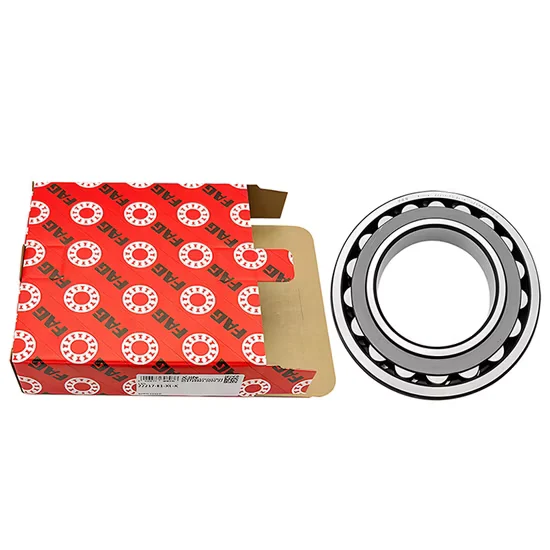
Product details
Description and application notes
Global Brand Consolidation — Source the FAG 24056 alongside other premium manufacturer equivalents in a single consolidated shipment without juggling multiple vendors.
Technical Specifications
| Parameter | Value |
|---|---|
| Designation | FAG 24056 |
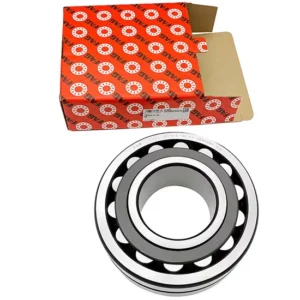
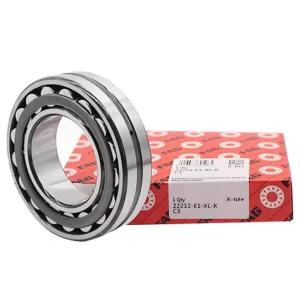
| Bearing Type | Spherical Roller Bearing |
| Bore Diameter (d) | 280 mm |
| Outside Diameter (D) | 420 mm |
| Width (B) | 140 mm |
| Number of Rows | Double |
| Material | Bearing Steel |
| Load Direction | Radial |
| Separated | Unseparated |
| Lubrication | Grease or Oil |
| Origin | Germany |
Application Suitability
| Industry | Typical Applications |
|---|---|
| Mining & Construction | Vibrating screens and primary crusher mechanisms |
| Metallurgy | Steel mill continuous casting and roller tables |
| Pulp & Paper | Paper machine dryer section support rollers |
Why Unmarked FAG 24056 Spherical Roller Bearings Fail in Extreme Heat
Assuming standard clearance for high-temperature machinery guarantees thermal seizure.
Early in my sourcing career, I supplied a steel mill in Dubai with a base-designation spherical roller bearing, completely ignoring the clearance suffix. The extreme ambient heat caused massive thermal expansion within the housing, leading to a complete seizure and catastrophic downtime that halted the entire production line. When procuring a FAG 24056 spherical roller bearing for similar heavy-duty environments, overlooking internal clearance specifications transforms a routine replacement into a critical operational failure. Buyers often assume the base part number is universally applicable, but in reality, thermal dynamics dictate the exact internal geometry required to maintain a stable hydrodynamic film.
Matching Heavy Radial Loads with Self-Aligning Geometry
The double-row arrangement inherent in this FAG 24056 spherical roller bearing accommodates heavy radial forces while effectively compensating for shaft misalignment and structural deflection. In demanding sectors like mining and metallurgy, equipment frames frequently twist under extreme operational stress, generating edge loading that rapidly destroys standard rigid bearings. Our engineering team provides comprehensive cross-brand equivalent model consultation to ensure this specific self-aligning geometry perfectly matches your equipment's structural characteristics. By correctly aligning the load distribution across both roller rows, we help you prevent localized stress concentrations and significantly extend the operational lifecycle of your heavy machinery.
Thermal Expansion and Lubrication Breakdown in Harsh Environments
Heavy machinery operating in metallurgy, mining, or aggregate processing faces severe temperature fluctuations that rapidly degrade standard lubricants and alter internal geometries. At elevated temperatures, standard bearing steel expands considerably, reducing the operational clearance and increasing friction between the rollers and the raceway. Selecting the appropriate grease or oil lubrication strategy is absolutely vital to maintain a stable hydrodynamic film and prevent metal-to-metal contact under combined shock loads. If the lubrication viscosity drops beyond the thermal limit of standard bearing steel, the resulting boundary friction accelerates wear and triggers premature spalling across the load zone.
Decoding the Base Designation and Clearance Selection
The base designation indicates a double-row, unseparated spherical roller design constructed from premium bearing steel, specifically optimized for high radial load capacity and structural rigidity. Because this specific identifier lacks a clearance suffix, it typically defaults to standard internal clearance, which is fundamentally insufficient for applications involving significant heat generation or tight interference fits. For vibrating screens, crushers, or steel mill equipment, specifying a C3 or C4 clearance class is essential to accommodate thermal expansion and prevent the rollers from binding during operation. The robust 280x420x140 mm dimensions provide the physical mass required for harsh conditions, but only when the internal geometry is correctly matched to the operating temperature profile. Understanding these suffix variations ensures the component survives the actual working environment rather than just the theoretical catalog conditions.
The Financial Impact of Ignoring Suffix Variations
Deploying a standard-clearance component in a high-heat application inevitably results in premature failure, unplanned downtime, and severe secondary damage to surrounding machinery. According to ISO 15243 frameworks, thermal seizure caused by incorrect clearance selection leads to catastrophic damage to both the bearing and the heavy-duty housing, often requiring complete assembly replacement. This type of failure entirely voids warranty claims and forces expensive emergency shutdowns, proving that precise suffix verification is far more cost-effective than reactive maintenance. Procurement teams must recognize that the initial savings from ignoring technical specifications are quickly erased by the massive financial impact of a single production halt.
Securing Traceability for Critical Heavy-Duty Replacements
Authenticity is absolutely non-negotiable when sourcing large-bore components for critical mining or metallurgy infrastructure. We verify the German origin of every unit through official traceability documentation, ensuring you receive genuine manufacturing quality rather than rebranded counterfeits that fail under load. Our technical selection support helps buyers confirm whether the base designation truly suits their thermal environment or if a modified clearance variant is strictly required for safe operation. Furthermore, we facilitate cross-reference to SKF, FAG and NSK equivalents if the specific identifier faces typical multi-week lead times, keeping your project on schedule. Massive spot inventory allows us to fulfill both single-unit emergency orders and full container consolidations with equal efficiency, backed by long-term after-sales technical support for failure analysis.
Documentation & Authenticity
- Certificate of Conformity verifying the German origin and genuine manufacturer production facilities.
- Original batch traceability codes linking the 280 mm bore component to its specific forging lot.
- Official app QR verification to confirm authenticity before installation in critical steel mill equipment.
- Dimensional inspection reports validating the 420 mm outside diameter and 140 mm width tolerances.
Storage, Handling & Mounting
- Retain the original factory packaging to protect the unseparated double-row assembly from humidity and particulate contamination.
- Use induction heaters for mounting the 280 mm cylindrical bore, strictly monitoring temperature to prevent altering the bearing steel metallurgy.
- Keep the component in a climate-controlled environment to prevent condensation inside the double-row roller arrangement before installation.
- Apply clean gloves when handling the exposed bearing steel surfaces to avoid corrosive sweat residue on the precision raceways.
- Verify the selected grease or oil lubrication compatibility with the specific operating temperature of your vibrating screen.
Validating Operating Parameters Before Dispatch
To ensure optimal performance, please share your exact radial loads, operating speeds, and ambient temperature profiles. Our engineering team will use these parameters to perform an L10 life calculation and verify if the standard internal clearance is sufficient or if a specific suffix variant is required. Providing the original OEM equipment number also allows us to conduct a thorough cross-reference check.
Frequently Asked Questions
Q: How do I verify the authenticity of this component using official tools?
A: Every genuine unit includes a unique traceability code and QR label on the packaging. You can scan this code using the manufacturer's official mobile application to confirm its German origin and production batch. We also provide a Certificate of Conformity and dimensional inspection reports to guarantee the component meets all original equipment specifications.
Q: What is the difference between C0, C3, and C4 clearance for heavy-duty applications?
A: C0 represents standard internal clearance, suitable for normal operating temperatures. C3 and C4 indicate greater than normal clearance, which is strictly necessary for high-temperature environments like steel mills or vibrating screens. This extra space compensates for thermal expansion of the bearing steel, preventing the rollers from seizing under extreme heat.
Q: How should I choose between grease and oil lubrication for vibrating screens?
A: Grease is typically preferred for vibrating screens due to its superior sealing properties against dust and particulate contamination. Oil lubrication is better suited for applications requiring rapid heat dissipation or higher rotational speeds. The choice depends on your specific operating temperature, load intensity, and maintenance interval capabilities.
Q: Can I use the 24060 as a direct replacement if the original is unavailable?
A: While the 24060 is a closely related cross-reference model, it features different physical dimensions and load capacities. Substituting it without engineering approval can lead to improper fitment and premature failure. Always consult our technical team to verify dimensional compatibility and load ratings before accepting any alternative designation.









