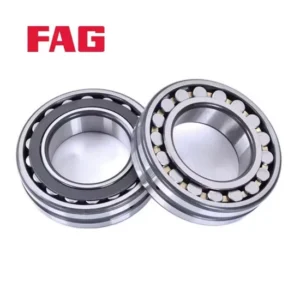
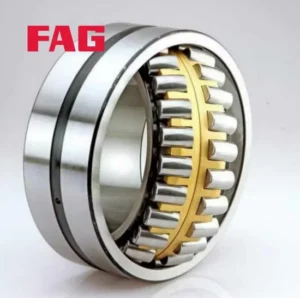
Product details
Description and application notes
Unified Brand Sourcing — Consolidate your FAG thrust bearings with other industrial components in a single shipment without juggling multiple vendors.
Technical Specifications
| Parameter | Value |
|---|---|
| Designation | FAG 29444-E1 |
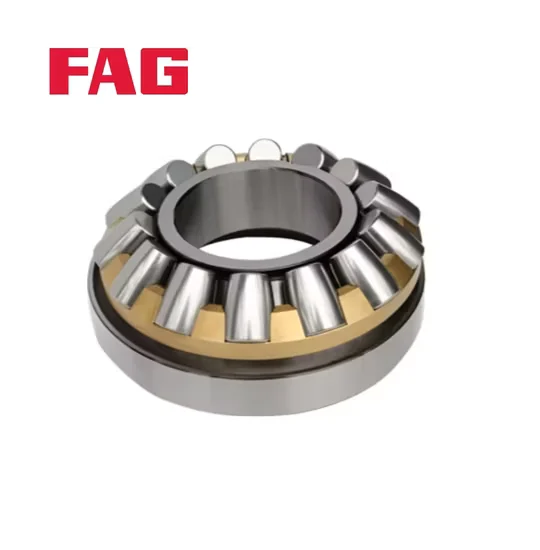
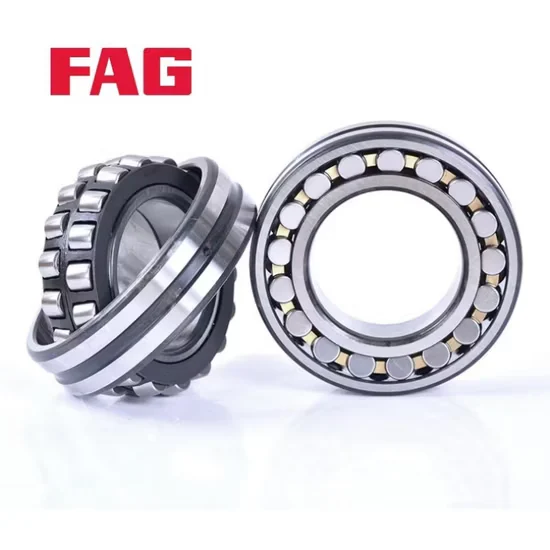
| Bearing Type | Spherical Roller Thrust Bearing |
| Precision Class | P0, P2, P4, P5, P6 |
| Cage Material | Steel, Brass, or Nylon options |
| Structure | Double Row, Self-Aligning |
| Material | Chrome Steel Gcr15 |
| Origin | Jiangsu China |
Note: E1 suffix requires manufacturer catalog confirmation for specific internal geometry details.
Application Suitability
| Industry | Typical Applications |
|---|---|
| Mining & Construction | Heavy-duty gearboxes and excavator slewing mechanisms |
| Marine & Shipbuilding | Marine drives and propulsion shaft assemblies |
| Metallurgy | Steel mill roll necks and continuous casting equipment |
| Manufacturing | Injection molding machines and metalworking machinery |
Why Standard Thrust Bearings Fail in Heavy-Duty Gearboxes
When specifying a FAG 29444-E1 spherical roller thrust bearing for extreme axial loads, overlooking internal geometry optimizations leads to catastrophic downtime.
Optimized roller profiles and increased roller counts fundamentally alter load distribution under severe operating conditions.
Early in my sourcing career, I matched standard thrust bearings for a Middle Eastern petrochemical rotary table, ignoring structural upgrades. The standard internal design simply collapsed under high-temperature, heavy-load cycling, causing unplanned shutdowns. Upgraded designs with enhanced internal capacity prevent these premature failures by distributing stress more evenly across the raceways, ensuring the equipment survives the harshest industrial environments.
Matching Thrust Capacity to Severe Industrial Environments
Selecting the correct FAG 29444-E1 spherical roller thrust bearing ensures reliable performance when equipment faces massive axial forces combined with moderate radial loads. Our engineering team cross-references your specific machinery requirements against available structural upgrades, ensuring the selected bearing handles the exact load spectrum without premature fatigue. This targeted matching eliminates the guesswork often associated with heavy-equipment replacements.
Managing Misalignment and Thermal Expansion in Drives
Heavy-duty gearboxes and marine drives constantly battle shaft deflections and housing distortions. A self-aligning structure compensates for these misalignments, preventing edge loading on the rollers. Furthermore, elevated operating temperatures demand careful clearance selection to accommodate thermal expansion without sacrificing load capacity. Proper lubrication routing is equally critical to flush out contaminants and maintain a stable oil film under intense pressure. Selecting the right seal or shield configuration balances contamination exclusion with friction management, ensuring the bearing survives in dusty mining or marine environments.
Decoding Cage Materials and Precision Tolerances
The choice between steel, brass, and nylon cages dictates the bearing's behavior under specific speed and vibration profiles. Brass cages offer superior durability and heat dissipation in high-load, low-speed applications, while steel cages provide a balanced approach for general industrial use. Precision classes ranging from P0 to P6 dictate the running accuracy, which is vital for minimizing vibration in high-speed metalworking machinery. Selecting the appropriate clearance class ensures the bearing operates optimally despite thermal gradients and heavy interference fits. Understanding these specifications prevents the common mistake of installing a standard clearance bearing in a high-temperature application, which inevitably leads to internal seizure.
The Financial Impact of Premature Thrust Bearing Failure
Installing a bearing without verifying its internal capacity design often results in rapid spalling and cage fracture. These failures trigger cascading damage to adjacent gears and shafts, turning a simple component replacement into a major mechanical overhaul. Unplanned downtime in continuous-process industries like metallurgy or mining incurs massive revenue losses far exceeding the initial component cost. Adhering to standardized failure analysis frameworks helps identify these hidden risks before procurement.
Securing Genuine Thrust Bearings with Verified Traceability
Sourcing authentic components is critical, as counterfeit thrust bearings lack the metallurgical integrity required for heavy axial loads. We provide complete batch traceability and original manufacturer documentation for every FAG 29444-E1 spherical roller thrust bearing shipped. Our massive spot inventory covers thousands of part numbers, allowing us to fulfill urgent MRO requirements without the typical multi-week lead times. Additionally, our technical team assists with cross-referencing equivalent models to ensure exact dimensional and functional compatibility. We accommodate flexible order quantities, from single-unit emergency replacements to full-container consolidation, supported by global shipping and long-term after-sales failure analysis.
Documentation & Authenticity
- Original manufacturer batch traceability documents verifying the production date and facility.
- Official QR code validation confirming the authenticity of the FAG packaging and labels.
- Material inspection reports confirming the chemical composition of the Chrome Steel Gcr15.
- Dimensional and running accuracy inspection reports matching the specified precision class.
Storage, Handling & Mounting
- Store the self-aligning thrust bearing in its original packaging to protect the raceways from ambient humidity.
- Use clean, lint-free gloves during handling to prevent corrosive sweat transfer onto the Chrome Steel Gcr15 surfaces.
- Apply induction heating for mounting interference fits, avoiding direct flame exposure that alters the cage material properties.
- Ensure the housing seating is machined to the correct tolerance to fully utilize the self-aligning capability without binding.
Engineering Review for Optimal Thrust Bearing Selection
To ensure precise dimensional and functional compatibility, please provide your equipment's axial and radial load profiles, operating speeds, and thermal conditions. Sharing the original OEM part numbers allows our technical team to perform a thorough cross-reference check and L10 life calculation. This data-driven approach guarantees the selected bearing meets your specific heavy-duty application requirements.
Frequently Asked Questions
Q: How can I verify the authenticity of the received bearings?
A: You can authenticate the components by scanning the official QR code on the packaging using the manufacturer's verification app. We also supply original batch traceability documents and material certificates. This multi-layered verification ensures you receive genuine products with full metallurgical integrity for your heavy-duty applications.
Q: What are the cross-reference considerations when replacing older thrust bearings?
A: When replacing legacy units with a FAG 29444-E1 spherical roller thrust bearing or its cross-references like 29448-E1 and 29452-E1, you must verify the internal geometry and cage type. Our engineering team reviews your load and speed parameters to ensure the upgraded design matches your specific application without requiring housing modifications.
Q: How does the self-aligning design benefit heavy-duty gearboxes?
A: The self-aligning structure accommodates shaft misalignment and housing deflections commonly found in heavy machinery. This flexibility prevents localized edge loading on the rollers, significantly reducing the risk of premature spalling. It ensures consistent load distribution across the raceway, extending the operational lifespan of the drive system under severe conditions.
Q: What is the difference between steel, brass, and nylon cages?
A: Brass cages offer exceptional durability and heat dissipation, making them ideal for high-load, low-speed environments. Steel cages provide a reliable, cost-effective solution for standard industrial applications with moderate speeds. Nylon cages reduce weight and operating noise but are limited by temperature thresholds, requiring careful evaluation of your specific thermal conditions.