

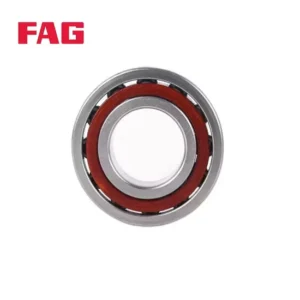
Product details
Description and application notes
Original Batch Traceability — Every FAG 3201b double row angular contact ball bearing ships with verifiable factory lot documentation to eliminate counterfeit risks.
Technical Specifications
| Parameter | Value |
|---|---|
| Designation | FAG 3201b |
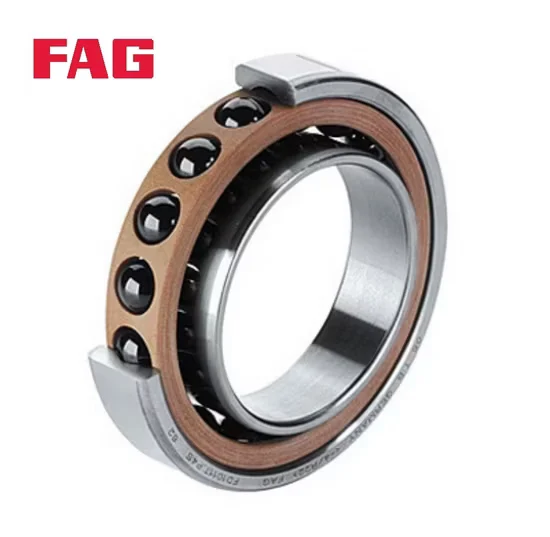
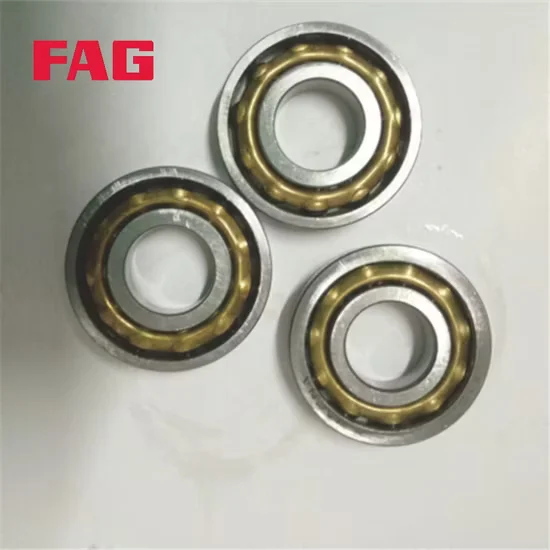
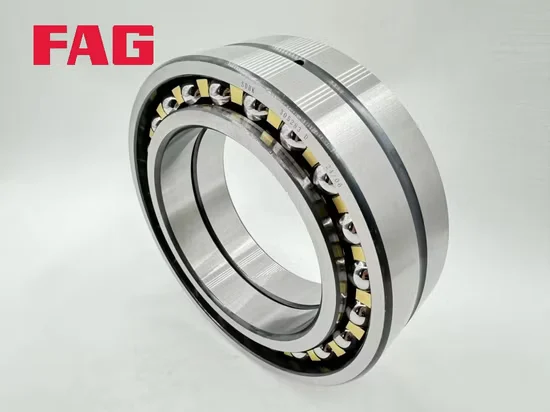
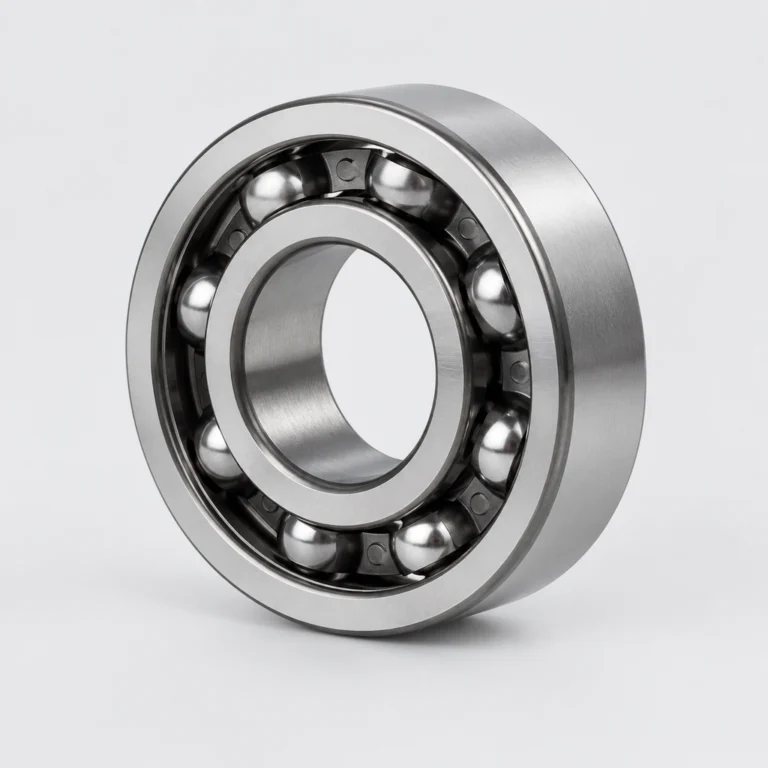
| Bearing Type | Double Row Angular Contact Ball Bearing |
| Cage Material | Polyamide (Tvh), Sheet Steel, or Brass (MP) |
| Seal or Shield Type | Open, 2Z, or 2HRS |
| Clearance Class | C3 |
| Precision Class | P0 / P6 / P5 |
| Standard | DIN 628-3, ISO 15:2017 |
| Origin | Jiangsu China |
The suffix 'b' is an unverified designation requiring manufacturer catalog confirmation for exact geometric interpretation.
Application Suitability
| Industry | Typical Applications |
|---|---|
| Machine Tools | High-speed spindle support and precision rotary tables |
| Fluid Machinery | High-speed pump impeller shafts and compressor rotors |
| Robotics | Articulated joint actuators and precision positioning arms |
| General Manufacturing | MRO replacement for automated assembly line gearboxes |
Thermal Expansion Traps in High-Speed Spindles Using the FAG 3201b double row angular contact ball bearing
Selecting the correct internal clearance prevents catastrophic seizure when operating temperatures spike during continuous machining cycles.
In high-temperature environments like those I frequently encounter in Middle Eastern compressor stations and heavy manufacturing plants, standard clearance bearings often fail prematurely. When thermal expansion outpaces the internal gap, the rolling elements bind tightly against the raceways, generating excessive friction. This leads to sudden operational halts rather than gradual wear, turning a simple maintenance task into a critical downtime event. Engineers often overlook how ambient heat combined with internal friction drastically reduces the effective operational window of standard components. Recognizing these thermal traps is the first step toward specifying a reliable replacement.
Matching the FAG 3201b double row angular contact ball bearing to Demanding Rotary Systems
When specifying a FAG 3201b double row angular contact ball bearing for precision equipment, matching the cage and clearance to the actual thermal profile is absolutely critical. Our engineering team cross-references your operational data against manufacturer specs to ensure the polyamide cage and C3 clearance align perfectly with your spindle's heat generation. This proactive validation prevents costly misapplications before the order is even placed. By analyzing the specific load vectors and rotational speeds of your machinery, we can confirm whether the non-aligning double row design provides the necessary rigidity for your exact setup, ensuring long-term reliability in demanding production environments.
Addressing Thermal and Contamination Challenges in Precision Machinery
High-speed pump shafts and machine tool spindles generate significant friction heat, which directly impacts internal clearance and lubricant viscosity over time. If the operating temperature exceeds the thermal limit of standard bearing steel, inadequate clearance will cause the bearing to preload itself into failure. Furthermore, choosing between open, 2Z, or 2HRS seal types dictates how well the unit resists coolant ingress without introducing excessive contact friction that could further elevate operating temperatures. Proper installation practices are equally vital to maintain the designed axial play, as incorrect mounting forces can permanently distort the raceway geometry and negate the benefits of the selected clearance class.
Decoding the Tvh Cage and C3 Clearance Configuration
The polyamide (Tvh) cage offers a distinct advantage in high-speed applications by reducing centrifugal forces and minimizing friction heat compared to heavier brass alternatives. Pairing this lightweight cage with a C3 internal clearance provides the necessary thermal buffer for equipment that experiences significant temperature gradients during startup and continuous operation. The availability of P0, P6, and P5 precision classes allows maintenance teams to balance procurement costs against the strict runout tolerances required for high-end machine tool spindles. Additionally, the non-aligning double row design ensures rigid support for combined radial and axial loads, maintaining shaft positioning accuracy under dynamic cutting forces. Understanding how these specific attributes interact ensures that the selected component will perform reliably under the exact stress profiles of your application, rather than just meeting basic dimensional requirements.
The Compounding Costs of Incorrect Clearance and Cage Selection
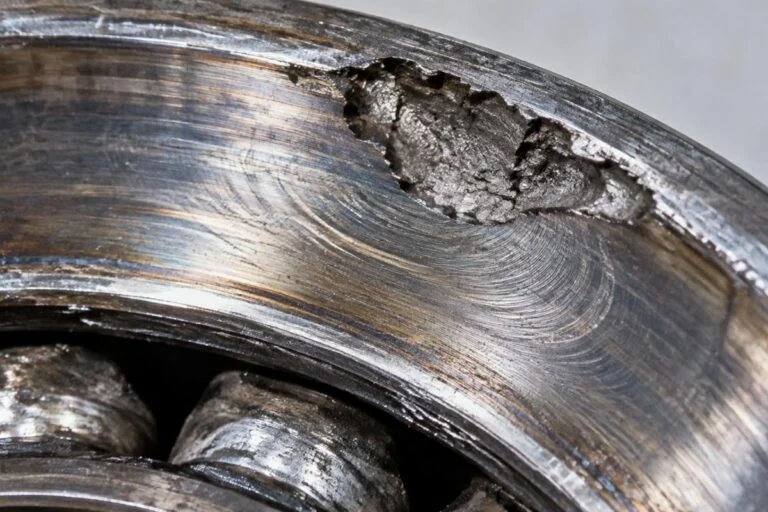
Misjudging the thermal expansion characteristics of a spindle can lead to catastrophic damage rather than predictable fatigue life exhaustion. When a standard clearance bearing seizes due to heat, it often destroys the shaft and housing, voiding equipment warranties and triggering severe unplanned downtime. According to failure mode classifications outlined in ISO 15243, thermal smearing and cage fracture are direct consequences of such specification errors. These secondary damages exponentially increase the total cost of a single replacement part, as the entire assembly must be rebuilt. Avoiding these hidden costs requires a disciplined approach to verifying every suffix and clearance designation before finalizing the procurement order.
Securing Verified Configurations for Critical MRO Projects
Sourcing the exact Tvh and C3 configuration requires more than just matching a part number; it demands rigorous verification and technical oversight. We maintain massive spot inventory covering thousands of standard and special part numbers, ensuring urgent MRO requirements are met without waiting for typical multi-week factory lead times. Our technical selection support helps buyers avoid the common pitfall of substituting a standard CN clearance when a C3 is explicitly required for high-heat environments. Every shipment includes complete traceability documentation, and our flexible MOQ accommodates everything from single-unit emergency spares to full container consolidations. Furthermore, our global shipping consolidation ensures your mixed-brand project orders arrive synchronized and ready for installation, backed by long-term after-sales technical support for failure analysis.
Documentation & Authenticity
- Certificate of Conformity confirming DIN 628-3 and ISO 15:2017 compliance for the specific batch.
- Original factory lot traceability records linking the Tvh cage variant to its production date.
- Official manufacturer app QR code verification to authenticate the P5 precision grade.
- Dimensional and running accuracy inspection reports validating the C3 internal clearance before dispatch.
Storage, Handling & Mounting
- Keep the original packaging sealed until mounting to protect the polyamide (Tvh) cage from UV degradation and moisture.
- Use clean, lint-free gloves when handling P5 precision class bearings to prevent skin acids from corroding the raceways.
- Apply induction heating for inner ring mounting, strictly monitoring temperature to avoid altering the C3 clearance geometry.
- Ensure the 2HRS sealed variants are not subjected to high-pressure washdowns that could compromise the contact lip integrity.
Preparing Your Technical Parameters for Selection Review
To ensure the selected configuration matches your exact operational demands, please provide detailed radial and axial load profiles, maximum operating speeds, and anticipated temperature ranges. Sharing the specific OEM equipment model number allows our engineering team to perform precise cross-reference alignment and L10 life recalculations. This technical review guarantees that the cage material, clearance class, and precision grade are perfectly optimized for your application. By supplying comprehensive environmental data, including exposure to contaminants or corrosive agents, we can also advise on the most appropriate seal type to maximize service intervals and protect your critical machinery from premature degradation.
Frequently Asked Questions
Q: How do I verify the authenticity of the Tvh cage and C3 clearance?
A: Authenticity is confirmed through the manufacturer's official app using the QR code on the packaging, which validates the specific production batch. We also provide original factory traceability documents and dimensional inspection reports that explicitly verify the C3 internal clearance and polyamide cage material before the items leave our facility.
Q: What precautions are necessary when cross-referencing this specific configuration?
A: When ordering, it is crucial to cross-reference the complete designation, ensuring the Tvh cage, C3 clearance, and P5 precision align perfectly with your equipment's original engineering specifications. Substituting even one attribute, such as using a standard cage instead of the specified polyamide variant, can severely compromise high-speed thermal stability and operational reliability.
Q: Can I substitute a standard CN clearance for the C3 variant in high-speed pumps?
A: Substituting a standard CN clearance in high-temperature or high-speed applications often leads to thermal seizure, as the internal gap is insufficient to accommodate heat-induced expansion. The C3 clearance provides a necessary thermal buffer, and replacing it with a standard variant will likely result in premature failure and unplanned downtime.
Q: How does the polyamide (Tvh) cage compare to brass options for machine tool spindles?
A: The polyamide cage is noticeably lighter, which reduces centrifugal forces and friction heat at high rotational speeds, making it ideal for precision spindles. Brass cages are typically reserved for applications with extreme vibration or higher operating temperatures that exceed the thermal limits of standard polyamide materials.