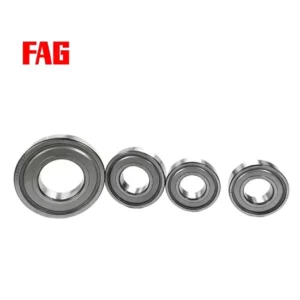

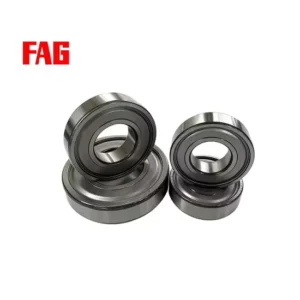
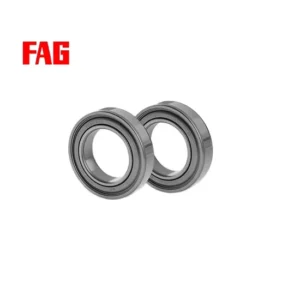
Product details
Description and application notes
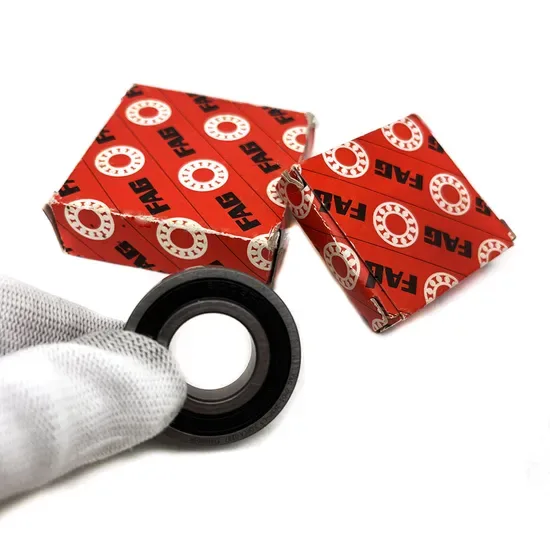
Verified via official app — Every FAG B7004-E-T-P4s-UL angular contact ball bearing ships with a scannable QR code for instant factory authentication.
Technical Specifications
| Parameter | Value |
|---|---|
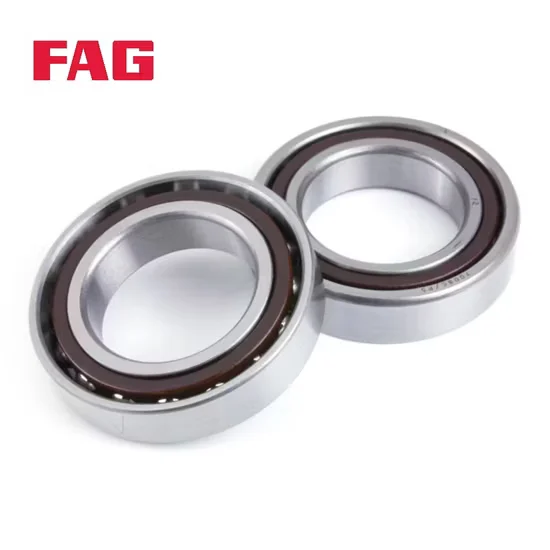
| Designation | FAG B7004-E-T-P4s-UL |
| Bearing Type | Angular Contact Ball Bearing |
| Precision Class | P4s |
| Contact Angle | 25° |
| Material | Steel |
| Origin | Jiangsu China |
| Certification | ISO |
Note: Certain suffix elements in this designation require verification against the manufacturer's latest catalog to confirm specific cage or pairing attributes.
Application Suitability
| Industry | Typical Applications |
|---|---|
| Machine Tool Manufacturing | High-speed motorized spindles for CNC milling centers |
| Precision Equipment | Rotary tables and indexing heads requiring tight runout tolerances |
Why Spindle Thermal Growth Destroys Machining Tolerances Before the FAG B7004-E-T-P4s-UL angular contact ball bearing Fails
Friction from mismatched preload generates heat faster than the cooling jacket can dissipate it.
I have seen this exact scenario unfold at trade shows and on shop floors across Europe. A minor suffix oversight on a spindle cartridge leads to excessive preload, causing the shaft to seize during high-speed cutting operations. The resulting vibration ruins surface finishes and forces unplanned downtime, proving that precision transmission leaves zero margin for configuration errors. When operators ignore the specific pairing marks or assume all P4 class bearings behave identically, the thermal displacement quickly exceeds the machine's compensation capabilities. This thermal expansion alters the tool tip position, rendering tight tolerances impossible to achieve and leading to massive scrap rates in aerospace component manufacturing.
Matching Spindle Dynamics with Precision Configurations
When designing high-frequency milling spindles, the FAG B7004-E-T-P4s-UL angular contact ball bearing provides the necessary rigidity to handle combined cutting forces without deflecting. Our engineering team regularly cross-checks these specific suffix combinations against OEM spindle blueprints to ensure the contact angle and preload align perfectly with the intended operational envelope. Selecting the correct precision class is not just about meeting a basic threshold; it dictates the entire dynamic behavior of the rotating assembly. By matching the exact internal geometry to the spindle housing tolerances, we help manufacturers avoid the micro-vibrations that cause chatter marks on finished parts. This precise alignment ensures that the bearing operates within its optimal load zone, significantly extending the service interval for the entire spindle cartridge.
Managing High-Speed Thermal and Load Challenges
Spindle environments subject bearings to intense radial and axial loads simultaneously, demanding an optimized contact angle to prevent raceway skidding under extreme cutting forces. At elevated rotational speeds, lubrication breakdown and thermal expansion can rapidly degrade running accuracy if the internal clearance is not precisely managed. Proper oil-air or grease lubrication protocols must be strictly followed to mitigate friction heat, while non-contact seals are often preferred to minimize drag and prevent contaminant ingress. The challenge lies in maintaining a stable lubricant film thickness when the centrifugal forces push the rolling elements outward against the outer raceway. If the thermal growth of the shaft outpaces the housing expansion, the internal preload increases dynamically, pushing the bearing beyond its designed operational limits and accelerating fatigue.
Decoding the Suffix Architecture for Spindle Integrity
The 'E' designation confirms a 25° contact angle, striking the ideal balance between axial thrust capacity and radial rigidity for milling operations. The 'P4s' precision class guarantees tighter dimensional and running tolerances than standard P4 grades, which is critical for minimizing spindle runout and ensuring consistent part geometry. Universal pairing capabilities allow maintenance teams to stack bearings in back-to-back or face-to-face configurations without needing custom grinding of spacer rings. Understanding how these precision parameters interact with the spindle's cooling system and clamping mechanism is essential for achieving the desired rigidity and damping characteristics during heavy material removal. The exact interpretation of any remaining suffix codes must be validated against current production documentation to ensure complete compatibility with the housing design.
The Cascading Impact of Preload Miscalculations
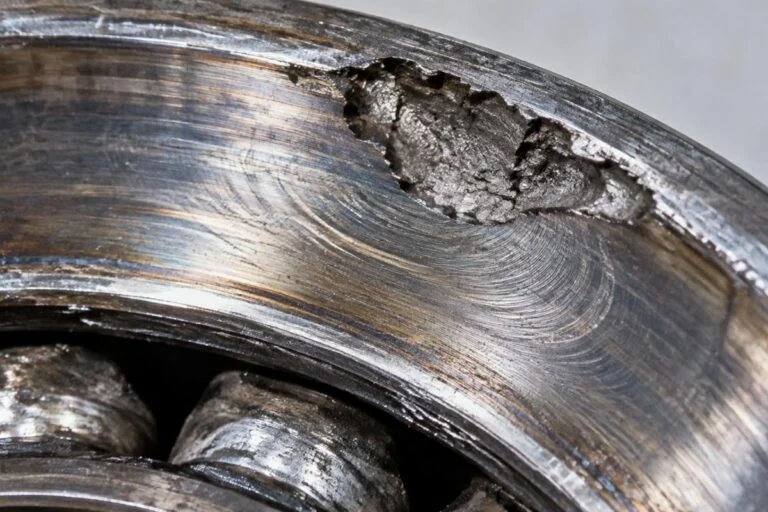
Installing a bearing with incorrect preload or mismatched pairing marks leads to premature fatigue and catastrophic spindle seizure. According to failure analysis frameworks, a significant share of premature failures in precision equipment stems from improper mounting and configuration errors rather than material defects. This results in voided machine warranties, scrapped workpieces, and extensive repair costs that far exceed the component price. When a light preload bearing is accidentally replaced with a medium or heavy preload variant, the excessive friction generates immense heat, rapidly degrading the lubricant and causing the cage to fail. The subsequent breakdown sends metallic debris through the spindle housing, destroying seals, drawbar mechanisms, and rotary unions in a cascading failure that requires a complete cartridge rebuild.
Securing Authentic Spindle Components Through Verified Channels
Sourcing genuine FAG B7004-E-T-P4s-UL angular contact ball bearings requires more than just matching the part number; it demands strict verification of the preload class and precision grade. We provide complete batch traceability and cross-reference support to ensure the light preload specification matches your existing spindle stack perfectly. Our flexible consolidation shipping allows you to mix this precise component with other MRO spares in a single shipment, backed by long-term technical support for failure analysis. Unlike unauthorized distributors who might substitute a standard clearance bearing for a precision spindle application, our technical team reviews every order against the specific machine tool requirements. This proactive verification process eliminates the risk of receiving mismatched components that could compromise the entire machining center's accuracy and productivity.
Documentation & Authenticity
- Certificate of Conformity confirming P4s tolerance grades for this specific batch.
- Original factory batch traceability linking the bearing to its production run.
- Official app QR code authentication to verify genuine FAG origin.
- Dimensional and running accuracy inspection reports aligned with ISO standards.
- Material certification validating the steel composition for high-speed durability.
Storage, Handling & Mounting
- Keep the matched set sealed until mounting to preserve factory preload pairing marks on this arrangement.
- Store in a climate-controlled environment to prevent thermal shock affecting the P4s precision tolerances.
- Use clean lint-free gloves during handling to avoid contaminating the 25° contact angle raceways.
- Apply induction heating strictly within specified limits if mounting the inner ring on a tight spindle shaft.
- Follow the manufacturer's exact lubrication volume to prevent churning losses in this high-speed configuration.
Preparing Your Technical Requirements for Review
To ensure optimal spindle performance, please share your specific radial and axial load profiles, maximum operating speeds, and target running accuracy. Providing the original OEM equipment number or existing spindle blueprint allows our technical team to perform a thorough cross-reference and L10 life calculation. This data enables us to confirm the exact preload and pairing configuration required for your machining center.
Frequently Asked Questions
Q: How do I verify the authenticity of the FAG B7004-E-T-P4s-UL angular contact ball bearing?
A: Every genuine unit includes a scannable QR code on the packaging. By using the manufacturer's official mobile application, you can instantly verify the production batch, origin, and precision grade. We also supply original factory traceability documents and dimensional inspection reports to guarantee the P4s tolerances meet your spindle requirements before installation.
Q: What does the 25° contact angle mean for my machine tool spindle?
A: The 'E' suffix indicates a 25° contact angle, which provides an optimal balance for handling combined radial and axial loads. This configuration ensures high rigidity during heavy milling cuts while maintaining the rotational accuracy needed for fine surface finishes. It is the standard choice for most high-speed motorized spindle cartridges in CNC machining centers.
Q: Why is the preload suffix critical for spindle stacking?
A: The universal pairing designation specifies a light preload, allowing the bearings to be mounted in any back-to-back or face-to-face arrangement. If this preload is mismatched with adjacent bearings in the spindle stack, it causes excessive friction, thermal growth, and eventual seizure. Always verify the exact preload class against your machine builder's specifications.
Q: How should I interpret complex suffix combinations for spindle bearings?
A: While standard catalogs define common suffixes like contact angles and precision classes, some specific designations may refer to specialized cage materials or legacy codes. We strongly recommend consulting the manufacturer's latest technical documentation or relying on our cross-reference engineering support. We verify every suffix against current production standards to ensure the physical bearing matches your exact spindle design requirements before shipment.