Product details
Description and application notes
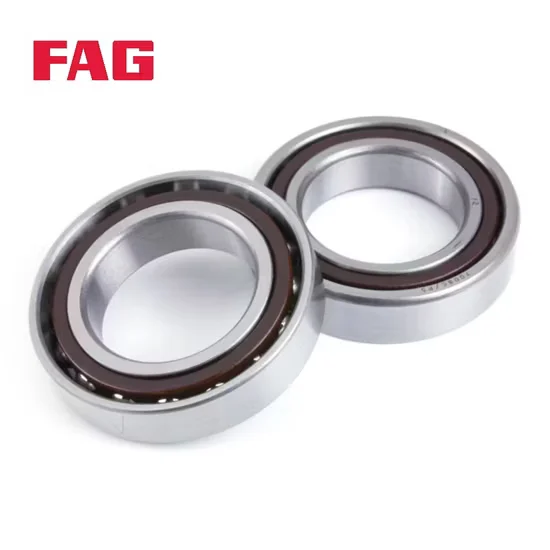
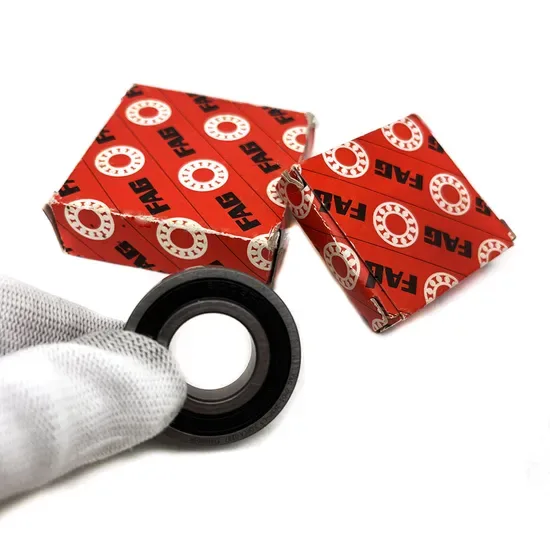
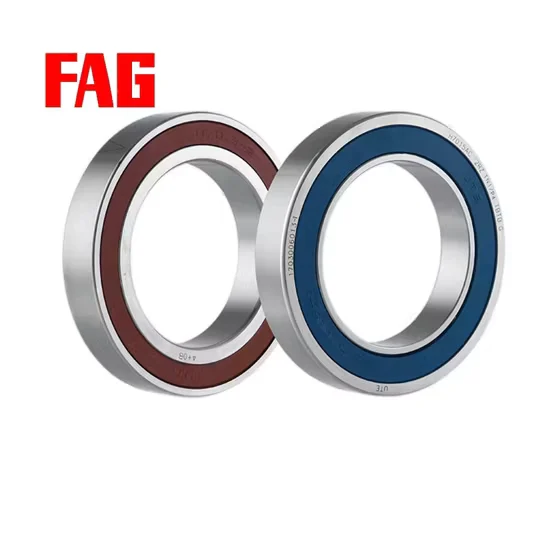
Traceable Factory Batches — Every FAG B7009-E-T-P4s-UL angular contact ball bearing ships with verifiable original manufacturing lot documentation to guarantee spindle reliability.
Technical Specifications
| Parameter | Value |
|---|---|
| Designation | FAG B7009-E-T-P4s-UL |
| Bearing Type | Angular Contact Ball Bearing |
| Precision Class | P4s |
| Contact Angle | 25° |
| Material | Chrome Steel |
| Number of Rows | Single-Row |
| Origin | Jiangsu China |
Application Suitability
| Industry | Typical Applications |
|---|---|
| Machine Tool Manufacturing | High-speed precision grinding and milling spindles |
| Robotics & Automation | High-precision rotary joints and actuator mechanisms |
| Industrial Pumps | High-speed fluid transfer pump shafts |
Why Standard Tolerances Destroy High-Speed Spindles Using the FAG B7009-E-T-P4s-UL Angular Contact Ball Bearing
Micro-vibrations from mismatched precision classes cause catastrophic thermal runaway in precision spindles.
Early in my career on Middle Eastern project sites, I witnessed the disastrous consequences of forcing standard tolerance bearings into precision spindles. The machine vibrated violently within hours, ultimately burning out the drive motor. For an ultra-precision component like the FAG B7009-E-T-P4s-UL angular contact ball bearing, preload and pairing tolerances must be controlled down to the micrometer. Any compromise in sourcing or handling inevitably leads to catastrophic thermal runaway and severe production losses.
Matching Ultra-Precision Requirements in Machining Environments
Modern machining centers demand exceptional rotational accuracy to maintain tight surface finish tolerances and extend tool life. The FAG B7009-E-T-P4s-UL angular contact ball bearing delivers the necessary running accuracy for these demanding high-speed setups. Our engineering team provides comprehensive cross-brand equivalent model consultation to ensure this specific precision class aligns perfectly with your unique spindle design and operational requirements.
Managing Thermal and Load Challenges at Extreme RPMs
High-speed spindles generate significant internal heat, which directly impacts internal clearance and lubrication film thickness. The 25° contact angle optimally balances the combined radial and axial loads typical in heavy milling operations. Proper oil-air or oil-mist lubrication is absolutely critical to prevent cage wear and raceway smearing at elevated rotational speeds. Managing these thermal and mechanical variables ensures the bearing maintains its geometric integrity throughout prolonged machining cycles.
Decoding the P4s Precision and Contact Angle Geometry
The P4s precision class ensures exceptionally tight dimensional and running accuracy, far exceeding standard industrial grades and minimizing high-frequency vibrations. A 25° contact angle provides an optimal compromise between axial rigidity and high-speed capability, making it ideal for demanding spindle applications. The single-row configuration allows for flexible mounting arrangements, such as back-to-back or face-to-face pairs, depending on the required moment load capacity. Chrome steel construction offers the necessary core hardness and fatigue resistance for continuous high-speed operation. Understanding these geometric and material traits is essential for predicting spindle behavior under varying cutting forces and preventing unexpected downtime.
The Hidden Financial Impact of Spindle Downtime
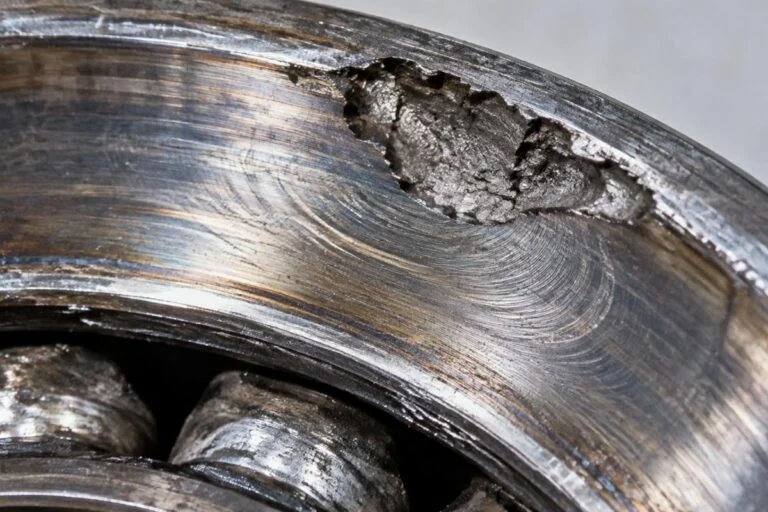
Selecting an incorrect precision class or misinterpreting suffix codes leads to premature spindle failure and unplanned production halts. According to ISO 15243 frameworks, improper mounting or mismatched preload often manifests as smearing or false brinelling on the raceways. This catastrophic damage not only destroys the bearing but can also warp the expensive spindle housing, resulting in massive repair costs. Relying on verified traceability and expert technical guidance prevents these costly operational disruptions and protects your capital equipment investment.
Securing Authentic Spindle Components Through Verified Channels
Sourcing genuine ultra-precision bearings requires strict channel verification to avoid counterfeit parts that completely lack true P4s tolerances. We supply the FAG B7009-E-T-P4s-UL angular contact ball bearing with complete traceability documentation, ensuring every unit matches original factory batch records. Our massive spot inventory covers thousands of standard and special part numbers, allowing flexible MOQ from single-unit emergency spares to full project consolidation shipments. Furthermore, our technical team provides in-depth failure analysis and application guidance to resolve complex spindle vibration issues. This comprehensive support guarantees long-term reliability and operational stability for your precision manufacturing equipment.
Documentation & Authenticity
- Certificate of Conformity validating P4s precision class and original FAG manufacturing origin.
- Factory batch traceability records linking each bearing to its specific production lot.
- Official app QR code verification for instant authenticity validation on site.
- Dimensional inspection reports confirming tight running accuracy tolerances before dispatch.
- Material certification proving chrome steel composition and heat treatment compliance.
Storage, Handling & Mounting
- Keep the single-row bearing in its original vapor-phase inhibitor packaging until immediate mounting to prevent chrome steel corrosion.
- Use clean, lint-free gloves when handling P4s precision surfaces to avoid microscopic contamination from skin oils.
- Maintain strict temperature control in the storage area to prevent thermal distortion of the ultra-precision raceways.
- Follow exact factory preload marks during paired mounting to preserve the intended 25° contact angle geometry.
- Apply specified spindle oil immediately after unsealing to protect the open bearing surfaces from ambient dust.
Engineering Data Required for Spindle Integration
To ensure optimal spindle integration, please share your specific radial and axial load profiles, operating speeds, and thermal conditions. Providing the original OEM equipment number allows our team to perform precise cross-reference verification and L10 life calculations. Supplying these technical parameters enables us to recommend the exact pairing arrangement and lubrication strategy for your application.
Frequently Asked Questions
Q: How can I verify the authenticity of the FAG B7009-E-T-P4s-UL angular contact ball bearing?
A: Authenticity is confirmed through original factory batch traceability documents and official manufacturer app QR code scanning. We provide complete certification packages, including dimensional inspection reports that validate the P4s precision class. This rigorous verification process ensures you receive genuine components capable of meeting strict high-speed spindle requirements without the risk of counterfeit failures.
Q: What does the P4s precision class mean compared to standard grades in ISO standards?
A: The P4s designation indicates ultra-precision tolerances for both dimensional accuracy and running performance, significantly tighter than standard P0 or P5 classes. This strict adherence to ISO standards minimizes micro-vibrations and thermal generation at high rotational speeds. Such precision is absolutely critical for machine tool spindles where even microscopic deviations can compromise surface finish quality and tool life.
Q: Why is the 25° contact angle preferred for certain high-speed spindle applications?
A: A 25° contact angle provides an optimal balance between axial rigidity and high-speed capability. It effectively manages the combined radial and axial loads typical in milling and grinding operations while minimizing internal friction. This specific geometry reduces heat generation, allowing the spindle to maintain tight tolerances and stable operation during prolonged high-RPM machining cycles.
Q: How should I interpret unverified suffixes like T and UL when cross-referencing catalogs?
A: Suffixes such as T and UL require direct confirmation against the manufacturer's current technical catalog, as they may denote specific cage materials, preload levels, or universal pairing arrangements. Misinterpreting these codes can lead to incorrect preload application during mounting. We recommend consulting our engineering team to decode these specific designations and ensure exact compatibility with your spindle housing.
Q: What are the recommended lubrication practices for ultra-precision angular contact ball bearings?
A: Ultra-precision spindle bearings typically require high-quality oil-air or oil-mist lubrication systems to manage heat and reduce friction at extreme speeds. Grease is generally unsuitable for these high-RPM applications due to churning losses and thermal degradation. Proper lubrication volume and interval must be calculated based on the specific speed factor and the 25° contact angle geometry to prevent premature cage wear.